Gregory XVI
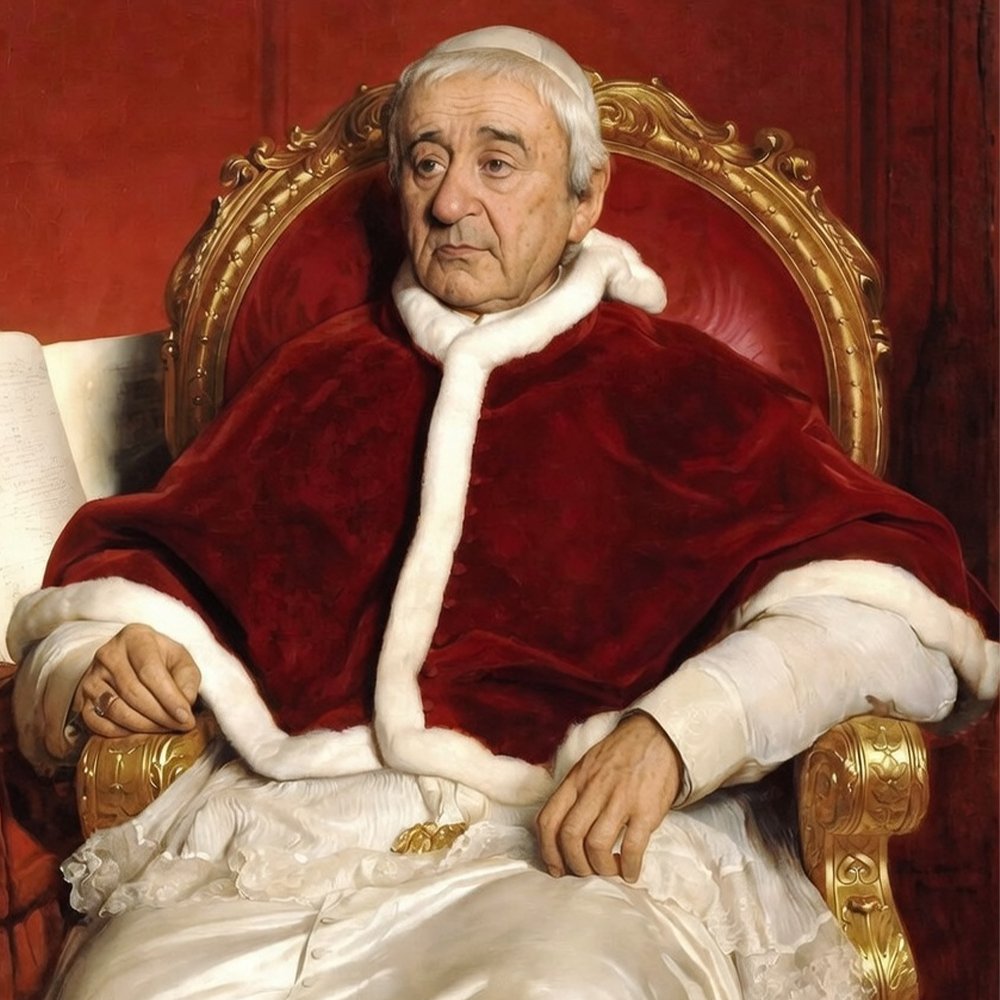
Pope Gregory XVI (1831-1846)
BIOGRAPHICAL DATA
Birth name: Bartolomeo Alberto Cappellari
Birth: September 18, 1765, Belluno, Republic of Venice (Italy)
Papal election: February 2, 1831
Coronation: February 6, 1831
Pontificate: February 2, 1831 – June 1, 1846 (15 years, 3 months)
Death: June 1, 1846, Quirinal Palace, Rome (age 80)
Burial: St. Peter’s Basilica, Vatican City
Religious order: Camaldolese (Order of St. Romuald)
Papal motto: None officially recorded
Nicknames: “Pope of Reaction”, “Last Pope of the Ancien Régime”
FORMATION AND RELIGIOUS LIFE
Modest Origins
Family:
Father: Giovanni Battista Cappellari – modest lawyer in Belluno (Veneto)
Mother: Giulia Cesa-Paulon
Lower-middle-class family – not aristocratic
Second of three children
Solid religious education
Childhood:
Belluno: small alpine town north of Venice
Republic of Venice (then independent)
Context: Enlightenment, eve of the French Revolution
Pious and conservative family
Religious Vocation and Formation
Entry into the Camaldolese Order (1783):
Age 18 – Monastery of San Michele di Murano (Venice)
Camaldolese Order:
Eremitical Benedictine branch
Founded by St. Romuald (11th century)
Rigorous contemplative life
Study and prayer
Intellectual tradition
Religious name: Mauro (in honor of St. Maurus, disciple of St. Benedict)
Intellectual formation:
Philosophy and Theology in the monastery
Exceptional student
Specialization in Canon Law
Voracious reading of the Church Fathers
Mastery of Latin, Italian, knowledge of French
Priestly Ordination: 1787 (age 22)
Monastic and Intellectual Career
Professor and scholar (1787-1799):
Taught Philosophy and Theology in Camaldolese colleges
Reputation for erudition
Specialist in ecclesiology (nature of the Church)
Napoleonic Period (1797-1814):
1797: Napoleon conquered the Republic of Venice
Monasteries suppressed (1810)
Cappellari took refuge in Rome (1807)
Traumatic experience:
Saw destruction of religious orders
Confiscation of ecclesiastical property
Persecution of the Church
Shaped profound conservative vision
Main Work: Il Trionfo della Santa Sede (1799)
“The Triumph of the Holy See and the Church against the Attacks of the Innovators”
Polemical book defending:
Absolute papal authority
Papal infallibility (before it was a dogma!)
Roman primacy
Against Gallicanism, Febronianism, Josephinism
Against the French Revolution and “modern” ideas
Radical Ultramontanism
Attracted attention of the Roman Curia
Catholic reactionary best-seller
Translated into several languages
Career in the Roman Curia
Consultor of the Holy Office (1814):
After the fall of Napoleon
Papal restoration (Pius VII returned to Rome)
Cappellari called to the Curia
Expertise in theology and canon law
Abbot General of the Camaldolese (1823):
Elected superior of the entire Order
Reformed monasteries
Restored post-Napoleonic discipline
Cardinal (1825):
Created cardinal by Leo XII (March 21, 1825)
Cardinal-Prefect of the Congregation for the Propagation of the Faith (Missions)
Crucial office: supervision of all worldwide Catholic missions
1826-1831 (5 years)
Expertise in missionary questions
Global vision of the Church
Other curial functions:
Member of various congregations
Reputation:
Extreme Ultramontane
Political reactionary
Respected scholar
Competent administrator
CONCLAVE OF 1830-1831 – PAPAL ELECTION
Death of Pius VIII
November 30, 1830:
Death of Pius VIII (Francesco Saverio Castiglioni)
Very short pontificate: 1 year, 7 months (1829-1830)
Died suddenly (rumors of poisoning, unconfirmed)
Revolutionary Context – Europe in Flames
July Revolution of 1830 (France):
July 27-29, 1830: “Three Glorious Days”
Charles X (absolutist Bourbon) deposed
Louis Philippe (Orléans, “citizen king”) enthroned
Liberal constitutional monarchy
Revolutionary wave spread
Belgian Revolution (August 1830):
Independence from Holland
Liberal Catholic state (advanced constitution)
Revolts in Italy:
Duchy of Modena (February 1831)
Papal States: insurrection in Bologna, Romagna, Marche (February 1831)
Carbonari (revolutionary secret society) active
Demands: constitution, reforms, popular participation
Dramatic situation:
Conclave met in context of open revolution
Papal States partially occupied by revolutionaries
Austrian troops intervened to restore order
Conclave (December 14, 1830 – February 2, 1831)
50 cardinal electors
Duration: 50 days (one of the longest of the 19th century)
Factions:
“Zelanti” (Intransigent Ultramontanes):
Wanted a reactionary pope
Against any concession to liberalism
Main candidate: Cardinal Cappellari
Support: conservative cardinals, some foreigners
“Politicians” (Moderates, French/Austrian influence):
Wanted a less intransigent pope
Open to minimal reforms in the Papal States
Avoid permanent conflict with powers
Candidate: Cardinal Giustiniani
Deep division:
No candidate reached 2/3
Repeated ballots (more than 50!)
Diplomatic pressures:
Austria (Metternich): preferred a moderate but would accept Cappellari
France (Louis Philippe, liberal): against Cappellari
Impossible compromise:
Intransigent Zelanti
Would not accept a moderate
Cappellari = most brilliant but most reactionary mind
Solution: Mutual exhaustion
February 2, 1831:
Cardinal Cappellari elected
Narrow majority finally reached
Age 65 – relatively old
Victory of the extreme conservatives
Choice of name: Gregory XVI
Homage to Gregory I the Great (590-604):
Reforming pope
Defender of orthodoxy
Resisted barbarians
Symbol: doctrinal firmness
Also medieval Gregorys (VII, IX) = combative popes
Coronation: February 6, 1831
Amid disturbances
Austrian troops in Rome
First Crisis: Revolution in the Papal States
Immediately after election:
Bologna and Romagna: total rebellion
Revolutionary provisional government
Papal troops defeated
Austrian intervention (March 1831):
Gregory XVI asked Austria for help
Austrian army (Metternich) crushed the revolution
Brutal repression
Restoration of papal government
Memorandum of the Powers (May 1831):
France, Austria, Prussia, Russia, Great Britain
Demanded reforms in the Papal States:
Civil administration (fewer clerics)
Improved justice
Limited popular consultations
Administrative modernization
Response of Gregory XVI:
Vague promises
Minimal reforms (cosmetic)
In practice: no real reforms
Restored absolutism
Repression of revolutionaries
Pattern established:
Periodic revolts (1831, 1832, 1843-1844)
Austrian/French intervention
Repression
Vicious cycle: no reforms → discontent → revolt → repression
THE PONTIFICATE (1831-1846) – 15 YEARS
GENERAL CHARACTERISTICS
“Pope of Total Reaction”:
Most reactionary pope of the 19th century (including post-1850 Pius IX)
Total absolutism
Refusal of any modernization
Alliance with the most conservative regimes (Austria, Russia)
Priorities:
Preserve traditional order
Combat liberalism, nationalism, socialism
Maintain absolutist temporal government
Defend Catholic orthodoxy
Expand missions
Governing style:
Extreme centralization
Absolute theocracy in the Papal States
Total clericalization of administration
Omnipresent secret police
Total censorship
GOVERNMENT OF THE PAPAL STATES (1831-1846)
Absolutist Structure
Absolute papal power:
Gregory XVI = absolute monarch temporal and spiritual
No constitution
No parliament or popular representation
Laws = papal decrees
Secretariat of State:
Cardinal Tommaso Bernetti (1831-1836): hardline
Cardinal Luigi Lambruschini (1836-1846): even more reactionary
Extremist even by the standards of the time
Brutal repression
Pius IX would remove him (1846)
Clerical administration:
Cardinal-Legates: provincial governors (all clerics)
Bureaucracy: 90%+ clerics
Justice: ecclesiastical tribunals
Police: directed by prelates
Laity systematically excluded
Political Repression
Secret Police:
Espionage network
Informants throughout the population
Anonymous denunciations encouraged
Climate of fear
Political prisons:
Castel Sant’Angelo (Rome): political prison
Fortresses: Civitavecchia, etc.
Thousands of political prisoners
Torture (officially abolished, but…)
Executions of revolutionaries
Total censorship:
Index Librorum Prohibitorum (Index of Forbidden Books):
Massively expanded
Enlightenment, liberal, scientific works
Press: only approved publications
Universities: rigid ideological control
Theater, opera: censored
Secret societies persecuted:
Carbonari: relentlessly hunted
Freemasonry: total persecution
Executions of captured Carbonari
Deliberate Economic and Social Backwardness
Refusal of modernization:
Railways:
Gregory XVI refused to authorize railways in the Papal States
Phrase (apocryphal but representative): “Chemins de fer? Chemins d’enfer!” (“Railways? Roads to hell!”)
Vision: railways bring revolutionary ideas, dangerous mobility
Papal States: last Italian state without railways
Only built under Pius IX (1846+)
Gas lighting:
Refused public gas lighting in Rome
“Dangerous invention”
Rome remained with medieval lighting (candles, oil)
Industry:
Practically nonexistent
Backward agrarian economy
No investment
Education:
Totally controlled by the Church
No secular education
University of Bologna: watched, liberal professors expelled
Illiteracy rate: extremely high
Social situation:
Massive poverty
Endemic brigandage (crime)
Administrative corruption
Increasingly resentful population
Jewish Ghetto
Segregation maintained:
Rome Ghetto: maintained and reinforced
Jews confined to a specific neighborhood
Doors locked at night
Professional restrictions
Occasional forced conversions
Last ghetto in Western Europe (only abolished in 1870, after fall of papal power)
Discriminatory policies:
Prohibition from owning property
Limitation of professions
Special taxes
Public humiliations
Administration of Justice
Archaic judicial system:
Ecclesiastical tribunals
Canon law mixed with civil law
No unified code
Judicial corruption
Severe penalties (including death penalty)
Public executions:
Guillotine (introduced during Napoleonic French occupation, kept!)
Piazza del Popolo (Rome): execution site
Public spectacle (intimidation)
ENCYCLICALS AND PONTIFICAL DOCUMENTS
Gregory XVI published fewer encyclicals than predecessors and successors, but some extremely important.
MAIN ENCYCLICALS
1. Mirari Vos (August 15, 1832)
“On Modern Errors”
THE MOST IMPORTANT AND NOTORIOUS ENCYCLICAL
Context:
Response to Lamennais and liberal Catholics
Félicité de Lamennais: priest, French philosopher
Initially ultramontane
Later: liberal Catholic
Newspaper L’Avenir (“The Future”): defended:
Freedom of conscience
Freedom of the press
Separation of Church and State (to free the Church!)
Democracy
Human rights
“God and Liberty!”
Visited Rome (1832), sought papal approval
Total condemnation by Gregory XVI:
Against freedom of conscience: “From this poisoned source of indifferentism flows that absurd and erroneous sentence, or rather delirium, that freedom of conscience must be claimed and guaranteed for all.”
Freedom of conscience = religious indifferentism
Truth is one (Catholicism)
Error has no rights
State must protect truth, repress error
Against freedom of the press: “To this is joined the freedom of the press, the most fatal liberty, an execrable liberty, for which one can never have enough horror.”
Free press = diffusion of errors
It must be censored
Dangerous books must be forbidden
Against separation of Church and State: “Nor can we hope for anything happy for religion and for civil government from the will of those who desire that the Church be separated from the State.”
Union of throne-altar necessary
State must support the Church
Separation = hostility
Against religious freedom:
Religious tolerance = evil
States must be Catholic confessional
Other religions: tolerated at most, not promoted
Against insurrection and revolution: “No one can doubt that it belongs to religion to require peoples to obey religiously legitimate sovereigns.”
Rebellion against legitimate monarchs = sin
Established order comes from God
Peoples must give passive obedience
Specifically condemned:
Lamennais and L’Avenir
Liberal Catholicism
“Reconciliation” with modernity
Consequences:
Lamennais:
Initially submitted (1832)
Later: broke with the Church (1834)
Paroles d’un Croyant (1834): anticlerical work
Excommunicated
Died outside the Church (1854)
Personal tragedy
Liberal Catholicism:
Crushed for decades
Only reborn in the 20th century
Mirari Vos = sword over liberal Catholics
Historical importance:
Declaration of war between Church and modernity
Pius IX (successor) would reiterate everything in Syllabus (1864)
2. Singulari Nos (June 25, 1834)
“Condemning Lamennais”
Reiteration:
After Lamennais’s Paroles d’un Croyant
Even severer condemnation
Work “small in volume, immense in perversity”
Lamented Lamennais’s apostasy
3. Commissum Divinitus (May 17, 1835)
“On the Church in Switzerland”
Context:
Canton of Aargau (Switzerland): liberal government
Suppressed monasteries (1841)
Conflict with the Church
Condemnation:
Usurpation of ecclesiastical property
Defense of religious orders
Support for Swiss Catholics
4. In Supremo Apostolatus (December 3, 1839)
“On the Slave Trade”
IMPORTANT – ANTI-SLAVERY POSITION:
Condemnation of the trade:
Forbade traffic in black slaves
“Inhuman commerce”
Catholics cannot participate
Context:
Atlantic traffic of African slaves
Great Britain had abolished (1807)
But continued in Catholic colonies (Brazil, Cuba, etc.)
Ambiguity:
Clearly condemned traffic
But existing slavery?
Did not explicitly condemn
Ambiguous text
Divergent interpretations
Historical debate:
Some see as total condemnation
Others: only traffic, not the institution
Brazil (Catholic): slavery until 1888
Leo XIII (1888) would be clearer
Importance:
Important moral position
But weak implementation
Did not prevent slavery in Catholic countries
5. Probe Nostis (September 18, 1840)
“On the Propagation of the Faith”
Missions:
Promoted missionary activity
Financial support
Organization
6. Inter Praecipuas (May 8, 1844)
“Against Bible Societies”
Condemnation:
Protestant Bible Societies
Distributed Bibles in vernacular languages
Without Catholic notes
“Danger of erroneous interpretation”
Position:
Bible in vernacular: dangerous without guide
Latin Vulgate: preferable
Catholic notes and commentaries: necessary
Protestant societies: disguised proselytism
Consequence:
Catholics forbidden to receive Protestant Bibles
Block to biblical diffusion
Only reversed in the 20th century
7. Summo Iugiter Studio (May 27, 1832)
On the situation in Poland
8. Cum Primum (June 9, 1832)
On schism in Poland
9-10. Other encyclicals on specific national situations
Total: Approximately 10-12 encyclicals (sources vary slightly)
DOCTRINAL CONDEMNATIONS
Against Rationalism and Modern Philosophies
Holy Office (Roman Inquisition):
Active under Gregory XVI
Books on the Index multiplied
Condemned:
Rationalism
Pantheism
Materialism
German idealist philosophies (Hegel, etc.)
Against Gallicanism and Febronianism
Gallicanism (France):
Autonomy of the French Church
Limitation of papal power
Conciliarism
Febronianism (Germany):
Similar to Gallicanism
Episcopal vs. papal power
Gregory XVI:
Militant Ultramontanism
Absolute papal authority
Centralized power in Rome
Resistance from some episcopates (France, Germany)
Condemnations of National Catholic Movements
Poland (1830-1831):
Insurrection against Russia
Gregory XVI condemned the Polish rebellion
Supported Tsar Nicholas I (Orthodox!)
Against Polish Catholics
Scandal: Pope supporting Orthodox oppressor!
Motivation: established order > national liberation
Poles bitter (to this day)
Ireland:
Catholic emancipation movement
Daniel O’Connell: leader
Gregory XVI: ambiguous
Supported religious rights
But against political “agitation”
FOREIGN POLICY AND DIPLOMATIC RELATIONS
Alliance with Reactionary Regimes
Holy Alliance (Austria, Russia, Prussia):
Gregory XVI natural ally
Metternich (Austria): close partner
Tsar Nicholas I (Russia): mutual support
Against liberal and national revolutions
Dependence on Austria:
Austrian troops in Italy
Protected the Papal States from revolutions
Gregory XVI: ally of Metternich
Criticism: subservience to foreign power
Conflicts with Liberal Governments
France (July Monarchy, 1830-1848):
Louis Philippe: liberal
Tense relations
Lamennais
But France also intervened militarily (Ancona, 1832) to balance Austria
Spain:
Carlist Wars (1833-1840)
Gregory XVI supported Carlists (absolutists, Don Carlos)
Against Queen Isabella II (liberal)
Lost
Portugal:
Civil war (1832-1834)
Supported Miguelists (absolutists, D. Miguel)
Against Liberals (D. Pedro, D. Maria II)
Lost
Persistent conflict
Switzerland:
Conservative Catholic cantons vs. liberals
Supported conservatives
Sonderbund War (1847, after Gregory’s death)
Latin America:
Independent republics (anti-Spanish)
Gregory XVI reluctant to recognize
Monarchical preference
Only gradually recognized (pressure)
Missions and Expansion
Propaganda Fide (Congregation for the Missions):
Gregory XVI had been Prefect (1826-1831)
As Pope: missionary expansion
70 new apostolic vicariates created
Asia, Africa, Oceania, America
Areas of expansion:
Africa:
West Coast (Senegal, Guinea)
Central Africa (precursors)
Madagascar
Ethiopia (attempts)
Asia:
China: significant expansion
Despite periodic persecutions
Jesuits, Franciscans, Lazarists
India: consolidation of communities
Indochina: Vietnam, Cambodia, Laos
Philippines: already Catholic, but reinforcement
Oceania:
Australia: first vicariates (1834)
New Zealand: Marist missions (1838)
Pacific Islands
America:
Consolidation in Latin America
United States: expansion
Catholic immigration (Irish, Germans)
New dioceses
Characteristics of the missions:
European colonial model
Missionaries: almost all European
No native clergy yet (that would come later)
Massive conversions (especially Africa)
Missionary orders supported:
Jesuits (restored in 1814 by Pius VII)
Franciscans
Lazarists (Vincentians)
Marists (founded 1816)
Oblates of Mary Immaculate (1816)
Results:
Catholicism expanded globally
Foundations for the 20th-century world Church
But Eurocentric and colonial model
LITURGICAL AND ECCLESIASTICAL QUESTIONS
Liturgy
Absolute liturgical conservatism:
Tridentine Roman Rite: immutable
Resistance to any adaptation
Latin mandatory
Total uniformity
Eastern Catholic Rites:
Allowed preservation
But Latinization encouraged (unfortunately)
Tensions with Eastern Catholics
Clerical Discipline
Celibacy:
Rigorously reinforced
Seminaries reformed
Vigilance over clergy
Religious life:
Support for traditional orders
Post-Napoleonic restoration
New congregations approved:
Marist Brothers (education)
Sisters of Charity (expansion)
Missionary congregations
Canon Law
Rigorous application:
Ecclesiastical tribunals
Canonical marriage
Matrimonial impediments
Index of Forbidden Books:
Massively expanded
Works condemned:
Enlightenment thinkers (Voltaire, Rousseau, etc.)
Liberal Catholics (Lamennais)
Scientists (some works)
Novelists (Victor Hugo, etc.)
Critical historians
ART, CULTURE, AND SCIENCE
Artistic Patronage
Restorations:
Basilica of St. Paul Outside the Walls:
Destroyed by fire (1823)
Gregory XVI: massive reconstruction
International contributions
Mosaics, marble columns
Work continued after his death
Other Roman churches restored
Vatican Museums:
Gregorian Etruscan Museum (1837)
Etruscan collection
Pre-Roman archaeology
Gregorian Egyptian Museum (1839)
Egyptian antiquities
Hieroglyphs, mummies, statues
Expansion of collections
Obelisks:
Erected obelisks in Rome
Restored ancient monuments
Artistic commissions:
Paintings, sculptures for churches
Predominant neoclassical style
Traditional sacred art
Attitude Toward Science
Ambivalence:
Astronomy:
Vatican Observatory: maintained
Jesuit astronomers: supported
“Pure” science: acceptable
Geology and Paleontology:
Beginning to challenge biblical chronology
Growing tension
But no open condemnation (yet)
Medicine:
Hospitals supported
But vaccines: initial distrust (later accepted)
Technology:
Railways: refused (already mentioned)
Telegraph: distrust
Photography (invented 1839): eventually accepted
Modernization seen as moral/social threat
Education
Universities in the Papal States:
Sapienza (Rome): rigidly controlled
Bologna: liberal professors expelled
Curriculum: theology, canon law, medicine (limited)
Modern philosophy: forbidden
Jesuit colleges:
Total support
Classical humanistic education
Formation of Catholic elite
Popular education:
Minimal
Low literacy
Priority: catechism, not reading
CANONIZATIONS AND BEATIFICATIONS
Few processes concluded:
Slow pace (characteristic of the time)
Canonized saints:
St. Francis de Geronimo (Neapolitan Jesuit) – 1839
St. Veronica Giuliani (Capuchin mystic) – 1839
Some others
Blesseds:
Various processes initiated or advanced
Many only concluded by successors
Characteristics:
Preference for: mystics, martyrs, founders of orders
Not politicians or intellectuals
PERSONAL CHARACTERISTICS
Personality
As religious:
Rigorous monastic life (before the papacy)
Profound piety
Personal discipline
Studious
As Pope:
Personally austere
Authoritarian in government
Doctrinally inflexible
Tireless worker
Personal relationships:
Distant (unlike his successor Pius IX initially)
Formal
Surrounded by extreme conservatives
Little popular charisma
Spirituality
Devotion:
Eucharist: profound piety
Virgin Mary: intense devotion
Liturgy of the Hours: prayed daily
Prayer life
Asceticism:
Simple personal life
Little ostentation (despite papal pomp)
Mortification
Health
Constitution:
Relatively healthy most of life
Worked intensely until old age
Last years:
Gradual decline after age 75
Arthritis, gout
Digestive problems
But mind lucid
LAST YEARS AND DEATH
Final Context (1845-1846)
Pre-1848 Europe:
Growing tensions
National movements
Liberalism advancing
“Spring of Nations” approaching
Papal States:
Maximum popular discontent
Corrupt and oppressive administration
Backwardness compared to the rest of Italy
Bandits (briganti) on the roads
Heavy taxes
Growing opposition:
Carbonari active
Giuseppe Mazzini (revolutionary) planning
Young Italy: nationalist movement
Anti-papal propaganda
Decline and Death
Spring 1846:
Health deteriorated rapidly
Erysipelas (bacterial skin infection – serious before antibiotics)
Spreading over face and body
High fever
Swelling
May 1846:
Confined to bed
Quirinal Palace (papal summer residence in Rome)
Received last sacraments
Viaticum (final communion)
Anointing of the Sick
June 1, 1846:
Died at 8:00 AM
Age 80, 8 months
15 years of pontificate
Surrounded by cardinals
Last words (reported):
Prayer
Recommended doctrinal firmness
Apparently no dramatic words recorded
Funeral
Popular reaction:
Rome: relief more than mourning
Population resentful of the government
No massive demonstrations of grief
Contrast with successor (Pius IX initially adored)
Official funeral:
Pompous
St. Peter’s Basilica
Cardinals, diplomats
But popular coldness
Burial:
St. Peter’s Basilica
Vatican Grottoes
Relatively simple tomb
No great monument
Successor Conclave
June 14-16, 1846:
Very fast: 2 days, few ballots
Cardinals wanted change
Elected: Cardinal Mastai-Ferretti = Pius IX
Seen as moderate (great illusion!)
Expectation of reforms
Total reversal of Gregory XVI’s spirit (temporarily)
LEGACY AND HISTORICAL EVALUATION
The Most Reactionary Pope
Record of intransigence:
Probably most reactionary pope of recent centuries
More than Pius IX (post-1850)
More than any modern pope
Symbol:
Ancien Régime (Old Regime)
Absolute monarchy
Theocracy
Total refusal of modernity
Negative Aspects (Historiographical Consensus)
1. Disastrous Temporal Government:
Papal States: worst administration in Italy
Deliberate economic backwardness
Brutal repression
Corruption
Prepared its own fall (1870)
2. Mirari Vos – Historical Error:
Declaration of war on modernity
Freedom of conscience condemned
Freedom of the press execrated
Intellectually isolated the Church
3. Destruction of Liberal Catholicism:
Lamennais: tragedy
Liberal Catholicism crushed for a century
Catholic intellectuals discouraged
“Catholic ghetto” created
4. Support for Tyrants:
Tsar Nicholas I (against Polish Catholics!)
Metternich (oppressor)
Absolutists against oppressed peoples
Priority: order > justice
5. Refusal of Reforms:
Railways rejected (ridiculous)
Modernization seen as evil
Papal States: anachronism
Alienated population
Positive Aspects (Recognized)
1. Missionary Expansion:
70 new apostolic vicariates
Asia, Africa, Oceania
Foundation for the 20th-century global Church
Best achievement of the pontificate
2. Anti-Slavery (partial):
In Supremo (1839): condemned the trade
Important moral position
Although limited and poorly implemented
3. Defense of Orthodoxy:
Against rationalism, materialism
Preserved traditional Catholic doctrine
Even if methods questionable
4. Artistic Heritage:
Vatican Museums expanded
St. Paul Outside the Walls rebuilt
Preservation of treasures
5. Exemplary Personal Life:
Profound piety
Asceticism
Dedication to work
Personally not corrupt (unlike the administration)
Long-Term Consequences
Prepared 1848:
Intransigence → Revolts of 1848
Papal States: among the first to explode
Pius IX (successor) fled Rome (1848)
Prepared 1870:
Unustainable temporal government
Hostile population
Italian invasion (1870): little resistance
End of the Papal States
Syllabus of Pius IX (1864):
Continuation of Mirari Vos
Same spirit
Gregory XVI = precursor
Isolation until Leo XIII:
Church intellectually and politically isolated
Leo XIII (1878-1903) began reopening
But decades of damage
Historical Comparisons
Versus Pius VII (distant predecessor, 1800-1823):
Pius VII: heroically resisted Napoleon but also signed Concordat (pragmatism)
Gregory XVI: intransigence without pragmatism
Versus Leo XII (1823-1829) and Pius VIII (1829-1830):
Also conservative
But less extreme than Gregory XVI
Short pontificates, less impact
Versus Pius IX (successor):
“Liberal” Pius IX (1846-1848) = reaction against Gregory XVI
“Reactionary” Pius IX (1850-1878) = disciple of Gregory XVI
But Pius IX more charismatic, complex
Versus Leo XIII (1878-1903):
Opposites:
Gregory XVI: total intransigence
Leo XIII: diplomacy, cautious openness
Rerum Novarum (1891) = partial acceptance of modernity
Leo XIII began correcting errors of Gregory XVI and Pius IX
Contemporary View
Traditionalist Catholics:
Some venerate Gregory XVI
Hero of orthodoxy
Resisted corrupt modernity
Mirari Vos = prophetic truth
Academic historians:
Consensus: political and intellectual disaster
Well-intentioned but disastrously misguided
Delayed necessary adaptation of the Church
Temporal government: terrible
CURIOSITIES
Last Pope Not a Bishop When Elected:
Gregory XVI was priest (Camaldolese monk)
Was not a bishop when elected
Had to be consecrated bishop after election (February 6, 1831)
Tradition: popes came from the College of Cardinals (who were bishops)
But Gregory XVI: cardinal-deacon (not episcopal)
Last case in history (since then, all popes were bishops when elected)
Never Left Rome:
After becoming pope (1831)
Never left Rome (nor its surroundings)
Not even pastoral visits to the Papal States
Government: from a distance, through delegates
Monk Who Never Ceased to Be a Monk:
Maintained Camaldolese spirituality
Austere personal life
But government: opposite of monastic humility
Photography:
Daguerreotype invented (1839) during his pontificate
There is no confirmed photograph of Gregory XVI
Only paintings and engravings
First photographed pope: Pius IX (successor)
DOCUMENTS AND WRITINGS
Besides encyclicals:
Apostolic Briefs (minor documents):
Dozens on administrative questions
Episcopal appointments
Privileges of religious orders
Apostolic Constitutions:
On ecclesiastical discipline
Curial organization
Consistorial Allocutions:
Speeches to cardinals
On the situation of the Church
Il Trionfo della Santa Sede (1799):
Pre-papal work
Still cited by Ultramontanes
COMPLETE LIST OF ENCYCLICALS
Mirari Vos (August 15, 1832) – Modern errors
Singulari Nos (June 25, 1834) – Lamennais
Commissum Divinitus (May 17, 1835) – Switzerland
Probe Nostis (September 18, 1840) – Propagation of the Faith
Inter Praecipuas (May 8, 1844) – Bible Societies
In Supremo Apostolatus (December 3, 1839) – Slavery
Summo Iugiter Studio (May 27, 1832) – Poland
Cum Primum (June 9, 1832) – Poland
Others on specific national situations
Total: Approximately 10-12 encyclicals (sources vary)
PHRASES (ATTRIBUTED OR AUTHENTIC)
“Chemins de fer, chemins d’enfer” (“Railways, roads to hell”) – APOCRYPHAL, but sums up the attitude
“Freedom of the press is an execrable liberty” – Mirari Vos (authentic)
“Freedom of conscience is a delirium” – Mirari Vos (authentic, paraphrase)
“The separation of Church and State can bring nothing good” – Mirari Vos (authentic, paraphrase)
Gregory XVI (1831-1846) was the last pope of the Ancien Régime, the ultimate symbol of Catholic resistance to modernity. An erudite Camaldolese monk, he became an intransigent defender of the traditional order in all aspects: political, intellectual, social.
His pontificate was marked by political repression in the Papal States, refusal of modernization, and total condemnation of modern liberties in Mirari Vos (1832).
He destroyed nascent liberal Catholicism (Lamennais), established a pattern of intransigence that Pius IX would deepen (Syllabus, 1864).
His only durably positive achievement was the massive missionary expansion (70 new vicariates), which globalized Catholicism.
Sic transit gloria mundi – Thus passes the glory of the world.