Language:
Catholica Apostolica Romana Church
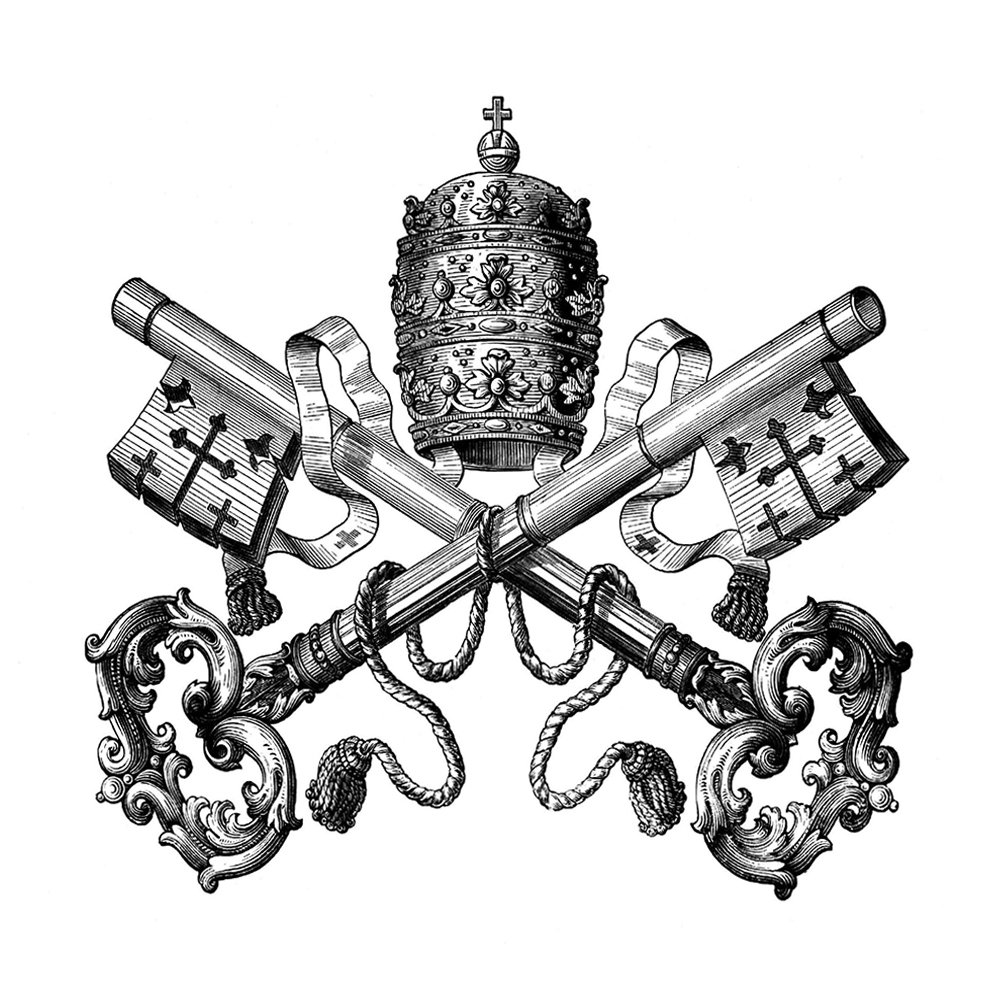
The Church founded by Christ on earth, the Body of Christ on earth, the Catholic Church, is the visible sacrament of salvation offered to all humanity. In it, through the centuries, the voice of the Lord echoes, who called the apostles, instituted the sacraments and entrusted the Church with the mission of teaching, sanctifying and governing in His name.
It is within the Catholic Church that we find apostolic succession, the Eucharist – source and summit of Christian life -, the communion of saints, and the constant presence of the Holy Spirit who guides it in the full truth. Its mission is universal, because, as its name indicates (from the Greek katholikós, which means “universal”), it is sent to all peoples, races and nations, to announce the Gospel to the ends of the earth.
Faithful to Christ’s mandate “Go therefore and make disciples of all nations” (Mt 28:19), the Catholic Church continues to be, throughout the centuries, a sign and instrument of intimate union with God and the unity of the entire human race. In it, we make a pilgrimage towards the definitive Kingdom, sustained by grace, guided by doctrine and strengthened by the sacraments.
The Holy Church founded by Christ himself, our Lord and Redeemer, on the firm stone of Peter (cf. Mt 16:18), is the only and true Church of God, the Mystical Body of Christ, visible and subsisting on earth, universal sacrament of salvation offered to all humanity. “I am the Way, the Truth and the Life; no one comes to the Father except through Me” (John 14:6), and in this eternal Truth the Church remains, keeping intact the deposit of Faith, transmitted by the Apostles.
Christ entrusted to His Apostles the power to bind and loose on earth and in heaven (cf. Mt 16:19; Mt 18:18), establishing the sacred hierarchy of the Church: the episcopate, the presbyterate and the diaconate, to govern, teach and sanctify the people of God. “He who listens to you listens to Me, and whoever despises you despises Me” (Luke 10:16). Thus, the authority of the Church is not human, but divinely instituted, founded on the eternal Word of the Lord and on apostolic succession, guaranteed by the Holy Spirit, who guides it into all truth (cf. Jn 16:13).
Within the Church, God’s grace is communicated through the holy sacraments, which are visible signs of invisible grace (cf. Heb 12:28). The Holy Eucharist stands out, the source and summit of Christian life (cf. SC 47), in which the Body and Blood of Christ are offered to the Father and become spiritual food for the faithful: “Take and eat, this is My Body; drink all of you, this is My Blood” (Mt 26,26-28). In her, we find the strength for holiness, perseverance in faith and intimate union with Christ, our Savior.
The Church is also the guardian of doctrine, teaching with divine authority everything that Christ commanded us. “Keep everything that I have taught you” (Mt 28:20), and “the doctrine that you must teach is that which was handed down by the Apostles” (cf. 2Tm 1:13). Ecclesiastical discipline, established by Councils and the Holy Fathers, preserves the unity of the Faith and protects the flock against heresies and spiritual disorders (cf. 1Tm 4:16).
Faithful to the universal mission that Christ entrusted to His Church, it is sent to all nations, races and peoples to proclaim the Gospel to the ends of the earth (cf. Mt 28:19; Mk 16:15). “Go into all the world and preach the Gospel to every creature” (Mk 16:15). No culture or language escapes the reach of the Church, as she is the only dispenser of salvation: “There is no other name given among men by which we must be saved” (Acts 4:12).
Within the Church, we find the communion of saints, those who have already achieved heavenly glory and intercede for us, and those who are still pilgrims in this world, united in charity and faith (cf. Heb 12:1; Rm 12:5). The Church is, therefore, the assembly of the holy people, led by the Spirit, in which all the faithful participate in the work of Christ and prepare themselves for the eternal Kingdom: “For here in the world we do not have a permanent city, but we seek the one to come” (Heb 13:14).
The sacramental life of the Church is indispensable for salvation. Through Baptism, we are freed from original sin and incorporated into the Body of Christ (cf. Mk 16:16; Rm 6:4). Through Confirmation, we are strengthened by the Holy Spirit to bear witness to Christ (cf. Acts 8:17; 1Cor 12:13).
Through Penance, we receive forgiveness of sins and reconciliation with God (cf. John 20:22-23). Through Marriage, spouses are signs of Christ’s covenant with the Church (cf. Eph 5:25-32). Through the Order, sacred ministers are configured to Christ for the sanctification of the people (cf. Lk 22:19; 1Tm 4:14). Through the Anointing of the Sick, the sick receive comfort and spiritual healing (cf. James 5:14-15).
The Church preaches Christian morality, firm in God’s commandments, keeping the faithful on the path of virtue: “You are the salt of the earth; you are the light of the world” (Mt 5,13-14). She disciplines with authority, corrects with charity and protects the innocent from error. It is a living but rigorous body that leads its children to holiness with firmness and mercy.
The Pope, successor of Peter, is the Vicar of Christ on earth, and the bishops, successors of the Apostles, are the guardians of the Faith and shepherds of the flock. “Feed My flock” (John 21:17). The laity, obedient to the hierarchy and faithful to the teachings of the Church, participates in the work of evangelization and sanctification of the world. Thus, the entire Church is a living, ordered, hierarchical and universal organism, on a constant mission to save souls and lead them to eternal glory.
The Church is not the work of man, but of God, sustained by the Holy Spirit who never abandons it (cf. Mt 28:20; Hb 13:5). It is firm, unshakable and eternal, “the rock on which the house of God stands” (Mt 16:18). The faithful must remain in it faithfully, avoiding heresies and deviations: “Hold on to what you have, so that no one takes your crown” (Rev 3:11). The Catholic Church is, therefore, the safe path to salvation, the sign of the unity of the entire human race and the instrument of divine grace so that all men reach eternal life.
May all people know the truth of the Church, venerate its ministers and participate in the sacraments, so that faith, hope and charity flourish and so that, one day, we can see the heavenly Jerusalem, “where there will be no more death, nor mourning, nor pain” (Rev 21:4). Thus, the Church, firm in its authority, faithful in its mission, and holy in its doctrine, leads all humanity to the only Savior, Jesus Christ, Our Lord.
Supersessionism or Replacement Theology
Every point of traditional Catholic theology on Verus Israel and its implications
1. THE CONCEPT OF VERUS ISRAEL (The True Israel) – IN-DEPTH ANALYSIS
A) Continuity, not Rupture
The early Church did not view Christianity as a “new religion,” but as the prophetic fulfillment of Judaism. The Church Fathers taught:
Saint Augustine: “The New Testament was hidden in the Old; the Old Testament is revealed in the New.”
Saint Justin Martyr (2nd century): In his Dialogue with Trypho, he argues that Christians are the “true spiritual Israel,” for they fulfill the prophecies that Rabbinic Judaism rejected.
B) The Two Covenants Contrasted
Old Covenant | New Covenant |
|---|---|
Blood of animals (bulls, goats) | Blood of Christ (unique and perfect) |
Circumcision of the flesh | Circumcision of the heart (baptism) |
Temple of stone in Jerusalem | Body of Christ (Church) as Temple |
Levitical priesthood (hereditary) | Priesthood of Christ according to Melchizedek (eternal) |
Law written on tablets of stone | Law written on the heart by the Holy Spirit |
Territorial promise (Land of Canaan) | Heavenly promise (Kingdom of Heaven) |
C) Galatians 6:16 – Key Text
“And as many as walk according to this rule, peace be on them, and mercy, and upon the Israel of God.”
Traditional Catholic interpretation:
The “Israel of God” does NOT refer to the ethnic Jewish people.
It refers to Christians (converted Jews + Gentiles) who follow the faith of Abraham through Christ.
The Church is the continuation of faithful Israel (the prophesied “remnant”).
2. DEVELOPED BIBLICAL FOUNDATIONS
A) Matthew 21:43 – The Transfer of the Kingdom
Context: Jesus is in the parable of the wicked husbandmen (who kill the owner’s son).
“Therefore say I unto you, The kingdom of God shall be taken from you, and given to a nation bringing forth the fruits thereof.”
Traditional interpretation:
The leadership of Israel (priests, Pharisees) rejected the Messiah.
Consequence: The Kingdom is transferred to the Church (composed of faithful Jews + Gentiles).
The destruction of the Temple in 70 A.D. is seen as the divine seal of this transfer.
B) Romans 9-11 – The Olive Tree and the Branches
Saint Paul uses the image of an olive tree:
Root = Patriarchs (Abraham, Isaac, Jacob)
Trunk = Israel
Natural branches cut off = Unbelieving Jews
Grafted branches = Converted Gentiles
Romans 11:17-24:
“And if some of the branches be broken off, and thou, being a wild olive tree, wert grafted in among them… boast not against the branches.”
Traditional view:
The Church does NOT replace the root (which is holy), but the unfaithful branches were cut off.
The Gentiles were grafted into the same olive tree (they did not create a new olive tree).
Ethnic Israel can return (Romans 11:23), but only through conversion to Christ.
C) Hebrews – The Superiority of the New Covenant
Hebrews teaches: | Conclusion: |
|---|---|
Christ > Moses (3:3) | The Mosaic Law is inferior |
Christ > Aaron (5:4-6) | The Levitical priesthood is obsolete |
New Covenant > Old (8:6-13) | The Old is “obsolete and ready to vanish away” |
Blood of Christ > blood of animals (9:12-14) | Temple sacrifices are useless |
Hebrews 8:13:
“In that he saith, A new covenant, he hath made the first old. Now that which decayeth and waxeth old is ready to vanish away.”
Traditional implication:
Rabbinic Judaism post-70 A.D. (without Temple, without sacrifices) is a religion without salvific validity.
The only legitimate continuity of biblical Israel is the Catholic Church.
3. THE CHURCH AS “SPIRITUAL ISRAEL” VS. THE MODERN STATE OF ISRAEL
A) Rejection of Theological Zionism (In-Depth)
What is Theological Zionism?
A movement (mainly Protestant evangelical) that views the founding of the State of Israel in 1948 as prophetic fulfillment.
Based on Old Testament prophecies about the “restoration of Israel.”
Why traditional Catholics reject this:
The prophecies were fulfilled in Christ:
Isaiah 11 (restoration of Israel) → Fulfilled in the universal Church
Ezekiel 37 (valley of dry bones) → Spiritual resurrection through baptism
Amos 9:11-15 (rebuilding of Israel) → Cited in Acts 15:16-17 as the conversion of the Gentiles
The State of Israel is secular:
Founded by secular socialists/Zionists (Ben-Gurion was an atheist)
Does not recognize Jesus as Messiah
Therefore, it cannot be the “prophetic restoration”
Expecting an earthly kingdom is millenarian heresy:
The Church condemned Millenarianism (expecting an earthly kingdom of Christ for 1000 years)
Saint Augustine taught that Christ’s Kingdom is spiritual (the Church), not political
B) The Star of Remphan and the Symbols (Developed)
Why traditionalists connect the Star of David with occultism:
Biblical absence:
Neither David nor Solomon used the hexagram as an official symbol
The Menorah (7-branched candelabrum) was the biblical symbol of Israel
The hexagram appears in occultist contexts (Kabbalah, alchemy, magic)
Late adoption:
Became a Jewish symbol mainly in the 17th-19th centuries
Called the “Seal of Solomon” in magical traditions (medieval grimoires)
Used in Kabbalah as a symbol of union between divine and earthly
Acts 7:43 and astral symbolism:
“Yea, ye took up the tabernacle of Moloch, and the star of your god Remphan”Traditionalist arguments:
The hexagram was used in Mesopotamian astrological cults
Saturn (Remphan/Chiun) was represented by geometric symbols
Rabbinic Judaism, in adopting the hexagram, would have “returned” to the apostasy denounced by Stephen
Talmud and Kabbalah:
Traditionalists view the Talmud as anti-Christian (contains blasphemies against Jesus)
Kabbalah is considered Jewish Gnosticism, incompatible with Catholic faith
The star is seen as a Talmudic/Kabbalistic symbol, not Davidic
4. VATICAN II AND THE “NEW ORIENTATION” (In-Depth Traditionalist Critique)
A) What Changed with Nostra Aetate (1965)
Before Vatican II:
Good Friday Liturgy: “Let us pray also for the perfidious Jews” (perfidious = unfaithful)
Clear teaching: Jews who reject Christ are outside of salvation
Conversion of the Jews was a missionary priority
After Vatican II:
Nostra Aetate §4: “God has not withdrawn His gifts nor His call from Israel”
John Paul II (1986): Jews are “our elder brothers in the faith”
Benedict XVI (2008): “The Old Covenant was never revoked”
Francis: Promotes “dialogue” without insisting on conversion
B) Why Traditionalists Reject This
Contradicts 2000 years of teaching:
Council of Florence (1442): Declared that Jews, heretics, and schismatics go to hell unless they unite with the Church before death
Saint Peter (Acts 4:12): “Neither is there salvation in any other name”
Traditionalists: “How can the Old Covenant ‘never have been revoked’ if Hebrews 8:13 says it is obsolete?”
The concept of “two parallel Covenants”:
Some post-Vatican II theologians suggest that Jews can be saved through the Old Covenant
Traditionalists call this heresy, as it denies the necessity of Christ
The abandonment of the mission of conversion:
Before: The Church prayed and worked for the conversion of the Jews
Now: It is seen as “offensive” to evangelize Jews
Traditionalists: “Leaving someone in error out of ‘respect’ is disguised hatred, not charity”
5. EXPANDED LOGICAL SUMMARY
Israel of God = The Catholic Church
Why:
Abraham is the “father of many nations” (Genesis 17:5), not just of the Jews
The promise made to Abraham was about “blessing to all nations” (Genesis 12:3)
This blessing is Christ (Galatians 3:16)
Therefore, whoever is “in Christ” (through faith and baptism) is the true heir
The Church, composed of Jews and Gentiles united in Christ, is the fulfillment of God’s plan for Israel
Modern Israel = A Secular Nation
Why:
Founded without reference to Jesus Christ
Majority of founders were atheists or agnostics
Uses symbols of dubious origin (hexagram)
Follows the Talmud (which denies Christ) instead of fulfilled Scriptures
Therefore, it cannot be the prophetic restoration of the “Israel of God”
The Star = Talmudic/Kabbalistic Symbol
Why:
Does not appear in the Bible as a symbol of David
Appears in medieval occultist traditions
Adopted late by Rabbinic Judaism
Possible connection with the “star of Remphan” (condemned astral cult)
Therefore, it is not a “holy” symbol, but potentially of idolatrous origin
FINAL CONCLUSION
The Church did not “replace” Israel — it IS the true Israel, purified and universalized in Christ.
Ethnic Jews who reject Christ are “cut off from the olive tree” (Rom 11), but can return through conversion.
The modern State of Israel has no theological significance; it is simply a secular nation among others.
Vatican II betrayed perennial doctrine by suggesting that Jews can be saved without Christ — this is seen as apostasy or at minimum grave error.
The Church’s mission continues to be to convert all, including Jews, to the only ark of salvation: the Holy Roman Catholic Apostolic Church.
“Extra Ecclesiam nulla salus” — Outside the Church there is no salvation
(Traditional Catholic axiom, reaffirmed by the Popes up to Pius XII)