Paul V
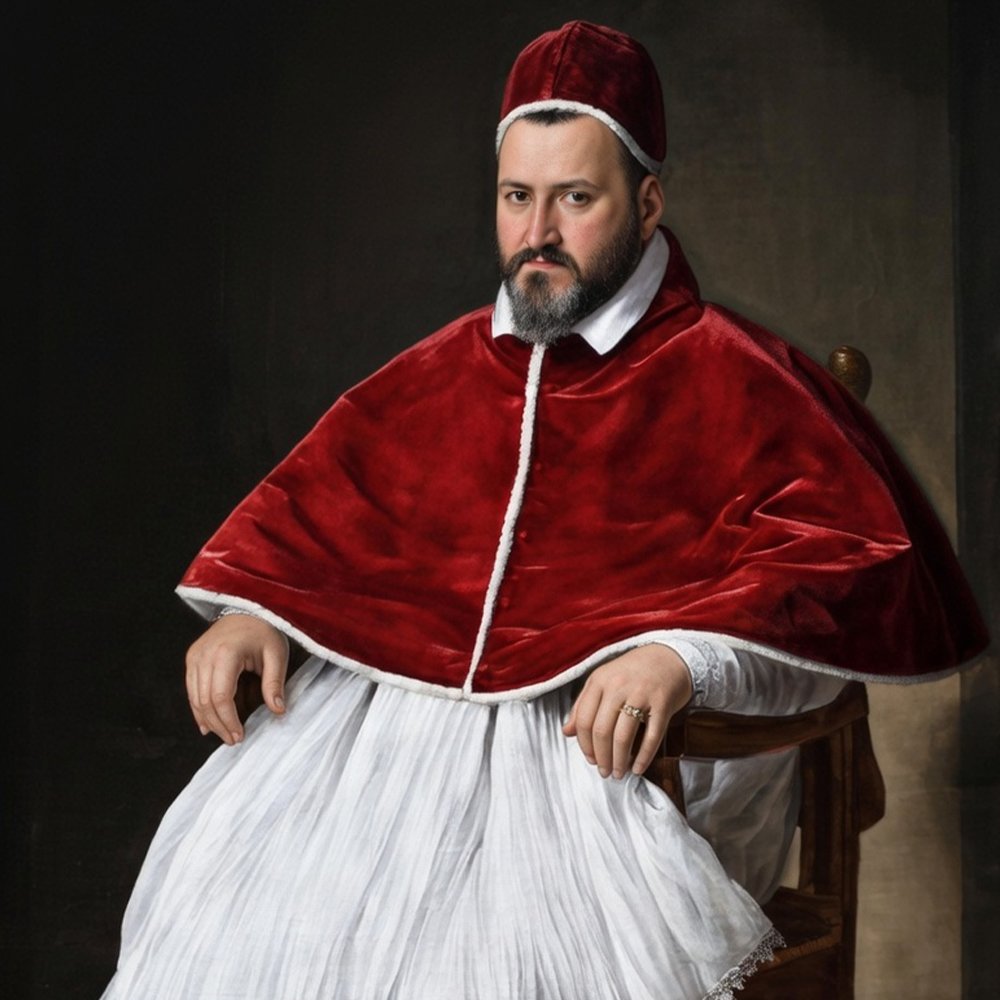
Paul V (1605-1621)
BIOGRAPHICAL DATA
Birth name: Camillo Borghese
Birth: September 17, 1552, Rome, Papal States
Papal election: May 16, 1605
Coronation: May 29, 1605
Pontificate: May 16, 1605 – January 28, 1621 (15 years, 8 months, 12 days)
Death: January 28, 1621, Rome (68 years old)
Burial: Borghese Chapel, Basilica of Santa Maria Maggiore, Rome
Religious order: Secular clergy (diocesan priest)
Papal motto: “Absit nisi in te gloriari” (“Far be it to glory save in Thee”)
Cognome: “Pope of the Interdict,” “The Canonist Pope,” “Builder Pope,” “Patron of the Arts”
NOTE: His pontificate was marked by the Venetian Interdict crisis, the completion of St. Peter’s Basilica, the first Galileo controversy, and the rise of the Borghese family through systematic nepotism. His reign spanned fifteen years, making it one of the longest of the 17th century.
EARLY LIFE AND FORMATION
Borghese Family Origins
The Borghese of Siena:
- Ancient noble family originally from Siena, Tuscany
- Claimed kinship with St. Catherine of Siena (1347-1380)
- Family endured endless political disturbances in Siena (“made life in Siena unbearable”)
- Relocated to Rome in the 16th century, establishing themselves in the papal city
Parents:
- Marcantonio Borghese: father, lawyer and Sienese patrician
- Flaminia Astalli: mother, Roman noblewoman
- Camillo: eldest of seven sons
- Family circumstances: comfortable nobility, legal tradition
Birth and Childhood:
- Born: September 17, 1552 (some sources give 1550, but 1552 is more widely accepted)
- Location: Rome
- Baptism: likely in Roman parish church
- Early education: humanistic formation, Latin, rhetoric
- Family deeply connected to legal and ecclesiastical circles
Education – Legal Formation
University of Perugia:
- Studied jurisprudence (canon and civil law)
- Perugia: renowned for legal studies in papal states
- Formative years: developed analytical, legalistic mindset
University of Padua:
- Continued legal studies
- Padua: one of Europe’s great universities
- Venetian territory – ironic given later conflict!
- Graduated: Doctor of Laws (both canon and civil – in utroque iure)
Legal Scholar:
- Became “a canonist of marked ability”
- Reputation: meticulous, learned, precise
- Devoted himself to law books throughout life
- Legal training would define his entire papacy
Early Ecclesiastical Career
Ordination to Priesthood:
- Date: October 20, 1577
- Age: 25 years old
- Ordained in Rome
- Entered Roman Curia after ordination
Referendary of the Apostolic Signatura:
- Position: judge in papal tribunal
- Responsibilities: reviewing legal cases
- Years: late 1570s-1580s
- Reputation building: competent jurist, hardworking
Vice-Legate in Bologna (1580s-1590s):
- Administrative position in second city of Papal States
- Gained experience in governance
- Developed diplomatic skills
Mission to Spain (1593-1595):
- Sent by Pope Clement VIII as papal envoy
- Mission: diplomatic representation to Spanish court
- Successfully completed mission
- Gained favor with Clement VIII
- Outcome: rewarded with cardinalate upon return
Cardinalate (1596-1605)
Created Cardinal (June 5, 1596):
- Elevated by Pope Clement VIII (1592-1605)
- Age: 44 years old
- Title: Cardinal-Priest of Sant’Eusebio
- Reason: reward for successful Spanish mission + legal competence
Titular Churches (in order):
- Sant’Eusebio (1596-1599)
- Santi Giovanni e Paolo (1599-1602)
- San Crisogono (1602-1605)
Cardinal Vicar of Rome (1603-1605):
- Appointed by Clement VIII
- Position: deputy to pope for Diocese of Rome
- Responsibilities: oversight of clergy, parishes, religious houses
- Administrative experience: daily governance of Rome
- Secretary: Niccolò Alamanni
Bishop of Jesi (1597-1599):
- Appointed: 1597 by Clement VIII
- Consecrated bishop: May 27, 1597
- Consecrators:
- Cardinal Silvio Savelli (former Latin Patriarch of Constantinople)
- Cardinal Francesco Cornaro (former Bishop of Treviso)
- Retained diocese until 1599
- Pastoral experience: brief but formative
Character as Cardinal:
- Held aloof from all parties and factions
- Devoted spare time to law books
- Neutral in Roman factional disputes
- Reputation: learned, impartial, reliable
- “Marked ability” as canonist
Relationship with Clement VIII:
- Trusted collaborator
- Rewarded for Spanish mission
- Gradual advancement through curial ranks
- Died: Clement VIII (March 5, 1605)
The Year of Three Popes (1605)
Death of Clement VIII (March 5, 1605):
- Conclave: March 14 – April 1, 1605
- Elected: Pope Leo XI (Alessandro de’ Medici)
- Leo XI: April 1, 1605 – April 27, 1605
- ONLY 27 DAYS as pope!
- Died suddenly
Second Conclave of 1605 (May 8-16, 1605):
- Borghese: 52 years old
- Major candidates:
- Caesar Baronius (historian, Oratorian)
- Roberto Bellarmine, SJ (theologian, future saint)
- Factions: Borghese seen as neutral compromise
CONCLAVE OF 1605 – ELECTION
Context: Death of Leo XI
Death of Leo XI (April 27, 1605):
- Pontificate: 27 days (one of shortest in history)
- College of Cardinals: 69 members, 60 electors participated
- Need: stable, experienced pope after brief reign
Situation of the Church (1605):
- Post-Tridentine reform: ongoing implementation
- Catholic powers: Spain dominant, France recovering
- Venice: tensions over ecclesiastical jurisdiction growing
- England: recently under James I (1603-), Gunpowder Plot brewing
- Galileo: rising scientific reputation
- Protestant Reformation: well-established in northern Europe
The Conclave – One Week
Dates: May 8-16, 1605
Duration: 8 days
Factions:
- Spanish Faction:
- Supported by King Philip III of Spain
- Wanted pro-Spanish pope
- Candidate: various
- French Faction:
- Smaller, less influential
- Opposed Spanish dominance
- Italian Neutrals:
- Cardinals not aligned with either crown
- Borghese among them
- Clementine Cardinals:
- Created by Clement VIII
- Seeking continuity
Leading Candidates:
- Cardinal Caesar Baronius (67):
- Renowned church historian
- Oratorian, disciple of St. Philip Neri
- Supported by reform-minded cardinals
- But: considered too strict, uncompromising?
- Cardinal Roberto Bellarmine, SJ (63):
- Greatest theologian of Counter-Reformation
- Jesuit, learned, pious
- But: Jesuits controversial in some quarters
- Considered “too Spanish” by some
- Cardinal Alessandro de’ Medici (70):
- Just been pope as Leo XI!
- Recently deceased – not an option
Why Borghese Won:
- Neutrality: Held aloof from factions
- Legal reputation: Canonist of marked ability
- Experience: Cardinal Vicar, former bishop, diplomat
- Age (52): Old enough for experience, young enough for stamina
- Health: Robust
- Personality: Stern but predictable
- No obligations: “Ascended the papal throne without engagement or obligation of any sort”
Election (May 16, 1605):
- Scrutiny: received sufficient votes
- Accepted: probably with reluctance (customary)
- Chose name: Paul V
- Honored Pope Paul III? Paul IV? (likely general tribute to apostolic name)
- “In consequence, on the death of Leo XI, all eyes were centred on him”
Coronation (May 29, 1605):
- St. Peter’s Basilica
- Ceremony: traditional, solemn
- Later possession of St. John Lateran
PONTIFICATE (1605-1621) – LAWYER POPE
Character and Governing Style
Personality:
- Stern and unyielding
- Lawyer rather than diplomat
- Defended privileges of Church to utmost
- Knew nothing of compromises
- Ruled Church from standpoint of decretals, not diplomacy
- Conceived duty: maintain inviolate every right claimed by predecessors
Legal Mindset:
- Canon law: absolute norm
- Church rights: non-negotiable
- Precedent: binding
- Compromise: weakness
- This character: would define entire pontificate
First Acts – Episcopal Residence
First Public Act (May-June 1605):
- Sent home to their sees: all prelates and cardinals sojourning in Rome
- Basis: Council of Trent had declared it a grave sin for bishop to be absentee
- Even those engaged in Roman Curia business: no exception
- “That he was engaged in Rome doing the business of the Holy See made no difference”
- Message: reform begins with bishops present in dioceses
Early Conflicts – Italian States
Disputes with Italian Cities:
- Savoy, Genoa, Tuscany, Naples: disputes over ecclesiastical jurisdiction
- Issues: privilegium fori (right of clergy to be judged in church courts)
- Other issues: taxation of clergy, church property
- Most states: wishing to avoid rupture, yielded
- But: one state resisted – VENICE
VENETIAN INTERDICT CRISIS (1606-1607)
Background – Venetian Policy
Venetian Republic:
- Proud, independent maritime republic
- Strong tradition of resisting papal authority
- Patrician class: jealous of state sovereignty
- Territories: mainland (Terraferma) and maritime empire
Anti-Clerical Legislation (1605):
Two laws passed by Venetian Senate:
- Forbidding alienation of real property in favor of clergy
- Preventing Church from acquiring more land
- Economic control over ecclesiastical holdings
- Demanding civil approval for building new churches
- State control over ecclesiastical construction
- Prevention of unauthorized religious expansion
The Trigger – Two Priests Arrested:
- Two clerics: charged with “cruelty, wholesale poisoning, murder and licentiousness”
- Arrested by Venetian authorities
- Imprisoned in Venetian dungeons
- Tried in civil courts
- Found guilty, committed to prison
Paul V’s Demand (Christmas 1605):
- Insisted: priests be released to ecclesiastical court
- Basis: privilegium fori – clergy immune from secular jurisdiction
- Threatened: interdict if not obeyed
- Presented to Senate: Christmas 1605
The Crisis Deepens
Venetian Response:
- Refused to release priests
- Refused to repeal laws
- Defended right to judge all subjects, including clergy
- Appointed canon lawyer to defend position: Fra Paolo Sarpi
Paolo Sarpi (1552-1623):
- Servite friar (Order of Servites)
- Brilliant canon lawyer
- “Man of wonderful literary skill”
- “Sworn enemy of the Roman Court”
- Venetian government: named him “counsellor in theology and canon law”
- Extended dispute to general principles: defining separate secular and ecclesiastical spheres
Sarpi’s Argument:
- Pope’s claim to intermeddle in civil matters: usurpation
- Republic recognized no authority but God in civil matters
- History supported Venetian position
- Advised government: refuse to receive interdict
Excommunication and Interdict
April 17, 1606:
- Pope Paul V: pronounced sentence of excommunication against:
- Doge (Leonardo Donà)
- Senate
- Government of Venice collectively
- Imposed: interdict on city of Venice
- Allowed: very short space for submission
The Interdict:
- Forbade: public Masses, sacraments, church services
- Aim: pressure population to demand submission
- Expectation: clergy would enforce
- Reality: completely different
Clergy Response:
- The Jesuits, Theatines, and Capuchins: obeyed pope, expelled from Venice
- All other clergy (secular and regular): sided with government
- Continued holding services despite interdict
- Masses celebrated normally
- Festival of Corpus Christi: celebrated with unusual splendor
- Sarpi: said Mass for first time in years
Effect:
- Interdict: completely defied
- Papal authority: openly resisted
- Schism: lasted about a year
- Paul V: humiliated
Mediation and Resolution
International Intervention:
- France and Spain: mediated
- Fear: Venice breaking with Rome entirely
- Risk: civil war in Italy
- Both powers: pressured for compromise
The Compromise (March 22, 1607):
- Republic refused to repeal obnoxious laws openly
- But: promised “to conduct itself with its accustomed piety”
- Vague formula: face-saving for both sides
- Paul V: forced to be content with obscure words
- Removed censures: March 22, 1607
- Theatines and Capuchins: permitted to return
- Jesuits: exception made – remained banned
Aftermath – Sarpi Attack:
- Venetian Republic rewarded Sarpi: state counsellor in jurisprudence
- Granted: liberty of access to state archives
- Infuriated Pope Paul V
- September 1607: assassination attempt on Sarpi
- Stabbed three times with stiletto (some sources say fifteen times )
- Sarpi: miraculously recovered
- Assassins: found refuge in Papal States
- Papal involvement: widely suspected
Significance of Venetian Crisis:
- “The effect of interdicts was dead”
- Papacy never again used interdict against sovereign state
- Paul V’s legalistic approach: failed against political reality
- Sarpi: became Venetian hero
- Jesuits: permanently embittered against Venice
RELATIONS WITH ENGLAND
James I and the Oath of Allegiance
Context:
- James I: succeeded Elizabeth I (1603)
- Initially: hoped for more tolerant policy toward Catholics
- But: Gunpowder Plot (November 5, 1605) – Catholic conspiracy to blow up Parliament and king
- Plot discovered: Guy Fawkes arrested
- Result: fierce anti-Catholic reaction
Paul V’s Letter to James I (July 9, 1606):
- Congratulated James on accession (three years late!)
- Referred with grief: to plot against king’s life
- Pleaded: not make innocent Catholics suffer for crime of few
- Promised: exhort all Catholics to be submissive and loyal
- Condition: “in all things not opposed to the honour of God”
The Oath of Allegiance:
- Parliament required: oath of allegiance to king
- Contained clauses:
- Denial of pope’s power to depose king
- Denial of pope’s power to release subjects from obedience
- For Catholics: impossible to swear in conscience
Papal Condemnation:
- First Brief (September 22, 1606): solemnly condemned oath
- Second Brief (August 23, 1607): extended, reinforced condemnation
- Result: divided English Catholics
- Archpriest George Blackwell: took oath, condemned by pope
- Cardinal Bellarmine: wrote reproaching Blackwell
- Catholic community: split between loyalists and papists
Consequences:
- James I: wrote theological essays defending oath (1608)
- Bellarmine: exchanged pamphlets with king
- English Catholics: suffered increased persecution
- Papal diplomacy: ineffective
- “Paul V’s hard-edged Catholic diplomacy cut the ground from under moderate Catholics in England”
Enduring Legacy:
- Effigy of Pope Paul V: still burnt annually at Lewes Bonfire celebrations
- Gunpowder Plot: permanently linked to papacy in English popular memory
GALILEO AND THE COPERNICAN CONTROVERSY (1616)
The First Galileo Case
Background:
- Galileo Galilei (1564-1642): renowned scientist
- Supported Copernican heliocentric theory: sun at center, earth moves
- Contrast with Ptolemaic geocentric system: earth at center
- Copernicus’s De Revolutionibus (1543): not formally condemned
Paul V’s Relationship with Galileo:
- 1611: Paul V honored Galileo as member of papal Accademia dei Lincei
- Supported his discoveries
- Initially: favorable attitude
The Controversy Develops:
- Dominican theologians: attacked Copernicanism as contrary to Scripture
- Galileo: defended compatibility of science and faith
- Pauline passage: “sun stood still” (Joshua) – implied sun moves
- Theological authorities: increasingly concerned
The 1616 Intervention:
- Paul V instructed Cardinal Roberto Bellarmine, SJ to act
- Bellarmine: leading theologian of Counter-Reformation
- Meeting: Bellarmine warned Galileo
The Warning:
- Not to hold or defend heliocentric ideas of Copernicus
- Debate: whether also forbidden to teach in any way
- Bellarmine’s certificate to Galileo (later crucial at 1633 trial):
- Stated only: could not defend or hold
- Allowed: use as theoretical device
- Enabled Galileo to defend against rumors
Paul V’s Assurance to Galileo:
- Same year (1616): Paul V assured Galileo
- Safe from persecution: so long as pope should live
- Personal protection: from legal consequences
Condemnation of Copernicus:
- March 5, 1616: Congregation of the Index
- Decreed: Copernicus’s De Revolutionibus suspended until corrected
- Placed on Index of Forbidden Books
- Action taken under Paul V’s authority
Significance:
- First papal intervention in Galileo controversy
- Set stage for 1633 trial under Urban VIII
- Paul V: personally protected Galileo while condemning theory
- Complex legacy: science and faith tension
Theological Approach
Doctrinal Moderation:
- Despite Galileo action: “in doctrinal matters he was surprisingly undogmatic”
- Approved: use of vernacular in liturgy for China
- Focused: on jurisdiction, not theology
Immaculate Conception:
- 1618: decree published in Lima, Peru
- “Decreto de Nuestro Sanctissimo Padre el Papa Paulo V. en favor dela Immaculada Concepción”
- Promoted devotion to Immaculate Conception
MISSIONS AND RELIGIOUS ORDERS
Support for Missions
Latin America:
- Encouraged missions notably in Latin America
- Supported evangelization of indigenous peoples
- Confirmed new congregations and brotherhoods
Japan:
- November 1615: welcomed embassy of Japanese samurai Hasekura Tsunenaga in Rome
- Hasekura: presented letter from Date Masamune requesting:
- Trade treaty between Japan and New Spain
- Christian missionaries to Japan
- Paul V: agreed to dispatch missionaries
- Left trade decision: to King of Spain
Mission Policy:
- Balanced: papal authority vs. colonial patronage (Padroado)
- Supported expansion of Catholicism globally
- Limited resources: but consistent encouragement
Approval of Religious Institutes
Oratorians (1613):
- Confirmed congregation of secular priests founded by St. Philip Neri
- Known as: Oratorians
- Significant: Philip Neri had died 1595, already beatified
Other Congregations:
- Confirmed many new institutes
- Focus: education, charity
- “Large number of new institutes for education and charity added new lustre to religion”
Liturgical Reform
Rituale Romanum (1612-1614):
- Authorized new version of Rituale Romanum
- One of Roman rite’s liturgical books
- Promulgated: June 17, 1614
- Contained: rites for sacraments, blessings, processions
- Standardized liturgical practice
Vatican Archives:
- Founded privy Vatican archives
- To preserve papal documents
- Legacy: invaluable for historical research
CANONIZATIONS AND BEATIFICATIONS
Canonizations
St. Charles Borromeo (November 1, 1610):
- Archbishop of Milan (1538-1584)
- Cardinal-nephew of Pius IV
- Key figure in Tridentine reform
- Model bishop after Council of Trent
- Canonization: major event, celebrated with pomp
St. Frances of Rome (May 29, 1608):
- Roman noblewoman (1384-1440)
- Benedictine oblate, founder of Olivetan Oblates
- Visionary, wife, mother
- Local Roman saint – popular with Romans
St. Pompejanus (1615):
- Details sparse in sources
- Confirmation of earlier cult
Cardinal Albert de Louvain (August 9, 1621):
- Bishop of Liège, martyr (d. 1192)
- Canonized: just after Paul V’s death (briefs issued earlier)
Beatifications
Major Beatifications:
- St. Ignatius Loyola (July 27, 1609): founder of Jesuits
- St. Francis Xavier (October 25, 1619): Jesuit missionary to Asia
- St. Philip Neri (May 11, 1615): founder of Oratorians
- St. Teresa of Ávila (April 24, 1614): Carmelite mystic, reformer
- St. Louis Bertrand (1608): Dominican missionary
- St. Thomas of Villanova (1618): Augustinian bishop
- St. Isidore of Madrid (1619): farmworker, patron of peasants
Significance:
- All beatified: later canonized by successors
- Counter-Reformation saints: Jesuits, mystics, reformers
- Paul V: prepared ground for future canonizations
NEPOTISM – THE BORGHESE RISE
The Borghese Family
Paul V’s Approach to Family:
- “Paul V was no more free from nepotism than the other pontiffs of that century”
- “His devotion to the interests of his family exceeded all bounds, and they became enormously wealthy”
- “Guilty of nepotism”
- “Responsible for his family’s inordinate wealth”
Defense (Catholic Encyclopedia):
- “It must be said that they were capable men of blameless lives”
- “Devoted their large revenues to the embellishment of Rome”
- Typical 17th-century justification
Cardinal Scipione Borghese (1577-1633)
Relationship: Nephew (son of Paul’s sister Ortensia)
Created Cardinal: Immediately after Paul V’s election (1605)
Age at Appointment: 28 years old
Role:
- Wielded enormous power on pope’s behalf
- Consolidated rise of Borghese family
- Effectively: papal secretary of state
- Managed papal patronage, diplomacy, finances
Art Patronage:
- One of greatest art collectors of era
- Patron of: Caravaggio, Bernini, Reni
- Built: Villa Borghese (now Galleria Borghese)
- Collected antiquities, paintings
- Paul V began collection
Legacy:
- Villa Borghese: now public museum
- Art collection: among world’s finest
- Reputation: capable, cultured, but enriched by nepotism
Marcantonio Borghese (1601-1658)
Relationship: Nephew (son of another sibling)
Favors:
- Created Prince of Vivaro
- Received extensive lands, titles
- Married into Roman nobility
- Founded Roman line of Borghese princes
Later Generations:
- Borghese family: became one of Rome’s wealthiest
- Prince Camillo Borghese: married Napoleon’s sister Pauline (1803)
- Villa Borghese, Palazzo Borghese: family monuments
Other Family Members
Brothers:
- Giovanni Battista Borghese: governor of Borgo, Castel Sant’Angelo
- Francesco Borghese: general of Church
Nephews:
- Multiple: given positions, benefices
- Systematic family advancement
Assessment of Borghese Nepotism
Compared to Contemporaries:
- Less excessive than some (Paul III, Urban VIII later)
- More systematic than others
- Typical of Counter-Reformation papacy
Defense:
- Scipione Borghese: genuinely capable, cultured
- Family funds: used for art, architecture, public works
- Enriched Rome as well as Borghese
Criticism:
- Diverted Church resources to family
- Created noble dynasty at Church expense
- “Wasted funds needed for more crucial purposes”
- Contradicted Tridentine reform ideals
PATRONAGE OF ARTS AND ARCHITECTURE
Completion of St. Peter’s Basilica
The Great Project:
- St. Peter’s: under construction for over a century
- Begun under Julius II (1503-1513)
- Architects: Bramante, Raphael, Michelangelo, Maderno
- Paul V: honor of putting finishing touches
Carlo Maderno (1556-1629):
- Appointed architect: 1603 under Clement VIII
- Paul V: continued, accelerated work
- Completed nave
- Built façade (1607-1612)
- Extended building toward piazza
The Façade:
- Inscription: “PAULUS V BURGHESIUS ROMANUS PONT. MAX. AN. MDCXII”
- Proudly proclaims: Roman, Borghese, builder
- “Although proud to call himself, as we read on the façade of St. Peter’s and on his epitaph, a Roman”
- Completed: 1612
- Massive scale: 115 meters wide, 45 meters high
Consecration:
- November 18, 1626 (under Urban VIII)
- But Paul V: saw completion of main structure
Vatican Library and Archives
Vatican Library:
- Enriched significantly
- Added manuscripts, books
- Improved facilities
Vatican Archives (Privy):
- Founded: separate archival institution
- Preserved papal documents
- Now: Vatican Secret Archives (renamed Vatican Apostolic Archive)
Roman Aqueducts – Acqua Paola
Restoration of Aqua Traiana:
- Ancient Roman aqueduct built by Emperor Trajan (109 AD)
- Brought water from Lake Bracciano to Rome
- Had fallen into disrepair
The Acqua Paola (1612):
- Named after Paul V: Acqua Paola
- Materials: used stone from demolition of Forum of Nerva
- Monumental fountain: on Janiculum Hill
- Inscription: celebrates Paul V as restorer
- Brought water to Trastevere and Borgo districts
Significance:
- Practical: provided clean water to growing districts
- Symbolic: pope as Roman emperor, restorer of ancient glory
- Artistic: fountain designed by Giovanni Fontana, Flaminio Ponzio
Other Architectural Projects
Borghese Chapel, Santa Maria Maggiore:
- Built: Cappella Paolina (Borghese Chapel)
- Burial place: Paul V himself
- “Magnificent Borghese chapel in St. Mary Major’s, where his monument is universally admired”
- Richly decorated with marbles, frescoes, sculpture
Quirinal Palace:
- Enlarged
- Summer papal residence
- Added gardens, buildings
Vatican Palace:
- Enlarged
- Improved apartments, offices
Villa Borghese:
- Began construction
- Family villa on Pincian Hill
- Surrounded by extensive gardens
- Now: public park, art museum
Artistic Patronage
Guido Reni (1575-1642):
- Paul V encouraged him
- Bolognese painter, Baroque master
- Commissioned works for Vatican, Borghese
Caravaggio (1571-1610):
- Scipione Borghese: major patron
- Collected Caravaggio’s works
- Death of the Virgin, Madonna of the Pilgrims, others
- Paul V: indirectly supported through nephew
Bernini (1598-1680):
- Young Gian Lorenzo: began career under Paul V
- Borghese patronage: crucial for early development
- Later: greatest artist of Roman Baroque
General Policy:
- “Excessive fondness for display”
- “Spectacular patron of the arts and of building”
- Wasted funds: “needed for more crucial purposes”
- But: transformed Rome into Baroque city
FOREIGN POLICY AND THIRTY YEARS’ WAR
Balance of Power
Catholic Powers:
- Spain: Habsburg, dominant in Italy
- France: Bourbon, recovering from religious wars
- Austria: Habsburg, Holy Roman Empire
Paul V’s Policy:
- Endeavored to maintain peace between Habsburgs and France
- Politically cautious after Venetian humiliation
- Avoided open alignment
Thirty Years’ War (1618-1648)
Origins:
- Defenestration of Prague (May 23, 1618)
- Bohemian revolt against Habsburg rule
- Spread: German states, eventually all Europe
Paul V’s Response:
- “When in 1618 hostility between German Catholics and Protestants caused fighting that developed into the Thirty Years’ War, Paul gave no support to the Catholic powers”
- Fear: open breach of Peace of Augsburg
- Concern: Habsburg domination of Italy if they won
- Cautious neutrality
Battle of White Mountain (November 8, 1620):
- Catholic victory: Imperial forces defeated Bohemians
- End of “winter-king” (Frederick V of Palatinate)
- Paul V: survived to hear of victory
- Died: two months later
Assessment:
- Missed opportunity? Possibly
- Cautious policy: preserved papal neutrality
- But: reduced papal influence in war’s outcome
Other Diplomatic Relations
Crusade Against Turks:
- Considered: another crusade
- But: without success
- Ottoman Empire: still powerful in Mediterranean
France – Gallicanism:
- Condemnation of Gallicanism (1613)
- Angered France
- Provoked declaration of States General (1614): king held crown from God alone
Austria:
- Efforts: healing disputes among Catholics
- Moral and material aid to Catholic Union
- Limited: by neutrality policy
Spain:
- Close relations: through Spanish faction in College
- But: not subservient
ADMINISTRATION AND GOVERNANCE
Internal Church Affairs
Reform Implementation:
- Continued Tridentine reforms
- Enforced episcopal residence (first act)
- Supported seminary formation
Papal States Governance:
- Competent administration
- Legal training: applied to governance
- Generally: effective ruler
Economic Policy:
- Established Banco di Santo Spirito (1605)
- Papal bank: still exists today
- Financial institution for Church needs
Consistories and Cardinals
Ten Consistories:
- Created: 60 cardinals during pontificate
- Major creations:
- Scipione Borghese (1605): nephew
- Maffeo Barberini (1606): future Pope Urban VIII
- Alessandro Ludovisi (1616): future Pope Gregory XV
- Two future popes: Barberini, Ludovisi
Policy on Cardinals:
- Mixed: merit and nepotism
- Promoted capable men (Bellarmine, Baronius already cardinals)
- But family: always favored
Death and Succession
Final Illness:
- January 1621: series of strokes
- Location: Quirinal Palace
- Gradual decline
- Received Last Sacraments
Death:
- January 28, 1621
- Age: 68 years, 4 months
- Cause: stroke (apoplexy)
- Surrounded by: cardinals, family, servants
Last Words:
- Not recorded precisely
- Likely: prayers, commendation of soul
Reaction:
- Rome: mourning, but expected
- Borghese family: grief, prepared for succession
- Cardinals: immediately began conclave preparations
- Successor: Pope Gregory XV (Alessandro Ludovisi) – elected February 9, 1621
Burial:
- Location: Borghese Chapel, Basilica of Santa Maria Maggiore
- Monument: “universally admired”
- Inscription: proudly proclaims ROMANUS
- Tomb: magnificent, fitting for patron of arts
LEGACY AND HISTORICAL EVALUATION
Major Achievements
- Completion of St. Peter’s Basilica:
- Façade, nave finished
- Inscription: permanent monument
- “Honour of putting finishing touches”
- Liturgical Reform:
- Rituale Romanum (1614): standardized rites
- Vatican Archives: founded
- Lasting institutional impact
- Canonizations and Beatifications:
- Charles Borromeo, Frances of Rome
- Beatified: Ignatius, Francis Xavier, Teresa, Philip Neri
- Prepared Counter-Reformation saintly pantheon
- Art Patronage:
- Guido Reni, early Bernini, Caravaggio (through Scipione)
- Transformed Rome architecturally
- Villa Borghese, Acqua Paola, Borghese Chapel
- Legal Contributions:
- Canon lawyer pope
- Defended ecclesiastical jurisdiction (even if unsuccessfully)
- Clarified Church-State boundaries
Failures and Criticisms
- Venetian Interdict:
- Complete failure
- Interdict defied, Jesuits expelled
- Papal authority humiliated
- “Effect of interdicts was dead”
- Nepotism:
- Enriched family excessively
- “Devotion to interests of his family exceeded all bounds”
- Diverted Church resources
- Contradicted reform ideals
- England Policy:
- Alienated moderate Catholics
- Oath controversy divided English Catholics
- Gunpowder Plot association: lasting damage
- Galileo Intervention (1616):
- Condemned Copernican theory
- Set stage for 1633 trial
- Science-faith tension: legacy problematic
- Thirty Years’ War Neutrality:
- Failed to support Catholic powers
- Missed opportunity to influence conflict
- Reduced papal prestige in Germany
Historiographical Assessment
Catholic Encyclopedia (1911):
- Balanced: acknowledges nepotism but defends family
- Positive: legal ability, completion of St. Peter’s
- Notes: “stern and uncompromising” but views as strength
Encyclopedia Britannica:
- Critical: “guilty of nepotism”
- Notes: “excessive fondness for display”
- Positive: missions, liturgical reform
Modern Scholarship:
- Paul V: lawyer pope in age of rising absolutism
- Venetian crisis: watershed in papal-state relations
- Patronage: significant for Roman Baroque
- Galileo: complex legacy – protector and censor
Comparison with Innocent XII:
Paul V (1605-1621) | Innocent XII (1691-1700) |
Practiced extensive nepotism | Abolished nepotism |
Enriched Borghese family | Refused to enrich Pignatelli |
Venetian Interdict failed | Avoided major conflicts |
Completed St. Peter’s | Minimal construction |
Patron of Baroque arts | Austere, simple |
Lawyer by training | Diplomat by experience |
15-year pontificate | 9-year pontificate |
Died 1621 | Died 1700 |
Character Evaluation
Strengths:
- Learned canonist
- Consistent, principled
- Hardworking, dedicated
- Patron of arts
- Personally pious
Weaknesses:
- Inflexible, uncompromising
- Legalistic rather than diplomatic
- Nepotistic
- Vain about family glory
- Poor judge of political realities
Personality:
- “Stern and unyielding”
- “Lawyer rather than diplomat”
- Knew “nothing of compromises”
- “Arrogance and obstinacy”
- “Perverse insistence upon the theoretical and disregard of the actual”
CURIOSITIES AND DETAILS
Personal Characteristics
Appearance (from portraits):
- Portrait by Caravaggio? (attributed)
- Face: strong features, determined
- Expression: stern, serious
- Beard: full, white (fashion of era)
- Vestments: rich, befitting patron of arts
Motto:
- “Absit nisi in te gloriari” – “Far be it to glory save in Thee”
- From Scripture? (allusion to 1 Corinthians 1:31?)
- Ironic: given family self-glorification
Languages:
- Latin: professional
- Italian: native
- Spanish: from mission to Spain
Health:
- Generally robust
- Died: stroke at 68
- Active until final illness
The Name “ROMANUS”
Inscriptions:
- Façade of St. Peter’s: “PAULUS V BURGHESIUS ROMANUS”
- Epitaph: likewise
- Proudly proclaimed Roman identity
Why Significant:
- Family originally from Siena
- Recently arrived in Rome
- Assertion: legitimacy, belonging
- “Although proud to call himself, as we read on the façade of St. Peter’s and on his epitaph, a Roman”
- Deliberate self-fashioning
Anecdotes
- The Lawyer Pope:
- “His legal training was soon visible in all his words and actions”
- Ruled Church “from the standpoint of the decretals”
- Every document: precise, legalistic
- Even conversations: lawyerly
- First Act:
- Sent all bishops home from Rome
- Even those doing Vatican business
- Absolute application of Trent
- Message: law is law
- Sarpi’s Attack:
- Assassination attempt: September 1607
- Sarpi stabbed with stiletto
- Recovered famously: “I recognize the style of the Roman Curia” (if authentic)
- Assassins: fled to Papal States
- Papal involvement: never proven but widely believed
- The Jesuits’ Exclusion:
- Venetian crisis: Jesuits expelled
- Paul V: never got them readmitted
- Jesuits: remained banned from Venice
- Paul’s failure: could not protect his strongest supporters
- Galileo’s Protector:
- Paul V: honored Galileo in 1611
- 1616: warned but protected
- “Safe from persecution so long as I live”
- Died 1621: Galileo survived him 21 years
- 1633 trial: under Urban VIII (Maffeo Barberini, Paul’s cardinal)
- Façade Inscription:
- Paul V’s name: prominent on St. Peter’s
- Every pilgrim sees it
- “BURGHESIUS ROMANUS” – permanent advertisement
- Nepotism: eternal
DOCUMENTS AND BULLS
Major Documents
Venetian Interdict (April 17, 1606):
- “Cum Romanus Pontifex” (likely)
- Excommunication of Venetian government
- Interdict on Venice
Briefs Against Oath of Allegiance:
- September 22, 1606
- August 23, 1607
- Condemned James I’s oath
Rituale Romanum (1612-1614):
- Authorized new version
- Promulgated: June 17, 1614
Condemnation of Gallicanism (1613):
- Against French claims
- Provoked French reaction
Immaculate Conception Decree (1618):
- Published in Lima
- Promoted devotion
Creation of Cardinals:
- Ten consistories
- 60 cardinals created
Beatification Decrees
- Ignatius Loyola (1609)
- Francis Xavier (1619)
- Philip Neri (1615)
- Teresa of Ávila (1614)
- Others
Correspondence
- Letters to James I (1606)
- Diplomatic correspondence with nuncios
- Instructions for missions
- Letters to Catholic princes
CHRONOLOGY SUMMARY
- 1552 (Sept 17): Born Camillo Borghese in Rome
- 1577 (Oct 20): Ordained priest
- 1593-1595: Mission to Spain for Clement VIII
- 1596 (June 5): Created cardinal
- 1597 (May 27): Consecrated Bishop of Jesi
- 1597-1599: Bishop of Jesi
- 1603-1605: Cardinal Vicar of Rome
- 1605 (May 16): Elected pope (52 years old)
- 1605 (May 29): Coronation
- 1605 (Nov 5): Gunpowder Plot in England
- 1606 (April 17): Excommunication and interdict on Venice
- 1606 (July 9): Letter to James I of England
- 1606 (Sept 22): First brief against Oath of Allegiance
- 1607 (March 22): Peace with Venice – interdict lifted
- 1607 (Sept/Oct): Sarpi assassination attempt
- 1608 (May 29): Canonized St. Frances of Rome
- 1609 (July 27): Beatified Ignatius Loyola
- 1610 (Nov 1): Canonized St. Charles Borromeo
- 1612: Façade of St. Peter’s completed; Acqua Paola dedicated
- 1613: Confirmed Oratorians; condemned Gallicanism
- 1614 (April 24): Beatified Teresa of Ávila
- 1614 (June 17): Promulgated Rituale Romanum
- 1615 (May 11): Beatified Philip Neri; Hasekura embassy from Japan
- 1616: Galileo warned by Bellarmine; Copernicus condemned
- 1618: Thirty Years’ War begins
- 1619 (Oct 25): Beatified Francis Xavier
- 1620 (Nov 8): Battle of White Mountain (survived to hear news)
- 1621 (Jan 28): Death in Rome (68 years old)
- 1621 (Feb 9): Gregory XV elected successor
FINAL EVALUATION
Pope Paul V, Camillo Borghese, reigned for fifteen years – one of the longer pontificates of the 17th century. He stands as the lawyer pope, a man of rigid principles who governed the Church according to canon law rather than diplomatic pragmatism. His pontificate was a study in contrasts: builder and destroyer, patron and censor, protector of Church rights and humiliator of papal authority.
His greatest visible legacy is the completion of St. Peter’s Basilica. The great façade that greets pilgrims bears his name; the nave through which millions have processed was finished under his direction. He also restored Rome’s water supply with the Acqua Paola, built the Borghese Chapel, enriched the Vatican Library, and began the Villa Borghese. As a patron of the arts, he encouraged Guido Reni, supported the young Bernini, and through his nephew Scipione assembled one of the world’s great art collections. Baroque Rome owes much to Paul V.
His liturgical legacy – the Rituale Romanum of 1614 – standardized Catholic worship for centuries. His foundation of the Vatican Archives preserved priceless documents. His beatifications and canonizations gave the Counter-Reformation its saints: Ignatius Loyola, Francis Xavier, Teresa of Ávila, Philip Neri, Charles Borromeo. These names would define Catholic spirituality for generations.
Yet his failures were equally significant. The Venetian Interdict crisis of 1606-1607 demonstrated the limits of papal power in an age of rising state sovereignty. His excommunication of the Venetian government was defied; his interdict was ignored; his strongest supporters (the Jesuits) were expelled and never readmitted. The attack on Paolo Sarpi, whether ordered by Paul or not, stained his reputation. The lesson was clear: the weapons of medieval papacy – excommunication and interdict – had lost their power against determined states.
His English policy was similarly counterproductive. By condemning the Oath of Allegiance, he divided English Catholics and ensured their continued persecution. The association with the Gunpowder Plot, however unjust, permanently linked his papacy with terrorism in English popular memory. The effigy of Paul V still burns at Lewes every year – a curious immortality.
The Galileo affair under Paul V was only the first act of a longer drama. His 1616 condemnation of Copernican theory and his warning to Galileo set the stage for the more famous trial of 1633. Yet he also personally protected Galileo, assuring him of safety during his own lifetime. The complexity of this legacy – defender and censor, protector and judge – mirrors the larger tensions of his pontificate.
His nepotism was typical of the age but nonetheless problematic. The Borghese family rose from respectable nobility to princely wealth under his reign. Scipione Borghese, created cardinal at 28, wielded enormous power and amassed incredible wealth. Marcantonio became Prince of Vivaro. The family’s fortunes were secured for centuries. Paul’s defense would have been that they were capable and used their wealth for Rome’s embellishment. But the principle remained: Church resources diverted to family enrichment.
In comparison with Gregory XV and Innocent XII, Paul V represents an earlier stage of Counter-Reformation papacy. Gregory XV would reform the conclave system and found Propaganda Fide; Innocent XII would abolish nepotism entirely. Paul V, by contrast, embodied both the strengths and weaknesses of post-Tridentine Catholicism: legal rigor combined with family ambition; artistic patronage combined with political inflexibility; defense of principle combined with tactical failure.
His tomb in Santa Maria Maggiore is magnificent, as befits a patron of the arts. The inscription proudly calls him ROMANUS – the Sienese family now Roman, the Borghese now among the great names of papal history. The chapel displays the wealth he channeled to his family, the art he loved, the Rome he helped build.
Epitaph:
“He completed St. Peter’s, restored Rome’s waters, and gave the Church its saints. Lawyer on the throne of Peter, he defended Church rights with uncompromising rigor. But the interdict failed, the family enriched itself, and the world changed around him. Builder and censor, patron and lawyer – Paul V embodied the contradictions of Baroque Catholicism.”
St. Peter’s façade bears his name. Every pilgrim who enters those doors passes under the inscription of Paul V Borghese. It is his monument, as surely as the Acqua Paola, the Borghese Chapel, the Villa Borghese. He built for eternity, and eternity has remembered him.
But the Venetian interdict taught a lesson. Papal power, exercised without diplomacy, could be defied with impunity. The weapons of the medieval papacy were obsolete. Future popes would need different tools.
The Galileo warning foreshadowed conflict. Science and faith, theology and astronomy – the tensions Paul V tried to manage would explode under his successor. He protected Galileo personally but condemned his ideas; the ambiguity satisfied no one.
The saints he beatified still inspire. Ignatius, Francis Xavier, Teresa, Philip Neri – these names remain living forces in Catholic spirituality. Paul V gave them to the Church, and the Church has never forgotten.
He was not a great pope by moral standards – the nepotism alone prevents that claim. He was not a successful pope by political standards – the Venetian humiliation proves that. But he was a significant pope, a builder pope, a lawyer pope, a pope who left Rome transformed and the Church equipped with new saints and standardized liturgy.
Nepotism, art, law, failure, building, blessing – the legacy of Paul V is all these things. A complex man in a complex age, he ruled the Church through fifteen turbulent years and died leaving Rome more beautiful, the Borghese richer, and the papacy wiser about its limits.
Pope Paul V: the canonist who built for eternity, defended the indefensible, and left his name on the greatest church in Christendom.