Pius IX
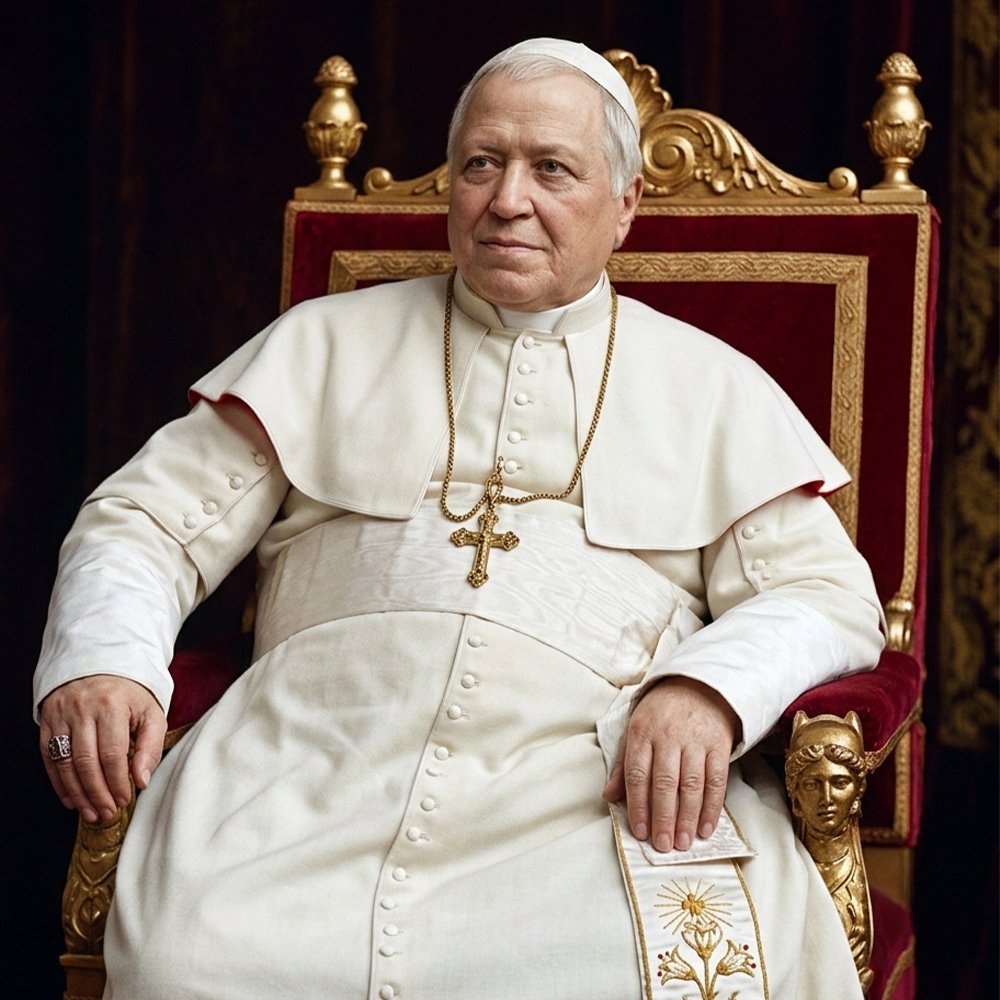
Pope Pius IX (1846-1878)
BIOGRAPHICAL DATA
Birth name: Giovanni Maria Mastai-Ferretti
Birth: May 13, 1792, Senigallia, Papal States (Italy)
Papal election: June 16, 1846
Coronation: June 21, 1846
Pontificate: June 16, 1846 – February 7, 1878 (31 years, 7 months, 23 days)
Death: February 7, 1878, Apostolic Palace, Vatican (age 85)
Beatification: September 3, 2000 by John Paul II
Burial: Basilica of San Lorenzo fuori le Mura, Rome
Papal motto: None officially recorded
Nicknames: “Pio Nono” (Italian), “Pope of the Immaculate”, “Prisoner of the Vatican”
RECORD: Longest pontificate in history (31 years, 7 months, 23 days) – surpassing St. Peter (traditionally 25 years)
FORMATION AND ECCLESIASTICAL CAREER
Aristocratic Origins
Family:
Father: Count Girolamo Mastai-Ferretti – noble of Senigallia (Marche)
Mother: Countess Caterina Sollazzi
Ancient aristocratic family but not extremely wealthy
Ninth (last) child of a large family
Traditional aristocratic education
Childhood and Health:
Sickly child
Suffered from epilepsy (at the time seen as an impediment to the priesthood)
Epileptic seizures in youth
Miraculously ceased after visit to Marian shrine (Loreto, 1815)
Attributed healing to the Virgin Mary (profound Marian devotion ever since)
Priestly Formation
Seminary of Volterra (Tuscany):
Initial studies
Interrupted by epilepsy
Roman College (Gregorian University) in Rome:
Resumed studies after healing
Theology and Canon Law
Diligent but not exceptional student
Pontifical Ecclesiastical Academy:
Diplomatic formation
Preparation for Curial career
Priestly Ordination:
April 10, 1819 (age 27)
Cathedral of Rome
Early Years of Priesthood
Tata Giovanni Orphanage (Rome, 1819-1823):
Director of orphanage
Pastoral zeal with abandoned children
Reputation for kindness and charity
Mission to Chile (1823-1825):
Auditor (secretary) to Mons. Giovanni Muzi, Apostolic Visitor
First diplomatic mission in South America
Recently independent Chile (1818)
Formative experience:
Saw extreme poverty
Contact with missionary reality
Witnessed struggle between Church and liberal anticlerical governments
Traumatic experience: hostility of liberal governments toward the Church
Profoundly marked: negative view of liberalism
Return to Italy (1825):
Chilean mission failed (government refused to recognize papal representative)
Returned to Rome
Ascending Ecclesiastical Career
Apostolic Delegate in Benevento (1827-1832):
Civil and ecclesiastical governor
Efficient administration
Charity to the poor
Firmness with crime
Apostolic Delegate in Spoleto (1827) and Imola (1832-1827):
Administrative posts in the Papal States
Gained reputation as just and charitable administrator
Moderate in politics (by the standards of the time)
Archbishop of Spoleto (1827-1832):
First episcopal diocese
Dedicated pastor
Archbishop of Imola (1832-1846):
14 years as archbishop
Important diocese (Emilia-Romagna)
Active pastoral work:
Parish visitations
Reformed seminary
Promoted Catholic education
Charity to the poor
Mediated social conflicts
Cardinal (1840):
Created cardinal by Gregory XVI (December 23, 1839, published 1840)
Cardinal-Archbishop of Imola
Reputation in 1846:
Considered moderate and reformist (for the time)
Charitable and pastoral
Not extremist (unlike many reactionary prelates)
Sympathetic to some reforms in the Papal States (not revolution!)
CONCLAVE OF 1846 – PAPAL ELECTION
Death of Gregory XVI
June 1, 1846:
Death of Pope Gregory XVI (1831-1846)
Extremely conservative and reactionary pontificate:
Condemned railways as “invention of the devil”
Opposed reforms
Papal States: corrupt and oppressive temporal government
Total alliance with Metternich (Austria) and absolutist regimes
Mirari Vos (1832): condemned freedom of conscience, press, separation of Church and State
Situation of the Papal States:
Extreme economic backwardness
Corrupt administration
Secret police (Gestapo-like)
Total censorship
No railways, industry, modernization
Resentful population
Italian nationalism (Risorgimento) growing
Revolutions of 1848 approaching
Conclave (June 14-16, 1846)
50 cardinal electors
Factions:
“Zelanti” (absolute reactionaries):
Total continuity with Gregory XVI
Candidate: Cardinal Lambruschini (Gregory XVI’s Secretary of State)
Supported by Austria (Metternich)
“Moderates” (cautious reformists):
Wanted moderate reforms
Candidate: Cardinal Mastai-Ferretti (Imola)
Seen as “liberals” (they weren’t, but less reactionary)
Crucial Question:
Maintain Gregory XVI’s absolutism?
Or allow moderate reforms?
Voting:
Fast conclave: 2 days (very quick for the time)
June 16, 1846, 4th ballot: Cardinal Mastai-Ferretti elected
Necessary majority reached
54 years old – relatively young
Victory of the moderates
Choice of name: Pius IX
Homage to Pius VII (1800-1823):
Resisted Napoleon
Prisoner (1809-1814)
Symbol of firmness but also flexibility
Signed Concordat with Napoleonic France (pragmatism)
“Pius” = pious
Expectations:
Enormous liberal hopes!
“Liberal pope” who would reform the Papal States
Italian nationalists hoped for support for unification
Complete illusion (would soon be revealed)
THE PONTIFICATE (1846-1878) – 31 YEARS
PHASE I: “LIBERAL PIUS IX” (1846-1848) – THE ILLUSION
First Months – Surprising Reforms:
General Amnesty (July 17, 1846):
Freed political prisoners in the Papal States
Approximately 1,000 prisoners (Carbonari, nationalists, revolutionaries)
Delirious enthusiasm in Rome and Italy
“Viva Pio IX!” shouted in the streets
Liberals ecstatic
Metternich horrified: “Calamity!”
Other Reforms (1846-1847):
Freedom of the press (relative – abolished prior censorship)
Consulta (lay consultative assembly) – limited popular participation
Civic Guard (citizen militia) – not just papal soldiers
Public gas lighting in Rome
Railways permitted! (Gregory XVI had forbidden them)
Administrative reforms
Reduction of corruption
Pius IX as “liberal hero” (1846-1848):
Acclaimed throughout Italy
Seen as “Pope of liberty”
Nationalists hoped he would lead Italian unification
Giuseppe Mazzini (revolutionary!) wrote enthusiastic letters to him
Giuseppe Verdi composed a hymn in his honor
Total illusion: Pius IX was NEVER a liberal – only made minimal administrative reforms
The Revolution of 1848 – TURNING POINT
Context – Spring of Nations:
1848: Liberal revolutions throughout Europe
Paris (February) – Louis Philippe deposed
Vienna (March) – Metternich fled
Berlin, Budapest, Prague – insurrections
Italy: revolutions in Milan, Venice, Sicily, Naples
First Italian War of Independence (1848-1849):
Kingdom of Sardinia (Piedmont) vs. Austrian Empire
Objective: expel Austrians from Italy (Lombardy-Venetia)
Pressure on Pius IX: join the “national” war
Papal States should send troops against Austria
Pius IX’s Dilemma:
As Pope: spiritual father of ALL Catholics (including Austrians!)
As temporal king: sovereign of the Papal States (pressured by subjects)
Could not wage war against Austrian Catholics
Allocution of April 29, 1848 – RADICAL TURNING POINT:
Pius IX refused to declare war on Austria
“We, as Vicar of Christ, cannot declare war on a Catholic nation”
Blessed Italy but did not support the war
END of the “liberal” illusion
Italian nationalists: betrayal!
Overnight: from hero to villain
Assassination of Pellegrino Rossi (November 15, 1848):
Count Pellegrino Rossi: Pius IX’s Prime Minister (liberal moderate)
Assassinated by radical revolutionaries on the Parliament steps
Stabbed in the neck
Pius IX watched from the window, horrified
Revolution in Rome (November 16, 1848):
Armed mob invaded the Quirinal Palace (papal residence)
Shots fired
Mons. Palma (Pius IX’s secretary) killed beside the Pope
Blood spattered on Pius IX
They demanded a revolutionary government
Pius IX de facto prisoner
Flight of Pius IX (November 24, 1848):
Disguised as a simple priest
Fled secretly from Rome at night
Carriage through Roman gates
Refuge: Gaeta (Kingdom of the Two Sicilies, southern Italy)
Under protection of King Ferdinand II (Bourbon, absolutist)
Forced exile: November 1848 – April 1850 (16 months)
Roman Republic (1849) – Definitive Trauma
February 9, 1849:
Rome proclaimed the Roman Republic
Revolutionary government
Democratic constitution
Giuseppe Mazzini (revolutionary leader) as triumvir
Giuseppe Garibaldi (military hero) defended the Republic
Separation of Church and State
Confiscation of ecclesiastical property
Anticlericalism
Pius IX in Gaeta:
Appealed to Catholic powers (France, Austria, Spain, Naples)
Asked for restoration of papal government
Denounced Republic as illegitimate and anti-Christian
French Intervention (April-July 1849):
Louis Napoleon Bonaparte (President of the Second French Republic, future Napoleon III)
Motivation: gain French Catholic support
French army besieged Rome
April 30 – July 3, 1849: Siege of Rome
Garibaldi resisted heroically
July 3: Republic surrendered
Garibaldi fled (pursued by Austrians, later captured)
Mazzini exiled
Return of Pius IX (April 12, 1850):
Returned to Rome
Permanent French garrison (until 1870!) protected him
Never forgave the revolutionaries
Deep trauma that shaped the rest of his pontificate
PHASE II: REACTIONARY PIUS IX (1850-1878) – 28 YEARS
Total transformation:
“Liberal Pope” (1846-1848) → Ultra-conservative Pope (1850-1878)
All reforms revoked
Absolutism restored
Political repression
Papal States: extreme reactionism
Government of the Papal States (1850-1870):
Cardinal Giacomo Antonelli – Secretary of State (1850-1876):
Strongman of the regime
Skilled but cynical
Police repression
No reforms
Alliance with reactionary regimes
Corrupt (personally enriched himself)
Characteristics of the restored papal regime:
Secret police reactivated
Total censorship
Massive political prisons
Executions of revolutionaries
Jewish ghetto maintained (Rome = last ghetto in Western Europe!)
Economic backwardness continued
Administrative corruption
Increasingly resentful population
Resistance:
Secret societies (Carbonari)
Popular support for the Risorgimento
Brigandage (anti-papal guerrilla warfare)
DOGMAS – THE TWO GREAT MARIAN DOGMAS
DOGMA OF THE IMMACULATE CONCEPTION (1854)
Bull Ineffabilis Deus (December 8, 1854)
Context:
Ancient devotion to the Immaculate Conception (especially Franciscans)
But it was not a dogma (defined truth of faith)
Centuries-old theological debate:
Franciscans/Scotists: defended the Immaculate Conception
Dominicans/Thomists: doubted (St. Thomas had rejected it)
Apparitions of Our Lady of Lourdes (1858) would confirm: “I am the Immaculate Conception”
Consultation of the Episcopate (1849-1854):
Pius IX consulted bishops worldwide
603 bishops of 603 consulted responded YES
Almost total unanimity
Preparation:
Theological commission
Patristic studies
Biblical foundation
Dogmatic Definition (December 8, 1854):
Solemn formula (ex cathedra – infallible):
“We declare, pronounce, and define that the doctrine which holds that the Most Blessed Virgin Mary, in the first instant of her conception, by a singular grace and privilege of Almighty God, in view of the merits of Jesus Christ, the Savior of the human race, was preserved immune from all stain of original sin, is a doctrine revealed by God and therefore must be firmly and constantly believed by all the faithful.”
Theological Significance:
Mary was conceived without original sin:
From the first instant of her existence
In her mother’s womb (St. Anne)
Before being born
By singular privilege:
Not by her own merit
But by Christ’s prevenient grace
In view of divine motherhood
Unique exception (with Christ):
All humanity is born with original sin
Mary: absolute exception
Preparation to be Mother of God
Consequences:
Defined unilaterally by the Pope (without a council!)
First clear use of papal infallibility (before it was defined as dogma in 1870)
Protestants scandalized: “Mariolatry!”
Orthodox: divided (some accept, others reject)
Catholics: Marian devotion intensified
Miraculous Confirmation – Lourdes (1858):
February 11 – July 16, 1858: 18 apparitions
Bernadette Soubirous (14 years old, poor, illiterate)
March 25, 1858 (9th apparition): The Lady identified herself:
Bernadette: “My Lady, would you tell me who you are?”
Response: “Que soy era Immaculada Councepciou” (local dialect: “I am the Immaculate Conception”)
Bernadette did not know what it meant (miraculous confirmation!)
Pius IX saw it as divine confirmation
DOGMA OF PAPAL INFALLIBILITY (1870)
First Vatican Council (1869-1870)
Convocation:
Bull Aeterni Patris (June 29, 1868): convoked the council
First ecumenical council since Trent (1545-1563) – 306 years!
Objectives:
Combat modern errors (rationalism, materialism, liberalism, socialism)
Define the relationship between faith and reason
Define papal infallibility
Opening: December 8, 1869 (15th anniversary of the Immaculate Conception)
Participation:
Approximately 700 bishops from around the world
Largest council in history until then
Dogmatic Constitution Dei Filius (April 24, 1870):
On faith and reason
Condemned:
Rationalism (reason alone suffices)
Fideism (faith without reason)
Materialism
Pantheism
Atheism
Affirmed:
Reason can know God (rational proofs of God’s existence)
But revelation is necessary
Faith and reason do not contradict
Possible harmonization (Neo-Thomism)
Dogmatic Constitution Pastor Aeternus (July 18, 1870): ON PAPAL INFALLIBILITY
Context:
Ultramontanes (majority): wanted clear definition
Gallicans/Conciliarists (minority): resisted
Feared papal absolutism
Preferred collegial authority (councils)
Ecumenical problems (Orthodox, Anglicans)
Heated Debate (months):
Minority (150-200 bishops): against definition
German bishops (fear of Kulturkampf)
Gallican French bishops
Some Americans
Arguments:
Inopportune (political problems)
Unnecessary (already implicitly believed)
Will harm ecumenism
Majority (500+ bishops): for definition
Modernity demands clarity
Pope needs authority to combat errors
Clear tradition (Petrine primacy)
Final Vote (July 18, 1870):
533 votes YES
2 votes NO (Bishops of Little Rock, USA, and Cajazzo, Italy)
Overwhelming majority
Minority absent (withdrew beforehand to avoid negative vote)
Defined as DOGMA
Definition of Papal Infallibility:
“The Roman Pontiff, when he speaks ex cathedra — that is, when, in the exercise of his office as pastor and teacher of all Christians, he defines, by virtue of his supreme apostolic authority, a doctrine concerning faith or morals to be held by the whole Church — possesses, by the divine assistance promised to him in blessed Peter, that infallibility with which the divine Redeemer willed his Church to be endowed in defining doctrine concerning faith or morals; and that, therefore, such definitions of the Roman Pontiff are irreformable of themselves, and not in virtue of the consent of the Church (ex sese, non autem ex consensu Ecclesiae).”
Conditions of Infallibility:
Ex cathedra (“from the chair” – solemnly):
Not private opinions
Not informal conversations
Not ordinary homilies
As Universal Pastor:
Speaking to the whole Church
Not as a private theologian
Defining doctrine:
Formal act of definition
Not mere exhortation
On faith or morals:
NOT on politics, science, history (in themselves)
Only religious/moral truths
With intention to bind:
Requiring assent of all the faithful
Consequences:
Immediate:
Old Catholic Schism (Germany, Switzerland):
Rejected the dogma
Separated from Rome
Small group (still exists)
Kulturkampf in Germany:
Bismarck used it as pretext
Persecution of the Catholic Church (1871-1887)
Orthodox: scandalized (confirmed division)
Anglicans: Oxford Movement weakened
Protestants: “Papism!”
Long-term:
Roman centralization increased
Papal authority strengthened
Episcopate more dependent
Collegiality diminished
Interruption of the Council:
Day after the definition (July 19, 1870):
France declared war on Prussia (Franco-Prussian War)
French and German bishops had to leave
September 1870: French troops (who protected Rome) withdrew
September 20, 1870: Italian army invaded Rome
Council suspended (never formally closed – “interrupted”)
THE ROMAN QUESTION – LOSS OF THE PAPAL STATES
Italian Unification (Risorgimento) 1859-1870
Context:
Italy divided into multiple states:
Kingdom of Sardinia (Piedmont) – liberal
Kingdom of the Two Sicilies (Bourbon) – absolutist
Papal States (Pope)
Duchies (Modena, Parma, Tuscany)
Lombardy-Venetia (Austria)
Italian nationalism (Risorgimento) wanted unification
Unification Process:
1859: Second War of Independence:
Piedmont + France vs. Austria
Victory: Lombardy annexed to Piedmont
1860: Expedition of the Thousand (Garibaldi):
Sicily and South conquered
Kingdom of the Two Sicilies destroyed
Marche and Umbria (Papal States) invaded by Piedmont
Pius IX lost 2/3 of the Papal States!
Remained only: Rome + Latium (protected by French garrison)
1861: Kingdom of Italy proclaimed:
Vittorio Emanuele II king
Camillo Cavour prime minister
Capital: Florence (later Turin)
Objective: Rome as capital
1864-1870: Pius IX maintained Rome with French troops
Fall of Rome (1870)
September 1870:
September 2: Napoleon III captured at Sedan (Franco-Prussian War)
September 4: Third French Republic proclaimed
French troops withdrew from Rome (needed in France)
Rome defenseless
September 20, 1870 – FATAL DAY:
Italian army (General Cadorna) invaded Rome
Porta Pia: breach opened with artillery (at 5:20 AM)
Pontifical Zouaves (papal army) resisted symbolically
Pius IX ordered only symbolic resistance (to avoid massacre)
Surrender after a few hours
49 dead (19 papal, 30 Italian)
Plebiscite (October 2, 1870):
Roman population voted for annexation to Italy
133,681 YES vs. 1,507 NO
Pius IX: fraudulent (excommunicated voted)
But real majority favorable to annexation
February 3, 1871:
Rome proclaimed capital of Italy
Italian parliament moved to Rome
END of the Papal States (existed since 756 – 1,114 years!)
“Prisoner of the Vatican” (1870-1878)
Pius IX’s Refusal:
Never recognized the Kingdom of Italy
Never left the Vatican after September 20, 1870
Considered himself “Prisoner of the Vatican”
Symbol: injustice suffered by the Church
Law of Guarantees (May 13, 1871):
Italian government offered:
Sovereignty over Vatican, Lateran, Castel Gandolfo
Personal inviolability of the Pope
Annual income (3.25 million lire)
Freedom of international communication
Diplomatic immunity
Pius IX rejected it:
“Non possumus” (“We cannot”)
Demanded complete restoration of the Papal States
Refused financial compensation
Did not accept unilateral “guarantees” (wanted international treaty)
Non Expedit (1868, reinforced 1871):
Italian Catholics forbidden from:
Voting in national elections
Being elected to parliament
“It is not expedient” (non expedit) to participate in the usurper state
Objective: delegitimize the Kingdom of Italy
Effect: Catholics kept out of Italian politics (until Pius X’s flexibilization, 1905)
Excommunications:
Vittorio Emanuele II (king): excommunicated
Cavour (already dead, 1861)
All invaders of Rome: excommunication
Italian government: illegitimate
“Situation remained until 1929”:
Lateran Treaties (Pius XI and Mussolini)
Creation of the Vatican City State
Reconciliation
SYLLABUS ERRORUM (1864) – CONDEMNATION OF MODERNITY
Context:
Modernity = threat (Pius IX’s view)
Liberalism, nationalism, rationalism, socialism, scientism
Church intellectually besieged
Publication: December 8, 1864 (10th anniversary of the Immaculate Conception)
Document: Syllabus Errorum (“Syllabus of Errors”)
Appendix to the encyclical Quanta Cura
List of 80 condemned propositions
Compilation of errors already condemned in previous documents
Not new doctrine, but systematization
Structure (10 sections):
I. Pantheism, Naturalism, Absolute Rationalism (propositions 1-7):
Denial of personal God
World = only reality
Human reason = sole criterion of truth
II. Moderate Rationalism (8-14):
Revelation is unnecessary
Prophecy and miracles are impossible
Faith must submit to reason
III. Indifferentism, Latitudinarianism (15-18):
All religions are equally good
Protestantism = form of true Christianity
Salvation possible in any religion
IV. Socialism, Communism, Secret Societies, Bible Societies, Clerico-Liberal Societies (propositions condemned by their gravity):
Socialism and communism
Freemasonry
Protestant Bible societies
V. Errors on the Church and Her Rights (19-38):
Church is not a perfect and free society
State has authority over the Church
Civil marriage valid without the Church
Education should be secular
VI. Errors on Civil Society (39-55):
State is the origin of all rights
State should not recognize God
Church must submit to the State
VII. Errors on Natural and Christian Morality (56-64):
Moral laws have no divine sanction
Sciences should ignore divine authority
Philosophy and morality independent of revelation
VIII. Errors on Christian Marriage (65-74):
Church has no jurisdiction over marriage
Divorce is legitimate
Marriage is merely a civil contract
IX. Errors on the Civil Principate of the Roman Pontiff (75-76):
Church should renounce temporal power
Papal States must end
X. Errors Related to Modern Liberalism (77-80):
Proposition 80 – THE MOST FAMOUS AND SCANDALOUS:
“The Roman Pontiff can and should reconcile and harmonize himself with progress, with liberalism, and with modern civilization.”
CONDEMNED!
Interpretation:
Pius IX rejected liberalism as an ideology (secularism, relativism)
Did NOT reject technical/scientific progress per se
But the phrase seemed to reject everything modern!
Reactions:
Traditionalist Catholics:
Enthusiasm
Finally clarity against modernity!
Liberal Catholics (Lamennais, Montalembert, etc.):
Shock
Discouragement
Some left the Church
Liberal/Secular World:
International scandal
“Church declares war on civilization!”
“Medieval obscurantism”
Pius IX seen as enemy of progress
Anticlericalism intensified
Liberal Governments:
Italy, France, Germany, etc.
Saw it as a declaration of war
Anticlerical policies justified
Consequences:
Isolation of the Church
Kulturkampf (Germany, 1871-1887)
Separation of Church and State (France, eventually 1905)
Catholic ghetto mental and social
Church vs. Modern World
ENCYCLICALS (38 ENCYCLICALS)
Main Encyclicals
1. Qui Pluribus (November 9, 1846)
“First encyclical” – Programmatic:
Against rationalism, religious indifferentism
Defense of the Catholic faith
Warning against secret societies (Freemasonry)
Moderate tone (still “liberal” phase)
2. Ubi Primum (June 17, 1847)
On the Immaculate Conception (preparation of the dogma):
Consulted bishops worldwide
Opinion on dogmatic definition
3. Praedecessores Nostros (March 25, 1847)
Against socialism and communism:
First explicit papal condemnation
“Mortal plague”
4. Qui Pluribus and Nostis et Nobiscum (December 8, 1849)
After flight from Rome – hardened tone:
Against revolutionaries
Liberalism condemned
Demanded restoration of order
5. Quanta Cura (December 8, 1864)
MOST IMPORTANT
Accompanied Syllabus:
Condemned principal modern errors:
Rationalism
Naturalism
Religious indifferentism
Separation of Church and State
Absolute freedom of conscience
Liberalism
Socialism
Condemned propositions:
“Church has no right to use force”
“State is the origin of all rights”
“Education should be purely secular”
“All religions are equally good”
6. Quanto Conficiamur Moerore (August 10, 1863)
On the situation in Italy:
Lamented usurpation of papal territories
Condemned Italian nationalism
7. Graves Ac Diuturnae (March 23, 1875)
On Kulturkampf in Prussia/Germany:
Condemned Bismarck’s anticlerical laws
Support for persecuted German Catholics
Resistance to oppression
8. Etsi Multa (November 21, 1873)
On the situation in Italy and Switzerland:
Protested against anticlerical laws
9. Respicientes Ea (November 1, 1870)
On the invasion of Rome:
Protested against Italian occupation
Reaffirmed necessity of temporal power
10. Quartus Supra (January 6, 1873)
On the Old Catholic schism (Germany):
Rejected papal infallibility
Condemned and excommunicated
Other encyclicals (28 remaining):
Specific national questions (Poland, Ireland, etc.)
Devotions (Rosary, Joseph, etc.)
Ecclesiastical discipline
Missions
Total: 38 encyclicals (fewer than Leo XIII and successors)
OTHER ACHIEVEMENTS AND EVENTS
Devotions and Spirituality
Sacred Heart of Jesus:
Promoted devotion intensely
Consecration of families
Prepared world consecration (Leo XIII, 1899)
Rosary:
Several encyclicals promoting it
October = Month of the Rosary
St. Joseph:
Quemadmodum Deus (December 8, 1870):
Proclaimed St. Joseph Patron of the Universal Church
During Vatican Council I
Marian Devotion:
Immaculate Conception (dogma 1854)
Approved apparitions:
Lourdes (1858) – approved 1862
La Salette (1846) – approved 1851
Missions
Restoration of Hierarchy:
England (1850):
Restored Catholic hierarchy
First time since the Reformation (1534)
Cardinal Nicholas Wiseman = Archbishop of Westminster
“Papal Aggression” – violent protests in England
Netherlands (1853)
Scotland (1878)
Missionary Expansion:
Africa, Asia, Oceania
Created dioceses
But still colonial model
Concordats:
Austria (1855) – very favorable
Various Latin American countries
Spain
Plenary Council of Latin America (1899)
Rome
All bishops of Latin America
Organization of the Latin American Church
Art and Culture
Vatican Museums:
Expanded collections
Pio-Christian Museum (paleo-Christian art)
Restorations:
Roman Catacombs
Early Christian archaeology
Basilica of St. Paul Outside the Walls:
Reconstruction after fire (1823)
Pius IX completed the work
Canonizations and Beatifications
Canonized Saints:
Japanese Martyrs (1862) – 205 martyrs
Numerous others
Blesseds:
Hundreds of beatifications
Episcopal Jubilee (1877)
50th anniversary of episcopate:
Worldwide celebrations
Millions of pilgrims to Rome
“Peter’s Pence” (donations from Catholics):
Financially essential (without Papal States)
Worldwide Catholic solidarity
Catholic Press
Promoted Catholic newspapers:
L’Osservatore Romano (official Vatican newspaper, since 1861)
Worldwide Catholic press
PERSONAL CHARACTERISTICS
Personality
Before 1848:
Affable, sympathetic
Charitable – personally visited the poor
Accessible
Sense of humor
Politically moderate
After 1848-1850 (Revolution/exile):
Deeply traumatized
Distrust of liberals
Political intransigence
But personal charity maintained
Firm in principles
Charisma:
Very loved by faithful Catholics
Venerated as a saint during his lifetime
Crowds acclaimed him
“Viva il Papa Re!” (Long live the Pope King!)
Piety:
Profound Marian devotion
Eucharist – frequent communion
Daily Rosary
Long hours of prayer
Appearance and Health
Physical:
Tall, thin
Ascetic face
Penetrating eyes
Epilepsy in youth (ceased)
Exceptional longevity:
93 years was extraordinary for the time
Most contemporaries: 50-60 years
Lucidity almost to the end
Worked until last weeks
Habits
Routine:
Woke early (5 AM)
Private Mass
Audiences
Administrative work
Recited Breviary (Liturgy of the Hours)
Rosary in the afternoon
Personal simplicity:
Austere life
Simple room
Frugal meals
Accessibility (with faithful):
Weekly public audiences
Received pilgrims
Papal blessing
Talked with visitors
LAST YEARS AND DEATH
Decline (1877-1878)
Winter 1877-1878:
Health deteriorated
Chronic bronchitis
Growing weakness
But mind lucid
January-February 1878:
Confined to bed
Fever
Respiratory difficulty
Last Weeks:
Received last sacraments
Viaticum (final communion)
Anointing of the Sick
Blessed the Church
Forgave personal enemies (not political ones!)
Last Words (reported):
“Guardate l’unità!” (“Guard the unity!”)
Reference to the unity of the Church
Death
February 7, 1878:
5:40 PM
Surrounded by cardinals
Apostolic Palace of the Vatican
85 years, 8 months, 25 days
Cause: heart failure with pneumonia
Mourning:
Catholics worldwide
No official mourning in Italy (conflict with government)
But Roman population wept (even many anticlericals)
Funeral
Problem: How to take the body from the Vatican for burial?
Chosen location: Basilica of San Lorenzo fuori le Mura
His testamentary will
Not St. Peter’s (protest: still “prisoner”)
February 13, 1878 – TUMULTUOUS FUNERAL:
Night procession (to avoid problems)
Body transported from the Vatican
Catholic crowd (thousands)
Radical anticlericals attacked:
Tried to throw the coffin into the Tiber River!
Shouts: “Death to the Pope!”
Physical violence
Italian police intervened (belatedly)
International scandal
Italian government embarrassed
Burial:
Finally in San Lorenzo
Initially modest tomb
Later monument built
Successor Conclave
February 20 – February 20, 1878 (same date!):
Very fast conclave: 1 day, 3 ballots!
Cardinal Gioacchino Pecci elected
Became Leo XIII
Radical change of style:
Pius IX: intransigent, isolated
Leo XIII: diplomat, open (cautiously)
LEGACY AND HISTORICAL EVALUATION
Paradoxical Pontificate
Record Longevity:
31 years, 7 months, 23 days
Longest in history (surpassed St. Peter)
Only theoretically surpassed if John Paul II had lived longer (he had 26 years)
Two Popes in One:
“Liberal Pius IX” (1846-1848): reformist, liberal hope
“Reactionary Pius IX” (1850-1878): intransigent, anti-modern
Positive Achievements
1. Marian Dogmas:
Immaculate Conception (1854) – fundamental for Mariology
Prepared Assumption (Pius XII, 1950)
2. Papal Infallibility (1870):
Clarified magisterium
Strengthened papal authority
Basis for future magisterium
3. Restoration of Hierarchies:
England, Netherlands, Scotland
Missionary expansion
4. Marian Devotion:
Lourdes approved
Popular piety intensified
5. Worldwide Catholic Solidarity:
“Peter’s Pence”
Ultramontanism (loyalty to Rome)
Negative Aspects
1. Loss of the Papal States:
End of 1,114 years of temporal rule
But disguised blessing:
Church more spiritually free
No territorial political commitments
“Roman Question” forced spiritualization
2. Syllabus and Isolation:
Church vs. Modern World
Catholic ghetto
Lost intellectual influence
Anti-intellectualism
3. Political Intransigence:
Non Expedit (Catholics out of Italian politics)
Refusal to negotiate with Italy
Missed opportunities
4. Repression in the Papal States (1850-1870):
Reactionary government
Lost popular support
Legitimized Italian invasion
5. Provoked Kulturkampf (partially):
Papal infallibility gave pretext to Bismarck
German Catholics persecuted
Balanced Evaluation
Crucial Context:
Revolutionary era: 1848, national unifications, secularization
Church objectively besieged
Revolutions were violent and anticlerical (not just liberal!)
Pius IX’s response: excessive but understandable
Personal Holiness vs. Political Governance:
Personal life: holy, charitable, pious
Political decisions: often misguided
Canonization (2000) recognizes personal virtues, does not approve all acts
Prepared Evolution:
Loss of temporal power = liberation (paradoxically)
Isolation forced spiritualization
Enduring Influence
Papal Infallibility:
Used rarely but decisively
2-3 times only (Immaculate Conception, Assumption)
Defined modern magisterium
Mariology:
Immaculate Conception = pillar
20th century = “Marian century”
Ultramontanism:
Roman centralization
Loyalty to Pope above nationalisms
Anti-modernism:
Inspired Pius X (1903-1914)
Intellectual repression (until 1960s)
Canonization (2000)
Beatification: September 3, 2000
Pope John Paul II
Together with John XXIII
Strategy: balance “conservative” (Pius IX) and “progressive” (John XXIII)
Controversies:
Jews protested:
Jewish ghetto maintained in Rome until 1870 (last in Europe!)
Edgardo Mortara case (1858):
Jewish boy secretly baptized by a servant
Pius IX refused to return him to his parents
Raised him personally in the Vatican
International scandal
Mortara became a priest (his own adult choice, but…)
Liberal Catholics: Syllabus, intransigence
Historians: reactionary temporal rule
Defense:
Heroic personal virtues
Charity
Profound faith
Suffering (“Prisoner”)
Holiness ≠ infallibility in practical decisions
Canonization has not occurred (still only blessed):
Lacks additional miracle
Or do controversies persist?
FAMOUS PHRASES
“La tradizione sono io” (“I am Tradition”) – apocryphal but captures the spirit
“Non possumus” (“We cannot”) – refusal of the Law of Guarantees
“Sono Sacerdote e Re” (“I am Priest and King”) – on temporal power
“Dopo di me, il diluvio” (“After me, the flood”) – attributed (possibly apocryphal)
MONUMENTS AND MEMORY
Tomb in San Lorenzo
Monument:
Basilica of San Lorenzo fuori le Mura
Artistic tomb
Pilgrim visitation
Statues and Memorials
Rome:
Various statues removed after 1870 (Italian government)
Later restored
Worldwide:
“Pius IX” parishes
Educational institutions
Popular Devotion
“Santo Subito” (already during life):
Venerated by faithful Catholics
“Holy Pope”
Attributed miracles
CURIOSITIES
Photography:
First pope extensively photographed
Preserved images
Visual documentation of the pontificate
Longevity in Office:
68 years old when elected (not so old)
85 when died
31+ years of pontificate
Witnessed Radical Transformation:
Born (1792): French Revolution recent
Died (1878): Industrial age, telegraphs, railways, Darwin, Marx
Epilepsy Miraculously Healed:
Canonical impediment to priesthood
Healing in Loreto (Marian shrine)
Resulting profound Marian devotion
Pius IX (1846-1878) was the pope of the longest pontificate (31 years) and the most dramatic of the 19th century. He witnessed and resisted the destruction of the traditional Catholic world: loss of the Papal States, secularization, national unifications, rise of liberalism and socialism.
He began as the “liberal Pope” (illusion, 1846-1848), became the “intransigent Pope” (reality, 1850-1878) after the trauma of the 1848 Revolution and exile. He defined two dogmas (Immaculate Conception, Papal Infallibility) that shaped modern Catholicism.
His Syllabus Errorum (1864) declared “war” on modernity, isolated the Church intellectually, but preserved Catholic identity in a time of crisis. He lost temporal power (1870), becoming “Prisoner of the Vatican”, but paradoxically freed the Church from territorial political commitments.
Personal holiness indisputable (charity, piety, suffering), but political decisions often disastrous. Government in the Papal States (1850-1870) was reactionary and lost popular support. Intransigence prevented compromises that might have been better.
Beatified (2000) for heroic personal virtues, he remains a controversial but gigantic figure – symbol of a besieged Church, resisting (sometimes blindly) modernity, preserving orthodox faith at the cost of cultural isolation.
“Prisoner of the Vatican” for 8 years (1870-1878), his imprisonment freed the papacy from the temporal burden. Pio Nono: last King-Pope, first modern Pope (paradoxically).
Requiescat in pace – Rest in peace, Pius IX, witness of a revolutionary era, intransigent defender of the faith, martyr of temporal power, involuntary preparer of the modern Church.
Soli Deo Gloria