Clement VIII
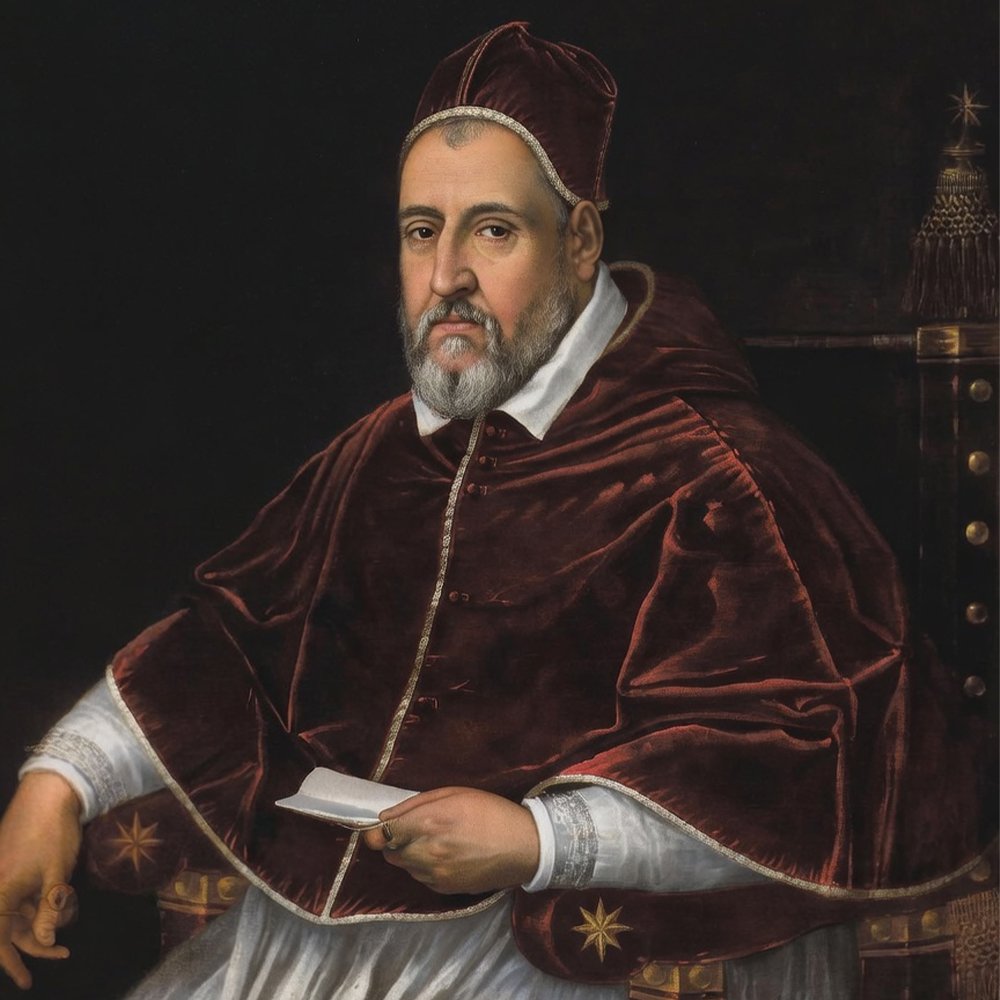
Clement VIII (1592-1605)
BIOGRAPHICAL DATA
Birth name: Ippolito Aldobrandini
Birth: February 24, 1536, Fano, Papal States
Papal election: January 30, 1592
Coronation: February 2, 1592
Pontificate: January 30, 1592 – March 3, 1605 (13 years, 1 month)
Death: March 3, 1605, Rome, Papal States (69 years old)
Burial: Borghese Chapel, Basilica of Santa Maria Maggiore, Rome (transferred 1646)
Religious order: Secular clergy (diocesan priest)
Papal motto: None officially recorded
Cognome: “Pope of the Jubilee,” “Reconciler of France,” “Pope of the Vulgate,” “The Lawyer Pope”
NOTE: His pontificate marked the culmination of the Counter-Reformation, highlighted by the reconciliation of Henry IV of France, the annexation of Ferrara to the Papal States, the publication of the Clementine Vulgate, and the tragic execution of Giordano Bruno. He was the last pope to serve in the 16th century and the first of the 17th.
EARLY LIFE AND FORMATION
Aldobrandini Family Origins
The Aldobrandini of Florence:
- Ancient Florentine noble family, originally from Florence
- Family left Florence due to disagreements with the Medici family
- Established themselves in the Papal States, particularly in Fano and Rome
- Tradition of legal and ecclesiastical service
Parents:
- Silvestro Aldobrandini: father, a distinguished canon lawyer and jurist
- Elisabetta Dati: mother, from a noble Florentine family
- Family circumstances: professional nobility with strong legal tradition
- Ippolito followed his father into canon law
Birth and Childhood:
- Born: February 24, 1536, in Fano (on the Adriatic coast of the Papal States)
- Some sources incorrectly give Florence as birthplace, but Fano is correct
- Baptism: likely in Fano cathedral
- Early education: tutored in law by his father from an early age
- Health: robust in youth, though later plagued by gout
Legal Formation – The Canonist
University Studies:
- Studied canon and civil law under his father’s guidance
- Trained as a consistorial advocate (lawyer for ecclesiastical courts)
- Legal education: thorough, precise, humanistic
- Developed reputation as an able jurist
Auditor of the Roman Rota (1569):
- Appointed Auditor of the Sacred Roman Rota
- Rota: highest ecclesiastical court of the Catholic Church
- Position: judge in the most important church tribunal
- Years: served from 1569 onward
- Reputation: meticulous, learned, fair
- His legal training would define his entire papacy
Spiritual Formation Under St. Philip Neri
Relationship with St. Philip Neri (1515-1595):
- Placed himself under the spiritual direction of the reformer St. Philip Neri
- Philip Neri: founder of the Oratorians, “Apostle of Rome”
- For thirty years Philip was his confessor
- Duration: approximately 1560s-1595 (until Philip’s death)
- Spiritual formation: Oratorian spirituality – joy, humility, pastoral charity
- Deeply influenced by Philip’s gentle reform approach
Impact of Oratorian Spirituality:
- Balanced legal rigor with pastoral compassion
- Emphasis on personal holiness over political maneuvering
- Commitment to reform through interior renewal
- Lifelong friendship with Philip and his disciples
Late Ordination
Ordination to Priesthood (December 31, 1580):
- Ordained at age 45
- Relatively late for the era
- Reasons for delay:
- Focus on legal career
- Possibly family considerations
- Not uncommon for curial officials
- Ordained by whom? (sources not specify)
Early Curial Positions:
- Consistorial Advocate: before Rota appointment
- Apostolic Datary (1585-1592): Office handling papal benefices and dispensations
- Major Penitentiary (1586-1592): One of the most important curial positions, dealing with matters of conscience
- Referendary of the Apostolic Signatura: (likely held earlier)
Cardinalate (1585-1592)
Created Cardinal (December 18, 1585):
- Elevated by Pope Sixtus V (1585-1590)
- Age: 49 years old
- Title: Cardinal-Priest of San Pancrazio fuori le Mura
- Reason: merit, legal competence, curial service
Major Penitentiary (January 1586-1592):
- Appointed by Sixtus V
- Position: head of the Apostolic Penitentiary, tribunal for matters of conscience
- Responsibilities: absolutions, dispensations, indulgences
- Gained: deep knowledge of pastoral theology and moral cases
Papal Legate to Poland (1588-1589):
- Sent by Sixtus V as Legatus a latere to Poland
- Mission: diplomatic intervention in Polish succession crisis
- Context:
- After death of King Stephen Báthory (1586)
- Contested election between:
- Sigismund Vasa of Sweden (supported by Polish chancellor Jan Zamoyski)
- Archduke Maximilian of Austria (Habsburg candidate)
- Maximilian invaded, was defeated and captured at the Battle of Byczyna (1588)
Achievement in Poland:
- Successfully negotiated release of Archduke Maximilian from captivity
- Won gratitude of the Habsburgs
- Demonstrated diplomatic skill
- Established relations with both Habsburg and Polish courts
- Returned to Rome with enhanced reputation
CONCLAVE OF 1592 – ELECTION
Context: Death of Innocent IX
Death of Innocent IX (December 30, 1591):
- Pontificate: only 2 months (October 30 – December 30, 1591)
- Died at age 72
- Third pope in quick succession:
- Urban VII (1590): 13 days
- Gregory XIV (1590-1591): 10 months
- Innocent IX (1591): 2 months
- Need: stable, experienced pope after series of brief reigns
Situation of the Church (1592):
- Counter-Reformation: in full swing, Trent reforms being implemented
- France: in chaos, Henry IV still Protestant (would convert 1593)
- Spain: dominant Catholic power, Philip II seeking influence over papacy
- England: Elizabeth I still on throne, persecution of Catholics
- Wars of Religion: continuing in France
- Ottoman threat: ongoing in eastern Europe
Political Alignments in College of Cardinals:
- Spanish Faction: cardinals loyal to Philip II of Spain
- Led by: Cardinal Ascanio Colonna, Cardinal Girolamo Simoncelli
- Sought pro-Spanish pope
- Anti-Spanish Faction (Italian Nationalists):
- Cardinals unwilling to be dictated to by Spain
- Sought pope independent of Spanish control
- Wanted balanced European policy
- Sixtine Cardinals: created by Sixtus V
- Gregorian Cardinals: created by Gregory XIV
- Neutrals: various
The Conclave
Dates: January 10-30, 1592
Duration: 20 days
Location: Apostolic Palace, Rome
Opening: January 10, 1592, eleven days after Innocent IX’s death
Major Candidates:
- Cardinal Giulio Antonio Santori (59):
- Former Inquisitor, supported by Spanish
- Considered too pro-Spanish by anti-Spanish faction
- Cardinal Benedetto Giustiniani (38):
- Young, capable, but not senior enough
- Cardinal Ippolito Aldobrandini (56):
- Legal scholar, experienced diplomat
- Known for intelligence, discipline, understanding of Church’s inner workings
- Not aligned with either extreme faction
- Reputation: “very intelligent, disciplined, and in tune with the inner workings of the Church”
The Struggle:
- Spanish faction pressed for Santori or another pro-Spanish candidate
- Anti-Spanish cardinals determined to resist Philip II’s domination
- A determined minority of Italian cardinals refused to be dictated to by Spain
- Deadlock developed between factions
Why Aldobrandini Won:
- Neutrality: Held aloof from extreme factions
- Legal reputation: Canonist of marked ability
- Diplomatic success: Poland mission demonstrated skill
- Experience: Major Penitentiary, Datary, Cardinal for 7 years
- Age (56): Mature but not elderly
- Spiritual reputation: Disciple of St. Philip Neri
- Perceived as “balanced and liberal” in European policy
- Acceptable to both sides: Compromise candidate
Election (January 30, 1592):
- Elected on the twenty-first day of conclave
- Received sufficient votes (probably two-thirds majority)
- Accepted willingly
- Chose name: Clement VIII
- Perhaps after St. Clement? Or to honor Clement VII (Medici)?
- “Non-politicised name” indicating new direction
Reaction to Election:
- “Received as a portent of more balanced and liberal Papal policy in European affairs”
- Spanish: cautiously accepting
- Anti-Spanish: pleased with independent choice
- Roman people: hopeful after series of short popes
Coronation (February 2, 1592):
- St. Peter’s Basilica
- Ceremony: traditional, solemn
- Age at coronation: almost 56
- Later possession of St. John Lateran
PONTIFICATE (1592-1605) – COUNTER-REFORMATION POPE
Character and Governing Style
Personality:
- Lawyer’s eye for detail: meticulous, thorough
- Unlimited capacity for work: industrious, dedicated
- Wise statesman: diplomatic, strategic
- Effective, if sometimes rigorous, administrator
- Spiritually formed: disciple of St. Philip Neri
Governing Approach:
- General object of policy: free Papacy from undue dependence upon Spain
- Balanced legal precision with pastoral concern
- Surrounded himself with able men (nephews, Bellarmine, Baronius)
- Attentive to both spiritual and temporal affairs
Appearance (from portraits):
- Portrait by various artists (Caravaggio circle?)
- Face: refined, intelligent, with aquiline features
- Expression: serious, contemplative
- Beard: full, white (fashion of era)
- Eyes: penetrating, lawyer’s gaze
Ecclesiastical Reforms and Publications
Clementine Vulgate (November 1592):
- Most significant literary achievement of pontificate
- Published: November 1592
- Official title: Sixto-Clementine Vulgate
- Issued with Bull “Cum Sacrorum” (November 9, 1592)
Background:
- Council of Trent (1546) had called for authentic edition of Latin Vulgate
- Sixtus V (1590) published edition but died soon after
- Sixtus’s edition contained errors, was withdrawn
- Clement appointed commission to revise Sixtus’s work
Content and Requirements:
- Became official Bible of Catholic Church
- Remained official until Nova Vulgata (1979)
- Requirements:
- Every subsequent edition must be assimilated to this one
- No word of text could be changed
- Not even variant readings could be printed in margin
Significance:
- Standardized biblical text for Catholicism
- Lasted nearly four centuries
- Monumental achievement of Counter-Reformation scholarship
Liturgical Books:
- Breviary: revised and published
- Roman Missal: revised and published
- Index of Forbidden Books: expanded
- Brought key liturgical texts into conformity with Trent
Forty Hours’ Devotion:
- Introduced in all dioceses of the Catholic Church
- Devotion: continuous prayer before the Blessed Sacrament
- Spread widely during his pontificate
- Counter-Reformation emphasis on Eucharistic piety
The De Auxiliis Controversy (1597-1605)
Background:
- Theological dispute between:
- Dominican Order: emphasized efficacy of divine grace
- Jesuit Order: emphasized role of free will (Molinism, after Luis de Molina)
- Issue: respective roles of efficacious grace and free will in salvation
- Long-standing tension between Thomists (Dominicans) and Molinists (Jesuits)
Establishment of Congregatio de Auxiliis (1597):
- Clement VIII established special commission to settle controversy
- Name: Congregatio de Auxiliis Divinae Gratiae (On the Helps of Divine Grace)
- Purpose: examine Molina’s teaching and decide orthodoxy
Proceedings:
- Extensive debates between Dominican and Jesuit theologians
- Held before pope and cardinals
- Many sessions over several years
- Debate tended toward condemnation of Molinism
Clement’s Dilemma:
- Theological inclination: possibly favored Dominican position
- Political considerations:
- Jesuit Order had enormous influence in Europe
- Jesuit missions abroad (South America, China, India)
- Powerful supporters in Catholic courts
- Condemnation would cause major disruption
Outcome:
- Clement VIII abstained from official condemnation
- Died before issuing final decision (1605)
- Successor Paul V (1607) prohibited further debate
- 1611 and 1625 decrees: reaffirmed prohibition
- Controversy never formally resolved but suppressed
Significance:
- Demonstrates Clement’s prudence and political wisdom
- Prevented schism within Catholic theology
- Kept both orders in service of Church
- “Wisely abstained from pronouncing a decision”
Relations with France and Spain
The French Problem:
- France: afflicted with civil wars between Catholics and Huguenots since 1562
- Henry of Navarre (Henry IV): Protestant, heir to French throne (from 1589)
- Catholic League: opposed Protestant king
- Spain (Philip II): intervened to support Catholic League, claim French throne
- Papacy: caught between competing Catholic powers
Reconciliation of Henry IV:
- Most remarkable event of his reign
- Long negotiations conducted with great dexterity through Cardinal Arnaud d’Ossat
- Henry IV embraced Catholicism: July 25, 1593
- Clement paused to assess Henry’s sincerity
- Autumn 1595: solemnly absolved Henry IV
Date of Absolution:
- Sources vary:
- September 17, 1595
- Autumn 1595
- Formal ceremony: Rome, St. Peter’s Basilica
- Henry represented by proctors
Significance:
- Put an end to thirty years’ religious war in France
- Braved Spanish displeasure to act independently
- Won a powerful ally for papacy
- Demonstrated papal independence from Spain
- “Moderated the dominance of the Spanish among the cardinals, reducing their influence on future conclaves”
Peace of Vervins (May 2, 1598):
- Clement VIII brought about definite treaty of peace between Spain and France
- Ended long contest between the two Catholic powers
- Negotiated at Vervins (northern France)
- Signed: May 2, 1598
- Won much credit for papacy
- Also negotiated peace between France and Duchy of Savoy
Annexation of Ferrara (1597-1598)
The Este Succession Crisis:
- Alfonso II d’Este, Duke of Ferrara, died childless (October 27, 1597)
- Heirs: Cesare d’Este, illegitimate cousin, claimed succession
- Ferrara: papal fief, reversion to Papal States upon extinction of legitimate male line
- Clement VIII resolved to attach Ferrara to states of Church
Diplomatic and Military Action:
- Spain and Holy Roman Emperor Rudolf II encouraged Cesare to resist
- But: Henry IV of France threatened to aid papacy
- Spain and Empire deterred from material support
- Papal army under Cardinal Pietro Aldobrandini (nephew) entered Ferrara almost unopposed
- Cesare fled to Modena (retained Modena and Reggio)
Outcome:
- Ferrara incorporated into Papal States (1598)
- Last significant addition to papal territories
- Bold annexation succeeded through French alliance
- Papal States now consolidated and economically strengthened
Long War Against Ottomans (1593-1606)
Context:
- Ottoman Empire: ongoing threat to Christian Europe
- Habsburg Austria: fighting Turks in Hungary (Long Turkish War, 1593-1606)
- Need for Christian alliance against common enemy
Clement’s Initiative (1594):
- Initiated alliance of Christian European powers to oppose Ottoman Empire
- Facilitated treaty of alliance signed in Prague by:
- Rudolf II, Holy Roman Emperor
- Sigismund Báthory of Transylvania
- Aron Vodă of Moldavia and Michael the Brave of Wallachia joined later
Papal Support:
- Lent Emperor valuable assistance in men and money
- Financial subsidies for war effort
- Diplomatic mediation between Christian princes
- Spiritual support: prayers, indulgences for crusade
Significance:
- Continued papal role as defender of Christendom
- Maintained papal relevance in international affairs
- War continued beyond Clement’s death (until 1606)
The Jubilee of 1600
The Great Jubilee:
- Holy Year: first jubilee of 17th century
- Three million pilgrims visited Rome
- Enormous crowds for era (Rome’s population ~100,000)
- Pilgrimage to holy places: St. Peter’s, Lateran, Santa Maria Maggiore, St. Paul’s
Significance:
- Magnificent testimony to restoration of papal prestige
- Demonstration of Catholic renewal after Trent
- Counter-Reformation on display
- Pilgrims from all over Europe
Challenges:
- Managing massive crowds
- Providing food, lodging, spiritual care
- Maintaining order and devotion
Legacy:
- High point of Clement’s pontificate
- Celebrated as spiritual triumph
- Last jubilee of 16th century (counted as 1600, but technically 17th)
Canonizations and Beatifications
Canonizations (Three Saints):
- St. Hyacinth (April 17, 1594):
- Polish Dominican (1185-1257)
- Apostle of Poland, missionary to Kiev, Russia
- Known as “Apostle of the North”
- St. Julian of Cuenca (October 18, 1594):
- Spanish bishop (1127-1208)
- Known for charity to poor, miraculous multiplication of bread
- St. Raymond of Peñafort (1601):
- Spanish Dominican (1175-1275)
- Master General of Dominicans, canon lawyer
- Compiler of Decretals for Gregory IX
Beatifications:
- 205 individuals beatified
- 200 of them: group martyrs
- Notable: St. Charles Borromeo (beatified, later canonized)
- Promoted cult of Counter-Reformation saints
Consistories and Cardinals
Creation of Cardinals:
- Six consistories during pontificate
- 53 cardinals created
- Major creations:
First Consistory (September 17, 1593):
- Included: Lucio Sassi, Francesco de Toledo (first Jesuit cardinal)
Notable Cardinals Created:
- Pietro Aldobrandini (1593): nephew, became powerful cardinal-nephew
- Cinzio Passeri Aldobrandini (1593): nephew
- Camillo Borghese: future Pope Paul V (1605-1621)
- Robert Bellarmine, SJ (1599): great theologian, later saint, doctor of Church
- Caesar Baronius (1596): great church historian, Oratorian
Nepotism:
- Named two nephews cardinals (Pietro and Cinzio)
- Standard practice of era
- Pietro Aldobrandini: became effective secretary of state
- Cinzio Passeri Aldobrandini: also influential
- Family advancement typical of Counter-Reformation papacy
Patronage of Arts and Letters
Patronage of Artists:
- Carlo Maderno (1556-1629): architect
- Later completed façade of St. Peter’s under Paul V
- Clement patronized his early work
- Supported Roman artistic community
Patronage of Writers:
- Torquato Tasso (1544-1595): great Italian poet
- Author of Gerusalemme Liberata
- Clement VIII patronized him
- Tasso died 1595, supported in final years
Collegio Clementino:
- Founded for education of sons of richer classes
- Noble college for young aristocrats
- Named after Clement VIII
National Colleges:
- Opened Collegio Scozzese (Scots College)
- Purpose: training missionaries to Scotland
- Continued expansion of Roman colleges for missionary training
Medals:
- “His reign is especially distinguished by the number and beauty of his medals”
- Artistic commemorations of papal achievements
- Renaissance tradition continued
Anti-Jewish Measures
Historical Context:
- Counter-Reformation papacy: increasingly restrictive toward Jews
- Paul IV (1555): established Roman ghetto, forced segregation
- Pius V (1569): expelled Jews from most Papal States except Rome, Ancona, Avignon
- Clement VIII continued and intensified these policies
Key Bulls:
- “Cum saepe accidere” (February 28, 1592):
- Forbade Jewish community of Comtat Venaissin (Avignon enclave) to sell new goods
- Economic restriction, forced them into secondhand trade
- Fostered stereotype of Jew as dealer in used goods
- “Caeca et Obdurata” (February 25, 1593):
- Title meaning: “Blind and Obdurate” (referring to Jewish obstinacy)
- Reiterated Pius V’s decree of 1569
- Banned Jews from living in Papal States outside Rome, Ancona, Avignon
- Evicted Jews who had returned to areas (especially Umbria) after 1586
- Expelled Jewish communities from cities like Bologna (under papal dominion since 1569)
- “Cum Haebraeorum malitia” (February 28, 1593):
- Forbade reading of Talmud
- Suppressed Jewish religious literature
Justification in Bull:
- Alleged that Jews engaged in usury and exploited hospitality of Clement’s predecessors
- Reference to “clemency of Christian piety” toward them
- Aim: “to lead them from darkness to knowledge of the true faith”
Impact:
- Completed segregation of Jews in Papal States
- Confined Jewish life to ghettos of three cities
- Economic restrictions impoverished communities
- Part of broader Counter-Reformation tightening against non-Catholics
Assessment:
- “Clement VIII was also openly anti-semitic (however, considering the times this was usual)”
- Modern scholarship: condemns these measures
- Context: era of religious intolerance following Reformation
INTERNAL POLICIES AND CONTROVERSIES
Law Enforcement and Justice
Crushing Banditry:
- “Clement VIII was as merciless as Sixtus V in crushing brigandage in central Italy”
- Papal provinces of Umbria and Marche: plagued by bandits
- Used strong military force to suppress
- Restored order to countryside
- Necessary for safe travel and commerce
Punishing Lawless Nobility:
- “Punishing the lawlessness of the Roman nobility”
- Upon ascension (1592): had several noble troublemakers put to death
- Message: no one above law
Notable Cases:
- Troio Savelli:
- Scion of powerful ancient Roman family
- Executed for crimes
- Symbol: even great families subject to justice
- Beatrice Cenci (1577-1599):
- Young Roman noblewoman
- Murdered her father, Francesco Cenci (likely due to his repeated abuses)
- Famous case: many requests for clemency
- Pope Clement VIII rejected all pleas
- Executed: September 11, 1599 (with stepmother and brother)
- Confiscated Cenci property passed to Aldobrandini family
- Became popular heroine, legend, subject of literature (Stendhal, Moravia)
Assessment:
- Clement’s justice: strict, sometimes harsh
- Did not spare even sympathetic figures
- Aim: establish rule of law throughout Papal States
- Contrast: personal piety with rigorous justice
Giordano Bruno (1548-1600)
Background:
- Giordano Bruno: Dominican friar, philosopher, cosmologist
- Developed pantheistic views, infinite universe, multiple worlds
- Held heretical opinions on Trinity, Incarnation, transubstantiation
- Wandered Europe: Geneva, Paris, London, Wittenberg, Prague, Frankfurt
- Returned to Italy (1591), arrested in Venice (1592), extradited to Rome (1593)
Trial by Inquisition:
- Imprisoned and tried for seven years (1593-1600)
- Clement VIII participated personally in final phases
- Invited cardinals in charge to proceed with verdict
- Bruno refused to recant
Execution:
- February 17, 1600
- Burned at the stake in Campo de’ Fiori, Rome
- Public square, central Rome
- Death: by fire, tongue pierced, iron spike through mouth (to prevent speaking)
- Grim spectacle of Counter-Reformation justice
Historical Judgment:
- “The execution of Giordano Bruno, February 17, 1600, is a blot upon an otherwise exemplary pontificate”
- “In 1600 Giordano Bruno was burned at the stake in the Campo de’ Fiori, a blot upon an exemplary pontificate”
- Clement’s personal involvement: final phase of trial
- Remains controversial to present day
Legacy:
- Statue of Bruno erected in Campo de’ Fiori (1889)
- Symbol of free thought against religious oppression
- Clement’s reputation permanently shadowed by this act
Menocchio (Domenico Scandella)
Case:
- Menocchio: miller from Friuli
- Formed belief that God was not eternal but created from chaos
- Tried by Inquisition
- Clement VIII had him tried and burned at stake (1599)
- Less famous but equally brutal
Inquisition and Index
Expansion of Inquisition:
- Intensified activity and scope of Inquisition
- Vigorous prosecution of heresy
- Counter-Reformation commitment to orthodoxy
Index of Forbidden Books:
- Expanded significantly
- More books prohibited
- Tighter control over reading
FOREIGN RELATIONS (OTHER POWERS)
England
Context:
- Elizabeth I (1558-1603): Protestant, excommunicated by Pius V (1570)
- Persecution of English Catholics
- Gunpowder Plot not yet (1605, after Clement’s death)
Clement’s Policy:
- Limited options for direct action
- Supported English Catholic exiles
- Established Scots College (for Scottish mission)
- Hoped for succession of Catholic monarch (not realized until James II, 1685)
Death of Elizabeth (1603):
- James I succeeded (1603)
- Initially: some hope for toleration
- Clement died before James’s policy became clear
Poland
Continued Relations:
- Had served as legate (1588-1589)
- Maintained good relations
- Synod of Brest (1595-1596):
- Held in Polish-Lithuanian Commonwealth
- Result: great part of Ruthenian clergy and people reunited with Rome
- Formation of Ukrainian Greek Catholic Church
- Significant achievement for Eastern Catholic unity
Germany and Empire
Support for Emperor:
- Financial and military aid against Turks
- Diplomatic support
- Maintained good relations with Habsburgs
Catholic League:
- Supported Catholic princes in Germany
- Counter-Reformation in imperial territories
Spain
Complex Relations:
- General object: free Papacy from dependence on Spain
- But: maintained diplomatic relations
- Peace of Vervins (1598): mediated between Spain and France
- Reduced Spanish influence in College of Cardinals
Venice
Relations:
- Correct but sometimes tense
- Clement avoided major conflict (unlike Paul V later)
- Venetian Republic: jealous of ecclesiastical jurisdiction
- Clement protested violations but did not retaliate
Naples
Relations:
- Kingdom of Naples: Spanish territory
- Secular authorities constantly provoked Clement’s remonstration
- Violations of ecclesiastical rights
- Clement protested but never retaliated
- Maintained peace with Spain over Naples
LAST YEARS AND DEATH
Health Decline
Gout:
- Clement was affected by gout in later years
- Forced to spend much of his later life immobilized in bed
- Painful condition affecting joints
- Limited mobility but not mental capacity
Continued Work:
- Despite illness, continued governing
- Worked from bed
- Received visitors, signed documents
- Capacity for business remained
Final Months (1604-1605):
- Gradually weakening
- Gout worsened
- But: remained lucid and active
- Lived to see new century
Death
March 3, 1605:
- Died at age 69
- Location: Quirinal Palace or Vatican (sources unclear)
- Cause: complications from gout, old age
- Surrounded by: cardinals, family, servants
Last Words:
- Not recorded precisely
- Likely: prayers, commendation of soul
- Possibly: commending Church to cardinals
Reaction:
- Rome: mourning for pope of 13 years
- Cardinals: began preparing for conclave
- French court: gratitude for reconciliation
- Spanish court: mixed feelings
- People: respect for long, stable pontificate
Immediate Successor:
- Conclave: March 14 – April 1, 1605
- Elected: Pope Leo XI (Alessandro de’ Medici)
- Leo XI: reigned only 27 days
- Then: Pope Paul V (Camillo Borghese) – created cardinal by Clement
Burial and Transfer
Initial Burial:
- St. Peter’s Basilica (temporary)
Later Transfer (1646):
- Remains moved to Borghese Chapel, Basilica of Santa Maria Maggiore
- Transferred by order of Pope Paul V (Borghese)
- Paul V had mausoleum built for him
- Location: magnificent chapel
Tomb:
- Designed: possibly by Flaminio Ponzio
- Features: marble, sculpture, Aldobrandini and Borghese heraldry
- Clement VIII rests near his successor Paul V
- Santa Maria Maggiore: one of four major Roman basilicas
LEGACY AND HISTORICAL EVALUATION
Major Achievements
- Reconciliation of France:
- Absolved Henry IV, ended religious wars
- Restored France to Catholic unity
- Freed papacy from excessive Spanish dependence
- “Most remarkable event of his reign”
- Annexation of Ferrara:
- Last major addition to Papal States
- Consolidated papal territories
- Demonstrated effective diplomacy backed by French alliance
- Clementine Vulgate:
- Official Latin Bible until 1979
- Standardized Scripture for Catholicism
- Monumental scholarly achievement
- Jubilee of 1600:
- Restored papal prestige
- Three million pilgrims
- Counter-Reformation on display
- Peace of Vervins (1598):
- Ended Franco-Spanish war
- Mediated by pope
- Enhanced papal diplomatic standing
- Support for Long War:
- Aided Emperor against Turks
- Maintained papal role in defending Christendom
- Canonizations and Beatifications:
- Hyacinth, Julian, Raymond
- Beatified 205 (mostly martyrs)
- Promoted Counter-Reformation saints
- Liturgical Books:
- Breviary, Missal, Index revised
- Standardized worship after Trent
Failures and Criticisms
- Execution of Giordano Bruno:
- “Blot upon an otherwise exemplary pontificate”
- Personal involvement in trial
- Permanent stain on reputation
- Anti-Jewish Measures:
- “Caeca et Obdurata”: expelled Jews from most Papal States
- Economic restrictions
- Part of Counter-Reformation intolerance
- Nepotism:
- Elevated two nephews to cardinalate
- Enriched family (Cenci confiscations)
- Standard for era but still criticized
- Beatrice Cenci Execution:
- Refused clemency despite pleas
- Confiscated property to Aldobrandini family
- Appeared harsh, self-interested
- De Auxiliis Controversy Unresolved:
- Died before decision
- Left issue for successors
- Controversy simmered for decades
- Inquisition Severity:
- Expanded Inquisition’s scope
- Burned Menocchio
- Harsh enforcement of orthodoxy
Historical Assessment
Contemporary Views:
- Catholic Encyclopedia (1913): “wise statesman,” “able ruler”
- Praised for: reconciling France, annexing Ferrara, Vulgate
- Noted: strict but effective
Modern Scholarship:
- Britannica: positive on statesmanship, negative on anti-Jewish measures, Bruno
- Balanced: acknowledges achievements, criticizes severity
- Recognizes: last Counter-Reformation pope of 16th century
Comparison with Successors:
Clement VIII (1592-1605) | Paul V (1605-1621) | Gregory XV (1621-1623) | Leo XI (1605) |
13-year pontificate | 15-year pontificate | 2.5-year pontificate | 27-day pontificate |
Reconciled France | Venetian Interdict crisis | Founded Propaganda Fide | Refused nepotism |
Clementine Vulgate | Completed St. Peter’s | Conclave reform | Medici pope |
Annexed Ferrara | Borghese nepotism | Canonized Ignatius, Xavier | “Lightning Pope” |
Executed Bruno | Protected Galileo (1616) | Jesuit-trained | Friend of St. Philip Neri |
Comparison with Innocent XII (1691-1700):
- Clement: practiced nepotism (typical of era)
- Innocent XII: abolished nepotism
- Clement: expanded Inquisition
- Innocent XII: focused on charity
- Different eras, different priorities
Coffee Legend
The Story:
- Coffee introduced to Europe from Muslim world
- Clement’s advisers pressured him to condemn coffee as “bitter invention of Satan”
- Because of its popularity among Muslims
- Clement reportedly tasted it
- Declared: “This devil’s drink is so good… we should cheat the devil by baptizing it”
Historical Status:
- “It is not clear whether this is a true story”
- Possibly apocryphal
- But: widely repeated in coffee lore
- Clement’s association with coffee remains in popular culture
Epitaph
Implied:
“He reconciled France to the Church, added Ferrara to Peter’s patrimony, and gave the Catholic world its Bible for four centuries. But the flames of Campo de’ Fiori cast a shadow over his memory.”
In Santa Maria Maggiore:
- Tomb inscription likely records his achievements
- Magnificent monument befitting long reign
Final Evaluation
Pope Clement VIII, Ippolito Aldobrandini, reigned for thirteen years—one of the longest and most significant pontificates of the Counter-Reformation. He stands as the last great pope of the 16th century, a figure who consolidated the reforms of Trent, restored papal prestige, and navigated the treacherous waters of European politics with lawyerly precision and diplomatic skill.
His greatest achievement was the reconciliation of France. By absolving Henry IV, Clement ended thirty years of religious war, brought the most powerful kingdom in Europe back to Catholic unity, and freed the papacy from its crippling dependence on Spain. The Peace of Vervins that followed was a masterpiece of papal diplomacy. For this alone, he deserves remembrance.
The annexation of Ferrara demonstrated that the Papal States could still expand through shrewd diplomacy and timely alliances. It was the last significant addition to the temporal domain of the popes—a fitting capstone to centuries of territorial accumulation.
The Clementine Vulgate standardized the Bible for Catholics until 1978. Every Latin Mass, every theological treatise, every Scripture quotation for nearly four centuries depended on this text. It was the work of a lawyer-pope who understood that words matter, that precision in sacred things is itself a form of devotion.
The Jubilee of 1600 drew three million pilgrims to Rome—an astonishing number for an age without railways or airplanes. It demonstrated that the Catholic Church, far from being mortally wounded by the Reformation, was alive, vibrant, and capable of drawing the faithful from every corner of Europe. Clement presided over this revival with dignity and devotion.
Yet the shadow of Bruno falls across this achievement. The philosopher burned in Campo de’ Fiori on February 17, 1600, remains a symbol of intolerance, a reminder that the Counter-Reformation had its dark side. Clement’s personal involvement in the final stages of the trial suggests that this was not merely the work of subordinates but a decision he owned. It is the great stain on his record.
The anti-Jewish measures—the expulsion from most of the Papal States, the economic restrictions, the suppression of the Talmud—reflect the harshness of an age that had lost the medieval tolerance for Jewish communities. Clement was a man of his time, but that time was one of increasing confinement and persecution for Jews.
His nepotism—elevating Pietro and Cinzio Aldobrandini—was standard for the era. Pietro, at least, proved a capable cardinal-nephew who served the Church well. The family enrichment from the Cenci confiscation was more questionable, but again typical of papal practice before Innocent XII’s reform a century later.
The De Auxiliis controversy showed Clement at his most prudent. Pressed to condemn the Jesuits, he hesitated, studied, consulted, and ultimately left the decision to his successors. Whether from conviction or political calculation, he avoided a condemnation that would have rent the Church. His wisdom here contrasts with his severity elsewhere.
Personally, Clement was a man of piety—formed for thirty years by St. Philip Neri, devoted to prayer, committed to reform. He was also a workaholic, with “unlimited capacity for work” and a “lawyer’s eye for detail” . Gout immobilized him but did not stop him. He governed from his bed until the end.
Artistically, he patronized Maderno and Tasso, founded the Collegio Clementino, and issued beautiful medals that still delight collectors. He understood that the Church needed beauty as well as truth.
Theologically, he gave the Church its Bible and its key liturgical books. He promoted saints—Hyacinth, Julian, Raymond—who embodied the Catholic renewal. He supported missions, including the Synod of Brest that brought many Eastern Christians back to Rome.
Politically, he restored papal independence, balanced France and Spain, and consolidated the Papal States. He was the last pope of the 16th century and the first of the 17th—a bridge between eras.
His tomb in Santa Maria Maggiore lies near that of Paul V, his successor and creation. Both Borghese and Aldobrandini are honored there. It is a fitting resting place for a pope who did so much to shape the Baroque Church that would follow.
Epitaph:
“Lawyer and statesman, penitent and prince, he reconciled a king, annexed a duchy, and gave the Church its Bible. But in the year of jubilee, a philosopher burned in Campo de’ Fiori—and the smoke of that fire still rises to trouble his memory.”
Coffee legend remembers him fondly: the pope who baptized the devil’s drink. It is a gentler image than the flames of Bruno—a reminder that Clement, like all humans, was complex, capable of both severity and humor, both rigor and indulgence.
The Clementine Vulgate remained in use until 1979. For nearly four hundred years, every Catholic who opened the Latin Bible read the text he authorized. That is a legacy few popes can match.
Henry IV of France knelt in absolution at Clement’s feet, and the wars ended. The most remarkable achievement of his reign stands.
Giordano Bruno burned, and the smoke still rises. The most terrible decision of his reign stands too.
Pope Clement VIII: reconciler and persecutor, builder and censor, lawyer and pilgrim—a man of his age, with all its glories and its shadows.