Language:
Catechismus
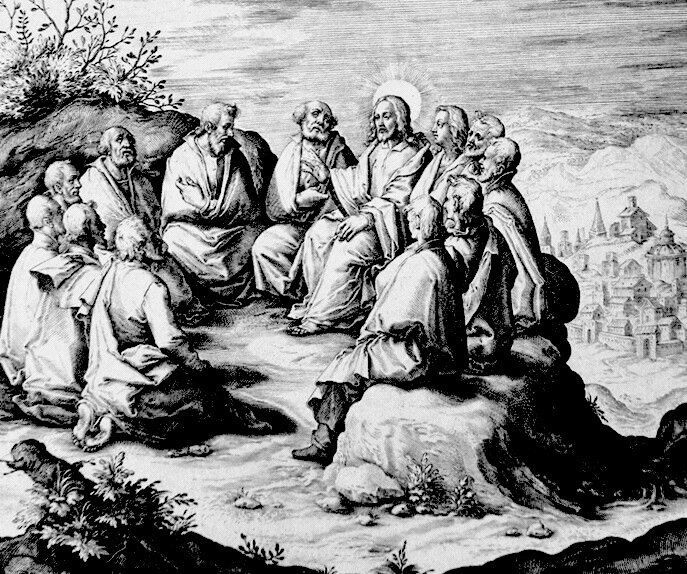
THE CATECHISM OF THE HOLY CHURCH
From the Apostolic Origins to the Roman Catechism of Trent
The Perennial Tradition of Instruction in the Catholic Faith
WHAT IS THE CATECHISM?
The word catechism derives from the Greek katechein, meaning to resound, to echo, to instruct by the living word. In the Catholic Church, the catechism is the ordered and systematic exposition of the truths of the Christian faith, transmitted by the Apostles, guarded by the Bishops, and taught to the people of God throughout the centuries.
Catechesis is not a medieval invention, nor a response to heresies. It is as ancient as the Church itself. Our Lord Jesus Christ, before ascending into Heaven, expressly commanded the Apostles: “Go therefore and make disciples of all nations, baptizing them in the name of the Father and of the Son and of the Holy Spirit, teaching them to observe all that I have commanded you” (Mt 28:19-20). This apostolic mandate is the root of all catechesis.
The catechism is, therefore, the voice of the Church teaching. It is the Faith of the Apostles transmitted from generation to generation not through private opinions, but through the living Magisterium of the Church, assisted by the Holy Spirit. It is the shield against heresy, the nourishment of the neophyte, the foundation of the Christian, and the handbook of the pastor.
This document presents the history, content, method, and spirituality of the Church’s catechism throughout the centuries from apostolic times to the great synthesis of the Council of Trent a sacred patrimony that no generation has the right to squander.
PART I – CATECHESIS IN THE EARLY CHURCH (1st-3rd Centuries)
1.1 The Apostolic Catechumenate
In the early centuries of the Church, one who wished to become a Christian did not receive Baptism immediately. A long period of preparation was required, called the catechumenate, which could last from one to three years, according to the candidate’s circumstances and the bishop’s judgment.
The catechumen was one who heard the word (from the Greek: katechoumenos, the one who hears). He attended the first part of the Mass called the Mass of the Catechumens but was dismissed before the Eucharistic Liturgy, for the sacred mysteries could not be revealed to the unbaptized.
This practice reflects a profound theology: the sacraments are gifts that presuppose faith, conversion, and knowledge. One was not baptized without understanding what was about to be received. The Church was not an open society admitting all without distinction, but a community of the elect that welcomed candidates with both love and severity.
1.2 The Discipline of the Secret
An essential aspect of primitive catechesis was the Discipline of the Secret (Disciplina Arcani). Certain mysteries of the faith especially the Creed, the Our Father, and the sacraments of Baptism and the Eucharist were not revealed to catechumens or to pagans. Only after Baptism did the new Christian receive the full explanation of these mysteries.
This practice served a double purpose: to protect the holy mysteries from profanation by the unfaithful, and to preserve in the baptized a spirit of reverence and sacred awe. Faith was treated as a precious treasure, not as a product for indiscriminate distribution.
The Fathers of the Church justified this practice with the words of Christ: “Do not give what is holy to dogs, and do not throw your pearls before swine” (Mt 7:6). The pedagogy of mystery was a fundamental characteristic of the ancient liturgy and catechesis.
1.3 The Content of Apostolic Teaching
The central content of primitive catechesis can be summarized in four pillars, which will remain throughout the entire history of the Catholic catechism:
PILLAR | CONTENT |
The Faith (Creed) | The truths to be believed: the Trinity, the Incarnation, Redemption, the Church, and the Last Things |
The Sacraments | The sacred signs through which the grace of Christ is communicated to the faithful |
The Commandments | The moral laws to be observed in order to please God and save one’s soul |
Prayer | The Our Father and the doctrine of how to converse with God |
These four pillars were not invented by any theologian or Council. They are the natural structure of Christian life: to believe, to be sanctified by the sacraments, to act rightly, and to pray. Every authentic catechism gravitates around these four realities.
1.4 The Great Catechists of Antiquity
Saint Cyril of Jerusalem (313-386)
Saint Cyril of Jerusalem is the greatest catechist of Antiquity whose work has come down to us in complete form. As Bishop of Jerusalem, he preached his famous Catecheses in the Basilica of the Holy Sepulchre during Lent, to candidates for Baptism.
Cyril’s Catecheses are divided into two series: the Pre-Baptismal Catecheses, addressed to catechumens preparing to receive Baptism at the Easter Vigil; and the Mystagogical Catecheses, given during Easter Week to the newly baptized, explaining the sacraments of Baptism, Confirmation, and the Eucharist.
“You who are called the illumined, and who have received the grace of God, are like wild olives, now grafted onto the true olive tree. Guard carefully what you have received, lest you lose the gifts that God has granted you.” Saint Cyril of Jerusalem
For Cyril, the Eucharist is truly the Body and Blood of Christ. He teaches with clarity the doctrine of transubstantiation: the bread and wine cease to be bread and wine and become in reality and substance the Body and Blood of the Lord. This doctrine, which later heretics would deny, was firmly established from the earliest centuries.
Saint Augustine of Hippo (354–430)
Saint Augustine wrote a treatise specifically devoted to catechesis: De Catechizandis Rudibus, which may be translated as On the Instruction of Beginners in the Faith. It is the first systematic manual for catechists in the history of the Church.
In this work, Augustine teaches that catechesis must always begin with sacred history from Creation to the Church showing how God guided humanity toward redemption in Christ. The catechist must adapt his teaching to the condition of the listener: the learned, the simple, the rich, the poor, the young, the old each requires a different approach.
Augustine insists that charity is the soul of catechesis. The catechist must teach with joy, not with compulsion. He must feel love for the catechumen, as a father feels love for his child. True doctrine transmitted without love is effective; but doctrine transmitted with love opens the heart and transforms the soul.
Saint John Chrysostom (347–407)
Saint John Chrysostom, Patriarch of Constantinople and Doctor of the Church, is celebrated as the greatest preacher of Christian Antiquity. His very name means Golden Mouth (Chrysostomos). His baptismal homilies, preached in Antioch, are monuments of patristic catechesis.
Chrysostom teaches that Baptism is truly a new creation. The baptized person is not merely cleansed of sins: he is reborn. The soul of the baptized is more brilliant than the sun, purer than freshly fallen snow, more luminous than the rays of the sky. This exalted theology of Baptism was taught to the people so that they would value and protect the grace received.
PART II – CATECHESIS IN THE MIDDLE AGES (4th–15th Centuries)
2.1 Christendom and Medieval Methods of Instruction
With the conversion of Emperor Constantine (313 AD) and subsequently with the Edict of Thessalonica (380 AD) making Christianity the official religion of the Empire, the situation of catechesis transformed profoundly. The adult catechumenate slowly declined, as most of the baptized were now children of Christian families.
The medieval Church found other means of catechesis adapted to the situation of a Christian civilization. The people were instructed in the faith through multiple channels, each with its own efficacy:
• The Liturgy – the liturgical year with its seasons, feasts, and solemnities was itself a living catechesis. The Church’s calendar taught the history of salvation through lived experience.
• Sacred Images – the frescoes, mosaics, stained glass windows, and sculptures of churches were called by the Councils themselves the Biblia Pauperum, the Bible of the poor. The illiterate learned the faith by contemplating images.
• Preaching Sunday sermons, parish missions, and the preaching of the mendicant friars (Franciscans and Dominicans) instructed the people in the essential truths.
• Sacred Drama the so-called Medieval Mystery Plays were theatrical representations of the lives of Christ, the Virgin, and the Saints, performed in town squares. They were dramatized catechesis.
• Litanies and Hymns – canticles, sequences, and litanies conveyed dogmatic truths in memorable and accessible form for the illiterate people.
2.2 The Fourth Lateran Council (1215) and the Obligation to Instruct
The Fourth Lateran Council, convened by Pope Innocent III, was one of the greatest legislative events of the medieval Church. Among its determinations, it established the obligation of all the faithful to confess at least once a year and to receive Holy Communion at Easter.
This obligation presupposed that the faithful possessed the minimum knowledge required for a valid confession: knowledge of what sin is, contrition, and familiarity with the basic precepts of the faith. The Council also determined that bishops should provide qualified preachers in their dioceses, for religious ignorance was considered one of the roots of sin and heresy.
Canon 10 of Lateran IV is explicit: “Since there are some bishops who, by themselves, are unable to announce the word of God to the people, especially in large and scattered dioceses, we command that capable men be appointed for the sacred ministry of preaching.”
2.3 Saint Thomas Aquinas and Theological Systematization
Saint Thomas Aquinas (1225–1274) did not write a popular catechism in the strict sense, but his philosophical and theological work especially the Summa Theologica and the Summa contra Gentiles provided the intellectual arsenal that would nourish all subsequent catechisms.
Thomas systematized Catholic theology according to the scholastic method: each question is presented with objections, followed by the master’s response (Respondeo dicendum) and the resolution of the objections. This rigorous method guaranteed doctrinal precision and coherence.
The influence of Thomism on subsequent catechisms is inestimable. Concepts such as matter and form of the sacraments, act and potency, substance and accident which appear in the explanation of transubstantiation come directly from Aristotelian philosophy filtered through Saint Thomas. The Tridentine catechisms speak in Aquinas’s language because this language is the most precise that human reason has found to express the mysteries of the faith.
Thomas also wrote a commentary on the Creed, the Our Father, and the Ten Commandments the famous Opuscula which served as the basis for the instruction of more educated faithful and for the formation of preachers.
2.4 Saint Bonaventure and the Affective Dimension of Catechesis
Saint Bonaventure (1221–1274), contemporary of Saint Thomas and Minister-General of the Franciscan Order, represents a different but complementary catechetical current. If Thomas privileges the intellect and rational demonstration, Bonaventure privileges affectivity, contemplation, and love.
For Bonaventure, faith is not merely a set of truths to be known, but an experience of encounter with God. The Itinerarium Mentis in Deum The Journey of the Mind to God is a work of mystical catechesis that leads the faithful through the degrees of contemplation to union with God.
This affective and mystical dimension of medieval catechesis is frequently forgotten by those who caricature the medieval Church as merely juridical and cold. Medieval spirituality was deeply sensitive to the beauty of God and to the love of the crucified Christ.
PART III – THE GREAT LANDMARK: THE COUNCIL OF TRENT (1545-1563)
3.1 The Context of the Protestant Reformation
In the sixteenth century, Martin Luther, John Calvin, Ulrich Zwingli, and other Protestant reformers provoked an unprecedented rupture in the unity of Western Christendom. Beyond theological arguments, they made extensive use of Gutenberg’s newly invented printing press to spread their doctrine among the people.
In 1529, Luther published his Small Catechism a brief work in questions and answers, intended for families and children. It was precise, accessible, and widely distributed. The Catholic Church recognized that the battle for the soul of the Christian people passed through the systematic teaching of the faith.
The Council of Trent (1545–1563) was convened to respond to the crisis of the Reformation. But its goal was not merely to combat Protestantism: it was above all to reform the Church from within, to restore ecclesiastical discipline, to clarify the truths of the faith, and to provide effective pastoral instruments for bishops and priests.
3.2 The Roman Catechism Catechismus Romanus (1566)
The great catechetical fruit of the Council of Trent was the Roman Catechism, published in 1566 by Pope Saint Pius V, three years after the Council’s close. Also called the Catechism of Trent, it is intended not directly for the people, but for pastors and priests, so that they might instruct their faithful with doctrinal uniformity and precision.
The Roman Catechism is a monumental work. Drafted by a commission of theologians under the presidency of Cardinal Charles Borromeo later canonized it is rigorous without being arid, precise without being cold, doctrinal without being remote from life. It is grounded in Sacred Scripture, in the Fathers of the Church, in the decrees of Councils, and in the theology of Saint Thomas Aquinas.
Its structure follows the four traditional pillars of catechesis:
PART | CONTENT DEVELOPED |
I The Symbol of Faith | The twelve articles of the Apostles’ Creed with explanation of each: the Trinity, the Incarnation, Redemption, the Church, resurrection of the dead, and eternal life |
II The Sacraments | The seven sacraments Baptism, Confirmation, Eucharist, Penance, Extreme Unction, Holy Orders, and Matrimony each with matter, form, minister, effects, and required dispositions |
III The Decalogue | The ten commandments of God’s Law and the precepts of the Church, with the distinction between mortal and venial sin, and the duties of each state of life |
IV Prayer | The Our Father petition by petition, the Hail Mary, and the general doctrine on Christian prayer |
3.3 The Doctrine of the Faith in the Tridentine Catechism
On the Most Holy Trinity
The Tridentine catechism expounds Trinitarian doctrine with philosophical precision inherited from the Councils of Nicaea (325), Constantinople (381), and the definitions of the great theologians. God is one in nature and three in Persons. Each divine Person is distinct from the others, yet each one is fully God.
The Son is consubstantial with the Father (homoousios), eternally begotten not created. The Holy Spirit proceeds from the Father and the Son (Filioque), as taught by the Latin Church since Saint Augustine. These truths are taught with firmness because they are the foundation of all Christian doctrine: without the Trinity, Baptism loses its meaning, Christian prayer loses its foundation, and salvation loses its agent.
On the Incarnation and Redemption
The catechism teaches that the Son of God became man true God and true man in the womb of the Virgin Mary, by the operation of the Holy Spirit. This is the doctrine of the Council of Ephesus (431), which defined Mary as Theotokos Mother of God.
Redemption is explained in terms of vicarious satisfaction: Adam sinned and contracted an infinite debt before God, which man, a finite being, could not pay. Only an infinite Person could offer infinite satisfaction. Therefore the eternal Son assumed human nature and, on the wood of the Cross, offered the Father the perfect sacrifice that cancels the debt of sin.
The catechism carefully expounds the mysteries of Christ’s life: the Nativity, the hidden life in Nazareth, the Baptism in the Jordan, the public ministry, the Passion, death, the descent into the Limbo of the Just, the glorious Resurrection, the Ascension, and the Session at the right hand of the Father. Each of these mysteries has redemptive value and is a source of graces for the faithful.
On the Church
The Tridentine catechism teaches that the Church is One, Holy, Catholic, and Apostolic the four attributes of the Nicene-Constantinopolitan Creed. The Church is One because she has a single visible Head the Roman Pontiff, successor of Saint Peter and one faith, one baptism, one God.
The Church is Holy not because all her members are holy, but because she was founded by the Holy Christ, is animated by the Holy Spirit, possesses the means of holiness (the sacraments), and produces saints in every age. The Church is Catholic because she is universal destined for all men of all times and places. She is Apostolic because she descends without interruption from the Apostles, both in doctrine and in episcopal succession.
The catechism distinguishes the Church Militant (the faithful on earth), the Church Suffering (the souls in Purgatory), and the Church Triumphant (the saints in Heaven). These three parts form the Communion of Saints, whose members assist one another through prayer and merits.
3.4 The Doctrine of the Sacraments
The General Notion of a Sacrament
The catechism defines a sacrament as an efficacious sensible sign of grace, instituted by Christ to sanctify souls. Every sacrament has three constitutive elements: the matter (physical element water, oil, bread, wine), the form (the words that determine the meaning of the act), and the intention of the minister to do what the Church does.
The sacraments are efficacious ex opere operato by force of the sacramental act itself distinguished from blessings and sacramentals that act ex opere operantis, by force of the faith and devotion of those who perform or receive them. This distinction, attacked by Protestants, is fundamental: sacramental grace does not depend on the sanctity of the minister, but on the action of Christ who acts through the sacrament.
Baptism
Baptism is the first and most necessary of all the sacraments. By it man is born to supernatural life, original sin is removed, personal sins (in the case of adults) are forgiven, and the soul receives sanctifying grace, the infused virtues (faith, hope, and charity), and the gifts of the Holy Spirit.
The catechism teaches that Baptism imprints an indelible character on the soul a permanent spiritual mark that cannot be erased. For this reason Baptism cannot be repeated. Whoever has been baptized is a Christian forever, even if he abandons the faith, even if he sins gravely.
The necessity of Baptism for salvation is affirmed with firmness, grounded in Christ’s own words: “Truly I say to you, unless one is born of water and the Spirit, he cannot enter the kingdom of God” (Jn 3:5). The catechism admits, however, Baptism of desire (one who desires Baptism but cannot receive it) and Baptism of blood (the martyr who dies for the faith without having been baptized).
The Holy Eucharist
Eucharistic doctrine is the heart of the Tridentine catechism and the point of greatest controversy with the Protestants. The catechism teaches with complete clarity the doctrine of Transubstantiation, solemnly defined by the Council of Trent: after the words of consecration pronounced by the priest, the substance of the bread and wine ceases to exist and is replaced by the substance of the Body and Blood of Christ, while only the species (appearances) of bread and wine remain.
Christ is present in the Eucharist not symbolically, not merely spiritually, but really, truly, and substantially. This is the faith of the Church from the Apostles onward, attested by Saint Ignatius of Antioch in the second century, by Saint Justin Martyr, by Saint Cyril of Jerusalem, and by all the Fathers of the Church.
The catechism also teaches the doctrine of the Mass as Sacrifice: the Holy Mass is not a mere commemoration of the Last Supper, nor a simple fraternal communion. It is the unbloody renewal of the Sacrifice of Calvary. The same Christ who offered Himself on the Cross offers Himself to the Father in the Mass, but in an unbloody manner. The Mass is, therefore, the most perfect and most pleasing sacrifice to God that exists, superior to all the sacrifices of the Old Testament.
The Sacrament of Penance
The catechism gives special attention to the Sacrament of Penance Confession because it is the divinely instituted remedy for sins committed after Baptism. Christ conferred upon the Apostles, and through them upon legitimately ordained priests, the power to forgive sins: “Whose sins you forgive, they are forgiven them; whose sins you retain, they are retained” (Jn 20:23).
The catechism minutely expounds the parts of the Sacrament of Penance, which medieval theologians systematized:
• Examination of Conscience – the faithful must carefully examine their sins, using the categories of the commandments of God and the Church, the seven capital sins, and the duties of their own state of life.
• Contrition – sorrow and repugnance for sins committed, with a firm purpose of sinning no more. Perfect contrition arises from love of God; imperfect contrition (attrition) arises from fear of hell. Both are sufficient for the sacrament, but perfect contrition can remit sins outside the sacrament in cases of necessity.
• Confession – the integral and sincere accusation of all mortal sins to the priest, with number, species, and circumstances that alter the nature of the sin. Confession must be complete: voluntarily omitting a mortal sin invalidates the entire confession.
• Absolution – the absolution pronounced by the priest in the person of Christ: “I absolve you from your sins, in the name of the Father, and of the Son, and of the Holy Spirit.” This is the essential act of the sacrament.
• Satisfaction (Penance) – the penitential works imposed by the confessor to repair the temporal punishment due for sins, even after they have been forgiven. Without satisfaction, punishments remain to be paid, either in this life or in Purgatory.
Extreme Unction
The catechism teaches that Extreme Unction so called because it is the last of the anointings is the sacrament of the gravely ill, especially those in danger of death. Instituted by Christ and witnessed by the Apostle James (“Is any among you sick? Let him call for the elders of the Church, and let them pray over him, anointing him with oil in the name of the Lord” Jas 5:14), this sacrament has multiple effects: it strengthens the sick person’s soul, forgives sins of which he has not sufficiently repented, and can restore bodily health if this is fitting for the good of the soul.
PART IV – THE POPULAR CATECHISMS (16th-20th Centuries)
4.1 Saint Peter Canisius and Catechesis in Central Europe
Saint Peter Canisius (1521–1597), a Dutch Jesuit, is considered the second Apostle of Germany after Saint Boniface. Confronted by the spiritual devastation caused by Lutheranism in Germany and Central Europe, he undertook a gigantic work of Catholic restoration through catechesis.
Between 1555 and 1558, Canisius published three versions of the catechism adapted for different audiences: the Major Catechism (Summa Doctrinae Christianae), for educated persons; the Middle Catechism (Catechismus Minimus), for young people and students; and the Minor Catechism (Parvus Catechismus Catholicorum), for children and simple people. These works dominated catechesis in Central Europe for more than two centuries.
Canisius had a sound pedagogical method: always begin with the essential, use simple and direct language, and never separate doctrine from devotion. For him, knowing the faith without loving God was useless; and loving God without knowing Him was dangerous. Knowledge and piety must go hand in hand.
4.2 Saint Robert Bellarmine and the Universal Catechism
Saint Robert Bellarmine (1542–1621), Jesuit cardinal and Doctor of the Church, is the author of one of the most widely distributed catechisms in history: the Dottrina Cristiana Breve (1597) and the Dichiarazione piu copiosa della Dottrina Cristiana (1598) one version for teachers and one for students.
Bellarmine’s catechism became the official model of catechesis in Rome and was recommended as the norm for the entire Church. Its structure is rigorous: precise questions and answers organized around the four traditional pillars. The language is simple but never superficial: each answer is complete and memorable.
A characteristic example of Bellarmine’s questions and answers:
Q: For what end were we created? A: We were created to know God, to love Him and serve Him in this life, and to enjoy Him in the next.
This answer and its equivalents in other catechisms is the condensation of all Christian theology: the ultimate end of man is God, and everything else virtues, sacraments, commandments, prayer is a means to attain this end.
4.3 Gaspar Astete and the Hispanic-American Tradition
Father Gaspar Astete S.J. (1537–1601) published in 1599 his Catecismo de la Doctrina Cristiana, which would become the most widely used catechism throughout the Hispanic world and, by extension, in Brazil and Latin America, for nearly four centuries.
Astete’s catechism was adopted throughout Spanish colonial America and strongly influenced Brazilian Catholicism. Generations learned their faith by answering Astete’s questions, often without knowing the author’s name, because the catechism was so widespread that it seemed to have no author it was simply the catechism, the doctrine, the primer of faith.
The simplicity and clarity of Astete became proverbial. Each answer is a block of solid doctrine, easy to memorize, difficult to distort. The structure of the catechism also served as an examination for confession, for marriage, and for ordination it was the minimum standard of religious knowledge required for the sacraments.
4.4 The Catechism of Saint Pius X (1905)
Pope Saint Pius X promoted one of the greatest catechetical reforms of modern history. Alarmed by the growing religious ignorance and by the spread of Modernism the heresy that sought to revise the truths of the faith in light of modern thought he made catechesis an absolute priority of his pontificate.
In 1905, Saint Pius X published the Compendio della Dottrina Cristiana, known throughout the world as the Catechism of Pius X. It was notable for several aspects:
• Rigorously clear and accessible language, without unnecessary technicalities
• Adaptation by age group: one version for young children, another for young people and adults
• Progressive pedagogical structure: from simple to complex, from essential to developed
• Great emphasis on devotion to the Virgin Mary and to the Blessed Sacrament
• Integration between doctrine and sacramental and prayer life
Saint Pius X also combated the abuse of delaying children’s First Communion. Until then, it was customary in many dioceses for children to receive Communion for the first time only at age 12 or 14. Pius X, by the Decree Quam Singulari (1910), determined that First Communion should be given to children when they reached the age of reason around 7 years provided they possessed the minimum necessary knowledge.
This measure revolutionized the spiritual life of millions of children throughout the world. Pius X understood that keeping children away from the Eucharist for years was to deprive them of the most necessary nourishment of the soul. “Let the children come to Me,” said Christ and Pius X took this word seriously, with immense pastoral consequences.
PART V – THE METHOD AND SPIRIT OF THE TRADITIONAL CATECHISM
5.1 Memorization as a Foundation
A characteristic and fundamental feature of the traditional catechism is the requirement of memorization. The questions and answers were learned by heart, recited aloud, repeated until they became part of the Christian’s deep memory. This practice is frequently criticized in modern pedagogy as mechanical and dehumanizing. This criticism, however, reveals a profound misunderstanding of both pedagogy and theology.
The Church knew, from centuries of experience, that memorizing the truths of the faith in childhood creates a foundation that withstands the storms of life. A man who memorized the catechism’s answers as a child can, at the hour of death, in the midst of temptation, in prison or in exile, draw upon that interior treasury. Memory is the archive of the soul.
Moreover, memorizing the precise formulae of the catechism protected against heresy and error. A faithful person who knows by heart that “there are in Christ two natures and one Person” will not be easily seduced by doctrines that confuse the natures or multiply the Persons. The precision of the formulae is an antidote against the imprecision of heresies.
5.2 The Theological Vision of the Traditional Catechism
The Vision of Man
The traditional catechism proceeds from a precise and sober, but not pessimistic, anthropology. Man was created by God in His image and likeness, endowed with intelligence, free will, and sanctifying grace destined for eternal happiness in the Beatific Vision.
Because of Adam’s sin original sin man lost sanctifying grace, became subject to ignorance, to concupiscence (the disordered tendency toward sin), to suffering, and to death. This is the universal human condition: wounded, but not totally corrupted. Man can still know some moral truths through natural reason, but he cannot, by himself, merit eternal salvation.
Baptism removes original sin and restores sanctifying grace, but leaves the wounds: concupiscence remains as temptation, ignorance remains as an inclination toward error, suffering and death remain as temporal punishment. Hence the necessity of the entire Christian life: sacraments, prayer, penance, virtues, and ascetic struggle.
The Four Last Things
One of the most striking characteristics of the traditional catechism is the emphasis on the Four Last Things (Novissima): Death, Judgment, Hell, and Heaven. Medieval theologians recommended frequent meditation on these four realities as the most effective remedy against sin and attachment to the world.
Death is certain and its hour is uncertain. The catechism teaches that death is the separation of the soul from the body, and that at the moment of death man fixes his eternal destiny. There is no second chance after death. Therefore preparation for death through the sacraments, prayer, and a virtuous life is the most serious business of human existence.
Judgment is twofold: the Particular Judgment, immediately after death, in which each soul is judged individually; and the Final or General Judgment, at the end of time, in which all men will be judged publicly before all of humanity, and the elect will enter eternal Paradise with their glorified bodies.
Hell is the eternal punishment of those who die in mortal sin without repentance. The catechism teaches that hell exists, that it is eternal, and that it consists of the pain of loss (privation of the vision of God, which is the greatest possible suffering) and the pain of sense (positive sufferings, symbolized by fire). This doctrine, however harsh it may seem, is taught explicitly by Christ Himself in the Gospels, and no human authority has the right to soften or silence it.
Heaven is the eternal happiness of the elect, which consists essentially in the Beatific Vision the direct and intuitive knowledge of God as He is in Himself. The catechism teaches that this beatitude infinitely surpasses all the pleasures and joys of this life, and that it will be perfect and eternal. The elect will also rise with glorified bodies impassible, agile, subtle, and resplendent.
5.3 Moral Life in the Traditional Catechism
The Ten Commandments
The catechism explains the Ten Commandments in detail, distinguishing for each one the positively obliged acts and the forbidden sins, with their various species and circumstances. Traditional Catholic morality is simultaneously a morality of law and of virtue: the law indicates the path; virtue is the habit of walking it well.
The First Commandment “You shall have no other gods before Me” is the foundation of everything. The catechism explains the vices against faith (heresy, apostasy, schism), against hope (despair and presumption), and against charity toward God (hatred of God, indifference, lukewarmness). False worship (idolatry, superstition, magic, divination) is condemned with firmness.
The Precepts of the Church
The catechism also teaches the positive precepts of the Church, which bind under pain of mortal sin:
• To hear Mass in its entirety on Sundays and holy days of obligation without just cause, missing Sunday Mass is a mortal sin.
• To confess at least once a year the minimum obligation imposed by the Church since the Fourth Lateran Council.
• To receive Communion at least at Easter the paschal fulfillment of the Eucharistic precept.
• To observe the fasts and abstinences prescribed by the Church especially in Lent and on the Ember Days.
• Not to celebrate solemnities prohibited by the Church not to contract marriage during times of prohibition.
• To contribute to the material needs of the Church and her ministers the support of divine worship is an obligation of every faithful person.
The Seven Capital Sins
The catechism expounds the seven capital sins so called not because they are necessarily the most grievous, but because they are the sources and roots of all other vices. They are: Pride, Avarice, Lust, Anger, Gluttony, Envy, and Sloth (acedia).
To each capital vice there corresponds an opposing virtue: to pride, humility; to avarice, generosity; to lust, chastity; to anger, patience; to gluttony, temperance; to envy, charity; to sloth, diligence. The Christian life is a continuous spiritual battle for the development of virtues and resistance to vices.
5.4 Prayer in the Traditional Catechism
The Our Father is, for the catechism, the perfect model of all Christian prayer. It is the prayer taught by Christ Himself, and it contains within itself all the elements of perfect prayer: adoration (“Hallowed be Thy Name”), desire for God’s glory (“Thy Kingdom come”), submission to the divine will (“Thy will be done”), petition for material necessities (“Give us this day our daily bread”), entreaty for mercy (“Forgive us our trespasses”), and supplication for protection against evil (“But deliver us from evil”).
The Angelic Salutation the Hail Mary occupies a central place in the devotion taught by the catechism. It is composed of the words of the Archangel Gabriel to the Virgin, the words of Saint Elizabeth, and the petition of the faithful. The catechism teaches veneration of Mary as Mother of God and Mother of Christians, recourse to her with filial confidence, and never separating devotion to the Mother from love of the Son.
The Rosary, the Litanies, the Way of the Cross, prayers before and after meals, the Angelus, the nightly examination of conscience all of this forms part of the prayers taught by the catechism as the structure of daily Christian life. Prayer was not a spiritual activity among others: it was the air that the Christian breathed.
PART VI – THE SPIRITUAL WORLDVIEW OF THE ANCIENT CATECHISM
6.1 Life as Pilgrimage
One of the deepest convictions that the traditional catechism conveyed was the vision of human life as pilgrimage. Earth is not the Christian’s homeland; it is the road to the homeland. The homeland is Heaven the Beatific Vision, eternal communion with God and all the saints.
This perspective did not render the Christian indifferent to the things of this world, but prevented the things of the world from becoming his idol. Work, family, health, wealth all of this is legitimate and good, but it is a means, not an end. Whoever confuses the means with the end loses his way. The catechism taught the use of worldly things without becoming imprisoned by them.
6.2 The Sacred Hierarchy
The traditional catechism had a clearly hierarchical vision of the Church and society. Authority came from God: Christ is Head of the Church; the Pope, as His vicar, governs the universal Church; bishops govern their dioceses; pastors care for their parishes; fathers govern their families.
This hierarchy was not understood as oppression, but as providential order. Legitimate obedience to ecclesiastical authority was presented as obedience to God. Revolt against legitimate authority was associated with pride, which is the first of the capital sins and the sin that caused the fall of Lucifer.
6.3 The Centrality of the Sacraments
The ancient catechism had the sacraments as the central axis of spiritual life, not as mere social rites. Each sacrament was a real encounter with Christ, an objective infusion of grace, a sacred act that permanently modified the soul of the faithful.
Preparation for the sacraments was, therefore, rigorous. To receive Holy Communion, the faithful must be in a state of grace (without mortal sin) and observe the Eucharistic fast from midnight. Irreverence toward the Eucharist was considered one of the greatest possible offenses against God. Confession, absolution, the anointing of the sick each sacrament was treated with the seriousness befitting a divine act.
6.4 The Role of the Virgin Mary and the Saints
The traditional catechism gave great prominence to devotion to the Virgin Mary and to the cult of the Saints. Mary is the Mother of God (Theotokos) a title defined by the Council of Ephesus (431) and, as such, is also the Mother of all the faithful. She is not worshipped (which would be idolatry), but venerated with hyperdulia an honor superior to that rendered to other saints, inferior to the adoration due to God alone.
The Saints are presented as models of virtue and as powerful intercessors before God. Each day of the liturgical calendar was the feast of a Saint, and the faithful were encouraged to imitate the Saints’ virtues and to invoke their intercession. The angels especially the guardian angels also had their place in catechesis and popular devotion.
THE INESTIMABLE PATRIMONY OF TRADITIONAL CATECHESIS
The catechism of the Church, from the Catecheses of Saint Cyril of Jerusalem in the fourth century to the Catechism of Saint Pius X at the beginning of the twentieth, represents one of the most precious patrimonies of human civilization. It is the distillation of two thousand years of theological reflection, pastoral experience, and spiritual wisdom.
Its strengths are undeniable: doctrinal clarity, philosophical precision, fidelity to Sacred Scripture and to Tradition, seriousness about eternal truths, and an integrated vision of man a spiritual and bodily being, a pilgrim on earth, destined for eternity with God.
Traditional catechesis never separated knowledge from devotion, doctrine from life, dogma from morality. It knew that a Christian who knows the faith but does not live it is like a physician who knows medicine but does not care for the sick. And it also knew that a Christian who practices externally without knowing what he practices is like a soldier who fights without knowing the cause for which he struggles.
The wisdom of the Church, accumulated over twenty centuries and expressed in the great catechisms of the Tradition, is not an archaeological relic of the past: it is a living treasure, belonging to every generation, which each age has the duty to receive, to guard, and to transmit intact to its children and grandchildren.
“The faith that is not taught fades away; the faith that is taught with love and precision illumines the world.” Saint Peter Canisius