Language:
Iesus Christus
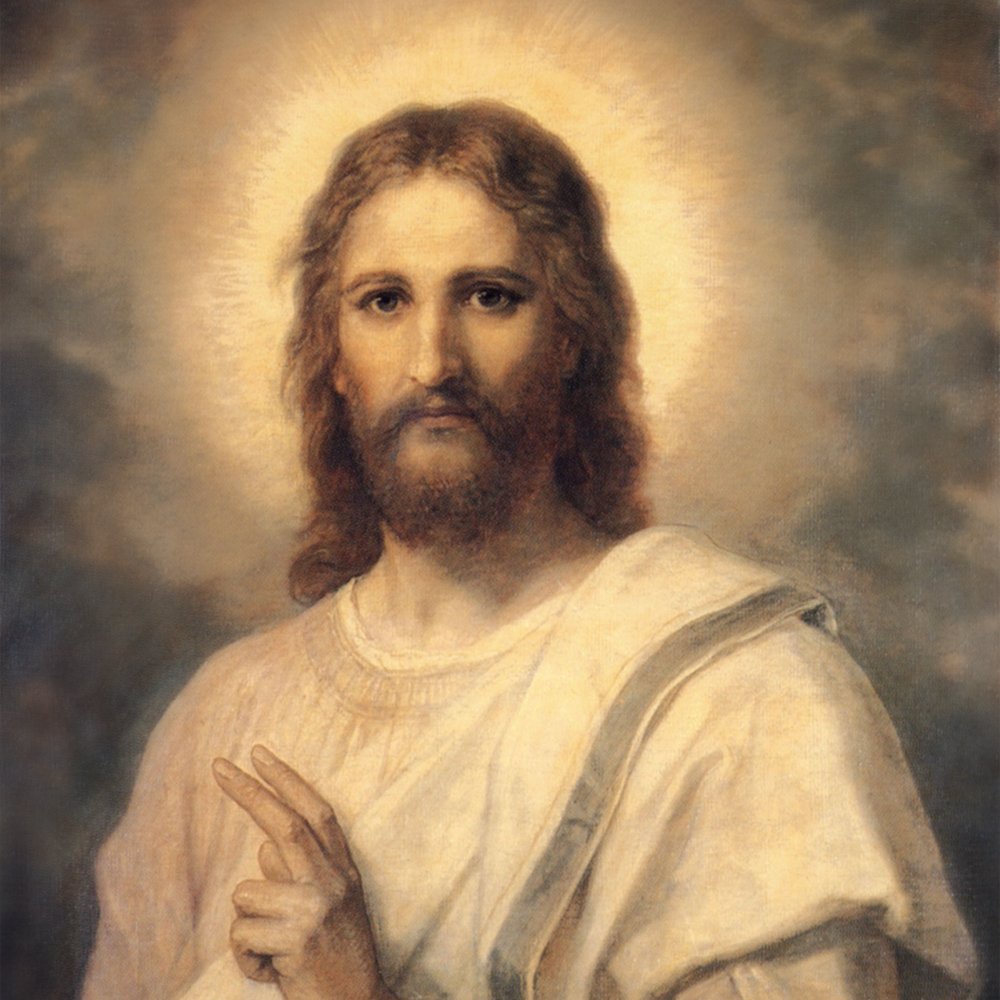
The word “Christ” comes from the Greek “Christós” (Χριστός), which means “Anointed One”.
This term is the translation of the Hebrew “Messiah” (מָשִׁיחַ, Mashíach), which also means “Anointed One”.
Therefore, Jesus Christ means “Jesus, the Anointed”, that is, the one who was consecrated by God with a special mission.
Jesus Christ is the Son of God who became man to save humanity. His life is understood not only as a historical event, but as the manifestation of God’s love. He was born in Bethlehem, Judea, in a miraculous way, as he was conceived by the Virgin Mary through the work of the Holy Spirit. Mary accepted the mission of being the Savior’s mother with faith and humility. Jesus was born in a stable, amidst simplicity, and was visited by shepherds and wise men, who recognized his importance since birth. As a child, he was taken with his family to Egypt to escape persecution by King Herod, later returning to live in Nazareth, where he had a simple childhood, growing in wisdom, obedience and grace.
At the age of 30, Jesus begins his public life after being baptized by John the Baptist in the Jordan River. At that moment, the Holy Spirit descends upon Him and the voice of the Father recognizes Him as the beloved Son. After 40 days in the desert, where he resists the temptations of the devil, Jesus begins to preach the arrival of the Kingdom of God. He calls 12 apostles to follow him, performs miracles (such as healings, multiplying bread, and even raising the dead) and teaches with authority, especially through parables and the Sermon on the Mount, where he proclaims the beatitudes and the new law of love, mercy and forgiveness. Despite attracting many followers, it faces opposition from religious authorities for criticizing hypocrisy and reinterpreting the Law in a profound and liberating way.
Realizing that his time was approaching, Jesus entered Jerusalem acclaimed by the people, but was betrayed by Judas Iscariot. At the Last Supper, with his apostles, he institutes the Eucharist, offering his Body and Blood in the form of bread and wine, anticipating the sacrifice of the cross. After being arrested, he is unfairly judged, tortured and crucified. His death on the cross is seen by the Church as the culmination of God’s love: Jesus offers his life to redeem the sins of humanity. He is buried, but on the third day he rises gloriously, overcoming death and confirming his divinity. He appears to the disciples for 40 days, strengthening their faith, and then ascends to Heaven, promising to send the Holy Spirit.
On the day of Pentecost, the Holy Spirit descends upon the apostles, beginning the mission of the Church, which continues to announce the Gospel. Jesus is alive and present among us, especially in the sacraments, in the Scriptures, in the Christian community and in the poor. He is recognized as the Savior, the Redeemer, the eternal Word of God incarnate. The Catholic faith awaits his glorious second coming, when he will judge the living and the dead and definitively establish the Kingdom of God.
The eternal Word, the Second Person of the Holy Trinity, descended from heaven in the fullness of time (cf. Gal 4:4) to carry out the work of our redemption. “And the Word became flesh and dwelt among us” (John 1:14). Thus, Christ, true God and true man, manifested the infinite love of the Father and made visible the salvation that had been prepared from all eternity.
Christ was born of the Virgin Mary, chosen among all women, full of grace and preserved from original sin (cf. Lk 1:28). The angel Gabriel announced to him: “Hail, full of grace, the Lord is with you” (Luke 1:28). Joseph, a righteous man, received divine guidance in a dream: “Do not be afraid to take Mary as your wife; what is conceived in her is from the Holy Spirit” (Mt 1:20). Thus Isaiah’s prophecy was fulfilled: “Behold, the virgin will conceive and give birth to a son, and she will call his name Immanuel” (Is 7:14).
The birth of Christ took place in Bethlehem, in the poverty and humility of a stable, according to prophecy (cf. Mi 5:1). The shepherds, warned by the angels, came to worship the newborn Savior: “Glory to God in the highest, and on earth peace among men of good will” (Luke 2:14). The magicians of the East, guided by a star, offered him gold, frankincense and myrrh, signs of his royalty, divinity and future death (cf. Mt 2:11).
From childhood, Christ showed wisdom and holiness beyond his years. At the age of twelve, in the Temple of Jerusalem, He taught the doctors of the Law, and everyone who heard Him was amazed at His intelligence and grace-filled response: “Why did you seek me? Did you not know that I must be about my Father’s affairs?” (Luke 2:49). His childhood was silent, humble and obedient to Mary and Joseph, an example of family holiness (cf. Lk 2:51).
At the beginning of his ministry, Christ was baptized by John the Baptist in the Jordan River, fulfilling all righteousness (cf. Mt 3:15). As he rose from the waters, the Holy Spirit descended upon him in the form of a dove, and the voice of the Father declared: “This is my beloved Son, in whom I am well pleased” (Mt 3:17). From this moment on, Christ begins his messianic mission to save the human race, announcing the Kingdom of God.
During forty days in the desert, Christ was tempted by the devil, but remained blameless, showing us the way of victory over sin (cf. Mt 4:1-11). He quoted the Scripture, “Man shall not live by bread alone, but by every word that proceeds from the mouth of God” (Dt 8:3), and rejected all proposals of pride, vanity and worldly power.
Christ’s public ministry was marked by the announcement of the Kingdom of God, the works of mercy and the preaching of conversion. He called the Apostles, simple fishermen and ordinary men, to be fishers of men (cf. Mt 4:19). “Follow me, and I will make you fishers of men” (Mt 4:19). With divine authority, He taught in the synagogues, healed the sick, cast out demons and raised the dead, showing the presence of the heavenly Kingdom (cf. Mt 9:35; Lk 7:22).
Christ taught with parables, illuminating the mysteries of the Kingdom of God in a simple and profound way (cf. Mt 13:34). He said: “You are the light of the world. A city on a mountain cannot be hidden” (Mt 5:14). With his words, the humble rejoiced and the hardened hearts were shaken, for He was the Master sent by the Father, the living Word.
The Eucharist was instituted by Christ at the Last Supper, a memorial of his Passion and a perpetual sign of communion with God (cf. Lk 22:19-20). He took bread and wine, giving himself as true food and drink for eternal life: “This is my body… This is the cup of the new covenant, poured out for many” (Mc 14,22-24). Thus, He left us the central sacrament of our salvation.
The Passion of Christ began with the betrayal of Judas, the arrest in the Garden of Olives and the unfair trial before the Sanhedrin and Pilate (cf. Mt 26,47-27,26). Jesus, innocent of all sin, was humiliated, flogged and crowned with thorns, accepting every suffering out of love for us. He himself said: “Father, if you are willing, remove this cup from me; nevertheless, not my will, but yours, be done” (Luke 22:42).
Christ carried the cross, being mocked and insulted by the people and soldiers (cf. John 19:17-18). “If anyone wants to come after me, let him deny himself and take up his cross and follow me” (Mt 16:24). On the cross, He gave up His spirit, offering Himself in the perfect sacrifice for the forgiveness of the sins of all humanity: “It is finished” (John 19:30). Every drop of your blood is a source of grace and redemption.
Christ’s glorious Resurrection on the third day after death confirmed his divinity and victory over death (cf. Mt 28:6). He appeared to Mary Magdalene, the Apostles and more than five hundred brothers, saying: “Do not be afraid; go and tell my brothers” (Mt 28:10). With his resurrection, Christ opened the doors of eternal life and became Lord of the living and the dead (cf. Rom 14:9).
After forty days, Christ ascended to heaven in the presence of the Apostles, sitting at the right hand of the Father (cf. Acts 1:9-11). He sent the Holy Spirit on the day of Pentecost, to guide the Church and strengthen the faithful in the mission of evangelization: “You will receive power when the Holy Spirit comes upon you, and you will be my witnesses” (Acts 1:8). Thus, the Kingdom of God is also manifested in the Church, prolonging the work of Christ in the world.
The life of Christ is a model for all men: humility, obedience, charity, patience, prayer, penance and total surrender to the Father’s will (cf. Phil 2:5-8). He is the Way, the Truth and the Life (John 14:6), the only bridge between God and men. Everyone who believes in Him, remains in Him and fulfills His commandments will achieve eternal life (cf. Jn 15:10-11; Jn 3:16).
Christ reigns forever as King of kings and Lord of lords (cf. Rev 19:16). He intercedes for us before the Father, offers us the sacraments and directs the Church with divine authority, reminding us: “I will be with you always, until the end of the world” (Mt 28:20). May each soul approach him with faith, hope and charity, and may the life of Christ inspire holiness, perseverance and love for God in all of us.
Christ’s goal was to restore the divine order broken by sin, reconciling humanity with God the Father through his perfect obedience and sacrifice on the cross. He came to teach eternal truth, found the only visible Church, and lead souls to eternal salvation. Through His Passion, Death and Resurrection, Christ became the only Mediator between God and men, offering eternal life to those who persevere in Faith.