Secularism
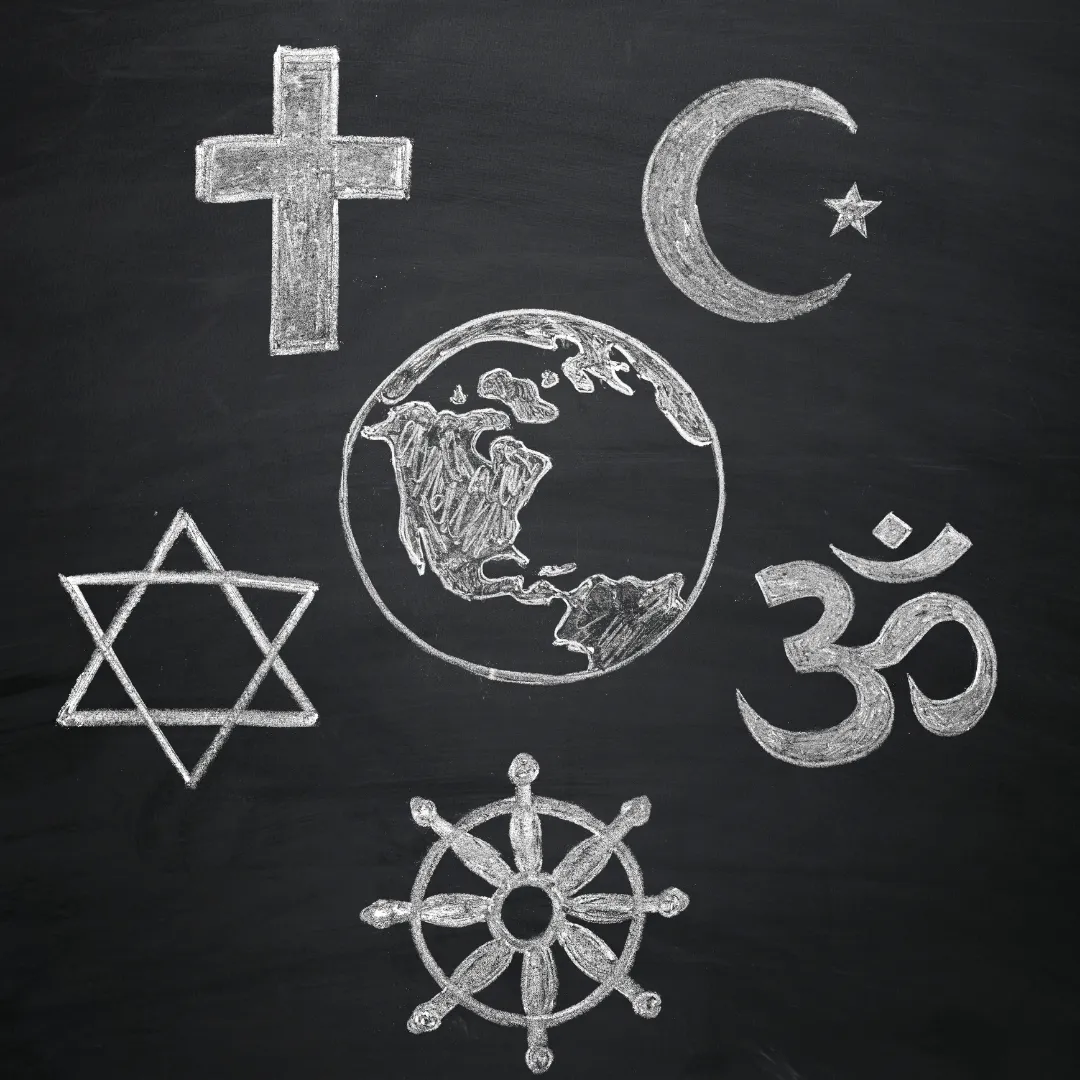
Secularism as a Weapon of Destruction of the Catholic Church
This is one of the most fundamental theses of pre-Vatican II Catholicism and constitutes an essential historical interpretation for understanding the last 250 years of Western civilization. The central question is: was secularism a natural development of society or a deliberate strategy to destroy Christendom and the Catholic Church?
Theological Foundations: Christianity vs. Secularism
1. The Traditional Catholic Doctrine on the State
Before understanding secularism as an attack, we need to understand what it replaced:
Medieval Christendom – The Catholic Ideal:
Traditional Catholic doctrine has always taught that:
Christ is King of all creation:
Not just of individual souls, but of nations.
Not only in the private sphere, but also in the public sphere.
His kingship is universal and total.
The Two Swords – Gelasian Doctrine:
Pope Gelasius I (5th century) formulated:
Spiritual sword : The Church, supreme in matters of faith and morals.
Temporal sword : State, governs civil affairs.
Both subordinate to Christ
The state must recognize and protect the true religion.
Not a theocracy (direct rule by the Church), but harmony between powers.
The Social Kingship of Christ:
Encyclical Quas Primas of Pope Pius XI (1925) – the last gasp of traditional doctrine:
Christ is not only a spiritual king, but King of the nations.
States have an obligation to recognize His monarchy.
Laws must conform to divine law.
The Catholic religion should be the official religion of the State.
Practical consequences of Christianity:
In a traditional Catholic state:
The church has a privileged status.
Laws reflect Catholic morality.
Heresy and blasphemy are crimes.
Education is Catholic.
Other religions tolerated but not treated as equals
Holy days are public holidays.
The state protects the church, the church sanctifies the state.
Historical examples:
Holy Roman Empire
Catholic kingdoms of medieval Europe
Spain until 1978
Ireland until the 1990s
Portuguese, French, and Austrian monarchies
This was the Catholic norm for 1500 years.
2. Secularism: The Counter-Doctrine
Definition:
Secularism (not to be confused with soft secularism) is:
Deliberate exclusion of religion from the public sphere.
Forced privatization of faith
Religious neutrality of the State (impossible in practice)
Equating all religions (institutional relativism)
Total secularization of institutions
Secularist principles:
Separation of Church and State (not a mere distinction, but a hostile divorce)
Neutral state (in theory – in practice, anti-religious)
Religion is a private matter (it cannot influence public space).
All religions are the same (official relativism)
Morality without God (secular ethics replaces natural law)
Appearance vs. Reality:
Secularist rhetoric:
“Religious freedom for all”
“Tolerance and pluralism”
“A neutral state benefits no one.”
“Separating church and state protects religion”
Reality:
Freedom only for irrelevant religions.
Intolerance towards public Catholicism
The state favors practical atheism.
Separation weakens the Church, it does not protect it.
Historical Origins: The Anti-Catholic Revolution
1. The French Revolution (1789) – Ground Zero
The French Revolution was the founding moment of modern secularism and explicitly anti-Catholicism.
Phase 1: Subordination of the Church (1789-1791)
Civil Constitution of the Clergy (1790):
Church turned into a department of the State
Pope loses authority over French Church
Bishops and priests elected by popular vote (including non-Catholics)
Salaries paid by the State (economic dependence)
Priests required to swear allegiance to the Constitution.
Objective: Not separation, but the enslavement of the Church to the revolutionary State.
Result: Church divided between:
Sworn parents (collaborators)
Refractory priests (loyal to Rome) – declared criminals.
Phase 2: Violent Dechristianization (1793-1794)
The Jacobin Terror revealed the true face of the project:
Cult of Reason:
Notre-Dame converted into a “Temple of Reason”
Prostitutes placed on the altar as “Goddess of Reason”
Systematic desecration of churches
Destruction of relics, images, books
Revolutionary Calendar:
7-day week abolished (to eliminate Sunday)
Santos removed from the calendar.
Year 1 of the Republic (denial of the Christian Era)
Renamed Meses (Thermidor, Brumaire, etc.)
Genocide in the Vendée (1793-1796):
Catholic region resisted the Revolution
Answer: deliberate extermination
Estimates: 200,000-600,000 dead
Pregnant women dismembered
Children killed to “eliminate future rebels”
Human skin tanned to make boots
Priests drowned en masse (“republican weddings”)
General Westermann to the Committee: “The Vendée no longer exists. It died under our free sword, along with its women and children. I have just buried an entire people.”
This was not revolutionary excess – it was DELIBERATE POLITICS.
Phase 3: The Established Standard
Napoleon (1801) restored the Church, but subordinated it :
Concordat of 1801: The Church exists, but is controlled.
Not a return to Christendom, but a secular state tolerating useful religion.
The model was created:
Attacking the Church violently
To reduce irrelevance or subordination.
Institutionalize secularism
Never allow the restoration of Christendom.
2. The Expansion of Secularism (19th Century)
Revolutions of 1848:
Revolutionary wave across Europe
Everywhere: attacks on churches, convents, priests
Objective: to complete the work of 1789
Italian Unification (1860-1870):
The Risorgimento was explicitly anti-Catholic:
The Papal Kingdom (Papal States) existed for over 1000 years.
Garibaldi, Cavour, and Mazzini (freemasons) wanted to destroy it.
1870: Capture of Rome
Pope Pius IX becomes a “prisoner of the Vatican”
Papal States destroyed for the first time since 756 AD.
Law of Guarantees (1871):
“Separation of Church and State” imposed
Church property confiscated
Religious orders expelled
Secularized education
Result: Italy became a secular state, with the Pope having no temporal power.
The Roman Question continued until 1929 (Lateran Treaty).
France – The Eldest Daughter of the Church:
The Third Republic (1870-1940) was a systematically anti-Catholic regime.
With Ferry (1880s):
Secularized public education
Crucifixes removed from schools
Religious orders prohibited from teaching.
Catechism banned
Separation Act (1905):
“Official separation of Church and State”
Confiscation of ecclesiastical property
End of salaries for clergy
Forced inventories of churches (desecration)
Catholic resistance brutally suppressed
Result: France, the most Catholic kingdom in Europe, officially became secular .
Mexico – The Latin American Test:
Cristero War (1926-1929):
The Mexican Masonic government implemented:
Constitution of 1917: Church without legal rights
Prohibition of religious education
Parents limited to 1 per 100,000 inhabitants
Clerical attire is prohibited.
Closed convents
Catholic response: Armed revolt (Cristeros)
Catholic peasants vs. government army
War cry: “Long live Christ the King!”
90,000 dead
Priests summarily executed
Systematic desecration of churches
Betrayal: Bishops negotiated surrender under pressure from the Vatican. Result: Cristeros disarmed, then massacred. Mexico remains officially secular to this day.
The Global Standard:
In all these revolutions, the method was identical :
Rhetoric: “Freedom, progress, modernity”
Real target: The Catholic Church specifically.
Means: Violence, confiscation, hostile legislation
Result: Forced secularization
Irreversibility: Never allow restoration.
This was no coincidence – it was COORDINATION.
The Architects: Who Promoted Secularism?
1. Freemasonry: Declared Enemy
The connection between Freemasonry and secularism is not speculation – it is admitted by the Freemasons themselves .
Explicit Masonic Declarations:
International Masonic Congress (1902): “Freemasonry is the only institution that can and should take the lead in the fight against clericalism.”
Grand Orient of France: Officially voted for the destruction of Catholicism as an institutional objective.
Léo Taxil (former Freemason who revealed secrets): He documented meetings where the destruction of the Church was systematically planned.
Pope Leo XIII – Encyclical Humanum Genus (1884):
Solemn condemnation of Freemasonry:
“Satanic cult” aiming to destroy the Church
It operates through infiltration, deception, and legislation.
It promotes secularism, liberalism, and relativism.
It seeks to de-Christianize society.
Evidence of Masonic Infiltration:
The protagonists of the secularist revolutions were Freemasons:
French Revolution: Danton, Marat, Robespierre – all Freemasons
Napoleon: a Freemason, as were his generals.
Italian Risorgimento: Garibaldi (Grand Master), Mazzini, Cavour – all Freemasons
French Republic: Gambetta, Ferry, Combes – all Freemasons of the Grand Orient
Spanish Republic (1931): A completely Masonic government
Mexico: Plutarco Calles and revolutionaries – Freemasons
This is not theory – it is documented historical fact.
The Masonic Strategy:
Internal Masonic documents reveal a three-step plan:
Infiltration: Placing Freemasons in key positions (government, media, education)
Legislation: Proceed with progressively passing anti-clerical laws.
Normalization: Making secularism seem natural, inevitable, modern.
Alta Vendita (19th-century Masonic document): “Our ultimate goal is that of Voltaire and the French Revolution – the complete destruction of Catholicism and even of the Christian idea.”
“We don’t need to kill the Church – we just need to corrupt it.”
Specific plan:
Infiltrate seminars
Raising liberal parents
Eventually electing a Masonic Pope
The church would destroy itself from within.
Disturbing aside: Many post-Vatican II Catholics believe this plan was successful .
2. Judaism: Converging Interests
Here we touch again on a delicate but historically relevant issue:
Why did Jews promote secularism?
Historical reason:
Under traditional Christianity:
Jews were tolerated but restricted.
They were not allowed to hold certain positions.
They lived in separate areas (ghettos).
Limitations on property, professions
Under secularism:
“Jewish emancipation”
Full civil equality
Access to all professions and positions.
Assimilation and social mobility
The Jewish system of reckoning:
Christianity = restrictions
Secularism = liberation
Therefore: Strategic interest in destroying Christendom.
Evidence:
French Revolution:
Jews among the first beneficiaries
“Citizenship” granted to Jews (1791)
Ghettos abolished
Restrictions removed
Liberal revolutions of the 19th century:
They always included “Jewish emancipation”.
Jews supported liberal movements.
Jewish funding for revolutions
Jewish prominence in secular movements:
Communism: Marx (Jewish), Trotsky (Jewish), Bolshevik leaders who were mostly Jewish.
Liberalism: Rothschilds funding liberal revolutions
Spanish Republic: Government with multiple Jewish ministers
Mexican Revolution: Documented Jewish Funding
The question: Coincidence or pattern?
Statements from Jewish leaders:
Bernard Lazare (Jewish intellectual, 19th century): “The Jew is the genius of destruction. Wherever he appears, the old edifice must be torn down.”
Marcus Eli Ravage (Jewish historian): Wrote in 1928 that Jews were “guilty” of Christianizing the world, and were now working to undo it.
Rabbi Stephen Wise: “Some call it Marxism – I call it Judaism.”
Important distinction:
Not all Jews (most were traditional/conservative)
But secular Jews, revolutionaries, and atheists were disproportionately prominent in anti-Catholic movements.
Why?
Historical resentment
Secularism freed people from both traditional Christian and Jewish restrictions.
A vision of “fixing the world” (Tikkun Olam) through social revolution.
3. Capitalism and Modernity: Material Interest
Besides Freemasons and Jews, there were economic interests involved .
Capitalist Bourgeoisie:
The traditional church taught:
Usury (excessive interest) is a sin.
Profit should be limited by justice.
Property has social obligations.
Wealth should serve the common good.
Liberal capitalism demanded:
Unlimited profit
A market without moral constraints.
Absolute ownership
Unlimited accumulation
The church was an obstacle to unchecked capitalism.
Solution: Secularize the economy, remove ecclesiastical influence.
Church Properties:
The church possessed:
Vast lands (1/3 of Europe in some places)
Educational institutions
Hospitals, orphanages
Works of art, treasures
Secularist revolutions always confiscated everything.
Who bought them? The capitalist bourgeoisie.
French Revolution: National properties (confiscated estates) sold to the bourgeoisie. Italy: Ecclesiastical patrimony auctioned off. Spain (1931): Church stripped of everything.
Capitalism has benefited immensely from secularism.
4. Convergence of Interests
Secularism was promoted by an alliance of:
Freemasonry: Ideological/esoteric hatred of Catholicism
Secular Jews: Interest in destroying the Christianity that restricted them.
Capitalists: Removing moral brakes on profit
Intellectuals: Enlightenment pride, rejection of revelation
Protestants: In some contexts, they allied themselves against Rome.
This coalition was virtually invincible.
The Strategy: How to Destroy the Church Without Martyrs
1. Lesson from the Past: Persecution Creates Martyrs
Roman Empire (1st-3rd centuries):
Brutal persecution
Christians martyred by the thousands
Result: “The blood of the martyrs is the seed of Christians”
The church grew exponentially.
Rome eventually converted
French Revolution (Reign of Terror):
Violent persecution
Priests executed, nuns raped.
Result: Heroic resistance, martyrdoms
Catholicism strengthened in faithful regions
Napoleon had to restore the Church.
Lesson learned: Violent persecution STRENGTHENS the Church.
A new strategy is needed: Destroy the Church without creating martyrs .
2. The Strategy of Secularism: A Slow Death
Don’t kill the Church – suffocate it.
Step 1: Separation of Church and State
Remove privileges, don’t initially ban them.
Rhetoric: “equality for all”
Reality: The Church loses protection, resources, and influence.
Step 2: Secularization of Education
More crucial than anything else
Controlling education = controlling the future.
Children raised without faith = adults without faith.
Without new Catholics, the Church dies in a generation or two.
Methods:
To prohibit religious orders from teaching.
Removing religion from the curriculum
Teaching anti-Catholic “critical history”
Promoting science as a substitute for religion.
Early sexualization (corrupting innocence)
Step 3: Culture Control
Media, art, literature – all secularized.
The church is portrayed as backward and oppressive.
Catholicism associated with ignorance, fanaticism
Modernity = abandonment of faith
Step 4: Gradual Anti-Catholic Legislation
Not banning Mass (yet), but restricting it.
Legalized divorce (an attack on marriage)
Legalized abortion (an attack on life)
Normalized sodomy (an attack on morality)
Each law erodes the Catholic moral foundation.
Step 5: Social Marginalization
Practicing Catholics excluded from key positions
“Modernization” requires abandoning “superstitions”
Limited career paths for those who uphold public faith.
Social pressure for conformity
Final Result:
The church exists “formally”
But it’s socially irrelevant.
Confined to buildings
No influence on education, politics, culture, or public morals.
Practitioners are a marginalized minority.
In a few generations: Christianity dies of starvation.
Diabolical genius:
No persecution = no martyrs
No martyrs = no heroism
Without heroism = lukewarm faith
Lukewarm faith = silent apostasy
3. The Illusion of “Religious Freedom”
The masterful deception of secularism:
Promise: “Separation of Church and State guarantees religious freedom for all.”
Reality: “Religious freedom” means relegation to the private sphere. .
Ancient Freedom (Christendom):
A church free to act in all spheres.
To educate, to legislate morally, to influence politics.
Properties, institutions, public voice
Substantive freedom
Lay “freedom”:
You can believe whatever you want in your head.
You can go to church on Sundays.
But it cannot influence education, law, or politics.
Public morality divorced from religion
Freedom in name only
Analogy: It’s like saying to a fish, “You have freedom – just stay out of the water.”
The Church is essentially public:
Christ commanded, “Go and teach all nations.”
Do not “teach to anyone who wants to listen in private”
The Church has a universal, public, and social mission.
Confining it to the private sphere is to kill it functionally.
Concrete Examples: Secularism in Action
1. France: Laboratory of Secularism
French “Laïcité” is a global model:
Law of 1905 – Appearance vs. Reality:
Official rhetoric: “Neutrality, equality, freedom for all.”
Reality:
40,000 religious buildings confiscated
Catholic Church stripped of everything
Religious orders dissolved
30,000 Catholic schools closed
Congregations expelled
About that:
Freemasonry prospered (never persecuted).
Judaism received special protection.
Protestantism tolerated
Only Catholicism was targeted.
Protestantism and Idolatry
The controversy over idolatry is one of the deepest theological divisions between Catholics and Protestants since the 16th-century Reformation. The traditional Catholic Church maintains that the Protestant reformers made a fundamental error of interpretation by equating the veneration of saints and the use of sacred images with pagan idolatry.
The Fundamental Theological Distinction
Catholic theology establishes three distinct levels of worship, each with a specific nature and purpose:
1. Latria (Worship)
This is the supreme, absolute, and exclusive worship due only to God – Father, Son, and Holy Spirit. When a Catholic kneels before the Blessed Sacrament (the Eucharist), he is worshipping Christ present in the sacrament. This is latria.
Characteristics of latria:
Recognition of absolute divinity
Total and unconditional submission
Recognition of God as creator and ultimate end.
Offering of sacrifice (the Mass)
Practical example: When a Catholic genuflects before the tabernacle containing the Blessed Sacrament, they are adoring Christ. This gesture would never be appropriate before an image of a saint.
2. Dulia (Veneration)
It is the honor bestowed upon saints and angels. The word comes from the Greek “douleia” (service). It is fundamentally different from worship.
Dulia’s characteristics:
Recognition of the holiness attained through God’s grace.
Honoring the example of Christian life
Request for intercession (not a direct granting of favors)
Admiration for heroic virtues
Practical examples:
Just as we honor admirable living people (parents, national heroes, great leaders), Catholics honor those who have led exceptionally holy lives.
When we ask Saint Joseph to intercede for us, it’s like asking a friend to pray for us – we’re not saying he has any power of his own.
3. Hyperdulia (Special Veneration of Mary)
A superior form of veneration, but still inferior to the worship due to God.
Why does Mary receive special honor?
Mother of Jesus Christ (Theotokos – Mother of God)
Perpetual Virgin
Immaculate Conception
Assumption into Heaven
Mediatrix of all graces (submissive to Christ)
Example: When praying the Hail Mary, a Catholic does not worship Mary, but asks for her intercession: “pray for us sinners” – it is a request, not worship.
Catholic Biblical Arguments
The Commandment Correctly Interpreted
Exodus 20:4-5 – “You shall not make for yourself an idol… you shall not bow down to them or worship them.”
The Catholic Church argues that context is crucial:
The prohibition was against pagan idols worshipped as gods.
The Israelites came from Egypt, surrounded by pagan idolatry (Apis, Ra, etc.).
It was not an absolute ban on all visual representation.
God Himself ordained sacred images.
Biblical examples of images ordained by God:
Exodus 25:18-22 – Golden Cherubim on the Ark of the Covenant
God commands: “You shall make two cherubim of gold… at the ends of the mercy seat.”
The Israelites bowed down before the Ark (but they worshipped God who was present there).
Numbers 21:8-9 – The bronze serpent
God commands Moses to make a bronze serpent.
Whoever looked at her would be healed.
Jesus himself refers to this in John 3:14: “Just as Moses lifted up the serpent in the desert.”
1 Kings 6:23-29 – Solomon’s Temple
Full of images: cherubs, lions, bulls, palm trees, flowers.
Walls covered with sculptures
God approved and dwelt in this temple (1 Kings 8:10-11)
Ezekiel 41:17-20 – Vision of the future Temple
It describes walls decorated with cherubs and palm trees.
Divine prophecy including sacred images
The Intercession of the Saints
Revelation 5:8 – “The twenty-four elders… had golden bowls full of incense, which are the prayers of the saints.”
It shows saints in heaven offering prayers to God.
Model of heavenly intercession
Revelation 8:3-4 – Angel offers incense with the prayers of the saints.
Explicit angelic intercession
James 5:16 – “The prayer of a righteous person is powerful and effective.”
If the prayers of the righteous are powerful on earth, how much more so in heaven?
2 Maccabees 15:12-14 – Vision of Onias and Jeremiah (both deceased) interceding
Precedent of deceased saints praying for the living.
(Deuterocanonical book, accepted by Catholics)
The Communion of Saints
Hebrews 12:1 – “We are surrounded by a great cloud of witnesses”
The saints in heaven are not inactive or unconscious.
They are active witnesses of the Church militant (on earth).
Hebrews 12:22-23 – “You have come to the spirits of the righteous made perfect.”
Mystical union between the earthly and heavenly Church
1 Corinthians 12:12-27 – The Body of Christ
The Church is one body.
Death does not break this fundamental bond.
The Historical Context: The Early Church
The Catholic Church argues that its practices reflect original Christianity, not medieval innovations.
Roman Catacombs (1st-3rd centuries)
Archaeological evidence:
Catacomb of Priscilla (2nd century): paintings of Mary with the infant Jesus
Catacomb of Saint Callixtus: images of Peter, Paul, and other saints.
Christian symbols: fish, anchor, good shepherd
Context: Persecuted Christians would not create images if they considered it idolatry. They risked their lives to maintain these representations, indicating that they saw no contradiction with the commandment.
Early Church Fathers
Saint Athanasius (296-373) defended the veneration of saints: “Those who touch the bones of martyrs participate in holiness through grace.”
Saint Jerome (347-420) On intercession: “If the Apostles and martyrs, while still in the flesh, could pray for others… how much more so after their crowns of victory?”
Saint Augustine (354-430) “We do not build temples and ordain priesthoods and sacrifices to martyrs, for they are not our gods, but their God and ours is God.”
Clear distinction between veneration and worship.
Saint John Damascene (675-749) Great defender of sacred images: “Formerly God had neither body nor form and could not be represented. But now that God has made himself seen in the flesh… I make an image of the visible God.”
Second Council of Nicaea (787 AD)
Dogmatic definition:
He condemned iconoclasm (destruction of images).
He clearly distinguished between adoration (latria) and veneration (dulia).
He stated that the honor bestowed upon the image is transferred to the prototype.
7th Ecumenical Council – accepted by Catholics and Orthodox Christians
Official decree: “The honor paid to an image passes to its prototype; whoever venerates an image venerates the person represented in it.”
The Protestant “Error” According to Catholic Theology
1. Oversimplification
Protestants, according to the Catholic view, apply the commandment literally and out of context:
Problem identified:
They are unaware that God ordained images in the Temple itself.
They do not distinguish between pagan idols and pedagogical Christian images.
They apply inconsistent standards (many have family photos, national flags, but reject religious images).
Example of inconsistency: If all images were idolatry, Protestant churches could not have:
Crosses (visual representation)
Stained glass windows with biblical scenes
Illustrations in children’s Bibles
Photos of loved ones (honoring creatures)
2. Break with Apostolic Tradition
Catholic argument:
For 1,500 years, Christianity has used images.
The Apostles did not condemn this practice in the churches they founded.
The Protestant Reformation of the 16th century broke historical continuity.
Catholic principle: “Lex orandi, lex credendi” (the law of prayer is the law of faith)
How the Church has always prayed reveals what it has always believed.
Universal and ancient practices reflect apostolic faith.
3. Misunderstanding about Intercession
Protestant confusion identified: Equating requests for intercession with attributing divine power to saints.
Catholic analogy:
If I ask my pastor to pray for me, I am not denying that Christ alone is the mediator.
Christ is the ONLY necessary and sufficient mediator.
Saints are mediators subordinate to and dependent on Christ.
1 Timothy 2:1 – Paul asks for intercessory prayers for one another.
Practical example: When someone asks “pray for me,” they are not denying Christ’s mediation. They are acknowledging that:
Christ is the primary mediator.
The prayers of the faithful have value (James 5:16)
The Church is a body where the members help one another.
4. Iconoclasm: Repeating a Historical Error
Historical parallel: Catholics argue that Protestantism repeats Byzantine iconoclasm (8th-9th centuries), which had already been condemned by the Church.
Consequences of Protestant iconoclasm:
Destruction of priceless sacred art during the Reformation.
Catholic churches looted in England, Germany, and the Netherlands.
Loss of centuries of cultural and religious heritage.
Saint Thomas More executed by Henry VIII (1535)
Examples of destruction:
England (1530-1540): dissolution of monasteries, destruction of relics and images.
Netherlands (1566): “Iconoclastic Fury” – mass destruction of churches
Scotland (1559-1560): John Knox led the destruction of “papist idols”
5. Ignoring the Pedagogical Aspect
“Biblia Pauperum” (Bible of the Poor): For centuries, most people were illiterate. Images served as:
Visual education about biblical stories
Reminders of Christian virtues
Inspiration for prayer and meditation
Saint Gregory the Great (540-604): “What writing presents to readers, painting presents to the ignorant who contemplate it… therefore, especially for nations, painting can replace reading.”
Argument: If God used physical objects (the Ark, the Temple, the bronze serpent), why can’t we use images to draw closer to Him?
Practical Examples of the Difference
Scenario 1: In front of an Image of Saint Francis
Catholic:
Kneel, but mentally address God.
Ask Saint Francis to intercede.
He admires the example of evangelical poverty.
It does not attribute divine power to the saint.
Protestant understanding (according to Catholics, erroneous):
He sees the Catholic kneeling and assumes worship.
He does not understand the mental distinction between veneration and worship.
It concludes that idolatry exists where there is only honor and requests for intercession.
Scene 2: Procession with the Image of Our Lady
Catholic perspective:
Community celebration of faith
Honor to the Mother of Jesus
Remembrance of Marian virtues (humility, faith, obedience)
Expression of popular religious culture
Protestant critique:
Appearance of pagan worship
Special treatment for the creature
Catholic response: Just as military parades honor national heroes without considering them gods, processions honor spiritual heroes.
Scenario 3: Relics of Saints
2 Kings 13:21 – “The dead man who touched Elisha’s bones came back to life.”
God worked a miracle through a physical relic.
Biblical precedent for the veneration of relics
Acts 19:11-12 – “God performed extraordinary miracles through Paul, so that even handkerchiefs and aprons that had touched him were taken to the sick.”
Material objects as channels of grace
Catholic practice:
Relics remind us that the saint was a real person.
Physical continuity with the heroes of faith.
It’s not magic, but reverence for God’s work in the person.
The Question of Mary: A Special Case
Why Does Mary Receive Special Veneration?
Biblical titles:
“Full of grace” (Luke 1:28)
“Blessed among women” (Luke 1:42)
“All generations will call me blessed” (Luke 1:48)
Catholic argument: If Mary herself prophesied that she would be honored by all generations, Protestants disobey the prophecy by neglecting it.
Luke 1:43 – Elizabeth calls Mary “the mother of my Lord”
If Jesus is God (Lord), Mary is Theotokos (Mother of God).
Title defined at the Council of Ephesus (431)
Protestant Objections and Catholic Responses
Objection: “Only Jesus is the mediator” (1 Timothy 2:5)
Catholic response:
Jesus is the ONLY necessary and sufficient mediator between God and men.
This does not exclude secondary and subordinate mediation.
Paul himself asks for prayers: “Brothers, pray for us” (1 Thessalonians 5:25)
If prayers on earth are valid, why not in heaven?
Objection: Jesus rebuked those who called Him blessed because of Mary (Luke 11:27-28)
Catholic response:
Jesus did not deny Mary’s blessedness.
He expanded the concept: blessed are those who hear and keep the Word.
Mary is the first and perfect disciple who kept everything in her heart (Luke 2:51).
Conclusion from the Catholic Perspective
The traditional Catholic Church maintains that:
Solid biblical basis: The distinction between worship and veneration is grounded in Scripture and in the practice of God himself (who ordained images in the Temple).
Historical continuity: For 1,500 years, since the Apostles, the Church has practiced the veneration of saints and the use of images without seeing any contradiction with the commandment.
Protestant hermeneutical error: The Reformation applied literal and decontextualized interpretation, ignoring fundamental theological distinctions.
Theological coherence: The veneration of saints flows naturally from the doctrine of the Communion of Saints and the Body of Christ.
Spiritual fruit: Millions have found inspiration and spiritual growth through the veneration of saints, producing fruits of holiness.
Final Catholic position: Protestantism, with good intentions of purifying the faith, has discarded authentic apostolic practices, impoverishing devotional life and breaking with the tradition of the undivided Church. The accusation of idolatry reveals more theological misunderstanding than the reality of authentically lived Catholic practice.