Portugal

Portugal has a relationship with the Catholic Church that is unique in the history of the Christian West, not only as a devout nation but as an active and deliberate instrument in the expansion of Catholicism throughout the known world. No other country of such small dimensions has exerted such a vast influence on the geography of the Christian faith, and this influence was possible precisely because the Portuguese crown and the Church walked together in a project that was simultaneously religious, political, and civilizational.
The roots of this relationship lie in the very foundation of Portugal as a nation. The Reconquista, the centuries-long process by which the Christian kingdoms of the Iberian Peninsula gradually recovered territories dominated by Islam since the Arab invasion of 711, was not merely a political war but a holy war in the mindset of the time. The County of Portucale, the origin of Portugal, was created in 1096 by King Alfonso VI of León and Castile, and its first independent count, Afonso Henriques, obtained recognition of Portugal as an independent kingdom from Pope Innocent II in 1143, becoming a direct vassal of the Holy See. This initial vassalage established a special bond between Portugal and Rome that would mark the following centuries. The legend of Christ’s apparition to Afonso Henriques before the Battle of Ourique in 1139, promising victory and the founding of a kingdom dedicated to the propagation of the faith, whether or not historically credible, reveals how the Portuguese understood themselves from the beginning as a people with a specific religious mission.
The Order of Christ, the direct heir of the Templars in Portugal, played a fundamental role in this history. When Pope Clement V suppressed the Order of the Temple in 1312, King Denis of Portugal refused to persecute the Portuguese Templars and negotiated with Rome the creation of a new order that absorbed their members, their assets, and their military vocation. The Order of Christ became the major financier and organizational framework of Portuguese explorations. Prince Henry the Navigator was Grand Master of the Order, and it was under his auspices that voyages along the African coast began systematically in the 15th century. The sails of Portuguese ships bore the cross of the Order of Christ, transforming each expedition into an act that was simultaneously commercial, political, and religious.
The papacy recognized and sanctioned this Portuguese expansionist vocation through a series of papal bulls that had immense historical consequences. Nicholas V’s bull Romanus Pontifex in 1455 granted Portugal the exclusive right to navigate, trade, and conquer along the African coast and in undiscovered lands, and established that the pagan peoples of these regions should be enslaved to facilitate their eventual conversion. Alexander VI’s bull Inter Caetera in 1493, issued after Columbus’s return, and the Treaty of Tordesillas of 1494 divided the non-European world between Portugal and Spain along an imaginary line, with Portugal retaining the lands to the east, which included Brazil, Africa, and Asia. These papal decisions transformed Portugal and Spain into recognized guardians of Catholic expansion throughout the world.
The Portuguese Patronage was the central legal and ecclesiastical instrument of this mission. Granted by the popes throughout the 15th century and definitively consolidated in the 16th century, the Patronage was the right of the Portuguese crown to appoint bishops, found dioceses, erect churches, and administer ecclesiastical affairs in the territories under its sovereignty or influence, in exchange for the commitment to finance and organize the evangelization of these territories. In practice, it meant that Portugal was responsible for the Catholic Church in an area that stretched from Brazil to Japan, passing through the entire African coast, India, Ceylon, Indochina, and China. No temporal power had ever received an ecclesiastical responsibility of such magnitude.
The fulfillment of this responsibility was the great Portuguese missionary enterprise. The Society of Jesus was the principal instrument of this evangelization, and the alliance between the Jesuits and the Portuguese crown was one of the most fruitful in the history of the Church. Saint Francis Xavier, the greatest missionary since Saint Paul, left Lisbon in 1541 under the patronage of King John III. In just over ten years, Xavier traveled through India, Ceylon, the Moluccas islands in Indonesia, Japan, and died trying to enter China in 1552. His missionary methodology, which sought to adapt the Gospel to local cultures without betraying the essentials of the faith, influenced generations of later missionaries and was simultaneously admired and contested within the Church itself.
In Japan, the Jesuit mission initiated by Xavier enjoyed impressive success in the following decades. It is estimated that by the end of the 16th century there were approximately three hundred thousand Christians in Japan, including several powerful feudal lords. This expansion generated a violent reaction from the Japanese rulers, who feared that Christianity was the prelude to a colonial conquest similar to that occurring in the Spanish Philippines. Persecution began in the late 16th century and intensified in the early 17th century under the Tokugawa government. Thousands of Japanese Christians were martyred in extremely cruel ways, with the Twenty-Six Martyrs of Nagasaki, crucified in 1597, being the most well-known. The result was the almost total visible extinction of Christianity in Japan, but notably, groups of Christians called kakure kirishitan, hidden Christians, maintained their faith in secret for more than two centuries without priests or sacraments, preserving prayers and rites in an inevitably altered but recognizable form, until they reappeared in the 19th century.
In China, the Jesuit mission took on a different character. Matteo Ricci, who arrived in China in 1582 within the framework of the Portuguese Padroado, developed a method of evangelization that sought to engage with the Confucian intellectual elite from within. He learned Mandarin and classical Chinese Latin perfectly, dressed as a Confucian scholar, and demonstrated knowledge of mathematics, astronomy, and cartography that impressed the mandarins and opened doors for religious discussion. Ricci arrived in Beijing and was received at the imperial court, becoming the first European to enter the Forbidden City. The question of the Chinese Rites, which debated whether Chinese Christians could participate in Confucian rites of ancestor veneration, deeply divided the missionaries and was eventually condemned by Rome in the early 18th century, an episode that caused enormous damage to the mission in China and revealed the tensions between the Jesuit approach to inculturation and Roman institutional rigidity.
In India, the history of Portuguese missions is marked by a duality that must be honestly acknowledged. On the one hand, the Church founded in Goa, which became the great ecclesiastical center of the Portuguese East, produced a vibrant Christian life, built churches and convents of extraordinary beauty, and evangelized coastal populations with lasting success that is still observed in the Catholic communities of Goa, Kerala, and other regions. The College of St. Paul in Goa, founded by the Jesuits in 1542, was the first university college in Asia and trained generations of Asian missionaries. On the other hand, the Inquisition established in Goa in 1560 persecuted with extreme cruelty not only Christians who Judaized or followed Hindu practices but also members of the ancient Christian communities of India, the so-called St. Thomas Christians, who maintained Syrian rites of apostolic origin and who were forced to submit to the Latin rite. This episode remains one of the darkest pages in the history of the Portuguese presence in Asia.
The St. Thomas Christians, or Nasrani Christians of Kerala, deserve special mention as they represent one of the oldest Christian traditions in the world. Local tradition states that the apostle Thomas evangelized southern India in 52 AD and was martyred near Madras. Regardless of the precise historicity of this tradition, it is certain that there were flourishing Christian communities in Kerala long before the arrival of the Portuguese, using the Syriac-Oriental rite and linked to the Patriarchate of Antioch. The arrival of the Portuguese and the subsequent effort to Latinize these communities caused divisions that produced several distinct Churches, some in communion with Rome and others not, whose tensions persist to this day.
In Brazil, the Portuguese mission had its own characteristics. The Jesuits arrived with the first colonial expedition in 1549 and for more than two centuries were the most important ecclesiastical presence in the colony. Figures such as Father José de Anchieta, born in the Canary Islands but educated in Portugal, learned the Tupi languages and developed a catechesis adapted to the indigenous culture, creating theatrical plays in Tupi to transmit the mysteries of the faith and founding mission villages where the indigenous people were grouped, converted, educated, and partially protected from colonial slavery. The expulsion of the Jesuits from Brazil by the Marquis of Pombal in 1759 was a devastating blow to the indigenous mission. The villages were dissolved, the Indians dispersed, and much of the work of two centuries undone in a few years. This expulsion is part of a broader conflict between Pombal’s Enlightenment project, which sought to modernize Portugal by reducing the power of the Church, and the Society of Jesus, which represented the more traditional vision of the alliance between crown and Church.
In Africa, the Portuguese presence had complex and contradictory religious consequences. In the Congo, at the beginning of the 16th century, the Portuguese found an organized kingdom whose king, Afonso I, converted to Catholicism with genuine sincerity and enthusiasm, learned Latin, corresponded with the popes, sent his sons to study in Lisbon and Rome, and one of them, Henrique, was ordained a bishop, becoming the first black bishop in the history of the Catholic Church. The history of the Christian kingdom of the Congo is one of the most fascinating and tragic of Catholic expansion, as this genuine Christian flourishing was progressively destroyed by the very slave trade that the Portuguese introduced and which King Afonso, in disturbing letters sent to the King of Portugal, implored to be stopped, without success.
The relationship between the Patronage system and slavery is the most painful point in this entire story. The Portuguese Catholic Church was deeply involved in the transatlantic slave trade, which was initiated by the Portuguese in the second half of the 15th century and which, over four centuries, deported between twelve and fifteen million Africans to the Americas. There were prophetic voices within the Church who condemned this practice, such as Father António Vieira, the greatest preacher in the Portuguese language, who defended the indigenous people of Brazil with extraordinary eloquence but held a more ambiguous position regarding African slaves. The complete moral reconciliation of the Church with this legacy remains a work in progress.
In the 19th century, the Padroado system entered a profound crisis. With Brazil’s independence in 1822 and the growing pressure from non-Catholic colonial powers on Asian and African territories, the system by which Portugal was responsible for the Church in a vast empire became increasingly difficult to sustain. The Padroado frequently became an obstacle to missionary effectiveness because Portugal lacked the resources to maintain the ecclesiastical structure it legally controlled, but also did not grant the Holy See the freedom to act on its own. Bitter jurisdictional conflicts between bishops of the Padroado and bishops appointed directly by Rome paralyzed the Church’s activity in countries such as India and China for decades. The progressive resolution of these disputes throughout the 20th century represented the practical end of a system that had lasted five centuries.
The apparition of Fatima in 1917 belongs to the history of Portugal and the Church in a way that transcends the purely spiritual dimension. Three shepherd children in a poor village in the Portuguese provinces claimed to have received apparitions of the Virgin Mary over a period of six months, in a context where Portugal was immersed in a profound crisis: the anti-clerical republican regime established in 1910 had persecuted the Church, expelled the Jesuits, suppressed religious orders, and violently separated Church and State, while the First World War dragged Portugal into a conflict that the country barely had the strength to endure. The message of Fatima, with its appeal to penance, prayer, and consecration to the Immaculate Heart of Mary, and its promise that Russia would convert, was set within a precise historical context and has become, over time, one of the most globally influential religious phenomena of the 20th century, bringing millions of pilgrims annually to a place that a century earlier was an obscure agricultural village in the Portuguese interior.
What runs through all of this history, from Afonso Henriques to Fatima, from Francis Xavier to the martyrs of Japan, is a persistent awareness that Portugal had a mission that exceeded its geographical and human dimensions. This feeling, which the Portuguese called saudade in a spiritual dimension and which poets and thinkers formulated as Sebastianism and later as the dream of the Fifth Empire, is inseparable from the Catholic faith that shaped the Portuguese soul from the foundation of the kingdom. Portugal was small in territory but immense in reach, and this reach was possible because the crown and the Cross walked together in an enterprise that, with all its contradictions and shadows, transmitted the Christian faith to entire continents and produced a religious heritage whose fruits, from Catholic Brazil to Christian Goa, from the Congo to the Philippines, are still visible today on the map of the universal Church.
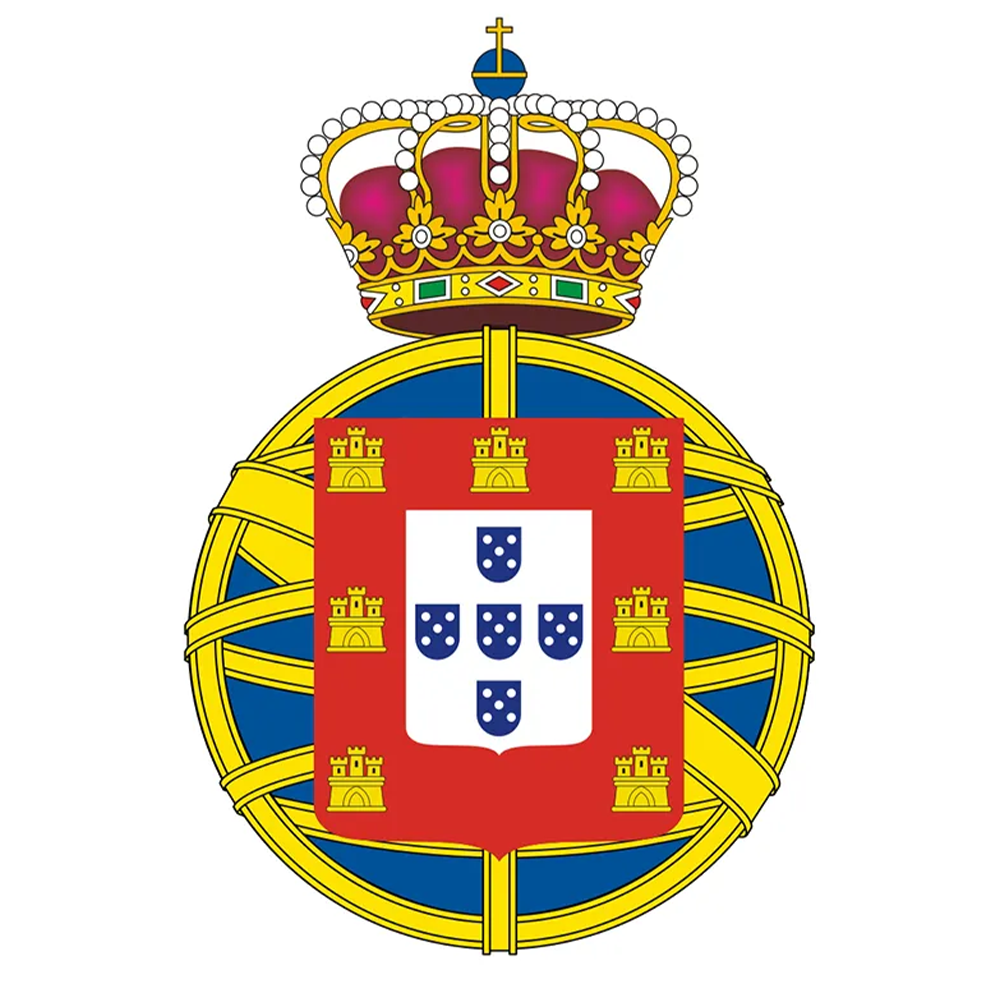
BRAZIL
Imperial Brazil, encompassing the period between Independence in 1822 and the Proclamation of the Republic in 1889, is one of the most unique political phenomena in the history of the Americas and the Western world in the 19th century. While all of Spanish America fragmented into often unstable and violent republics after independence, Brazil achieved the remarkable feat of separating from Portugal while maintaining the territorial unity of an entire continent, preserving the monarchy, and building a state that, with all its contradictions and limitations, functioned with a stability and intellectual sophistication that surprised foreign observers of the time. This uniqueness was not accidental but a direct product of the Portuguese heritage that Brazil carried in its deepest soul.
The transfer of the court and the gestation of independent Brazil.
To understand Imperial Brazil, it is necessary to go back to 1807 and 1808, when an unprecedented event in Western history definitively transformed the relationship between Portugal and its largest colony. When Napoleon Bonaparte invaded Portugal in November 1807, Prince Regent Dom João, advised by England and the court itself, made a decision that few European monarchs would have the mental flexibility and lack of pride to make: instead of resisting in vain or capitulating, he embarked the entire royal family, the entire court, the entire state administration, the archives, the royal library, the treasury, the clergy, and thousands of nobles—a total of between ten and fifteen thousand people—and crossed the Atlantic under British naval escort to settle in Rio de Janeiro.
This transfer of the Portuguese court to Brazil was a desperate act of improvisation that, from a historical perspective, proved to be one of the most consequential gestures in Luso-Brazilian history. In one fell swoop, Rio de Janeiro ceased to be a peripheral colonial city and became the capital of an empire. Dom João opened Brazilian ports to trade with friendly nations, breaking the commercial monopoly that had characterized the Portuguese colonial system. He founded the Bank of Brazil, the Royal Press, the Royal Library (which would become the National Library), the Royal Military Academy, the School of Medicine, the Botanical Garden, and the Royal Museum. In a few years, Rio de Janeiro was transformed into a city that aspired to be worthy of an imperial capital, with theaters, academies, artistic and scientific missions, and a social life that imitated, with inevitable tropical adaptations, the etiquette of the European court.
When Dom João, already King João VI after the death of Queen Maria I in 1816, was finally forced to return to Portugal in 1821 due to pressure from the Liberal Revolution of Porto, which demanded the monarch’s return and the recolonization of Brazil, he left his son and heir, Dom Pedro, in Rio de Janeiro as prince regent. The instruction that became legendary, probably apocryphal but revealing of the spirit of the situation, was that if Brazil were to become independent, it should be under Pedro rather than under some adventurer. The Braganza dynasty remained, and with it the legacy of fifteen years of Portuguese court presence in Brazil.
The Cry of Ipiranga and Conservative Independence
The Brazilian independence of 1822 was a profoundly different process from the Spanish-American independences. While the latter were largely popular, violent revolutions, marked by prolonged wars and significant social ruptures, Brazilian independence was essentially a negotiated separation within the Braganza family, led by the Portuguese colonial elite who inhabited Brazil and who wanted political autonomy without social revolution.
Dom Pedro, young and impetuous but politically astute, was gradually pressured by the Brazilian elite to lead the separation from Portugal. The famous Cry of Ipiranga on September 7, 1822, on the banks of the Ipiranga stream in São Paulo, when Dom Pedro declared Brazil’s independence, was preceded by months of growing tension with the Cortes of Lisbon, which demanded Pedro’s return to Portugal and the reversal of the reforms that had given Brazil the status of a kingdom equal to Portugal. The cry was theatrical and symbolic, as befits a founding moment, but the substance of independence had been prepared by an elite that wanted a Brazilian state without wanting a Brazilian revolution.
What followed was the construction of an imperial state that was, in all its fundamental elements, an extension and continuation of the Portuguese political, cultural, religious, and social tradition. The language was Portuguese. The religion was Catholicism, established as the official religion by the Constitution of 1824. The law was Portuguese law, slowly adapted throughout the century. The institutions were modeled on Portuguese institutions and, through them, on European institutions in general. The ruling elite was composed of men educated in Coimbra or who aspired to the culture and values that Coimbra represented. The emperor himself was a Braganza, a direct descendant of the kings of Portugal, and governed Brazil with a mentality and education that were essentially Portuguese.
The Constitution of 1824 and the Moderating Power
The Constitution granted by Dom Pedro I in 1824, after dissolving the elected Constituent Assembly which was producing a document considered excessively restrictive of imperial power, was a document of undeniable political sophistication for its time and place. Influenced by the thought of the liberal political philosopher Benjamin Constant, the Brazilian constitution created a system of four powers instead of the usual three of European constitutionalism: the Executive, the Legislative, the Judiciary, and the Moderating Power.
The Moderating Power was the great innovation and legacy of Constant’s political theory adapted to the Brazilian monarchical context. It was exercised exclusively by the emperor and granted him powers that no European constitutional monarch possessed: he could dissolve the Chamber of Deputies, appoint and dismiss ministers independently of the parliamentary majority, appoint life senators from a list of three, and suspend decisions of the other branches of government. In the words of the constitution itself, it was the key to the entire political organization, the instrument that harmonized the other powers and guaranteed the stability of the system.
In practice, the Moderating Power made the emperor the supreme arbiter of Brazilian political life and was the mechanism that allowed the imperial system to function for decades with a stability that neighboring republics envied. The emperor could alternate power between the two parties that dominated the political life of the Second Reign, the Liberal Party and the Conservative Party, calling elections when he deemed it time for a change, and the elections invariably produced majorities for the party that the emperor had called to power, because the mechanisms of electoral control ensured that the government always won the elections it called. This inversion of the normal democratic process, where elections should reflect the will of the people and not the will of the emperor, was one of the structural flaws of the system that Dom Pedro II, the most intelligent of its defenders, recognized but did not know how to correct without destabilizing the entire edifice.
Dom Pedro II, the philosopher emperor
Dom Pedro II is one of the most fascinating and complex figures in 19th-century political history anywhere in the world. Son of Dom Pedro I and Empress Leopoldina, born in 1825 and crowned emperor at the age of fourteen in 1841 after a turbulent regency, he ruled Brazil for almost fifty years until the proclamation of the Republic in 1889. This long reign was marked by an imperial personality that defied all the conventions of the time.
Emperor Pedro II was a genuine and passionate intellectual in an era when monarchs were expected to be military leaders and administrators. He learned Greek, Latin, Hebrew, Sanskrit, Arabic, Tupi, and several modern European languages. He corresponded with the greatest intellectuals of his time, from Victor Hugo to Pasteur, from Longfellow to Gobineau, from Richard Wagner to Friedrich Nietzsche. He was a personal friend of Agassiz and sponsored him in his scientific expeditions to Brazil. He supported the introduction of the telegraph and railroads, brought European immigrants to colonize the south of the country, and was one of the first world leaders to take an interest in photography, becoming a competent photographer himself.
He had a mindset more like that of a university professor or scientist than a monarch. He preferred the company of wise men and poets to that of politicians and military men. When he visited the United States in 1876 for the Centennial Exposition in Philadelphia, the moment that most excited him was his encounter with Alexander Graham Bell and the newly invented telephone, and the phrase attributed to him upon hearing the voice transmitted by the device for the first time, “My God, it speaks,” captures something genuine of the man he was. He also visited Europe several times and was received as an equal by monarchs and as a fascinating curiosity by intellectuals, who found in him a type of ruler they did not expect to find in the tropics.
This intellectual personality had direct political consequences. Dom Pedro II did not enjoy power in the way that most rulers do; he was not attracted to the exercise of domination for domination’s sake, and this made him both a more benevolent and less effective ruler than the situation sometimes demanded. He was indecisive in crises, slow to make difficult decisions, preferring to let problems fester rather than nip them in the bud. This indecision was fateful in relation to slavery, the military question, and the religious question—the three major problems that progressively undermined the foundations of the imperial regime.
The religious question
The relationship between Imperial Brazil and the Catholic Church is a fascinating chapter that perfectly illustrates the Portuguese legacy and its contradictions. The imperial patronage, inherited directly from the Portuguese patronage, gave the emperor the right to appoint bishops and oversee ecclesiastical affairs, creating a Catholic Church that was both devoutly Roman in its faith and deeply dependent on the State in its structure.
Portuguese regalism, the tradition of state control over the Church that had been taken to extremes by the Marquis of Pombal in the 18th century, continued in Imperial Brazil in a milder but equally regal form. The emperor appointed bishops, papal bulls required imperial approval to be published in Brazil, and religious orders were subject to significant restrictions. The Brazilian clergy were paid by the state, creating a relationship of dependence that compromised the prophetic independence of the Church.
The Religious Question of 1872-1875 was the most dramatic episode in the relationship between the Empire and the Church. Two bishops, Dom Vital de Oliveira of Olinda and Dom Antônio de Macedo Costa of Pará, following the dictates of the Syllabus of Pius IX and Roman instructions to combat Freemasonry, excommunicated religious brotherhoods that had Freemason members and refused to lift the interdict even when the imperial government ordered them to do so. The government prosecuted the bishops for disobedience, and Dom Pedro II, who personally sympathized more with the bishops than with the Freemasons but was trapped in the gears of the regalist system, lacked the political courage to intervene. The bishops were sentenced to forced labor, a sentence soon commuted to simple imprisonment, and released after two years in prison.
The episode definitively alienated a large part of the Catholic clergy and the most committed Catholics from the imperial regime. It showed that the patronage system, which had worked while the bishops were sufficiently submissive to the State, lacked mechanisms to deal with an ecclesiastical hierarchy that decided to take Rome’s directives seriously, to the detriment of the government’s interests. And it revealed a fundamental weakness of Dom Pedro II: the inability to make clear decisions when principles conflicted with each other.
The Paraguayan War and its consequences
The Paraguayan War, fought between 1864 and 1870 against the dictator Francisco Solano López, was the largest armed conflict in South American history and had consequences that profoundly transformed Imperial Brazil. Brazil entered the war allied with Argentina and Uruguay, in an alliance called the Triple Alliance, and after five years of brutal warfare completely destroyed Paraguay as a regional power, with estimates pointing to the death of more than half of the Paraguayan population, including the vast majority of adult men.
For Brazil, the victory was Pyrrhic in several senses. The war effort demanded the mobilization of human and financial resources that the country barely possessed, and revealed the structural weaknesses of the imperial army, which was poorly organized, poorly equipped, and dependent on volunteers and freed slaves to compose its contingents. The officers who fought in the war, especially those of lower rank who had to ingeniously solve problems that the State failed to address, returned from Paraguay with a corporatist consciousness and accumulated resentments that made them progressively hostile to the imperial regime.
The issue of abolitionism became explosively intertwined with the military question. The Army had fought alongside Black soldiers, former slaves who received their freedom in exchange for military service, and the young officers returning from Paraguay had difficulty accepting that these men, with whom they had fought and died, would continue to be the property of others upon their return. The Army’s resistance to capturing runaway slaves and returning them to their masters, which became institutional policy in the 1880s, was a clear sign that the state’s military apparatus was no longer willing to be the instrument for maintaining slavery.
Slavery and abolition
Slavery was the fundamental contradiction of Imperial Brazil, the open wound that corroded the moral legitimacy of the regime, and which Dom Pedro II, personally opposed to slavery but politically incapable of confronting it head-on, allowed to accumulate until the problem resolved itself in a way that destroyed the monarchy along with slavery.
Brazil was the last country in the Western Hemisphere to abolish slavery, doing so only in 1888, twenty-three years after the United States and fifty-five years after Great Britain. Throughout the Second Reign, reforms toward abolition were partial, late, and insufficient. The Law of the Free Womb of 1871, which declared the children of slaves born from that date onward free, was an important step but left the enslavement of adults intact. The Law of the Sexagenarians of 1885, which freed slaves over sixty years of age, was such a limited measure that abolitionists sarcastically called it a law of manumission for the dying, as it freed people who were no longer physically able to work.
The Golden Law, signed by Princess Isabel on May 13, 1888, was received with popular fervor in Brazilian cities. Isabel, who was governing as regent during one of her father’s absences in Europe, signed the document with genuine religious conviction, seeing in the act the fulfillment of a Christian duty that Brazil had been too slow to fulfill. Pope Leo XIII sent her a golden rose in recognition of the act. The people of the cities, especially the black population, celebrated with an intensity that revealed how heavy the wait had been.
But abolition came too late to save the monarchy. The slave owners, who were the economic base of the imperial regime, felt betrayed by the princess and the emperor who had not prevented abolition without compensation. They withdrew the support they had given to the monarchy for decades. Without the large rural estates as a mainstay, the regime hung in the air, dependent on an army that did not love it and an urban class that wanted a republic.
The Proclamation of the Republic
The Proclamation of the Republic on November 15, 1889, was a virtually non-violent military coup that caught Dom Pedro II by surprise, and which the emperor himself refused to believe was real until it was evident that the military had decided. Marshal Deodoro da Fonseca, who led the movement, had been personally loyal to the emperor for years and acted more under pressure from civilian republicans and younger military officers than out of his own republican conviction. Dom Pedro II received the news with a serenity that some interpreted as dignity and others as indifference. He embarked for exile in Portugal with his family, refused any dramatic gesture that could incite violence, and died in Paris in 1891, two years after the fall.
The phrase attributed to him upon leaving Brazil, “I will leave, but if Brazil needs me, I will return,” whether authentic or not, captures the spirit of a man who genuinely loved the country he had governed for almost fifty years but who had lost the ability to govern it effectively long before formally losing it.
The Portuguese legacy and its enduring influence.
What Imperial Brazil left as a legacy to republican Brazil was precisely what it had inherited from Portugal: the territorial unity of a continent, the Portuguese language as an instrument of national identity, Catholicism as the cultural and moral substratum of a society that was extremely diverse in ethnic and regional terms, and a tradition of a centralized state that contrasted with the fragmented federalism of the Hispanic-American republics.
The Portuguese legacy also manifested itself in the contradictions that Imperial Brazil failed to resolve and that republican Brazil inherited: extreme social inequality rooted in three centuries of slavery, the concentration of land in a rural oligarchy that economic liberalism did not challenge, the abysmal distance between the European culture of the ruling elite and the African and indigenous reality of the majority of the population, and the tendency of the State to be simultaneously grandiose in its projects and ineffective in their execution.
Portugal transmitted to Brazil a Baroque soul, made of contrasts and improbable syntheses, of grandeur and misery coexisting in the same space, of a sensual and popular religiosity coexisting with a sophisticated theology, of a universal civilizational project expressed in a territory of continental dimensions by a people of modest resources. Imperial Brazil was the most elaborate and conscious expression of this heritage, and its fall was not the end of this heritage but only the end of its monarchical expression, which Brazil continued to carry, transformed but recognizable, in all its subsequent political forms.