Urban VIII
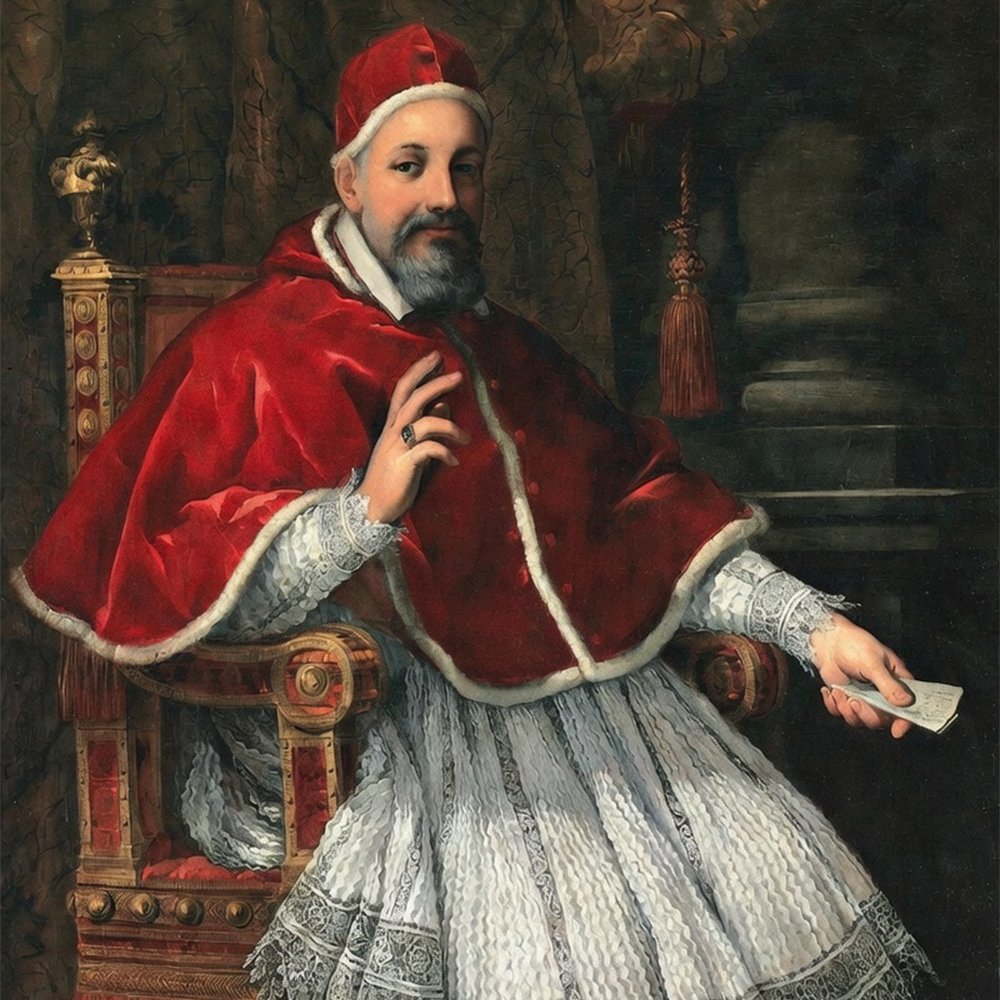
Pope Urban VIII (1623-1644)
BIOGRAPHICAL DATA
Birth name: Maffeo Vincenzo Barberini
Birth: April 5, 1568, Florence, Duchy of Florence (Italy)
Papal election: August 6, 1623
Coronation: September 29, 1623
Pontificate: August 6, 1623 – July 29, 1644 (20 years, 11 months)
Death: July 29, 1644, Rome (age 76)
Burial: St. Peter’s Basilica, Vatican City
Religious order: Secular clergy
Papal motto: None officially recorded
Cognome: “Pope of the Barberini”, “Last Warrior Pope”, “Patron of the Arts”
NOTE: One of the longest and most consequential pontificates of the 17th century – patron of Bernini, condemner of Galileo, and the last pope to expand papal territory by force of arms .
FORMATION AND RELIGIOUS LIFE
Aristocratic Origins – The Barberini Family
Family Barberini:
- Antonio Barberini: father, Florentine nobleman
- Camilla Barbadoro: mother
- Family originally from Barberino Val d’Elsa (Tuscany)
- Wealth derived from wool trade and banking (“sheep-shearing” fortunes)
- Maffeo: third of six children
Childhood:
- Father died when Maffeo was only three years old
- Mother brought him to Rome at an early age
- Placed under the care of his uncle, Francesco Barberini (Apostolic Protonotary)
- At age 16, became his uncle’s heir, inheriting considerable wealth
Education
Collegio Romano (Jesuit):
- Educated by the Society of Jesus (“Jesuits”)
- Curriculum: humanities, rhetoric, philosophy
- Developed lifelong literary interests
University of Pisa (1589):
- Received Doctorate of Law (both civil and canon law)
- Graduated at age 21
Early Career (1589-1601)
Return to Rome after graduation:
- Abbreviator Apostolic: minor curial office
- Referendary of the Apostolic Signatura: judge in papal tribunal (1589-1592)
Ordination:
- September 24, 1592 – ordained priest
- Relatively late for the period (age 24)
Governor of Fano (1592-1604):
- Papal city in the Marche region
- 12 years as governor
- Administrative experience
- Reputation: competent, efficient, cultivated
Diplomatic Career (1601-1606)
Papal Legate to France (1601):
- Sent by Pope Clement VIII to congratulate King Henry IV on the birth of the Dauphin (future Louis XIII)
- First important diplomatic mission
- Made excellent impression on the French court
Archbishop of Nazareth (1604):
- Appointed by Clement VIII
- Office joined with that of Bishop of the suppressed Dioceses of Canne and Monteverde
- Residence: Barletta (Apulia)
Nuncio to France (1604-1606):
- Apostolic Nuncio in Paris
- Developed close relationship with King Henry IV
- Became very influential in French affairs
- Learned French politics thoroughly (would shape his later pro-French policy)
Cardinal (1606-1623)
Created Cardinal by Pope Paul V:
- September 11, 1606 – Cardinal-Priest
- Titular church: San Pietro in Montorio (1607-1610)
- Later: Sant’Onofrio (1610-1623)
Bishop of Spoleto (1608-1617):
- Transferred to this see on October 17, 1608
- Convened a diocesan synod
- Completed the seminary
- Built two additional diocesan seminaries (at Spello and Visso)
Legate of Bologna (1617):
- Appointed by Paul V as papal legate
- Also made Prefect of the Apostolic Signatura
Character during cardinalate:
- Highly cultured: wrote Latin poetry, patronized men of letters
- Diplomatic and astute
- Accumulated friends rather than enemies
- Maintained luxurious residence (inherited uncle’s wealth)
- Built reputation as one of the most accomplished cardinals
CONCLAVE OF 1623 – PAPAL ELECTION
Death of Gregory XV
July 8, 1623: Death of Pope Gregory XV (Alessandro Ludovisi)
Context:
- Gregory XV’s pontificate: short but significant (1621-1623)
- Had established the Congregation for the Propagation of the Faith (1622)
- Left College of Cardinals divided
The Conclave
Start: July 19, 1623
Location: Apostolic Palace, Rome
Duration: 19 days
Number of cardinals: 55 entered conclave
Factions:
- Spanish faction: aligned with Habsburg interests
- French faction: aligned with Bourbon interests
- Italian neutrals: sought independent candidate
- Barberini supporters: Maffeo’s own network
Candidacy of Barberini:
- Initially not considered a frontrunner
- Cardinal Ottavio Bandini worked to prevent his election
- Cardinal Ludovico Ludovisi (nephew of Gregory XV) initially dismissed his chances
Turning point (July 30):
- Cardinals Odoardo Farnese, Carlo de’ Medici, and Ippolito Aldobrandini discussed Barberini’s candidacy
- All three supported him
- Began securing votes from other factions
Election: August 6, 1623
- Cardinal Maffeo Barberini received fifty votes
- Elected on the 19th day of conclave
- Age: 55 years old
Choice of name: Urban VIII
- In honor of Urban (popes of that name)
- “Urban” means “courteous” – fitting his refined character
Delay of Coronation:
- Stricken with fever (common in Rome’s summer)
- Forced to postpone coronation until September 29, 1623
Description by Venetian envoy Zeno:
“The new Pontiff is 56 years old. His Holiness is tall, dark, with regular features and black hair turning grey. He is exceptionally elegant and refined in all details of his dress; has a graceful and aristocratic bearing and exquisite taste. He is an excellent speaker and debater, writes verses and patronises poets and men of letters.”
PONTIFICATE (1623-1644) – 21 YEARS
First Acts
Humility before acceptance:
- Before allowing himself to be vested in pontifical robes, he prostrated himself before the altar, praying “that God might let him die if his pontificate would not be for the good of the Church”
Immediate actions (August 6, 1623):
- Issued the Bulls of canonization for Philip Neri, Ignatius Loyola, and Francis Xavier (who had been canonized by Gregory XV)
Selection of Secretary of State:
- Initially: kept experienced curial officials
- Later: his nephew Francesco Barberini would dominate
Character and Personality
Description by contemporaries:
- Venetian Ambassador Alvise Contarini: “He loves life: in the morning he discusses pleasant things, mainly poetry; and he delights in hearing his Latin compositions set to music.”
- Cultured: wrote poetry in Greek, Latin, and Italian (published 1620, 1634, 1637)
- Refined: elegant, aristocratic bearing
- Astute: politically shrewd
- Ambitious: determined to elevate Barberini family
- Patron of arts: genuine lover of beauty
Temperament:
- Could be melancholic and subject to fits of violent temper
- Evidence: one summer, he had all the birds in the papal gardens slaughtered because their noise distracted him from work
Literary works:
- Maphei Cardinalis Barberini poemata (Rome, 1637) – collection of poems written before his papacy
- Composed hymns for the Breviary (feasts of St. Martina, St. Hermenegild, St. Elizabeth of Portugal)
- Wrote the entire proper Office of St. Elizabeth
RELATIONS WITH MONARCHIES AND THIRTY YEARS’ WAR
Political Context
Thirty Years’ War (1618-1648):
- Urban’s pontificate covered 21 years of this devastating conflict
- Initially: Catholic Habsburgs (Austria, Spain) vs. Protestant powers
- Later: became dynastic conflict involving Catholic France against Catholic Habsburgs
Urban’s policy: Pro-French, anti-Habsburg
- Desired extinction of Protestantism everywhere
- But: feared Habsburg domination in Italy more than he feared Protestant victory
- Withheld support from Habsburgs despite their Catholic champion role
- Allied with Cardinal Richelieu of France (Catholic but anti-Habsburg)
Assessment:
- This alliance destroyed the Habsburgs’ claim to be exclusive champions of Catholicism
- Turned Thirty Years’ War into conflict of dynastic interests
- Result: not so much triumph of Protestantism as ruin of Germany
Relations with Specific Powers
France:
- Close relationship (had been nuncio there)
- Supported Richelieu despite his suppression of Huguenots at home and alliances with Protestants abroad
- Result: French influence in Rome increased
Spain:
- Strained relations
- Spanish ambassadors frequently frustrated
- Habsburg interests subordinated to French
Holy Roman Empire:
- Emperor Ferdinand II: expected papal support against Protestants
- Urban refused to provide substantial financial aid
- Papal nuncios in Vienna: often worked at cross-purposes with imperial policy
England:
- Attempted to restore Catholicism
- 1624: Sent Richard Smith as Vicar Apostolic
- Smith’s imprudent insistence on exercising full episcopal authority led to conflict with Jesuits and government persecution
- 1631: Smith forced to flee
- 1634: Sent Gregorio Panzani to England
- 1638-1639: George Conn, then Rossetti as agents
- King Charles I requested financial aid through Rossetti (war with Parliament brewing)
- Urban refused except on condition of the king’s conversion
- English Civil War ended all negotiations
TERRITORIAL EXPANSION AND MILITARY POLICY
Acquisition of Urbino (1626)
Duchy of Urbino:
- Ruled by the della Rovere family
- Duke Francesco Maria della Rovere: aged, without heirs
- Urban persuaded him to cede the duchy to the Church
- Incorporated into Papal States (1626)
- Last major territorial expansion of the Papal States
Fortifications and Military Infrastructure
Urban VIII: the last warrior pope
- Determined to strengthen papal military capacity
- Massive fortification program
Major projects:
- Castel Sant’Angelo, Rome: heavily fortified (1624-1641)
- Fort Urbano: erected at Castelfranco Emilia (Mantuan frontier) – costly but unfavorably situated
- Civitavecchia: transformed into military port with harbor fortifications
- Tivoli: established extensive arms manufactory
- Monte Cavallo (Quirinal Hill): fortified
- Other fortifications throughout the Papal States
Vatican Arsenal:
- Established within Vatican City
- Produced cannon and weaponry
The Pantheon Bronze – Famous Satire
For making cannon and the baldachin in St. Peter’s:
- Massive bronze girders were removed from the portico of the Pantheon (ancient Roman temple)
- Used for:
- Baldacchino (Bernini’s canopy over St. Peter’s tomb)
- Cannon for Castel Sant’Angelo
Resulting lampoon (pasquinade):
“Quod non fecerunt barbari, fecerunt Barberini”
(“What the barbarians did not do, the Barberini did”)
Irony: The Barberini, who claimed ancient lineage, were compared unfavorably to the barbarian invaders who had spared the Pantheon.
PATRONAGE OF ARTS – THE BAROQUE POPE
Gian Lorenzo Bernini
Urban’s most significant artistic relationship:
- Discovered and nurtured the young Bernini’s talent
- 1629: Appointed Bernini chief architect of St. Peter’s
- Bernini succeeded Carlo Maderno
Major commissions for Bernini:
- Baldacchino (canopy) over the tomb of St. Peter (1624-1633)
- Bronze taken from the Pantheon
- Massive twisted columns
- Barberini bees (family emblem) prominently displayed
- Tomb of Urban VIII (1628-1647)
- Located in St. Peter’s Basilica
- Bronze figure of the pope blessing
- Personifications of Charity and Justice
- Skeleton writing the pope’s name in a book (memento mori)
- Palazzo Barberini:
- Bernini completed the enlargement (begun by Maderno)
- Now houses Galleria Nazionale d’Arte Antica
- Loggias of St. Peter’s
- Fountains and piazzas throughout Rome
Other Artistic Patronage
Palazzo Barberini:
- Luxurious Renaissance/Baroque palace
- Family residence in Rome
- Decorated by leading artists of the day
- Barberini Library founded (later acquired by Leo XIII for Vatican Library in 1902)
Castel Gandolfo:
- Papal summer residence
- Built during Urban’s pontificate
- Grandiose villa with extensive gardens
- Claude Lorrain commemorated its completion
Coat of arms – Barberini bees:
- Three bees (or bumblebees) on a blue field
- Contemporaries complained of gross extravagance
- 10,000 duplications of the Barberini coat of arms appeared throughout Rome and the Papal States
Overall assessment of artistic patronage:
- Transformed Rome into Baroque city
- Massive expenditure on architecture, sculpture, painting
- Legacy visible today throughout Rome
- But: drained papal finances
Patronage of Music and Literature
Music:
- Great patron of opera and music
- Delighted in hearing his Latin compositions set to music
- Supported development of Baroque musical forms
Literature:
- Patronized poets and men of letters
- Maintained literary circle
- His own poetry published and widely read
NEPOTISM – THE BARBERINI DYNASTY
Scale of Nepotism
Contemporary view:
- “Urban VIII practiced nepotism on a grand scale; various members of his family were enormously enriched by him, so that it seemed to contemporaries as if he were establishing a Barberini dynasty.”
Historian Leopold von Ranke’s estimate:
- During his reign, Urban VIII’s immediate family amassed 105 million scudi in personal wealth
- Incredible sum for the period
Family Appointments
Brother:
- Antonio Marcello Barberini (Antonio the Elder) – Capuchin friar
- Made Bishop of Senigaglia (1625)
- Created cardinal (1628)
- Appointed Grand Penitentiary and Librarian of the Vatican
Nephews:
- Francesco Barberini (nephew):
- Created cardinal three days after Urban’s coronation (1623)
- Made librarian of the Vatican (1627)
- Vice-Chancellor (1632)
- Did not abuse his power (according to contemporaries)
- Built the large Barberini Palace
- Founded Barberini Library
- Antonio Barberini (Antonio the Younger – another nephew):
- Created cardinal (1627)
- Made Camerlengo (1638)
- Became commander-in-chief of papal troops
- Legate at Avignon and Urbino (1633)
- Legate at Bologna, Ferrara, Romagna (1641)
- Taddeo Barberini (third nephew):
- Made Prince of Palestrina
- Appointed Gonfalonier of the Church (standard-bearer)
- Prefect of Rome
- Commander of Sant’Angelo
Moral Scruples?
Urban’s doubts:
- Tormented with scruples concerning his nepotism
- Twice appointed special committees of theologians to investigate whether it was lawful for his nephews to retain their possessions
Committee decisions:
- First committee: decided in favor of nephews
- Second committee (including Cardinal Lugo and Father Lupis): also decided in favor
Convenient theology:
- Theologians found reasons to justify immense wealth
- Urban accepted these judgments
- Nepotism continued unabated
Financial Consequences
Massive debts incurred:
- Urban’s extravagance (fortifications + art patronage + nepotism) drained papal treasury
- Left enormous debt for successors
- Weakened papacy’s political and military influence for decades
GALILEO AFFAIR (1633)
Background: Early Friendship
Urban and Galileo before the papacy:
- Maffeo Barberini and Galileo Galilei: friends
- Barberini admired Galileo’s work
- As cardinal, he had defended Galileo against accusations
- Galileo dedicated works to him
Urban as pope (early years):
- Initially continued friendly relations
- Galileo came to Rome (1624) and had six audiences with the pope
- Urban gave Galileo permission to write about Copernican theory – as hypothesis only, not fact
The Dialogue (1632)
Galileo’s book:
- Dialogue Concerning the Two Chief World Systems (1632)
- Compared Copernican system with Ptolemaic system
- Three characters: Salviati (Copernican), Sagredo (neutral), Simplicio (Ptolemaic)
- Simplicio: simpleton who defended traditional view
The fatal choice:
- Urban believed (or was persuaded) that the character Simplicio represented him
- The arguments of Simplicio were made to seem foolish
- Urban felt personally betrayed
Trial and Condemnation (1633)
Summons to Rome:
- Urban ordered Galileo to Rome (1633)
- Despite Galileo’s age (69) and illness
Trial by Inquisition:
- Charged with “vehement suspicion of heresy”
- Forced to recant Copernican views
- Legend: after recanting, muttered “Eppur si muove” (“And yet it moves”)
Verdict:
- Galileo condemned
- Dialogue placed on Index of Forbidden Books
- Galileo sentenced to house arrest (remained until death in 1642)
Urban’s role:
- Personally involved in the case
- Reluctantly condemned his former friend
- Refused clemency
- Some historians: Urban felt betrayed and overreacted
- Others: political pressure from Spanish faction forced his hand
Assessment
Galileo affair’s significance:
- Became symbol of Church’s conflict with science
- Damaged Church’s intellectual reputation
- Urban’s reputation suffered
- Not resolved until John Paul II’s acknowledgment of error (1992)
JANSENISM – EARLY CONDEMNATION
Background
Cornelius Jansen (1585-1638):
- Bishop of Ypres
- Wrote Augustinus (published posthumously, 1640)
- Emphasized: divine grace, predestination, human depravity
- Similar to Calvinism but within Catholic framework
Spread in France:
- Attracted many devout Catholics
- Center: Port-Royal Abbey
- Opposition: Jesuits (emphasized free will)
Urban’s Response
Bull In eminenti (March 6, 1642):
- Condemned Augustinus of Jansenius
- Prohibited teaching of Jansenist doctrines
- Issued before controversy fully developed
- Significance: First papal condemnation of Jansenism
Publication delayed:
- Bull published in June 1643
- But: political complications delayed enforcement
- Jansenism would continue to trouble Church for 150+ years
MISSIONARY ACTIVITY AND COLONIAL POLICY
Propagation of the Faith (Propaganda Fide)
Gregory XV’s foundation (1622):
- Urban continued and expanded its work
- Extended sphere of activity for the Congregation
Collegium Urbanum (1627):
- Founded by Urban VIII
- Purpose: training missionaries for foreign countries
- Named after him
- Became major training center for missionaries
China and Japan – Opening to All Orders
Previous Jesuit monopoly:
- Gregory XIII (1585) had given Jesuits exclusive right to missions in China and Japan
- Jesuits developed effective strategy: cultural accommodation
Urban’s policy change (1633):
- Opened China and Japan to all missionaries
- Repealed Jesuit monopoly
- Permitted other orders (Franciscans, Dominicans) to enter
Consequences:
- More missionaries arrived
- But: rivalries between orders developed
- Chinese Rites controversy intensified (would explode later)
Maronite College (1625)
Founded on Mount Lebanon:
- For Maronite Christians (Eastern Catholic rite)
- Training of indigenous clergy
- Strengthened Eastern Catholic churches
Anti-Slavery Measures
Bull on slavery (April 22, 1639):
- Strictly prohibited slavery of any kind among the Indians of Paraguay, Brazil, and the entire West Indies
- Defended native populations from enslavement
- Protected existence of Jesuit missions in South America
Previous bull (1638):
- Commissum Nobis protected Jesuit Reductions
- Forbade enslavement of natives at the missions
Dioceses and Vicariates
Erected various dioceses and vicariates in pagan countries
- Encouraged missionaries by word and financial assistance
- Strengthened Church presence in Asia, Americas, Africa
LITURGICAL REFORMS AND DEVOTIONAL LIFE
Reform of the Breviary
Committee appointed (1629):
- Purpose: reform of the Roman Breviary
- Their incomplete and often ill-advised corrections were approved (September 19, 1631)
- Official edition of the Roman Breviary issued (1632)
Urban’s personal contributions:
- Composed hymns for the Breviary
- Wrote the entire proper Office of St. Elizabeth
- Introduced many new offices
Holy Days of Obligation
Bull (September 13, 1642):
- Reduced number of holy days of obligation to thirty-four, besides Sundays
- Aimed at practical pastoral concern
- Previously: too many feast days burdened the faithful
Policy on Private Revelation
Bull Sanctissimus Dominus Noster (March 13, 1625):
- Instructed Catholics not to venerate the deceased or represent them in the manner of saints without Church sanction
- Required bishop’s approval for publication of private revelations
- Reserved beatification of saints to the Holy See
Later bull (October 30, 1625):
- Forbade representation with halo of sanctity of persons not beatified or canonized
- Prohibited placing lamps, tablets, etc., before their sepulchres
- Forbade printing of alleged miracles or revelations without approval
Purpose: prevent superstition, maintain control over cult of saints
Long-term effect: standard disclaimer in devotional books (19th-20th centuries): “In obedience to the decrees of Urban the Eighth, I declare that I have no intention of attributing any other than a purely human authority to the miracles, revelations, favours, and particular cases recorded in this book…”
Canonizations and Beatifications
Canonizations (5 saints):
- Stephen Harding (1623)
- Elizabeth of Portugal (May 25, 1625)
- Conrad of Piacenza (1625)
- Peter Nolasco (1628)
- Andrew Corsini (April 22, 1629)
Beatifications (68 individuals):
- James of the Marches (Minorite) – August 12, 1624
- Francis Borgia (Jesuit) – November 23, 1624
- Andrew Avellino – June 10, 1625
- Felix of Cantalice (Minorite) – October 1, 1625
- Mary Magdalen de’ Pazzi – May 8, 1626
- Martyrs of Nagasaki (Japan) – 1627
- Cajetan (founder of Theatines) – October 8, 1629
- John of God – September 21, 1630
- Josaphat Kuncevyc – May 16, 1643
Approval of New Religious Orders
Men’s orders:
- Congregation of Our Saviour (1628) – reformed branch of Augustinian canons, founded by Peter Fourier (1609)
- Lazarists (Priests of the Mission) (1632) – secular congregation founded by Vincent de Paul
Women’s orders:
- Canonesses of the Holy Sepulchre (1631)
- Sisters of the Incarnation (1633)
- Nuns of Our Lady of Nancy (1634)
- Sisters of Our Lady of Mercy (1642)
Suppression of “Jesuitesses”:
- Mary Ward’s congregation (founded 1609)
- Suppressed in 1631 for insubordination
WARS OF CASTRO (1641-1644) – DISASTROUS FINALE
Background
Odoardo Farnese, Duke of Parma and Piacenza:
- Ruler of Castro (enclave within Papal States)
- Wealth derived from grain exports
- Powerful family: Farnese (Dukes of Parma)
Origins of conflict (1639):
- Odoardo visited Rome
- Quarrels on questions of etiquette with Urban’s nephews
- Personal animosity developed
Barberini revenge:
- Urban’s nephews induced the pope to prohibit export of grain from Castro to Roman territory
- Deprived Farnese of income needed to pay interest on his bonds (monti)
- Duke’s creditors complained to the pope
First War of Castro (1641-1642)
October 13, 1641:
- Urban took forcible possession of Castro to assure payment of debts
- Farnese: outraged
January 13, 1642:
- Urban excommunicated Odoardo Farnese
- Deprived him of all his fiefs
Farnese’s response:
- Backed by Tuscany, Modena, and Venice (formed antipapal league)
- Raised army of about 3,000 horsemen
- Advanced toward Rome
Papal forces:
- Commanded by Taddeo Barberini (nephew) and Luigi Mattei
- Put to flight by Farnese’s forces
- Humiliating defeats
Peace negotiations:
- Conducted near Orvieto
- But: Urban refused to accept terms
Second War of Castro (1643-1644)
Hostilities renewed (1643):
- Continued without decisive success
- France intervened in Odoardo’s favor
Final peace (March 31, 1644):
- Peace concluded at Venice
- Urban forced to:
- Free the duke from excommunication
- Restore all places taken by papal troops
- Accept defeat
- “Disgraceful peace” (contemporary view)
Consequences
For Urban:
- Humiliating end to his military ambitions
- Last months of life: overshadowed by defeat
- Reputation damaged
For Papal States:
- Castro returned to Farnese
- War expenses: enormous
- Further drained treasury
- Urban died knowing his military policy had failed
CONSISTORIES AND CARDINAL CREATIONS
Cardinals Created
Total: 74 cardinals in eight consistories throughout his pontificate
Notable creations:
- Francesco Barberini (nephew) – 1623
- Antonio Barberini (nephew) – 1627
- Antonio Marcello Barberini (brother) – 1628
- Lorenzo Magalotti (cousin)
- Giovanni Battista Pamphili – future Pope Innocent X
In pectore reservations:
- Created eight cardinals whom he had reserved in pectore (secretly)
Title of “Eminence” for Cardinals
Decree of June 10, 1630:
- Bestowed upon cardinals the title of “Eminence”
- Former title: “Illustrious and Most Reverend”
- Elevated cardinalatial dignity
- Still used today
Precedence
Ordered cardinals to give precedence only to crowned heads
- Enhanced dignity of College of Cardinals
- Reflected Urban’s high view of ecclesiastical dignity
RELATIONS WITH RELIGIOUS ORDERS
Jesuits
Complex relationship:
- Educated by Jesuits
- Initially supportive
- But: opened China and Japan to other orders (breaking Jesuit monopoly)
- Conflict with Jesuits in England over Richard Smith’s authority
- Never suppressed them (unlike later popes)
Capuchins
- His brother Antonio was Capuchin
- Favored the order
- Supported their missionary work
Other Orders
- Approved new orders (noted above)
- Reformed older orders
- Maintained balance among competing groups
FINAL YEARS AND DEATH
Declining Health (1643-1644)
Age: 75-76 years (old for the period)
Factors affecting health:
- Stress of failed War of Castro
- Humiliation of defeat
- Possibly remorse over nepotism?
- Natural decline
Last Months
Early 1644:
- Increasingly frail
- Depressed over political situation
- Continued work but with difficulty
March-July 1644:
- Peace concluded (March 31)
- Urban: relieved but humiliated
- Health deteriorated rapidly
Death
July 29, 1644:
- Died at age 76
- Location: Rome (probably Quirinal Palace)
- 21 years of pontificate
Last words: Unknown (no dramatic deathbed scene recorded)
Reaction:
- Mixed feelings among Romans
- Admired for patronage, resented for taxes, nepotism, failed war
- Barberini family: immediately concerned about their future
Funeral
Burial:
- St. Peter’s Basilica
- Tomb designed by Bernini (his protégé)
- Completed 1647 (three years after death)
Tomb of Urban VIII (Bernini):
- Bronze and marble
- Pope seated, arm raised in blessing
- Below: two figures (Charity and Justice)
- Skeleton writing his name in a book of gold – memento mori
- One of the most magnificent papal tombs
Successor
Conclave (August-September 1644):
- Barberini influence: diminished
- Pro-Spanish faction: strong
- Elected: Cardinal Giovanni Battista Pamphili = Innocent X
- Ironically: Pamphili had been created cardinal by Urban
Fate of Barberini family after Urban:
- Innocent X initially investigated Antonio Barberini
- Antonio, Francesco, Taddeo fled into exile (Paris)
- Later reconciliation through marriage (Maffeo Barberini, son of Taddeo, married Olimpia Giustiniani, niece of Innocent X)
- Barberini survived as Roman noble family
LEGACY AND HISTORICAL EVALUATION
Positive Achievements
- Artistic Patronage:
- Transformed Rome into Baroque capital
- Bernini’s greatest works commissioned
- Palazzo Barberini, Baldacchino, tomb, fountains
- Legacy visible today
- Missionary Expansion:
- Founded Collegium Urbanum (1627)
- Opened China and Japan to all missionaries
- Supported missions financially
- Erected new dioceses worldwide
- Anti-Slavery Measures:
- Condemned enslavement of Indians (1639)
- Protected Jesuit Reductions
- Moral stance for native populations
- Liturgical Reform:
- Reformed Breviary (1631-1632)
- Reduced holy days (pastoral concern)
- Regulated private revelation (prevented superstition)
- Territorial Expansion:
- Last pope to expand Papal States (Urbino, 1626)
- Fortified papal defenses
- Strengthened military infrastructure
- Canonizations and Beatifications:
- 5 saints, 68 blesseds
- Promoted devotion to saints
- Reserved beatification to Holy See (centralization)
Negative Aspects
- Excessive Nepotism:
- Enriched family on colossal scale (105 million scudi estimated)
- Created Barberini “dynasty”
- Drained papal treasury
- Galileo Condemnation:
- Condemned former friend
- Damaged Church’s intellectual reputation
- Symbol of conflict between faith and science
- Financial Irresponsibility:
- Massive spending on art, fortifications, family
- Left enormous debt
- Weakened successors’ ability to maintain political influence
- Failed War of Castro (1641-1644):
- Unnecessary war based on family quarrels
- Humiliating defeat
- Wasted resources
- Destructive Political Policy:
- Pro-French, anti-Habsburg stance weakened Catholic cause in Thirty Years’ War
- Contributed to prolonging war?
- Germany ruined
- Personal Contradictions:
- Lover of beauty but had birds killed for noise
- Patron of arts but financially irresponsible
- Friend of Galileo but condemned him
- Devout but nepotistic
Historical Assessment
Contemporary view:
- Zeno’s description (1623): elegant, refined, cultured
- Later view: extravagant, nepotistic, failed politician
Pasquinade (Roman satire):
“Quod non fecerunt barbari, fecerunt Barberini”
Summed up Roman resentment of his depredation of ancient monuments
17th-18th century view:
- Seen as symbol of papal worldliness
- Criticized for nepotism and political failures
- Galileo affair damaged reputation
19th-20th century view:
- Leopold von Ranke: documented nepotism’s scale
- Catholic historians: defended but acknowledged faults
- Art historians: celebrated as greatest papal patron of Baroque
21st century view:
- Complex figure: genuine patron of arts, sincere in faith, but deeply flawed
- Last “warrior pope” who attempted to maintain political power
- His pontificate marked peak and beginning of decline of papal temporal power
The Barberini Bees – Symbol of an Era
Three bees (or bumblebees):
- Appeared on thousands of buildings, monuments, works of art
- Symbolized industry, diligence, royalty
- 10,000 duplications in Rome and Papal States
Significance:
- Barberini ambition made visible
- Papal power identified with family power
- Today: still visible throughout Rome – reminder of Urban’s impact on the city
CURIOSITIES AND PERSONAL DETAILS
- The Bird Massacre
- One summer, Urban had all the birds in the papal gardens slaughtered
- Reason: their noise distracted him from work
- Reveals: capacity for violence, irritability, impatience
- Contrasts with his refined, cultured image
- The Pantheon Bronze
- Bronze girders from Pantheon portico removed
- Used for Baldacchino and cannon
- Ancient Roman structure despoiled by pope
- Led to enduring satirical verse
- Urban reportedly indifferent to criticism
- Latin Poet Pope
- Published multiple volumes of poetry
- Composed hymns still in Breviary
- Wrote in Greek, Latin, Italian
- One of the most literary popes
- Title “Eminence” for Cardinals
- His decree (1630) gave cardinals their current title
- Previously: “Illustrious and Most Reverend”
- Still used today
- Longest Pontificate of 17th Century
- 21 years (1623-1644)
- Only Clement X (1670-1676) and Innocent XI (1676-1689) approached length
- Witnessed entire middle period of Thirty Years’ War
- Barberini Library
- Founded by nephew Francesco
- Acquired by Leo XIII (1902)
- Incorporated into Vatican Library
- Continues as resource for scholars
- The Baldacchino’s Bronze
- Legend: bronze taken from Pantheon
- Fact: documented in papal accounts
- Still stands in St. Peter’s
- Barberini bees prominently displayed
- Patron of Bernini
- Discovered Bernini’s talent
- Gave him first major commissions
- Bernini’s career largely due to Urban
- Their collaboration defined Baroque Rome
- Attitude Toward Science
- Friend of Galileo (initially)
- Interested in scientific developments
- But: ultimately condemned heliocentrism
- Embodied Church’s ambivalence toward new science
- Death and Legacy
- Died defeated (War of Castro)
- But artistic legacy endured
- Family survived through political marriages
- Rome transformed by his patronage
WRITINGS
Major Works
Poetry:
- Maphei Cardinalis Barberini poemata (Rome, 1637)
- Earlier editions: 1620, 1634 (Antwerp)
- Latin, Greek, Italian verse
- Subjects: religious and secular
Liturgical compositions:
- Hymns for Breviary (feasts of St. Martina, St. Hermenegild, St. Elizabeth of Portugal)
- Entire proper Office of St. Elizabeth
Bulls and Briefs:
- Numerous documents (see above)
- In eminenti (1642) – condemning Jansenism
- Sanctissimus Dominus Noster (1625) – on private revelation
- Anti-slavery bulls (1638, 1639)
FAMOUS PHRASES
Authentic:
- From his poetry (various lines)
- Bulls: formal Latin prose
Attributed:
- “Quod non fecerunt barbari, fecerunt Barberini” – not his words, but satirical response to his actions
- No famous deathbed saying recorded
Inscription on his tomb (Bernini):
- Latin epitaph praising his achievements
- Standard formula
CONCLUSION
Pope Urban VIII (Maffeo Barberini, 1623-1644) was one of the most significant, controversial, and consequential popes of the 17th century. His 21-year pontificate – one of the longest in history – transformed Rome artistically, expanded papal territory militarily, and left deep marks on Church doctrine, liturgy, and missions.
Patron of the arts: He discovered and nurtured Gian Lorenzo Bernini, commissioning masterpieces that still define Baroque Rome: the Baldacchino in St. Peter’s, his own magnificent tomb, the Palazzo Barberini, and countless other works. His patronage made Rome the artistic capital of Europe.
Warrior pope: The last pope to expand papal territory by force (Urbino, 1626), he fortified the Papal States extensively and attempted to maintain military power. His disastrous War of Castro (1641-1644) ended in humiliation, draining the treasury and weakening successors.
Controversial figure: His condemnation of his former friend Galileo (1633) became symbol of Church’s conflict with science. His massive nepotism enriched the Barberini family on a colossal scale (estimated 105 million scudi). His pro-French policy during the Thirty Years’ War arguably weakened the Catholic cause in Germany.
Reformer: He reformed the Breviary, reduced holy days, regulated private revelation, and reserved beatification to the Holy See. He founded the Collegium Urbanum for missionaries, opened China and Japan to all orders, and condemned slavery of indigenous peoples.
Paradox: Cultured and brutal, generous and nepotistic, friend of Galileo who condemned him, lover of beauty who slaughtered birds for disturbing him – Urban VIII embodied the contradictions of the Baroque age. His pontificate marked both the zenith of papal artistic patronage and the beginning of the decline of papal temporal power.
Legacy: Rome today bears his stamp everywhere – the Barberini bees adorn countless buildings, Bernini’s masterpieces draw millions, and the Galileo affair still haunts Church-science relations. He was the last of the “Renaissance popes” who combined political ambition, artistic patronage, and ecclesiastical authority – and the first of the “early modern popes” facing a changing world.
Epitaph (unspoken but true): “He loved beauty, sought power, enriched his family, condemned his friend, and left Rome more beautiful – and the Church more burdened.”
Requiescat in pace – Rest in peace, Urban VIII, last warrior pope, greatest patron of Baroque, complex figure of a turbulent century.
“Quod non fecerunt barbari, fecerunt Barberini” – What the barbarians did not do, the Barberini did.