Christendom
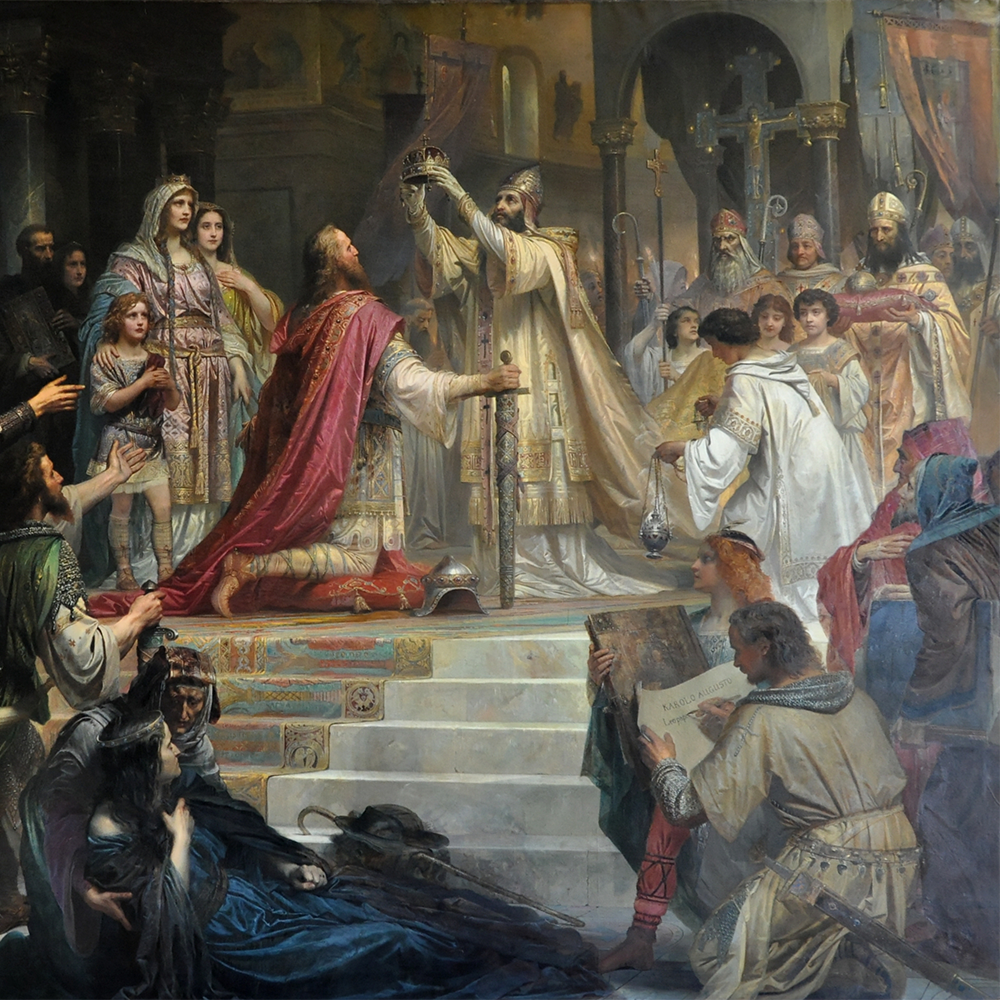
The Christian Society
I. FUNDAMENTAL CONCEPT OF CHRISTENDOM
What was Christianity?
Theological and cultural definition:
Christendom was not merely “a region where Christians live.” It was a complete civilization where:
Christian faith permeated EVERYTHING.
There was no separation between “religious” and “secular”.
Every aspect of life – work, justice, art, education – was Christian.
Paganism and secularism did not exist as options.
Hierarchical corporate structure
Society organized into estates (orders)
Each social class had a divine function.
No one was “just an individual” – they were a member of a body.
Catholic Truth as a foundation
Church dogma was fundamental law.
Heresy was a capital crime.
The papacy was the moral and spiritual apex.
Without relativism: One Truth, One Faith, One Church
Temporal-spiritual unity
Secular power served spiritual ends
Spiritual power legitimized temporal authority.
There was no “State vs. Church” conflict – they were collaborators.
Structural analogy:
If the modern West is a sick body where the head (reason) wars against the body (tradition), Christendom was a healthy body where the spirit (faith) animated everything harmoniously.
Estate Structure (Orders)
Medieval Christian society was divided into three main estates (the “Three Speakers” theory):
CLERGY (Speakers – “Those who pray”)
├─ Pope
├─ Cardinals
├─ Bishops
├─ Diocesan priests
├─ Monks
└─ Nuns
NOBILITY (Bellatores – “Those who fight”)
├─ Emperor/Kings
├─ Princes
├─ Dukes/Counts
├─ Knights/Nobles
└─ Squires
PEOPLE (Laborators – “Those who work”)
├─ Craftsmen and traders
├─ Free peasants
├─ Servants/Villains
└─ Slaves (rare in the West)
Function of each estate:
CLERGY:
They pray for the salvation of all.
They administer sacraments.
They teach doctrine.
They heal souls.
NOBILITY:
They fight heretics and enemies.
They protect the weak.
They uphold justice.
They defend Christianity.
PEOPLE:
They work to earn a living.
They support clergy and nobility.
They obey authorities.
They receive protection in return.
Sacred interdependence:
No one could live without another social class:
People without clergy = lose salvation.
A people without nobility = loses protection.
Clergy without the people = loses its livelihood.
Nobility without clergy = loses divine legitimacy.
Ideal: Each social class fulfilling its duty = Christian peace and harmony.
II. SOCIAL AND POLITICAL STRUCTURE
Feudalism – System of Christian Loyalties
Christian foundation of feudalism:
Feudalism was not just a land system. It was a system of Christian loyalties based on:
Sacred oaths:
The vassal swore a solemn oath before God to the overlord.
The overlord swore to protect his vassal.
Both swore an oath before the altar with a saint’s relic.
Breaking an oath = mortal sacrilege
Divine hierarchy:
GOD (Supreme)
↓
KING/PRINCE (anointed of God)
↓
GREAT NOBLES (Dukes, Counts)
↓
KNIGHTS/NOBLES
↓
FREE MEN
↓
SERVANTS/VILLAINS
Each level was God’s representative to the level below.
Concrete example of a relationship:
A knight (Lord of a small village):
He swore allegiance to the Count (his overlord).
The Count swears to protect him militarily.
Knight promises to provide soldiers if count is attacked.
The count promises justice if his vassal is wronged.
Both believe they are fulfilling a Christian duty.
Peasant (servant of the knight’s village):
He works the knight’s land 3 days a week.
Knight protects peasant from invaders.
Farmer pays “tribute” (% of harvest)
Knight ensures peasant does not go hungry (in times of famine, nobleman shares).
Political Order – Sacramental Monarchy
The King was neither “elected by the people” nor did he “possess unlimited absolute power”:
The King was:
Anointed of God – Coronation ceremony was a SACRAMENT:
The bishop crowned the king and anointed him with holy oil.
The people swore allegiance to the sacred king.
The king received rings and a scepter as divine symbols.
Rey was seen literally as representing Christ
Subject to Divine Law – The king was not above the law.
He should obey the moral law (Ten Commandments).
He had to obey ecclesiastical law (canon law).
He had to obey the customary law of the kingdom.
If he committed adultery, he was responsible before God.
Example: King Henry II who killed Thomas Becket:
Henry was furious with the Archbishop.
He said (probably): “Who will deliver me from this troublesome priest?”
The knights interpreted it as an order and killed Becket.
The Pope excommunicated Henry.
Henry had to do public penance.
It showed that not even a king was above Christian morality.
Duties towards subjects:
Protecting the weak
To do justice
Do not tyrannize
Maintaining Christian peace
If he failed, he lost divine legitimacy.
Coronation of Louis IX (St. Louis):
Typical medieval coronation ceremony:
Faith: Bishop announces that God has chosen this man as king.
Anointing: Holy oil is poured on the forehead (as in anointing prophets/priests).
Oath: The King swears to protect the Church, to do justice, to protect the weak.
People: The entire population acclaims and swears allegiance to the “anointed king”.
Communion: The King participates in communion as an ordinary Christian (even as a priest).
Responsibility: The king understands that he will answer to God for his righteousness.
Christian Justice System
Medieval justice was not purely retributive:
Christian foundations:
Restitution – Criminal should compensate victim
Robbery = paying 2-3 times the value
Damage = paying for repairs
Violence = paying “wergeld” (blood price)
Redemption – Justice aimed at converting the criminal.
Punishment was necessary, but it was aimed at repentance.
Confession could mitigate the sentence.
Penance was an alternative to brutal punishment.
Mercy – Clemency was integrated
The king had the right to pardon.
The Church offered asylum to criminals in cathedrals.
A system of “forgiveness” after a certain period of time.
Proportionality – Punishment should be proportional to guilt.
Death by homicide
Mutilation for robbery
Whippings for disobedience
There was no life imprisonment (it wasn’t a medieval institution).
Example of a judgment:
A peasant steals bread (extreme hunger):
Brought before the court of the lord
The gentleman investigates: Why? (hunger or greed?)
If hunger: sir, you can forgive or demand restitution lightly.
If greed: harsher punishment (whippings)
Priest confesses to thief.
Thief does penance (prayer, community service)
Victim receives compensation.
Community witnesses justice
III. CHRISTIAN DAILY LIFE
The Christian Calendar Permeates Everything
Medieval life was structured according to the Christian calendar:
Days of the week:
Each day dedicated to a saint or mystery.
Sunday = Rest and mandatory Mass
Monday to Friday = Workdays, but with breaks for prayer.
Liturgical Stations:
Advent (4 weeks before Christmas) = penance, fasting
Christmas (December) = 12-day celebration
Epiphany = celebration of the Three Wise Men
Lent (40 days before Easter) = fasting and severe mortification.
Holy Week = Passion play staged in the streets
Easter = resurrection celebrated for 8 days
Pentecost = descent of the Holy Spirit
Corpus Christi = solemn procession of the Blessed Sacrament
Practical impact:
Peasant who works in the field:
He does not work on Sunday (the Christian day of rest).
He doesn’t work on important saints’ days (there were ~30 religious holidays/year).
Fasting Monday through Friday during Lent (not eating meat)
Participates in Corpus Christi processions.
His life was paced not by a clock, but by a sacred calendar.
Parish Life – Community Center
The parish church was the CENTER OF LIFE:
Multiple function:
Spiritual – Daily Mass, Sacraments
Social – Community Gathering
Politics – Proclamation of laws
Educational – Catechism teaching
Charitable – Hostel for poor/pilgrims
Registry – Baptisms, marriages, and deaths registered.
Parish life in practice:
Sunday morning:
Church bell rings (call to Mass)
People converge on the parish church.
Priest celebrates Mass in Latin
People participate (songs in the vernacular)
Communion of the faithful
After Mass:
Priest proclaims announcements (lands of the lord, wars, saints of the day)
People discuss business.
Poor people receive food at their door.
Children learn catechism.
Weekly:
Tuesday: Confession
Thursday: Special Mass
Friday: devotion to the sufferings of Christ
Annual:
Corpus Christi (Body of Christ) procession
Passion Play during Holy Week
Feast of the parish’s patron saint.
Christian Domestic Life
Medieval Christian houses were “small churches”:
Family structure:
Boss = patriarch (father/husband)
Wife = homemaker, child educator
Children learn faith and profession.
Servants = members of the Christian family
Daily Christian practice:
Morning:
Family gathered for prayer.
The priest (if he had one) celebrates Mass at home.
Breakfast (simple)
Work:
Men work (in the fields, at their jobs)
Women take care of the home and children.
Children learn their father’s trade.
Afternoon:
Simple snack
Children study catechism.
Women spinning wool (manual work)
Night:
Family reunited
Recitation of the Rosary (1 hour)
Bible reading/Lives of saints
Moral/spiritual discussion
Supper (simple meal)
Rest
Sexual/marital pattern:
Marital relationship viewed as a duty , not a pleasure.
Husband and wife sleep together (accepted)
Physical pleasure = “carnal madness” to be tolerated for the sake of the marriage.
Premarital chastity = absolute obligation
Adultery = grave sin (confession required)
Contraception = mortal sin (coitus interruptus condemned)
Authority structure:
Saint Thomas Aquinas summed it up: “Husband is the head of the wife, as Christ is the head of the Church.”
Husband makes the final decisions.
The wife obeys (as the Church obeys Christ)
But husbands must love their wives (as Christ loved the Church).
It’s not tyranny – it’s loving authority.
IV. CHRISTIAN ECONOMY – THEOLOGY OF WORK
Vocation and Work
Work was not a “curse”:
Theology of work:
God’s Creation – Adam worked in the Garden BEFORE sin.
Imitation of Christ – Jesus was a carpenter; work is sanctifying.
Service – Work should serve the community, not just personal enrichment.
Dignity – All honest work has dignity.
Saint Thomas: “Manual labor dignifies man… every man should work according to his condition.”
Trade Corporations (Guilds)
Christendom’s unique economic system:
Instead of:
Capitalism (where money rules)
Communism (where the state dominates)
Christendom had:
Guilds (where masters, journeymen, and apprentices worked together)
Corporate Structure:
MASTERS:
Workshop owners
They possessed trade secrets (passed down during initiation).
Quality controlled
Regulated prices (non-exploratory)
OFFICERS:
Skilled workers
They could open their own workshop (after years)
Fair salary (set by the company)
Protection against exploitation
APPRENTICES:
Young people (12-20 years old) learning a trade.
They lived with the master (like a son).
They received food, clothing, and education.
After 7 years = officials
Quality control:
Each corporation had a mandatory quality standard .
Bad products were destroyed.
Prices were fair (there was no “profit maximization”)
Objective: to serve the community well, not to get rich.
Example – Carpenters’ Guild:
All vans produce furniture of a certain quality.
They couldn’t use inferior wood to save money.
They couldn’t charge “what the market allows.”
The price was “fair” (covering costs + moderate profit).
If a carpenter cheated a customer, he was expelled from the guild.
Prohibition of Usury
Revolutionary Christian concept:
Christianity absolutely forbade usury (lending money with interest).
Theological basis:
Saint Thomas Aquinas: “Charging interest on a loan is stealing. Money is fruitless; it does not naturally produce more money.”
Logic:
Loan = help to those in need (not commerce)
Charging interest = exploiting the poverty of the poor.
Interest = unearned (sinful) gain
Money doesn’t “reproduce” like a field.
Practical application:
A farmer with a poor harvest asks his wealthy neighbor for a loan of seeds.
Neighbor lends interest-free
Farmer pays back with harvest.
If the harvest is bad again, you can order more.
Objective: to help a fellow Christian, not to exploit.
Bankers and the exception:
Some banks (Medici, etc.) charged for “exchange” and “service” (not “interest”) to circumvent the prohibition:
An administrative fee was charged (permitted).
This became a cover for interest payments.
The Church tolerated it in practice, but condemned it in principle.
Impact:
The prohibition of usury meant:
Credit was scarce (only for genuine needs).
Debt did not multiply perpetually.
The poor were not enslaved by debt.
The economy was less “financialized”.
V. PRACTICAL RELIGIOSITY
Sacramental Life
Sacraments were not abstract – they were LIFE:
BAPTISM:
It occurred in infancy (in the first weeks of life).
Cleansing original sin
Child enters the Christian community
Godparents pledged their commitment to Christian education.
Confirmation/Chrism:
At 12-14 years old (reason age)
A bishop or priest would confirm the child.
He received gifts from the Holy Spirit for spiritual warfare.
The child became a “soldier of Christ”.
EUCHARIST:
Mandatory Mass every week
Communion was rare (for some, once a year).
But attendance at the sacrifice was mandatory.
Visual spectacle: elevation of the host (moment of silent adoration)
CONFESSION:
Required at least once a year (before Easter).
Most frequent: Once a month or once a week
I confess it was inviolable (secret confession)
Absolution brought psychological and spiritual relief.
MARRIAGE:
Sacramento, not just a legal contract
Indissoluble marriage (there was no divorce)
Spouses saw each other as mutual helpers in salvation.
Procreation was the purpose of marriage.
EXTREME ANOINTING:
Last rites for the dying
The priest absolved people of a lifetime’s worth of sins.
A clear conscience before death.
Alma could leave without fear of condemnation.
SACRED ORDER:
A man would become a priest or a religious figure.
He promised chastity, obedience, and poverty.
He received the power to consecrate the Eucharist.
He became an instrument of God.
Popular Devotions
Medieval faith is expressed in concrete devotions:
ROSARY:
Repetitive prayer (150 Hail Marys organized into 15 mysteries)
They meditated on the life of Christ and Mary.
It took me an hour to pray the entire Rosary.
Made daily by dedicated believers.
VENERATION OF SAINTS:
Each saint had their own feast day (calendar).
People venerated saints (not worshipped them – an important distinction).
He asked for the intercession of saints.
He visited relics (bones, objects of saints).
PILGRIMAGES:
Trip to sanctuaries (Rome, Santiago, Jerusalem)
Penance for serious sins
A miraculous cure was expected.
It lasted weeks/months (a lifetime for some).
VENERATION OF MARY:
“Queen of Heaven” – Mother of Christ
More loved than saints
Mass dedicated to her: “Hail Mary”
Marian apparitions seen as especially significant
Worship of Relics:
Fragments of saints’ bones
Pieces of clothing for saints
Objects that have touched saints
It was believed that relics had powers.
Example of a famous relic – Veronica’s Veil:
The handkerchief that Veronica used to dry Jesus’ face.
Stored in Rome
Thousands made pilgrimages to see him.
It was believed to have miraculous properties.
Medieval Mysticism
Direct experience of God was seen as possible:
CHRISTIAN MYSTICISM:
Saint Teresa of Ávila (16th century):
He experienced ecstasy during prayer.
He was levitating during Mass (he was embarrassed).
He heard Christ speaking to him internally.
Through visions of angels
Saint Francis of Assisi:
He received “stigmata” (wounds of Christ).
I talked to animals.
Ecstasy of love for God
Saint Padre Pio (20th century – late):
Permanent stigmata
He levitated during Mass.
She read minds (knew unconfessed sins)
Mystical theology:
God could communicate directly with a devout soul.
Contemplative prayer was the “peak” of the spiritual life.
Ecstasies, visions, and private revelations were possible.
Rights of living saints = validating the existence of a saint.
VI. DEATH AND LIFE AFTER DEATH
Medieval Obsession with Death
Medieval life was constantly reminded of death:
Reasons:
Life expectancy = 30-40 years
Regular plagues killed 30-50% of the population.
Constant wars
Common hunger
Christian response:
Instead of despair:
Death seen as a gateway to true life.
Earthly life seen as exile far from God.
Death was a blessing (return to God)
The Art of Christian Death
“Ars moriendi” (The Art of Dying) was a literary theme:
A “good” death meant:
Full confession – all sins confessed
Absolution – the priest absolved before death.
Extreme Unction – Last Sacraments
Acceptance – the dying man accepted God’s will.
Faith – trusting in divine mercy.
“Evil” death meant:
To die suddenly (without confession)
Deny faith until the end.
To die in despair (without hope)
Attachment to the material world
Concept of Purgatory
Purification after death was a central concept:
Theology: If someone dies with unconfessed venial sins, they go to Purgatory.
It undergoes purification by fire.
Then he ascends to Heaven.
Duration depends on the weight of the sin.
Practical impact:
The deceased needed masses of intention to shorten their purgatory.
Wills left money for priests to say Mass.
The living prayed for the deceased (Rosary, novenas).
A living connection between the dead and the living.
Psychological advantage:
Death was neither the end (complete despair) nor the certainty of heaven (complacency). It was hope with responsibility.
Cemetery as a Community Space
The cemetery next to the church was a community center.
Features:
Exposed bones (reused graves)
The living ate and socialized there.
It wasn’t a “scary” place, but a community-oriented one.
He recalled the brevity of life.
All Souls’ Day festivities:
The whole community visited the graves.
He was carrying food.
They prayed together.
It reaffirmed the community of the living and the dead.
VII. CHRISTIAN EDUCATION
There was no “Secular Education”
All learning was Christian:
For typical children:
Catechism (Creed, Our Father, Hail Mary)
Doctrine (10 Commandments, deadly sins, virtues)
Trade (they learned their father’s profession)
Reading (some eventually learned)
For the children of nobles:
Clergy (if intended for the Church)
Latin (the universal language of the Church)
Scripture
Theology
Canon Law
Knights (if destined for war)
Riding
Weapons
Chivalrous honor
Courtly poetry
But also Catechism
Catholic Universities
The first universities in Christendom were Catholic creations:
University of Bologna (1088):
Canon and civil law
Priests learned Church law.
Oxford University (1096):
Theology, philosophy, arts
He trained educated clergy and lay people.
University of Paris (1150):
Ultimate intellectual center
Scholastic Theology (Saint Thomas Aquinas, Bonaventure)
Philosophy (Aristotle reinterpreted)
Medieval university curriculum:
TRIVIUM (Literary arts):
├─ Grammar (Latin)
├─ Logic
└─ Rhetoric
QUADRIVIUM (Mathematical arts):
├─ Arithmetic
├─ Geometry
├─ Music
└─ Astronomy
HIGHER FACULTIES:
├─ Theology
├─ Law (Canonical/Civil)
├─ Medicine
└─ Philosophy
Theology was the queen of sciences:
All other disciplines served to aid in the understanding of Revealed Truth .
Example: Astronomy was studied for:
Calculate liturgical calendar dates (Movable Easter)
Understanding the “order” of the cosmos (reflected divine order)
NOT to satisfy isolated human curiosity
VIII. ART AND ARCHITECTURE – FAITH EMBODIED
Gothic Cathedral – Prayer in Stone
The Gothic Cathedral was the ultimate expression of Christendom:
Spiritual characteristics:
Verticality – It pointed towards the sky.
Very high vaults
Stained glass windows in the ceiling
Needle towers
Light – Represented God
Stained glass windows
Divine light pouring forth
Darkness of sin far away
Hierarchical structure
Ship = people
Choir = clergy
Altar = Presence of God
Every space has meaning.
Visual narrative
Stained glass windows told stories (for illiterate people).
Sculptures = saints and mysteries
Portals = Last Judgment (heaven to the right, hell to the left)
Construction time:
Chartres Cathedral: 60 years (1194-1254)
Notre-Dame de Reims: 80+ years
Cologne Cathedral: 600+ years old (begun 1248, completed 1880)
Community involvement:
Every city contributed (the rich financed, the poor worked).
Entire generations worked without seeing any completion.
The work was for God , not for personal glory.
Investment calculation:
Building a cathedral could cost the kingdom an annual fortune.
The investment was in something eternal , not temporary.
It meant real sacrifice for the building generation.
Sacred Art
Medieval art was not “art for art’s sake”:
Purpose of art:
Iconography – representing saints/mysteries
Doctrine – teaching faith (stained glass, panels)
Devotion – promoting prayer (iconostasy)
Beauty – a testament to divine beauty
Rules for religious representation:
Unrealistic proportion (important = larger)
Symbolic colors (gold = divinity, blue = sky)
Hierarchical position (Christ at the center and highest)
Halo = holiness
Example: Medieval painting of Christ Pantocrator (Christ Almighty):
At the center (everything revolves around it)
Greater than everything
Blessing with two fingers (unity in the trinity)
Book in the other hand (Divine wisdom)
Direct gaze (stern but merciful judge)
Sacred Music – Gregory and Polyphony
Medieval music was liturgical, not a “concert”:
Gregorian Chant:
Monody (a melodic line)
Accompanied by liturgical text (words dictate music)
Without instruments (pure human voice)
Objective: to elevate the soul to contemplation.
Development of Polyphony:
11th-12th centuries: Ars Antiqua (two voices in canon)
14th Century: Ars Nova (complex rhythm)
15th Century: Renaissance (Orlando di Lasso, Palestrina)
Religious composition:
Mass – Kyrie, Gloria, Credo, Sanctus, Agnus Dei
Motet – a religious text with multiple voices
Hymn – a text of praise
Example: Bach’s Mass in B minor:
Take the Latin text of the traditional Mass
He composes monumental works (multiple voices, orchestra).
It takes 2 hours to run.
Each section reflects theology (Kyrie = supplication, Gloria = exultation)
IX. CRUSADES – CHRISTIAN WAR
Concept of the Crusade
Crusade was a holy war authorized by the Pope.
Theological justification:
The Holy Land was under Muslim rule.
Christians were persecuted there.
The Pope authorized the reconquest as a Christian duty.
Christian warriors fought for their faith.
Characteristics of a true crusade:
Papal authorization (it was not a private war)
Solemn vow (the crusader swore before God)
Plenary indulgence (complete forgiveness of sins after death)
Symbol of the cross (pinned to the chest)
Ecclesiastical protection (the crusader’s family could not be attacked)
First Crusade (1096-1099)
Pope Urban II calls (1095):
Speech in Clermont:
“The Eastern Church is in danger… Muslims are advancing… Christian warriors, defend your sisters… liberate the Holy Land from Muslim rule!”
Response:
Tens of thousands get involved.
Kings (Godefredo de Bouillon, etc.) lead
Lesser nobles seek glory.
Priests accompany (as chaplains)
March:
Crossing of Europe (1096-1097)
Massacres of Jews along the way (anti-Semitic persecution)
Thousands die of hunger/disease
They arrive in Jerusalem (1099)
Conquest of Jerusalem:
Months-long siege
The city fell after a breach in the wall.
Massive massacre (chroniclers speak of “rivers of blood”)
Jerusalem conquered “in the name of Christ”
Result:
Christian Kingdom of Jerusalem established
Crusaders made a pilgrimage to the Holy Sepulchre.
Charity towards Christian pilgrims
Initially peaceful coexistence with Muslims
Military Orders – Warrior Monks
Unique combination: Monks + Soldiers
Order of the Templars (1119-1312):
Foundation:
Created to protect pilgrims to the Holy Land.
Monks who fought
Vows of poverty, chastity, and obedience.
More votes in the fight against pagans
Structure:
GRAND MASTER (supreme leader)
├─ MASTERS (commanders)
├─ KNIGHTS (noble warriors)
├─ SQUIRES (common soldiers)
└─ SERGEANTS (craftsmen and workers)
Military characteristics:
Elite combatant (rigorous discipline and training)
White armor with a red cross
Cavalry tactics
Fortified castles in the Holy Land
Monastic characteristics:
They prayed as a community.
They fasted during Lent.
They slept in a shared dormitory.
Unwavering obedience to the Grand Master
Economic function:
They stored pilgrims’ treasures (the first “banks”).
They lent money.
They owned property in Europe.
They financed crusades.
End (1312):
King Philip IV (France) sent war against them.
He accused them of heresy (worship of a mysterious head, etc.)
Pope suppressed order (Council of Vienne)
Last ones burned at the stake (Grand Master Jacques de Molay)
Hospitaller Order (1098-present):
Similar to the Templars
It focused on hospitality (patient care).
It persisted in Malta until the 16th century.
It evolved into the “Order of Malta” (which still exists).
Teutonic Order (1190-1560):
Germanic knights
He conquered and ruled Prussia (territory in the Baltic region).
He created a crusader state in Northern Europe.
Eventually defeated by the Lithuanians
Impact of the Crusades
Positive (medieval Christian view):
He freed the Holy Land from “infidelity”.
Martyrdom of crusaders = salvation
Contact with the East = knowledge
Expansion of Christianity
Negative (modern critical view):
Slaughter of Muslims (and Jews along the way)
Sack of Constantinople (Crusade IV)
Failure to permanently reconquer the Holy Land
Generations of Islamic hatred
Medieval context:
War was constant (it was not an anomaly of the Crusades).
Death in combat viewed as glorious (especially by faith)
Religious conflict viewed as legitimate
The concept of “human rights” did not exist.
X. HERESY – A THREAT TO CHRISTENDOM
Catharism – Heresy that Threatened Christendom
What was Catharism?
Eastern heresy (Manichean dualism) that arrived in Europe in the 12th century.
Beliefs:
Two gods (good and evil, light and darkness)
Good God = Spirit (invisible)
Evil God = Matter (visible)
The body is a prison of the spirit.
Moral consequences:
Extreme asceticism (rejection of the body)
They did not eat meat (product of reproduction).
They didn’t get married (sex = a material thing)
Suicide was seen as liberation (endura = voluntary starvation).
They ate little, slept little (extreme mortification)
Elite sector:
Catari Perfeitos (the initiates) = followed strict rules
Simple Catari (believers) = could live normally
Infiltration:
In the 12th-13th century, Occitania (southern France) was half Cathar:
Nobles adopted faith
Local bishops saw dioceses being dominated.
The Papacy viewed it as an existential threat to Christendom.
Answer: Albigensian Crusade (1208-1270):
Pope Innocent III called for a crusade against the Cathars.
French nobles (under Simon de Montfort) conquered territory.
Catharists massacred
Medieval Inquisition established to find survivors
Cruelty of the process:
Catharists burned at the stake
Entire cities destroyed.
“Kill them all, God knows his own” (a maxim attributed to the papal legate)
Result:
Catharism eliminated
Christendom “purified” of massive heresy
BUT it left behind traumas (persecution, death of innocents)
Waldensians and Other Heresies
Waldenses:
They originated with Valdés (a rich man who distributed everything to the poor).
Itinerant preaching (like apostles)
They rejected ecclesiastical property.
Criticism of clerical corruption was legitimate, BUT they denied papal authority.
Valdo:
Condemned by the hierarchy for:
Preaching without papal authorization
Questioning the authority of priests
Create an “alternative cult”
Destination:
Persecuted for centuries
Some converted back, others maintained their faith.
Many went to Valles (Italy) and survived.
XI. DEATH OF CHRISTENDOM – LONG DECLINE (1300-1700)
Decay Factors
1. Avignon Captivity (1309-1377):
Pope in France for 68 years
Papacy viewed as a French vassal
Weakened papal authority
2. Great Schism (1378-1415):
Two popes (later three) divide Christendom.
Which one is true? Both claim infallibility.
Chaos of authority
3. Protestant Reformation (1517):
Martin Luther rejects papal authority.
Christendom splits in two.
Protestant kingdoms do not recognize the Pope.
A permanently divided church
4. Enlightenment (18th century):
Philosophers reject religious authority.
Reason replaces faith.
Secularism becomes respectable.
5. National Revolutions:
French Revolution (1789) = war against the Church
Italian Unification (1870) = Pope loses territories
Russian Revolution (1917) = communist persecution
Modern movement = total secularization
The Verdict – Christendom Vanished
There is no Christianity today.
There is no “one faith, one Church, one civilization”
Religious pluralism is a value.
Secularism dominates
The church is marginalized.
No one is condemned for heresy.
Marriage is a contract, not a sacrament.
Work is for profit, not a calling.
XII. TRADITIONIST NOSTALGIA FOR CHRISTENDOM
What Was Lost
Traditionalists mourn the loss of:
True unity – One faith for all
Harmonious hierarchy – Each estate in its place.
Sacramental life – Faith permeated everything.
Real community – Not atomized isolation
Work with purpose – A calling, not just a job.
Death with dignity – Rite and community
Sacred beauty – Art in service of God
Moral order – Shared values
Why Christianity Was Better (Traditionalist View)
Argumentation:
Lower rate of moral sin – Homicide, adultery, theft less frequent when the community demanded a standard.
Community solidarity – No one moved alone.
Existential meaning – Life had a clear purpose.
Art and beauty – Culture was elevated
Moral education – Children received virtue, not just knowledge.
Modern counter-argument:
Christendom oppressed women and servants.
Horrible infant mortality rates
Regular hunger
Without individual freedom
Superstition and ignorance
Traditionalist response:
Oppression exists in every society.
Death rate = result of inferior technology, not faith.
Modern “individual” freedom = isolation
Modern “superstition” (psychology, science) is equally blind to the spiritual.
CHRISTENDOM AS AN IDEAL
Medieval Christendom represented:
An attempt to organize all of human society around:
Revealed Truth (Catholic)
Hierarchical Authority (Pope, Emperor, Kings)
Sacramental Life (Sacraments at each stage)
Transcendent Purpose (Salvation of souls)
Sacred Beauty (Art in the service of God)
It was never perfect:
Sins of the clergy (simony, lust)
Tyranny of the nobles
Widespread ignorance
Frequent injustice
But at its best:
He combined justice with mercy.
It created extraordinary beauty.
It offered spiritual certainty.
It structured meaning.
The modern appeal of Christianity:
In a world of:
Atomization (all isolated)
Relativism (without truth)
Secularism (without transcendence)
Existential emptiness (lack of purpose)
Christendom offers a vision of:
Real community
Objective truth
Spiritual reality
A life with meaning.
Possibility of restoration:
Traditionalists believe that Christianity can be restored:
By a miracle of God
When the modern world collapses into chaos
Under the future Catholic “great monarch”
Before the end of times