Abolitions
The abolition of an order was always an extreme measure, reserved for situations where the continuation of that institution would represent harm to the faith, to ecclesiastical discipline, or to the very unity of the Church, whether due to doctrinal deviation, moral corruption, or unsustainable political interference.
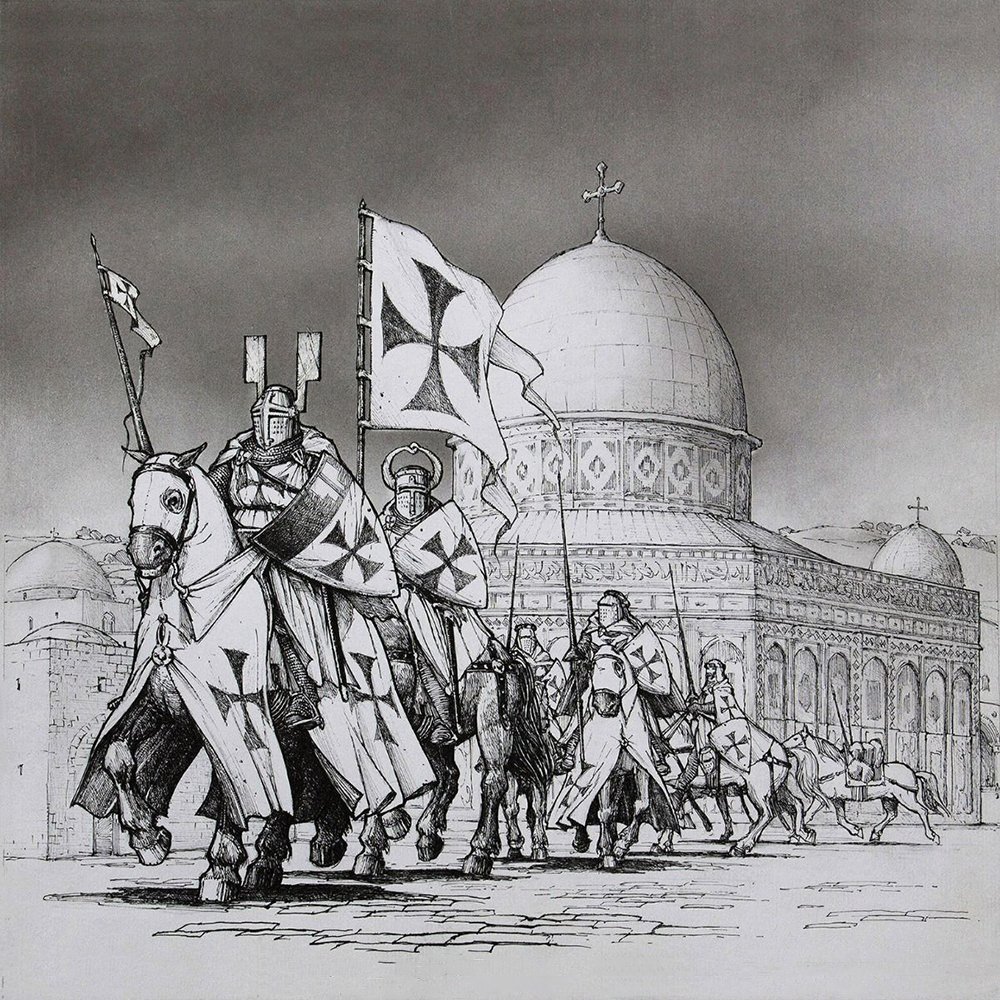
Order of the Templars (Poor Knights of Christ) (1312)
- Founded: 1119, in Jerusalem.
- Original function: To protect pilgrims in the Holy Land.
- Reason for abolition: Pressure from King Philip IV of France and abuse of papal power.
- How it happened:
- The king owed the Templars a great deal of money and wanted to get rid of the debt.
- He accused the order of heresy, sodomy, idol worship, and secret rituals (such as spitting on the cross).
- On Friday, October 13, 1307, all the Templars in France were arrested and tortured to confess.
- Pope Clement V, under enormous pressure from the king, abolished the order in 1312 at the Council of Vienne, without formally finding it guilty.
- The last Grand Master, Jacques de Molay, was burned alive in 1314.
- Interesting fact: He popularized the superstition of “Friday the 13th”.
Origin and Foundation (1118-1129)
The Historical Context
After the First Crusade and the conquest of Jerusalem in 1099, Christian pilgrims began traveling en masse to the Holy Land. However, the roads were fraught with danger—bandits and Muslim groups constantly attacked travelers, resulting in robbery and death.
The Nine Horsemen
In 1118 (or 1119, according to some sources), a French nobleman named Hugh de Payens gathered eight knights, including Geoffrey de Saint-Omer, André de Montbard (uncle of Saint Bernard of Clairvaux), and others. These nine men presented themselves to King Baldwin II of Jerusalem and Patriarch Warmund, offering themselves as guardians of pilgrims.
The king granted them lodging in a wing of his palace, which was located on the Temple Mount – the site where, according to tradition, Solomon’s Temple had stood. It was from this location that the names “Order of the Temple” and “Templars” originated.
For nine years, the group lived in extreme poverty, with few resources. The order’s original symbol — two knights mounted on a single horse — represented precisely this initial humility.
Official Recognition
In 1127, Hugh de Payens traveled to Europe to seek official recognition from the Church. On January 13, 1129 , at the Council of Troyes , the order was formally approved. The great architect of this recognition was Saint Bernard of Clairvaux , the most influential monk of his time, who drafted the “Primitive Rule” of the Templars and wrote a treatise in praise of the new order, entitled De Laude Novae Militiae (“In Praise of the New Militia”).
The Rule, based on the Cistercian order, established the vows of poverty, chastity, obedience, and devotion . In 1139, Pope Innocent II issued the bull Omne Datum Optimum , which granted the order extraordinary privileges: the Templars answered only to the Pope, were exempt from taxes and tithes, and could build their own oratories.
The Life and Rule of the Templars
The Monk-Warrior Duality
The Templars were unique: they were both monks and warriors — “lions of war and lambs at home,” in the words of the chronicler Jacques de Vitry. The motto of the order was “Non nobis, Domine, non nobis, sed Nomini tuo da gloriam” (“Not for us, Lord, not for us, but for the glory of your Name”).
The Primitive Rule
The main points of the Rule included:
- Vow of poverty : knights could not own personal property.
- Strict chastity : any contact with women is forbidden.
- Absolute obedience to the superior.
- Austerity : short hair, clean-shaven, few meals.
- Clothing : white cloak (symbol of purity) with a red cross (symbol of martyrdom)
The prologue to the Rule addresses the candidates as follows:
“We speak first to those who secretly despise their own will and, with studied care, desire to wear and permanently use the most noble armor of obedience.”
The Structure of the Order
The order was led by a Grand Master (the last one was Jacques de Molay), subordinate to the Pope. Below him were:
- Knights (noble warriors, wore white)
- Sergeants (warriors of non-noble origin, wore black or brown)
- Chaplains (clergy who cared for spiritual needs)
At its peak, the order had 15,000 to 20,000 members , of whom only 10% were knights.
Power, Wealth and Innovations
The Military Force
In the Holy Land, the Templars became the elite fighting force. They participated in the main battles of the Crusades: Siege of Ascalon (1153), Battle of Monte Gisardo (1177), Battle of Hattin (1187), among others. They were known for never retreating and for preferring death to surrender.
The Financial System
Paradoxically, the order that had taken a vow of poverty became the richest institution in medieval Europe . The Templars:
- They invented the “check” : a pilgrim could deposit money in a Templar house, receive a letter of credit, and cash the amount at another house in the Holy Land, avoiding the risk of carrying cash.
- They managed the royal treasury of France.
- They financed kings and nobles.
- They owned vast estates , castles, churches, and lands throughout Europe.
Political Power
With the papal bull of 1139, the Templars were exempt from all local jurisdiction —they paid no taxes, answered neither to bishops nor kings. They reported directly to the Pope. This privilege, coupled with their wealth, generated envy and resentment, especially in France.
Decline
The End of the Crusades
In 1291, the city of Acre—the last Crusader stronghold in the Holy Land—fell to the Muslims. The order lost its original reason for existence: protecting the Holy Land. Without a clear mission, the Templars focused on their financial activities in Europe, which increased criticism.
Criticisms and Rumors
Even before the fall of Acre, rumors circulated about the Templars’ secret initiation rituals. The chronicler William of Tyre , in the 12th century, accused them of ransoming prisoners through bribery and described Grand Master Odo of St. Amand as “wicked, arrogant, and insolent.” Critics such as Walter Map and John of Salisbury accused them of avarice .
The specific charges that would be used against them included:
- Blasphemy and heresy
- Apostasy (denying Christ)
- Sodomy (homosexuality)
- Idol worship (such as the alleged worship of a cat or a mummified head called “Baphomet”)
- Spitting on and stepping on the cross during initiation rituals.
The Fall: King Philip IV and Pope Clement V
The Indebted King
King Philip IV of France , known as “Philip the Fair,” was deeply indebted to the Templars. He had taken out large loans to finance his wars against England and Flanders. Philip had already demonstrated his willingness to confiscate the property of wealthy groups: in 1306, he expelled the Jews from France and seized their properties.
Philip saw in the Templars the solution to his financial problems: if the order were dissolved, his debts would be cancelled and his treasure confiscated.
The Manipulation of the Papacy
To act against the Templars, Philip needed the Pope. Pope Boniface VIII had resisted the French king’s advances, and in 1303, Philip’s men even managed to capture and flog the Pope in Anagni—an event that led to Boniface’s death days later.
In 1305, Philip succeeded in electing a French pope, Clement V (born Bertrand de Goth), who established his court in Avignon, under French influence. This was the beginning of the so-called “Avignon Papacy”.
The Prison (Friday, October 13, 1307)
In the early morning of October 13, 1307 — a Friday that went down in history and gave rise to the superstition of “Friday the 13th” — agents of King Philip arrested all the Templars in French territory simultaneously.
Grand Master Jacques de Molay , who had arrived in France to meet with the Pope, was also arrested. The king sent letters to other monarchs (England, Spain, Portugal) asking them to do the same—although not all complied.
Torture and Confessions
The prisoners were handed over to the French Inquisition , controlled by the king. Brutal torture sessions took place in the following years.
- Of the 138 Templars arrested, 38 died under torture.
- Many confessed to the accusations to escape the pain.
- Jacques de Molay, however, never confessed to the accusations, nor denounced his companions, nor revealed where the Order’s riches were hidden.
The Council of Vienne and the Dissolution (1312)
Despite the forced confessions, Pope Clement V was reluctant to condemn the order. He convened the Council of Vienne (1311-1312) to decide the fate of the Templars.
On March 22, 1312 , pressured by Philip, the Pope issued the decree Vox in Excelso , which officially dissolved the Order of the Templars, “not because he considered them guilty of the accusations, but to avoid future scandals.”
The decision was made without the order being formally judged or found guilty.
On the Death of Jacques de Molay (1314)
The sentencing of the Templar leaders was delayed for years. Finally, on March 18, 1314 , in Paris, Jacques de Molay and the monk Geoffroy de Charney were burned alive at the stake.
According to legend, as the flames consumed his body, Molay cursed King Philip and Pope Clement V, summoning them to appear before God within a year. Both died under mysterious circumstances later in 1314.
The Fate of Assets and the Legacy
Confiscation and Redistribution
The order’s assets were officially transferred to the Order of the Hospitallers (now the Order of Malta). However, in France, Philip retained a large part of the confiscated treasure.
Portugal: The Order of Christ
Not all kings obeyed the papal order. King Denis of Portugal refused to arrest the Portuguese Templars. Instead, in 1319 , he negotiated with the Pope the creation of the Order of Christ , which inherited the assets, structure, and symbols of the old order.
It was this order that financed the Portuguese Age of Discovery. The Templar cross (red cross) was emblazoned on the sails of Pedro Álvares Cabral’s caravels when he arrived in Brazil—a form of indirect continuity of the Templars.
Legends and Speculations
The sudden disappearance of the powerful order gave rise to numerous legends:
- Alleged hidden Templar treasure (perhaps the Ark of the Covenant or the Holy Grail)
- Secret societies that claim to be heirs of the Templars (like the Freemasons)
- Connections to the Priory of Sion, the Holy Shroud, and conspiracy theories about the lineage of Christ.
Brief Timeline
Data | Event |
1118 | Founded by Hugo de Payens and eight knights. |
1129 | Council of Troyes: official recognition and approved rule |
1139 | Bulla Omne Datum Optimum : papal privileges |
1291 | Fall of Acre: end of the Christian presence in the Holy Land |
1305 | Pope Clement V (French) elected |
13/10/1307 | Mass arrest of Templars in France. |
1311-1312 | Council of Vienne |
22/03/1312 | Official dissolution of the order by Clement V. |
18/03/1314 | Execution of Jacques de Molay at the stake. |
1319 | Foundation of the Order of Christ in Portugal (successor) |
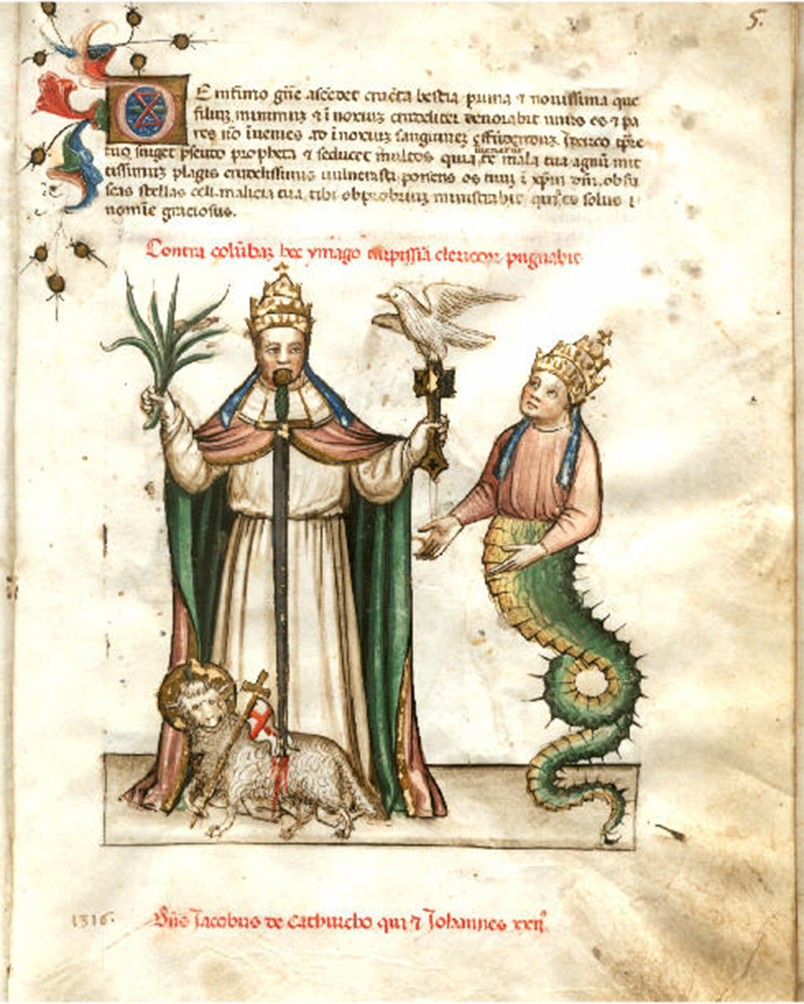
Fraticelli (1318) – Condemned as a heretic
The Fraticelli (from the Italian “little friars”) were a radical movement that arose within the Franciscan Order in the late 13th century. They were fervent followers of Saint Francis of Assisi, but interpreted the rule of absolute poverty in an extreme and uncompromising way. While the official Church, especially under the papacy of John XXII (1316-1334), sought to moderate the Franciscan ideal to make the order institutionally viable (allowing friars to own property in the name of the pope), the Fraticelli rejected any concession.
The central point of conflict was apostolic poverty : the Fraticelli asserted that Christ and the apostles possessed no goods, either individually or collectively, and that this should be the obligatory rule for all religious. When Pope John XXII, in 1322, declared that absolute poverty was not an article of faith (in the bull Ad conditorem canonum ), the Fraticelli accused him of heresy. They also rejected papal authority in matters of interpretation of the Franciscan rule, which put them on a direct collision course with Rome.
Furthermore, the Fraticelli held an apocalyptic view of history, inspired by the works of the Calabrian theologian Joachim of Fiore (12th century). They believed that the institutional Church had become corrupt and that a new era of the Holy Spirit was coming, in which the truly poor (themselves) would be the guides. This millenarian theology was seen as subversive and dangerous.
In 1318 , Pope John XXII issued the bull Gloriosam Ecclesiam , formally condemning the Fraticelli as heretics. Many were imprisoned, burned at the stake, or excommunicated. The order was suppressed, but small clandestine groups persisted in Italy and France until the 15th century. The Council of Trent (1545-1563) reiterated the condemnation. Today, they are considered a classic example of a reformist movement that, by radicalizing a legitimate ideal (poverty), broke with the unity of the Church and was extinguished.
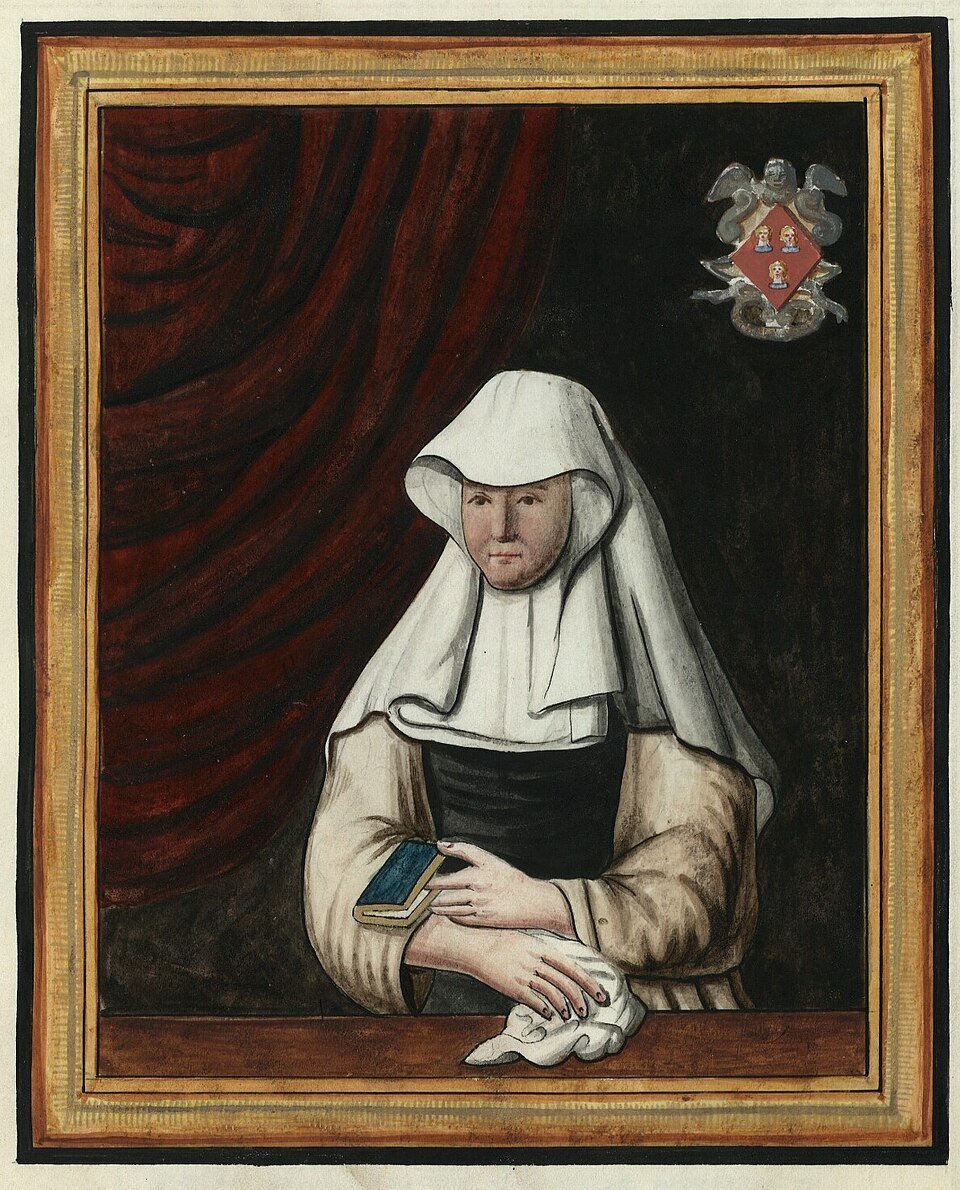
Order of Begards (1311-1321 – local suppression, not global extinction by Rome)
The Beghards were a lay movement that emerged in the 13th century in the Netherlands, the Rhineland, and northern France. They were not monks in the strict sense (they did not take solemn vows in a recognized order), but lived in communities similar to monasteries: lay men (the Beghards) and women (the Beguines) who sought a life of prayer, manual labor, and charity, without needing to join a traditional religious order. Unlike the mendicant friars, the Beghards did not seek papal authorization to exist, which already generated distrust.
The problem for the Church was that, throughout the 14th century, some groups of Begards began to adhere to doctrines considered heretical, mainly the so-called “free spirit” ( liber spiritus ). This heresy, condemned several times in the 13th century, preached that a person in a state of mystical perfection (united with God) could no longer sin, did not need to obey human or ecclesiastical laws, and could satisfy all their desires because “everything is permitted to the free spirit.” In practice, this led to the dissolution of sexual morality, contempt for the sacraments, and the denial of the Church hierarchy.
The Begardians were not all heretics – most were orthodox and pious. However, their decentralized structure and lack of ecclesiastical oversight allowed radical groups to infiltrate and preach these ideas. Pope Clement V, at the Council of Vienne (1311-1312) , condemned the heresy of free spirit and included the Begardians among the suspect groups. The decree Cum de quibusdam mulieribus (1311) ordered local bishops to investigate and suppress communities that preached erroneous doctrines.
Between 1311 and 1321 , several bishops (especially in Germany and France) dissolved Beghard communities, burned heretical leaders, and dispersed members. However, the suppression was never global or definitive : the Church did not issue a bull formally extinguishing “the Order of the Beghards” as a single entity (because it was never a unified order). Many beguinages (houses of beguines) continued to exist, especially in Belgium and the Netherlands, some to this day (such as the Beguinage of Bruges, a UNESCO World Heritage site). Therefore, the case of the Beghards is less an “extinction” and more a local repression of a decentralized movement that contained heretical pockets.
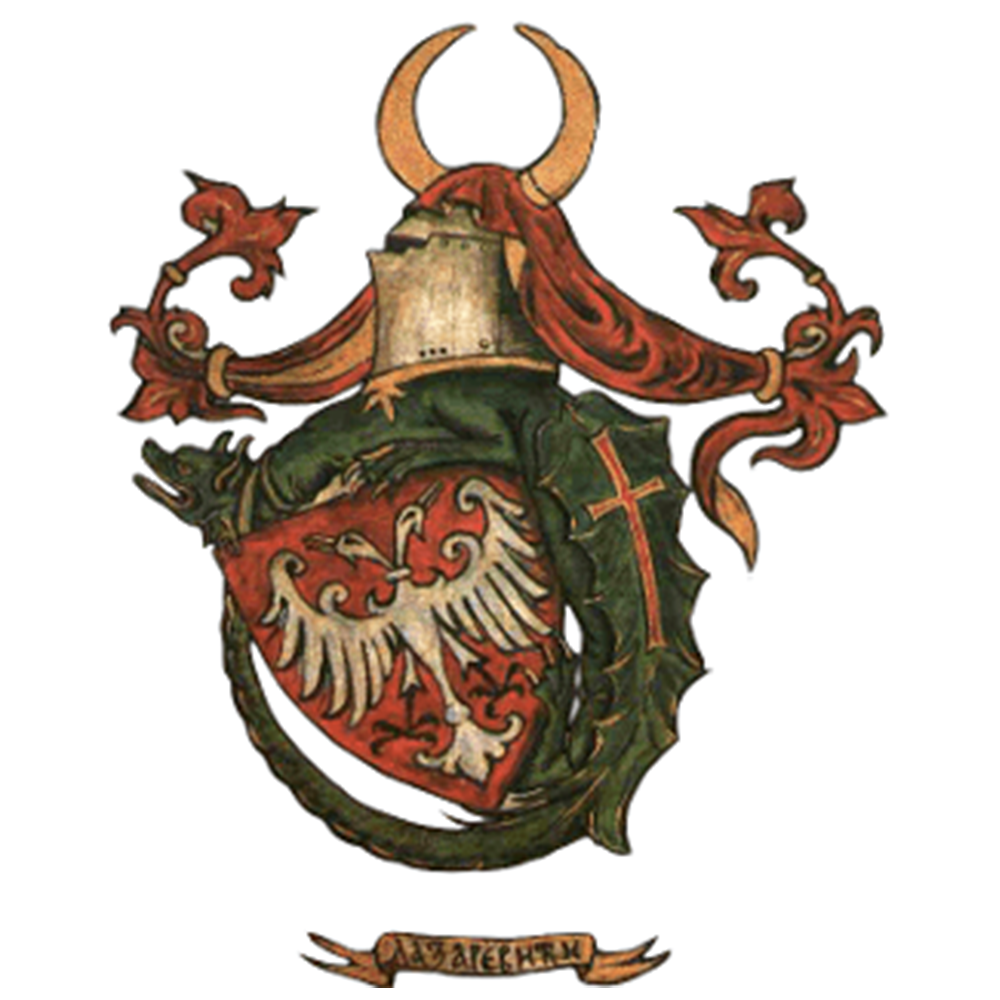
Order of the Dragon (1408 – dynastic order, extinct around 1430)
The Order of the Dragon (Latin: Societas Draconis or Ordo Draconis ) was founded on December 12, 1408, by Emperor Sigismund of the Holy Roman Empire (who would later become King of Hungary, Bohemia, and Emperor). Unlike traditional religious orders (such as the Templars or Hospitallers), the Order of the Dragon was a dynastic and military order , created with a very specific geopolitical purpose: to defend Christendom against the advance of the Ottoman Empire.
Sigismund founded the order after being defeated by the Turks at the Battle of Nicopolis (1396). The order’s symbol was a dragon coiled with its tail around its neck (similar to an ouroboros), often with a red cross on its back – an image that combined the dragon as a symbol of evil to be fought and as a heraldic emblem of power. The original members included Hungarian, Croatian, Bosnian, Serbian, and Wallachian nobles, among them a famous name: Vlad II Dracul (father of Vlad III Dracula, the Impaler), who received the nickname “Dracul” (dragon) for being a member of the order.
Why was the order dissolved? The answer is: there was never a formal abolition by the Church . The Order of the Dragon was not a canonical religious order – it had no monastic vows, did not answer directly to the Pope, and its members were not clergy. It was a secular order , a military brotherhood of knights loyal to the emperor. Therefore, the Church had no authority to dissolve it; it simply died of its own accord when its political purpose ceased to make sense.
After Sigismund’s death in 1437, the order lost its main patron. Internal conflicts in the Kingdom of Hungary, the Ottoman advance (the fall of Constantinople in 1453, which rendered the order obsolete as a defense instrument), and the lack of an autonomous financial and administrative structure led to its decline. By around 1430-1440 , the order no longer held meetings, admitted no new members, and had no active Grand Master.
Some historians suggest that the order was “extinguished” because it did not conform to the Church reforms in the post-Council of Basel period (1431-1449), which sought to regulate and reduce the number of chivalric orders without a clear religious function. However, there is no specific papal or imperial decree of extinction. The more accurate explanation is that the Order of the Dragon was dissolved by inertia – it ceased to exist naturally when its founder died and the immediate threat (the Ottomans) could no longer be confronted by a decentralized medieval order.
Interesting fact: The name “Dracula” (son of the dragon) used by Vlad III and Count Dracula in Bram Stoker’s novel has a direct origin in this order. The dragon symbolized the fight against evil, but the Church never saw the order as heretical – on the contrary, it was informally approved by Rome as a tool for the defense of Christendom. Its extinction was political, not religious.

Order of Christ (Portugal) (1834)
- Founded in 1319 by King D. Dinis of Portugal to succeed the Templars in the country.
- Current status: It was not abolished, but transformed into a civil honorary order .
- How it happened:
- After the abolition of the Templars (1312), King Dinis negotiated with Pope John XXII the creation of a new Portuguese order that would inherit the assets and functions of the Templars.
- The Order of Christ financed the great Portuguese voyages of discovery (15th-16th centuries) – the order’s cross is on the sails of the caravels.
- With the extinction of religious orders in Portugal (1834, liberal government), it lost its religious-military character.
- Today it is an honorary order granted by the President of the Republic to reward meritorious service – it no longer has monastic vows or a military function.

Miles of Christ (2025)
- Founded in 1994 in Argentina.
- Reason for suppression: Scandals involving sexual abuse and abuse of power.
- What happened:
- A Catholic religious order of apostolic life, focused on spiritual retreats and formation.
- In 2022, the founder, Father Roberto Juan Yannuzzi, was expelled from the clerical state for “crimes against the Sixth Commandment” (read: sexual abuse of adults).
- Subsequent investigations revealed a system of abuse of authority, spiritual manipulation, and the promotion of problematic members to the position of superior general.
- The Vatican (Pope Francis) decreed the complete suppression of the order in February 2025 – something rare in modern times.
- Significance: This shows that the Church still dissolves orders today when there is serious and systemic misconduct.