Alexander VIII
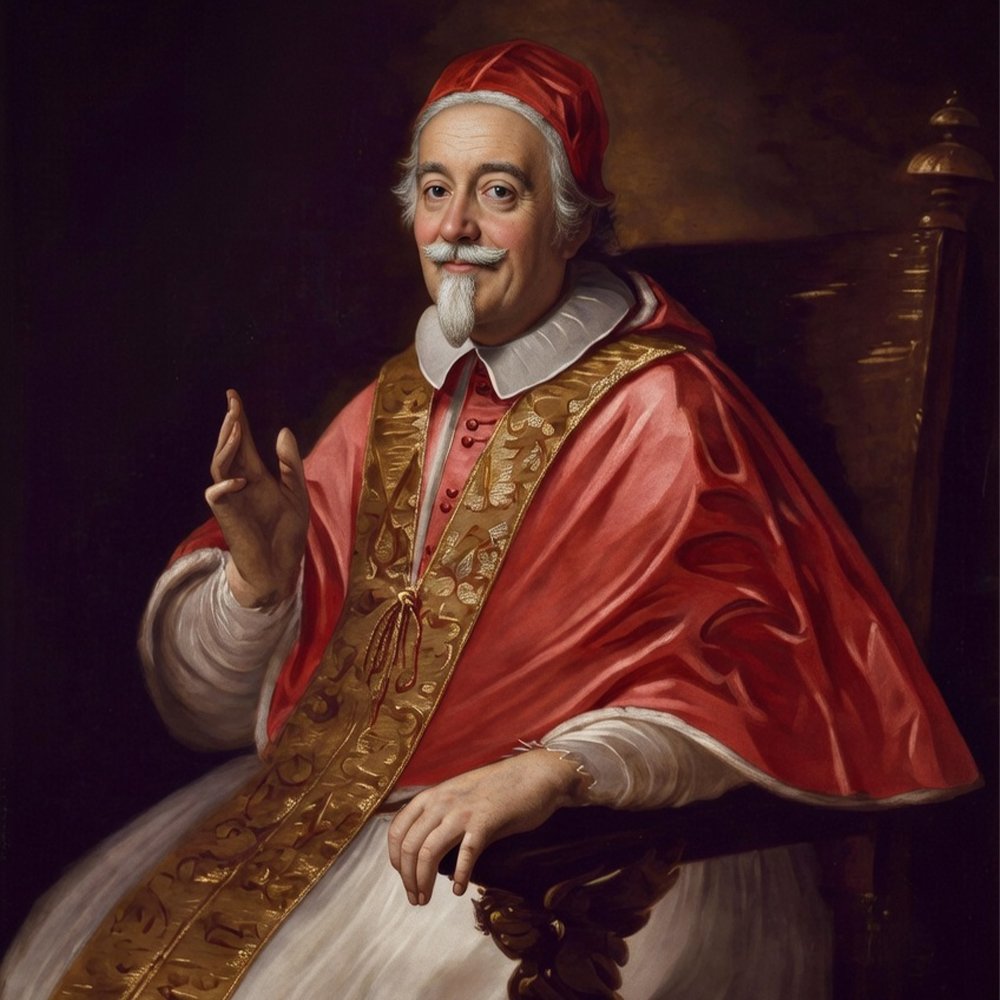
Alexander VIII (1689-1691)
BIOGRAPHICAL DATA
Birth name: Pietro Vito Ottoboni
Birth: April 22, 1610, Venice, Republic of Venice
Papal election: October 6, 1689
Coronation: October 16, 1689
Pontificate: October 6, 1689 – February 1, 1691 (1 year, 3 months, 26 days)
Death: February 1, 1691, Rome, Papal States (age 80)
Burial: St. Peter’s Basilica, Vatican City (tomb designed by Count Arrigo di San Martino, sculpted by Angelo de’ Rossi and Giuseppe Bertosi, 1691-1725)
Religious order: Secular clergy (diocesan priest)
Papal motto: None officially recorded
Cognome: “The Venetian Pope,” “The Nepotist Pope,” “The Peacemaker with France,” “The Octogenarian Pope”
NOTE: His brief pontificate (16 months) was marked by the reversal of his predecessor Innocent XI’s austere policies, blatant nepotism that exhausted the papal treasury, the condemnation of the Four Gallican Articles (1682), the return of Avignon to papal control by Louis XIV, the purchase of Queen Christina of Sweden’s library for the Vatican, and the condemnation of “philosophical sin” taught in Jesuit schools. He is the most recent pope to take the pontifical name “Alexander” .
EARLY LIFE AND FORMATION
Noble Venetian Origins – The Ottoboni Family
The Ottoboni of Venice:
Pietro Vito Ottoboni was born of a noble Venetian family
His father, Marco Ottoboni (1554-1646), was grand chancellor of the Republic of Venice
His mother was Vittoria Tornielli (d. 1635), whom Marco married in 1594
He was the youngest of nine children
The family had been invited into the nobility of Venice as a result of the Battle of Zonchio (1499) and later met the financial qualifications for nobility in the 17th century after amassing a fortune in diplomatic service
Siblings and Family Connections:
Agostino Ottoboni (1608-1673): brother, whose children included Marco (future Duke of Fiano), Antonio (future general of the church), and grandparents of Cardinal Pietro Ottoboni
Cristina Ottoboni: sister, married Giambattista Rubini (their son would become Cardinal Secretary of State)
Andriana Ottoboni: sister, married Marcantonio Padavino
Education – Brilliance at Padua
University of Padua (1620s):
His early studies were made with marked brilliancy at the University of Padua
In 1627, at age 17, he earned a doctorate in canon and civil law (in utroque iure)
Distinguished himself as an outstanding student
Subsequently became an expert on canon law
Early Curial Career in Rome
Move to Rome (c. 1630):
Went to Rome during the pontificate of Pope Urban VIII (1623-1644)
Ordained to the priesthood around 1630
Referendary of the Apostolic Signatura:
Served as Referendary of the Apostolic Signatura (papal judge)
Early judicial experience in the Roman Curia
Governor of Provincial Cities:
Appointed governor of Terni, Rieti, and Spoleto
Also served as governor of Citta di Castello
Gained administrative experience in the Papal States
Auditor of the Sacred Roman Rota:
For fourteen years served as auditor of the Sacred Roman Rota
The Rota was the highest ecclesiastical court in Christendom
This long service established his reputation as a canon lawyer
EPISCOPATE AND CARDINALATE (1652-1689)
Cardinalate
Created Cardinal (February 19, 1652):
Elevated by Pope Innocent X
At the request of the Venetian Republic, this favored son was made cardinal
Age: 41 years old
Titular church: Cardinal-Priest of San Salvatore in Lauro (installed March 11, 1652)
Bishop of Brescia
Appointment (December 7, 1654):
Named Bishop of Brescia (in Venetian territory)
Consecrated bishop: December 27, 1654, in the Church of San Marco in Rome
Principal consecrator: Cardinal Marcantonio Bragadin, Bishop of Vicenza
Co-consecrators: Cardinal Antonio Barberini and others
Quiet Decade in Brescia (1654-1664):
Spent the best years of middle life quietly in his diocese
Devoted himself to pastoral care rather than curial politics
Resigned the see on June 9, 1664
Transfers Among Titular Churches
Over his long cardinalate, Ottoboni opted for several titular churches, as was customary for senior cardinals:
Date | Title | Notes |
|---|---|---|
November 15, 1660 | Cardinal-Priest of San Marco | |
September 13, 1677 | Cardinal-Priest of Santa Maria in Trastevere | |
January 8, 1680 | Cardinal-Priest of Santa Prassede | |
December 1, 1681 | Cardinal-Bishop of Sabina | Elevated to suburbicarian see |
February 15, 1683 | Cardinal-Bishop of Frascati | |
November 10, 1687 | Cardinal-Bishop of Porto e Santa Rufina |
Roles Under Later Popes
Cardinal-Datary under Clement IX (1667-1669):
Clement IX made him Cardinal-Datary
Important curial position handling papal benefices
Grand Inquisitor and Secretary of the Holy Office:
Under Innocent XI (1676-1689), he became Grand Inquisitor of Rome and secretary of the Holy Office
This position gave him oversight of doctrinal orthodoxy
Vice-Dean of the College of Cardinals (1687-1689):
Served as Vice-Dean from 1687 until his papal election
Participated in multiple conclaves: 1655, 1667, 1669-1670, 1676
CONCLAVE OF 1689 – ELECTION
Context: Death of Innocent XI
Death of Innocent XI (August 12, 1689):
Pontificate: 13 years (1676-1689)
Innocent XI had been a reforming pope, austere, anti-nepotist
He had clashed sharply with Louis XIV of France over Gallicanism and the regale (right to administer vacant dioceses)
The treasury was well-filled due to his careful economy
Political Situation (1689):
France: Louis XIV, at the height of his power, seeking reconciliation with the papacy after years of tension
Holy Roman Empire: Emperor Leopold I, traditional ally of the papacy against France and Turkey
Venice: Seeking papal support against the Ottoman Turks in the Morean War
Spain: In decline but still influential
Factions in the College of Cardinals:
French Faction: Supported by Louis XIV’s ambassador, seeking a pope favorable to French interests
Imperial Faction: Pro-Habsburg cardinals supporting Austrian interests
Spanish Faction: Pro-Spanish cardinals
Zelanti: Cardinals wanting continuity with Innocent XI’s reform policies
The Conclave (August-October 1689)
Dates: August 23 – October 6, 1689
Duration: 44 days
Location: Apostolic Palace, Rome
The Misdirection Strategy:
Cardinal Flavio Chigi (nephew of Alexander VII) and his allies initially proposed Gregorio Barbarigo, a Venetian, as a test candidate
Barbarigo garnered an exceptional number of votes, demonstrating that a Venetian pontiff was indeed a tantalizing opportunity
However, Barbarigo could not gain additional votes beyond what he already had accrued
Many in the camp wanting continuity with Innocent XI’s policies caught on to the deception, creating indignation
Since Chigi’s faction had not directly voted for Barbarigo to maintain the deception, the Ottoboni candidacy could proceed unmarred
Building Support for Ottoboni:
The Venetians indicated their support for Ottoboni
The Republic secured the support of Madrid and Vienna through their ambassadors
Cardinal Medici ensured that the Imperial and Spanish factions would also support Ottoboni’s candidacy
The determination to elect Ottoboni became conclusive when he indicated he was strongly in favor of reconciliation with the French
This greatly appeased Louis XIV, who had been in a more conciliatory mood of late
Why Ottoboni Won:
French support: The ambassador of King Louis XIV succeeded in procuring his election
Venetian backing: His native republic worked tirelessly for him
Diplomatic skill: Known as an able diplomat despite his age
Reconciliation platform: He promised to heal the breach with France
Experience: Decades of curial and episcopal service
Age (79): Seen as a transitional pope (he famously told a cardinal: “I have no time to lose; for me the day is almost done!”)
Strong constitution: Old but of strong constitution
Election (October 6, 1689):
Elected on the 44th day of the conclave
Age at election: 79 years, 5 months, 14 days
Choice of Name:
Took name: Alexander VIII
In gratitude to Cardinal Flavio Chigi, the nephew of Pope Alexander VII, who had helped support his candidacy
Coronation and Possession
Coronation (October 16, 1689):
Crowned in St. Peter’s Basilica
Protodeacon: Cardinal Francesco Maidalchini
Age at coronation: 79 years old
Possession of St. John Lateran (October 28, 1689):
Traditional ceremony taking possession of the cathedral of Rome
PONTIFICATE (1689-1691) – THE SIXTEEN-MONTH REIGN
Character and Governing Style
Personality and Disposition:
An upright man, generous, peace-loving, and indulgent
Possessed a peaceful disposition
Known for his compassion and attentiveness for the poor
An able diplomat despite his advanced age
His motto could have been: “I have no time to lose”
Age and Health:
Already an octogenarian when elected
Old but of a strong constitution
Lived only sixteen months
Philosophy of Governance:
Reversed many of his predecessor Innocent XI’s policies
Spent the money Innocent XI had carefully saved
All the money saved by Innocent XI was spent on enriching the Ottoboni family
To a cardinal he said: “I have no time to lose; for me the day is almost done!”
This sense of urgency colored his entire pontificate
The Nepotism Controversy
Reversal of Innocent XI’s Policies:
Innocent XI had been a stern opponent of nepotism
He had suppressed sinecure offices and saved money
Alexander VIII “managed to destroy most of his predecessor’s good work”
The Famous Quip:
When a cardinal expressed surprise at his lavish gifts to relatives, Alexander VIII replied: “I have no time to lose; for me the day is almost done!”
Family Appointments:
Relative | Position | Notes |
|---|---|---|
Pietro Ottoboni (grandnephew, age 22) | Cardinal and Vice-Chancellor of the Church | Later a famous patron of arts |
Giambattista Rubini (nephew) | Cardinal Secretary of State; Bishop of Vicenza | Son of sister Cristina |
Marco Ottoboni (nephew) | Inspector of naval fortifications; Duke of Fiano | Son of brother Agostino |
Antonio Ottoboni (nephew) | General of the Church | Another son of Agostino |
Revival of Sinecure Offices:
On behalf of his relations, he revived sinecure offices which had been suppressed by Innocent XI
These were positions with salary but little work
This was “to the discredit of his pontificate”
Financial Consequences:
Charities on a large scale and unbounded nepotism exhausted the papal treasury
Reversed the careful economy of his predecessor
The treasury was quickly depleted
This later forced his successor, Innocent XII, to implement austere measures to restore the papal coffers
Relations with France – The Gallican Crisis
Background – The Four Gallican Articles (1682):
In 1682, a council of French bishops issued the Four Gallican Articles
These declared restrictions on the authority of the pope in both secular and spiritual affairs
They affirmed the pope’s supreme spiritual power but made him subject to the decisions of ecumenical councils in spiritual matters
They declared that the pope must accept as inviolable the historical customs of the French church
This included recognition of the right of secular rulers to appoint bishops
Alexander’s Condemnation:
After months of negotiation, Alexander VIII finally condemned the declaration made in 1682 by the French clergy
On August 4, 1690, he declared that the Declaration of Gallican Liberties was null and invalid
He insisted that the articles could not be taught
This was a firm assertion of papal authority against Gallican claims
Louis XIV’s Concession:
Louis XIV, whose political situation was now critical, profited by the peaceful dispositions of the new pope
The king restored Avignon and the Comtat Venaissin to the Holy See (territories seized during the conflict with Innocent XI)
He renounced the long-abused right of asylum for the French Embassy in Rome
Aftermath:
Louis XIV eventually revoked the Gallican Articles in 1693, two years after Alexander’s death
This was in exchange for papal recognition of the French crown’s right to administer vacant bishoprics
Alexander had initiated measures that led eventually (after his death) to a solution of long-standing disputes
Condemnation of “Philosophical Sin” (1690)
The Doctrine:
The so-called “philosophical sin” was a doctrine taught in schools run by the Society of Jesus
It held that an act could be morally wrong in a philosophical sense (contrary to reason) without being a sin against God
This seemed to separate morality from theology
Condemnation (August 24, 1690):
Alexander VIII condemned the doctrines of the so-called philosophical sin
The condemnation included a number of variously erroneous propositions
This was an important clarification of Catholic moral theology
Relations with Venice and the Turkish War
Support for Native Venice:
Assisted his native Venice by generous subsidies in the war against the Turks
Sent seven galleys and 2,000 infantry for the campaign in Albania
This was part of the Morean War (1684-1699) in which Venice sought to expand in Greece
Motivation:
As a Venetian, he maintained strong ties to his homeland
The Ottoman threat to Christian Europe remained serious
His support continued the papal policy of defending Christendom
Purchase of Queen Christina’s Library
Queen Christina of Sweden (1626-1689):
The former queen of Sweden, who had abdicated and converted to Catholicism
Lived in Rome as a patron of arts and learning
Died in April 1689, shortly before Alexander’s election
The Acquisition:
Alexander VIII purchased the books and manuscripts owned by Queen Christina of Sweden
Added them to the Vatican Library
This was a significant enrichment of the Vatican’s collections
Significance:
The collection included many rare manuscripts and printed books
It remains one of the treasures of the Vatican Library
One of Alexander’s most lasting positive achievements
Condemnation of Jansenism
Background:
Jansenism: theological movement emphasizing grace and predestination, originating from Cornelius Jansen’s Augustinus (1640)
Had been condemned by several popes (Urban VIII, Innocent X, Alexander VII)
Continued to have followers in France and the Low Countries
Alexander’s Action:
Alexander VIII opposed Jansenism
In 1690, he condemned thirty-one Jansenist propositions
This continued the papal policy of suppressing Jansenist teachings
Minor Reforms and Regulations
Funeral Expenses (November 29, 1690):
Established that no more than ten thousand ducats could be spent on the funeral of a pope
A measure of fiscal restraint in an otherwise spendthrift pontificate
Conclave Furnishings:
Forbade that any furnishings of the conclave could be stripped to be sold for profit
Protected the property of the Church during papal elections
Rights of Neophytes in Asia (March 30, 1690):
In the papal brief Animarum salutes, he established and confirmed the rights of the neophytes (new converts) in Southeast Asia
Protected converts from discrimination by colonial authorities
Economic Policies
Tax Reduction:
Out of compassion for the poor of the impoverished Papal States, he sought to help them by reducing taxes
This was a reversal of Innocent XI’s fiscal policies
Backfiring of Policy:
However, this backfired due to the pope’s focus on large-scale charity initiatives
His focus on the Great Turkish War against the Ottoman Empire also depleted funds
The combination of tax reduction, charity, war subsidies, and nepotism exhausted the treasury
Creation of Cardinals
Three Consistories:
Held three consistories that saw 14 new cardinals elevated
Notable creations included:
His grandnephew Pietro Ottoboni (age 22) – cardinal-nephew
His nephew Giambattista Rubini – Cardinal Secretary of State
Beatifications and Canonizations
Beatification (June 11, 1690):
Confirmed the cultus of Kinga of Poland (Blessed Kinga), which served as beatification
Canonizations (October 16, 1690):
Canonized several saints on the same day:
St. Pascal Baylon (1540-1592) – Spanish Franciscan, patron of Eucharistic congresses
St. Lorenzo Giustiniani (1381-1456) – First Patriarch of Venice
St. John of Sahagun (1430-1479) – Spanish Augustinian
St. John of God (1495-1550) – Portuguese founder of the Brothers Hospitallers
St. John of Capistrano (1386-1456) – Italian Franciscan, preacher, crusader
LAST MONTHS AND DEATH
Final Months (January 1691)
Continuing Work:
Despite his age (80), remained active
Continued to receive diplomats and cardinals
Oversaw final consistories and appointments
Final Illness:
Details of his final illness are not recorded in available sources
Age 80, he succumbed to the infirmities of advanced years
Death
February 1, 1691:
Died at age 80 years, 9 months, 10 days
Location: Rome, Papal States
Cause: natural causes, advanced age
Pontificate: 1 year, 3 months, 26 days
Last Words:
Not recorded precisely
Likely prayers and commendation of soul
Reaction:
Rome: mixed feelings – gratitude for peace with France, resentment at nepotism
The poor he had tried to help mourned
Cardinals immediately began preparing for the conclave that would elect his successor
Louis XIV of France had lost a cooperative pope
The Ottoboni family lost their patron
Successor:
Conclave: February 12 – July 12, 1691 (151 days, one of the longest of the century)
Elected: Pope Innocent XII (Antonio Pignatelli)
Innocent XII would abolish nepotism permanently with the bull Romanum Decet Pontificem (1692)
Funeral and Burial
Funeral:
St. Peter’s Basilica
Ceremony: standard papal funeral
Presided by Cardinal Dean
Tomb:
His tomb in St. Peter’s was designed by Count Arrigo di San Martino
Sculpted (1691-1725) by Angelo de’ Rossi and Giuseppe Bertosi
Located in St. Peter’s Basilica
LEGACY AND HISTORICAL EVALUATION
Major Achievements
1. Reconciliation with France:
Condemned the Four Gallican Articles (1682) while maintaining peace with Louis XIV
Regained Avignon and the Comtat Venaissin for the Papal States
Louis XIV renounced the right of asylum for the French embassy
Initiated measures that led to the eventual resolution of the Gallican crisis (1693)
2. Condemnation of Philosophical Sin (1690):
Condemned the doctrine of “philosophical sin” taught in Jesuit schools
Clarified Catholic moral theology
Reaffirmed that all sin is ultimately against God
3. Condemnation of Jansenism:
Condemned thirty-one Jansenist propositions
Continued the papal policy against this theological movement
4. Purchase of Queen Christina’s Library:
Enriched the Vatican Library with the books and manuscripts of Queen Christina of Sweden
One of his most lasting positive achievements
5. Support for Venice Against the Turks:
Provided generous subsidies, seven galleys, and 2,000 infantry
Supported Christian defense against Ottoman expansion
6. Canonizations:
Canonized five saints, including St. John of God and St. John of Capistrano
Promoted Counter-Reformation sanctity
7. Beatification of Blessed Kinga:
Confirmed her cultus, beatifying a significant Polish saint
8. Minor Reforms:
Limited papal funeral expenses (10,000 ducats)
Protected conclave furnishings from being stripped and sold
Confirmed rights of neophytes in Southeast Asia
Failures and Criticisms
1. Blatant Nepotism:
“His blatant nepotism in appointing his nephews to high church and civil positions”
“Unbounded nepotism exhausted the papal treasury”
Revived sinecure offices suppressed by Innocent XI
Appointed 22-year-old grandnephew Pietro cardinal and vice-chancellor
2. Exhaustion of Papal Treasury:
“Charities on a large scale and unbounded nepotism exhausted the papal treasury”
Reversed the careful economy of Innocent XI
Spent the money saved by his predecessor
Left financial chaos for his successor, Innocent XII, to clean up
3. Reversal of Innocent XI’s Reforms:
“During his brief pontificate he managed to destroy most of his predecessor’s good work”
All the money saved by Innocent XI was spent on enriching the Ottoboni family
Undid the anti-nepotism stance that Innocent XI had championed
4. Economic Policy Backfire:
Attempted to reduce taxes to help the poor
Combined with large-scale charity and war subsidies, this depleted funds
Well-intentioned but poorly executed
5. Short Pontificate:
Only sixteen months
“Little of importance was done”
Incomplete agenda; Gallican settlement finalized after his death
Personal Assessment
Virtues:
Upright man, generous, peace-loving, indulgent
Compassion and attentiveness for the poor
Peaceful disposition
Able diplomat
Strong constitution despite age
Loyal to his native Venice
Patron of learning (purchase of Queen Christina’s library)
Weaknesses:
Excessive generosity to relatives
Lacked fiscal prudence
Sense of urgency (“I have no time to lose”) led to hasty decisions
His good intentions toward the poor were “often squandered and abused by his nepotistic relatives”
Personality:
Generous to a fault
Indulgent toward family
Peace-loving, sought reconciliation with France
Pious and devout
Canon lawyer by training, diplomat by experience
Historiographical Assessment
Catholic Encyclopedia (1913):
Balanced assessment: acknowledges nepotism but also virtues
“Alexander was an upright man, generous, peace-loving, and indulgent”
Notes his compassion for the poor
Regrets that his generosity led him to enrich relatives
Praises his condemnation of Gallicanism and philosophical sin
Encyclopedia Britannica:
Focuses on condemnation of Gallicanism, nepotism, charity initiatives
Notes he was best known for condemning Gallicanism
Documents his nepotism and exhaustion of treasury
Wikipedia:
Comprehensive treatment of his life and pontificate
Documents nepotism, reversal of Innocent XI’s policies, purchase of Queen Christina’s library
Quotes his famous remark: “I have no time to lose”
Nordic and Academic Sources:
Biblical Training: notes his roles as Grand Inquisitor, interest in English affairs
Catholic-Hierarchy: provides precise dates and episcopal lineage
Comparison with Predecessor and Successor:
Alexander VIII (1689-91) | Innocent XI (1676-89) | Innocent XII (1691-1700) |
|---|---|---|
16-month pontificate | 13-year pontificate | 9-year pontificate |
Blatant nepotist | Anti-nepotist | Abolished nepotism |
Exhausted treasury | Saved money | Reformed finances |
Condemned Gallicanism | Clashed with France | Resolved Gallicanism |
Purchased library | Reformer | Austere |
“I have no time to lose” | “Father of the poor” | “Pope of the poor” |
Epitaph
Implied Epitaph:
“Here lies Pietro Vito Ottoboni of Venice, Alexander VIII, who in sixteen months tried to do the work of years. He made peace with France and regained Avignon, condemned the errors of the Gallicans and the Jansenists, enriched the Vatican with a queen’s library, and sent ships against the Turk. But he loved his family too well, spent his predecessor’s savings, and left the treasury empty. ‘I have no time to lose,’ he said, and he proved it. Generous, peace-loving, indulgent—he rests in St. Peter’s, his tomb a monument to a brief and contradictory reign.”
The “I Have No Time to Lose” Pope
Significance of the Quip:
Alexander VIII’s remark to a cardinal—”I have no time to lose; for me the day is almost done!”—captures the essence of his pontificate . Elected at 79, knowing he had little time, he acted with urgency:
Made peace with France quickly
Enriched his family lavishly
Spent money freely on charity and war
Condemned errors decisively
Bought Queen Christina’s library
He lived as if there were no tomorrow—and for him, there were only sixteen months of tomorrows.
The Nepotism That Backfired
Alexander’s Dilemma:
He was an upright man, generous and peace-loving . He had compassion for the poor . But this same generous nature led him to bestow on his relations the riches they were eager to accumulate . The result:
His nepotistic relatives squandered the wealth for their own personal ends
The treasury was exhausted
His successor, Innocent XII, had to impose austerity and abolish nepotism permanently
His generosity to family undid his good intentions for the poor.
The Peacemaker with France
His Most Positive Political Legacy:
Despite his brief reign, Alexander VIII achieved what his predecessor could not: reconciliation with France . By condemning the Gallican Articles while maintaining peaceful relations, he:
Regained Avignon and the Comtat Venaissin
Secured Louis XIV’s renunciation of the right of asylum
Initiated the process that led to the final resolution of the Gallican crisis in 1693
This was his greatest diplomatic achievement.
Final Judgment
Pope Alexander VIII, Pietro Vito Ottoboni, reigned for only sixteen months—one of the shorter pontificates of the 17th century. He stands as the transitional pope between the austerity of Innocent XI and the reform of Innocent XII, a man whose brief reign was marked by sharp contrasts: peace with France but nepotism at home; compassion for the poor but enrichment of relatives; condemnation of errors but fiscal imprudence.
His greatest positive legacy was diplomatic and cultural. He reconciled with France after decades of tension, regained Avignon, and set the stage for the final resolution of the Gallican crisis. He enriched the Vatican Library with Queen Christina’s manuscripts—a treasure that remains to this day. He condemned the doctrine of philosophical sin, clarifying Catholic moral theology. He supported Venice against the Turks, sending ships and men to defend Christendom.
His greatest failure was nepotism. Elected at 79, feeling the urgency of his age, he lavished wealth and offices on his family with abandon. The treasury that Innocent XI had carefully filled was quickly emptied. Sinecure offices suppressed by his predecessor were revived for relatives. His 22-year-old grandnephew became cardinal and vice-chancellor. His nephews became duke, general, and cardinal secretary of state. The good will he earned by peace with France was squandered at home.
His personal character was genuinely admirable: upright, generous, peace-loving, indulgent, compassionate toward the poor . He was not corrupt in intent; he was weak in execution. His generosity, which should have been a virtue, became a vice when directed toward unworthy relatives who squandered what he gave .
In the history of the papacy, Alexander VIII occupies a minor but instructive place. He proves that good intentions are not enough; that a pope must govern with prudence as well as generosity; that the love of family must be balanced by the good of the Church. His pontificate is a cautionary tale—a reminder that the road to financial ruin is paved with good intentions.
Comparison with Innocent XII, his successor, is inevitable. Innocent XII, elected after Alexander’s death, would abolish nepotism permanently with the bull Romanum Decet Pontificem (1692). He would reform the Curia, stabilize finances, and live austerely. Alexander VIII’s excesses made Innocent XII’s reforms necessary. The one created the problem; the other solved it. Both served the Church—Alexander by showing what not to do, Innocent by showing what to do.
His tomb in St. Peter’s, designed after his death and completed in 1725, is a monument to a brief and contradictory reign. It stands in the greatest church of Christendom, a silent witness to a pope who tried to do too much in too little time, who loved his family too well, and who died leaving a legacy as mixed as any in papal history.
Epitaph (expanded):
“He made peace with France and bought a queen’s library. He condemned errors and sent ships against the Turk. But he loved his family too much, spent money too freely, and left the treasury empty. His successor would clean up the mess he made. Pray for him—the Venetian pope, the nepotist pope, the pope who had no time to lose.”
Alexander VIII: generous to a fault, peace-loving to the end, a man whose virtues became vices in the crucible of the papacy, and whose brief reign serves as a warning to all who follow.