Clement XII
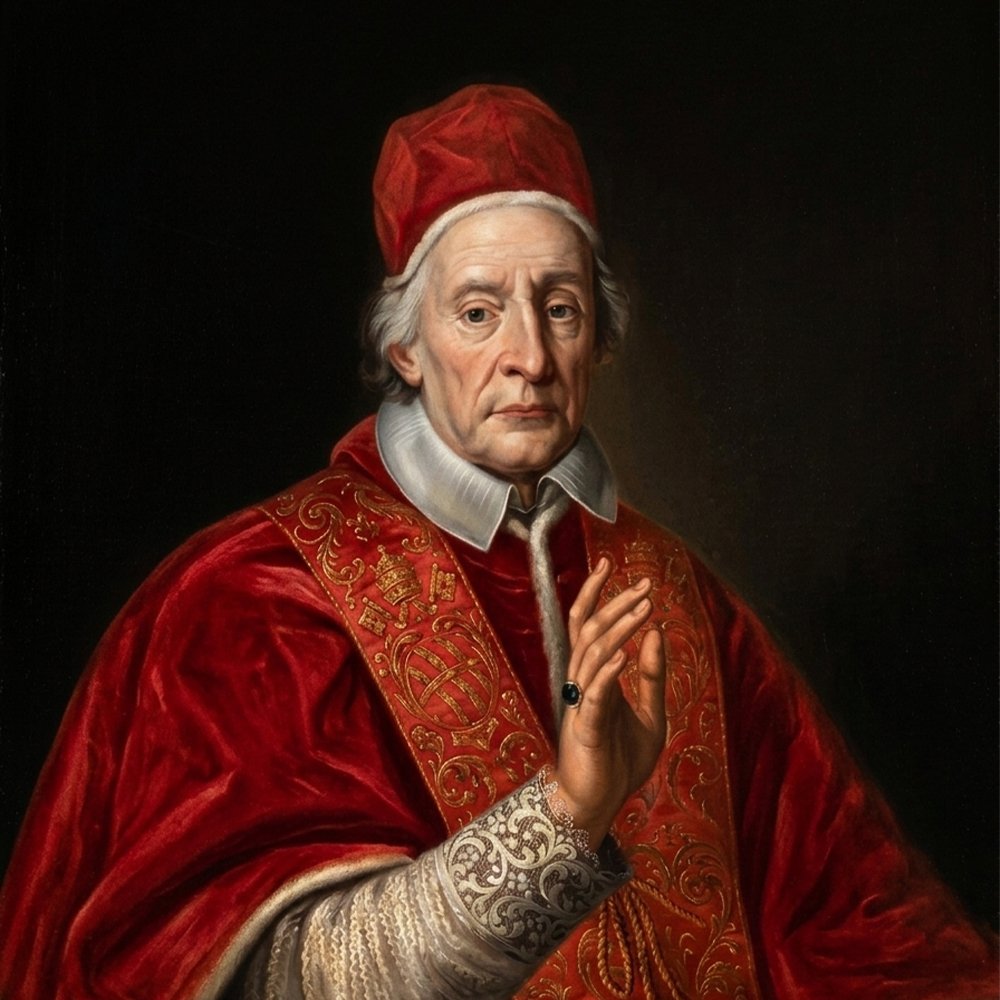
Pope Clement XII (1730-1740)
BIOGRAPHICAL DETAILS
Birth Name: Lorenzo Corsini
Birth: 7 April 1652, Florence, Grand Duchy of Tuscany (Italy)
Papal Election: 12 July 1730
Coronation: 16 July 1730
Pontificate: 12 July 1730 – 6 February 1740 (9 years, 6 months, 25 days)
Death: 6 February 1740, Rome (87 years old)
Burial: Basilica of St. John Lateran, Rome
Religious Order: Secular clergy (did not belong to a religious order)
Papal Motto: None officially recorded
Sobriquets: “The Blind Pope”, “Pope of Nepotism”, “Pope of the Trevi Fountain”
NOTE: Elected at 78 years old, blind at 79 – a pontificate marked by illness, nepotism, but also great public works!
FORMATION AND RELIGIOUS LIFE
Aristocratic Origins – Corsini Family
Corsini Family:
One of the oldest and noblest families of Florence
Bartolomeo Corsini: father, marquis, Florentine senator
Elisabetta Strozzi: mother, from another great Florentine family (Strozzi – historical rivals of the Medici!)
Family: immensely rich (banking, commerce, properties)
Palazzo Corsini: magnificent Florentine palace (still exists)
Lorenzo: fourth child (firstborn would inherit the title, Lorenzo destined for the Church – aristocratic tradition)
Privileged Childhood (1652-1670):
Refined aristocratic education
Private tutors
Renaissance Florence: art, culture, sophistication
Family close to the Grand Dukes of Tuscany (Medici)
Lorenzo: intelligent child but not a prodigy
Health: delicate since childhood (predisposition to illness)
Academic Formation
Roman College, Rome (1670-1675):
Elite Jesuit school
Curriculum: Latin, Greek, rhetoric, philosophy
Diligent student (not brilliant like Lambertini)
Developed solid piety
University of Pisa (1675-1679):
Doctorate in Civil and Canon Law
In utroque iure
Thesis defense: competent but not exceptional
Networking: met Tuscan aristocrats
Priestly Ordination: 1680 (28 years old)
Initial Ecclesiastical Career (1680-1706)
Apostolic Referendary (1681-1685):
Papal tribunal
Minor canonical cases
Demonstrated administrative competence
But: did not particularly stand out
Governor of Città di Castello (1685-1690):
Small town in the Papal States
Local administration
Reputation: just, moderate
Fought banditry (endemic problem)
Modest public works
Treasurer of the Apostolic Camera (1690-1696):
Papal finances
Crucial: demonstrated financial skill
Reorganized accounting
Reduced fraud
Pope Innocent XII noticed his talent
De Facto Cardinal-Nephew:
Was not a nephew of any pope
But: served under several popes
Florentine connections: valuable in Rome
Mediator between Tuscany and the Holy See
Nuncio to Vienna (never served):
Appointed but did not go
Health: pretext (or genuine concern)
Preferred to remain in Rome
CARDINAL (1706-1730)
Created Cardinal by Clement XI (17 May 1706):
54 years old (relatively young for a cardinal at the time)
Cardinal-Deacon of Santa Susanna
Promoted: for administrative merit + Florentine connections
Corsini family: contributed generously to the Church
Bishop of Frascati (1725-1730):
Roman suburb, small but prestigious diocese
Often resided there (unusual – many cardinals neglected dioceses)
Modest reforms:
Pastoral visits
Seminary: improvements
Charity to the poor
Reputation: conscientious bishop
Activity in the College of Cardinals:
Participated in Conclaves:
1721 (election of Innocent XIII – very brief conclave)
1724 (election of Benedict XIII)
Congregations:
Propaganda Fide (missions)
Council (interpretation of the Council of Trent)
Ecclesiastical Immunity
Position: moderate, not factious
Did not lead a faction but was respected by all
Characteristics (1706-1730):
Advanced age: 54-78 years as cardinal
Deteriorating health: gout, rheumatism, eye problems (already serious in his 70s)
Wealth: Corsini family supported him generously
Piety: sincere, not ostentatious
Politics: pragmatic, avoided extremes
Networking: excellent relations with Italian aristocracy
CONCLAVE OF 1730 – PAPAL ELECTION
Pre-Conclave Context
Death of Benedict XIII (21 February 1730):
Personally austere Dominican pope
But: disastrous government
Cardinal Coscia (favorite): scandalously corrupt
Sold offices
Appropriated funds
Universally despised
Church: needed to restore dignity, reform finances
Situation of the Church (1730):
Finances: chaotic (Coscia had plundered the treasury)
Reputation: stained (nepotism scandals)
International relations: tense
Spain: hostile (disputes over episcopal appointments)
Austria: dominant in Italy
France: distant (strong Jansenism)
Papal States: poorly administered, impoverished
The Conclave – Four Months
Start: 5 March 1730
Location: Quirinal Palace, Rome
Duration: 129 days (more than 4 months)
Main Factions:
“Zelanti” (Zealous):
Intransigent, pro-papal independence
Wanted: a strong pope, without compromises with crowns
Led by: Cardinal Piazza
Candidate: Cardinal Imperiali (but vetoed by Spain!)
“Crown” (imperial faction):
Pro-Austria (Holy Roman Empire)
Emperor Charles VI: enormous influence in Italy
Wanted: a docile, cooperative pope
Candidates: several pro-imperial cardinals
Moderates/Florentines:
Not extremists
Wanted: peace, administrative reform
Corsini: member of this faction
Prolonged Impasse:
Multiple vetoes:
Spain: vetoed Imperiali (zelante)
Austria: vetoed pro-French candidates
France: vetoed pro-imperial candidates
Roman heat (summer 1730):
Cardinals: exhausted, some fell ill
Pressure: intense for a resolution
Age of the cardinals:
Many elderly (at the time: old cardinals were common)
Fear: deaths during the conclave
Corsini’s Rise:
Initially: not the favorite (very few votes)
Unexpected advantages:
Age (78 years old): seen as a “transition pope” (would live little – everyone thought)
Florentine: Tuscany neutral (Grand Duchy independent, not subject to great powers)
Financial experience: crucial after Coscia’s disaster
Moderate: didn’t gravely offend any faction
Rich: Corsini family (wouldn’t depend on favors)
Sick: severe gout (paradoxically an advantage – wouldn’t last long, wouldn’t do much damage!)
Decisive Moment (July 1730):
Factions: exhausted, no main candidate viable
Cardinal Albani: proposed Corsini as a compromise
Argument: “We need someone who restores finances, doesn’t cause conflicts, and won’t live long”
Corsini: reluctant (terrible health, already almost blind)
Election: 12 July 1730
Vote: majority (but not enthusiastic)
Corsini hesitated: “I am old, sick, blind…”
Cardinals: insisted
He accepted: “May God forgive and help me”
Chose name: Clement XII
Homage to Clement XI (predecessor who made him cardinal)
Coronation: 16 July 1730
St. Peter’s Basilica
Ceremony: Corsini needed to be supported (could barely walk)
Vision: already severely compromised
Symbolism: fragile pope, weakened Church
PONTIFICATE (1730-1740)
Catastrophic Health – “The Blind Pope”
Medical Conditions:
Progressive Blindness:
1730 (election): already very poor vision
1731: almost total blindness
1732: complete and permanent blindness
Cause: probably glaucoma + cataracts
Treatments (bloodletting, unguents): useless
Severe Gout:
Swollen, painful joints
Difficulty walking (carried in a chair)
Frequent attacks
Rheumatism:
Constant pain
Mobility: severely limited
Age:
78 years old at election
87 at death
A whole decade governing while practically incapacitated
Impact on Government:
Total dependence on advisors
Documents: read to him
Decisions: influenced by those who had access
Openness to nepotism: could not supervise personally
Extreme Nepotism – Cardinal Neri Corsini
Omnipotent Nephew:
Neri Maria Corsini: nephew of Clement XII
Created cardinal immediately: July 1730
De facto Cardinal Secretary of State (not officially, but in practice)
Absolute Power:
Controlled access to the pope
Read/wrote all correspondence
Made decisions in the pope’s name
Appointments: his prerogative
Finances: under his control
Character of Neri Corsini:
Intelligent, administratively competent
But: ambitious, nepotistic
Scandalously enriched the Corsini family
Built Palazzo Corsini (Rome) – sumptuous
Bought lands, titles
Criticisms: universal (even among cardinals who tolerated him)
Other Favored Corsinis:
Cousins, grandnephews: appointed to offices
Family: brutally enriched
Criticism: echoed nepotism of the past (16th-17th centuries)
But: Clement XII (blind) could not control
(Partial) Defense:
Neri: at least competent (unlike Coscia under Benedict XIII)
Administration: functioned (did not collapse)
But: ethically indefensible
Financial Reform – Paradox
Disastrous Inheritance:
Benedict XIII/Coscia: drained the treasury
Debt: enormous
Papal States: impoverished
Neri Corsini’s Measures (in Clement XII’s name):
Trial of Coscia:
Cardinal Coscia: arrested, tried
Convicted: embezzlement, corruption
Fine: 1 million scudi (a fortune!)
Prison: Castel Sant’Angelo
Part of the stolen funds was recovered
Popular: Romans celebrated (they hated Coscia)
Tax Reform:
New taxes (unpopular but necessary)
Taxes on luxury
More efficient collection
Spending Cuts:
Curia: reduction of unnecessary personnel
Ceremonies: less extravagant
But: Corsinis enriched themselves (contradiction!)
Loans:
Florentine banks (Corsini connections)
Temporarily stabilized finances
Result:
Finances: improved (compared to Benedict XIII)
But: never healthy
Nepotism: drained resources
International Relations – Passive Diplomacy
Spain:
King Philip V: initially hostile
Disputes over episcopal appointments in Naples, Sicily
Clement XII: partially yielded
1737: Partial Concordat (mutual concessions)
Austria (Holy Empire):
Emperor Charles VI: dominant
Clement XII: cordial relations (had no choice)
Austria: controlled northern Italy
Pope: avoided conflicts
France:
Louis XV: distant
Jansenism: persistent problem
Clement XII: moderate condemnations (ineffective)
Relations: cold but not hostile
Poland:
War of the Polish Succession (1733-1735)
Clement XII: tried to mediate (failure)
Papal power: limited in dynastic matters
Portugal:
King John V: devout
Excellent relations
Portugal: sent Brazilian gold to Rome (!)
Clement XII: favored Portuguese missions
Doctrinal and Ecclesiastical Issues
Condemnation of Freemasonry (1738) – Most Famous Act:
Bull “In Eminenti Apostolatus” (28 April 1738):
First papal condemnation of Freemasonry
Reasons:
Secret society (incompatible with Catholicism)
Suspect ritualism (pseudo-religious)
Members of various religions (relativism)
Secret oaths (usurped ecclesiastical authority)
Excommunication: for Catholics who joined
Prohibition: strict, without exceptions
Context:
Freemasonry: growing in Europe (England, France, Italy)
Enlightenment: associated (although not all Masons were Enlightenment thinkers)
Clement XII: saw a threat to orthodoxy
Impact:
Some countries: applied the prohibition
Others: ignored it (England, Prussia)
Debates: to this day about the motives (political vs. theological)
Condemnation: maintained by successors (until 1983 – new formulation)
Jansenism:
Persistent rigorist heresy
Clement XII: renewed condemnations
But: ineffective (Jansenism strong in France)
Beatifications/Canonizations:
Few (health prevented active participation)
St. Vincent de Paul: beatified (1729, before the pontificate, but process completed)
St. John of God: canonized (1690, but festivities under Clement XII)
Missions:
Support for Jesuit missions (Latin America, Asia)
But: Chinese Rites controversy: did not resolve (left for successor)
Portuguese missions: favored (John V generous)
Public Works – Visual Legacy of Rome
Trevi Fountain (1732-1762):
Project: Nicola Salvi (architect)
Commission: Clement XII (1732)
Most famous fountain in Rome!
Completion: under successors (Benedict XIV, Clement XIII)
But: initiative of Clement XII
Cost: enormous (criticized during famine)
Justification: employment, beauty, glory of Rome
Palazzo Corsini (Rome):
Family residence
Clement XII: allowed Neri to build with questionable funds
Sumptuous (today a museum)
Symbol: nepotism
Façade of the Basilica of St. John Lateran:
Architect: Alessandro Galilei
Commissioned: 1732
Completed: 1735
Style: late Baroque, imposing
One of the most important architectural works of the pontificate
Corsini Chapel (St. John Lateran):
Funerary chapel of the Corsini family
Splendid decoration
Clement XII: planned his own tomb there
Artists: various Baroque masters
Capitoline Museums:
Reorganized ancient collections
Acquired the Albani Collection (ancient sculptures)
Opened to the public (1734) – first public museum in the world!
Enormous cultural legacy
Charitable Works:
Hospitals: improvements
Bread distribution (during scarcity)
Orphanages
But: spending on Corsinis overshadowed them
Administration of the Papal States
Government:
Neri Corsini: controlled it
Local governors: appointed for loyalty (not merit)
Corruption: persistent (although less than under Benedict XIII)
Economy:
Agriculture: stagnant
Industry: minimal
Commerce: limited
Papal States: among the most backward in Italy
Justice:
Penal code: not reformed
Death penalty: frequent
Prisons: terrible conditions
Banditry:
Endemic problem
Military campaigns: partially effective
Security: slightly improved
LAST YEARS – PROLONGED AGONY (1735-1740)
Total Deterioration
1735-1737:
Blindness: total, permanent
Mobility: almost nil (always in a chair)
Pain: constant (gout, rheumatism)
Mental lucidity: preserved (surprisingly!)
But: totally dependent
1738-1739:
Confined to quarters
Rarely appeared publicly
Audiences: very brief (exhausted)
Government: Neri Corsini completely in control
1739-1740:
Practically moribund
Eats little, sleeps poorly
Sacraments: received several times (preparing himself)
Rome: expected imminent death (for years!)
Awareness of His Own Situation
Reports:
Clement XII: aware of his dependence
Lamented (privately) Neri’s nepotism
But: unable to control (blind, immobile)
Phrases (reported): “God will judge what I could not prevent”
Preparation for Death:
Will: left personal fortune to charity (!)
But: Corsini family already enriched
Asked forgiveness for the scandals of his pontificate
Piety: genuine until the end
Death
Last Weeks (January-February 1740):
Practically unconscious
Occasional delirium
Received Last Rites: 3 February
6 February 1740:
Morning: coma
Afternoon: peaceful death
87 years old
Cause: extreme old age, multiple organ failure
Last Words (reported):
“Forgiveness… I could not see…” (reference to blindness? or metaphor?)
Funeral
8-10 February 1740:
Basilica of St. John Lateran (not St. Peter’s – unusual choice)
Reason: Corsini Chapel (family tomb)
Ceremony: solemn but not enthusiastic
Romans: respect (personal piety) but criticism (nepotism)
Burial:
Corsini Chapel, St. John Lateran
Monumental tomb (planned by him)
Sculpture: Giovanni Battista Maini
Inscription: praises piety, charity (ignores nepotism)
LEGACY AND HISTORICAL EVALUATION
Contemporaries
Critics (majority):
Scandalous nepotism: Neri Corsini enriched himself obscenely
Weak government: an incapacitated pope should not have governed
Should have abdicated: precedent (Celestine V, 1294) existed
Pontificate: a waste (blind pope for a decade)
Defenders (few):
Personal piety: genuine
Not to blame for illnesses (God allowed it)
Public works: beautified Rome
Condemnation of Freemasonry: prophetic
Successor (Benedict XIV):
Reformed excesses
But: respected the memory of Clement XII (did not denounce him publicly)
Historiography
18th-19th Centuries:
Consensus: failed pontificate
Nepotism: compared to the worst Renaissance popes
But: personal piety recognized
20th Century:
Partial reassessment:
Victim of circumstances (incapacitating illness)
Neri Corsini: competent (though corrupt)
Public works: lasting legacy
But: never fully rehabilitated
21st Century:
Renewed interest:
Condemnation of Freemasonry: studied historically
Capitoline Museums: cultural legacy
Trevi Fountain: popular association
Evaluation: problematic but not catastrophic pontificate
Comparisons
Worst Aspects:
Nepotism: comparable to Alexander VI, Paul III (Renaissance)
Physical incapacity: worse than any recent predecessor
Dependence: parallel with future sick popes (late Pius IX, late John Paul II)
Best Aspects:
Public works: comparable to Sixtus V, Urban VIII
Culture: less than Leo X, but significant
Personal piety: genuine (unlike Alexander VI!)
Enduring Impact
Condemnation of Freemasonry:
Defined the Catholic position for centuries
Debates: continue (theological vs. political reasons)
Successors: confirmed until 1983 (reformulation)
Artistic Works:
Trevi Fountain: icon of Rome
Capitoline Museums: first public museum
Lateran Façade: architectural landmark
Negative:
Example of nepotism that later reformers cited
Argument for limiting papal age (not implemented)
Case for debate on papal abdication (Celestine V vs. duty to remain)
CURIOSITIES AND PERSONAL DETAILS
Personality (before blindness)
Virtues:
Piety: daily Mass, constant prayer
Generosity: genuine personal charity
Moderation: avoided conflicts when possible
Culture: lover of arts, literature
Limitations:
Vain: concerned with appearance (ironic, given future blindness)
Indecisive: depended on advice
Weak with family: did not control Corsinis
Life During Blindness
Routine (1732-1740):
7 AM: Got up, dressed by servants
8 AM: Mass (celebrated for him, not by him – blind, couldn’t)
9 AM – 12 PM: Audiences (very brief, exhausted)
12 PM: Lunch (ate little)
2 PM – 4 PM: Rest
4 PM – 6 PM: Correspondence (read/written by secretaries)
6 PM: Rosary (daily)
7 PM: Dinner
8 PM – 10 PM: Private prayer
10 PM: Retire
Habits:
Music: loved it (only joy)
Private concerts: frequent
Voice: weakened (but spoke clearly)
Humor: lost it (understandable depression)
Appearance
Before blindness (young portraits):
Noble, aristocratic face
Light eyes (cruel irony of blindness)
Figure: erect, dignified
During pontificate (descriptions):
Aged, wrinkled face
Eyes: closed or opaque (visible cataracts)
Figure: stooped, always in a chair
Vestments: impeccable (Neri ensured a dignified appearance)
Personal Relationships
Corsini Family:
Kept in close contact
Florentines: frequently visited Rome
But: their enrichment: scandal
Neri Corsini:
Relationship: total dependence
Clement XII: loved his nephew (genuinely)
But: unable to control him
Tragedy: family love caused papal scandal
Cardinals:
Some: genuinely compassionate (Benedict XIV/Lambertini)
Others: frustrated (pope unable to govern)
Relations: respectful but tense
Anecdotes
1. Reluctant Election:
When elected, Corsini: “But I am almost blind!”
Cardinal: “Better a blind pope than a blind Church” (unintentional irony)
2. Trevi Fountain:
Clement XII: never SAW the fountain (blind when it began)
They described it to him
He replied: “I hear the water in my dreams”
3. Neri and the Pope:
Visiting cardinal (anonymous): “Your Holiness, do you know that Neri steals?”
Clement XII: “I know. But he is my nephew. God will judge him, not me.”
(Demonstrates: awareness of the problem, but impotence or familial weakness)
4. Capitoline Museums:
Opening (1734): Clement XII could not see the collections
But: insisted on a symbolic “inauguration”
Taken in a chair, he touched the sculptures
“Beauty can be felt, not only seen”
IMPORTANT DOCUMENTS
Bulls and Briefs
“In Eminenti Apostolatus” (1738):
Condemnation of Freemasonry
Most important document of the pontificate
“Apostolica Sedes” (1731):
Against Jansenism
Ineffective but orthodoxically necessary
“Ex Omnibus” (1735):
Regulation of beatifications
Continued the work of predecessors
Concordats
Spain (1737): Partial, on episcopal appointments
Portugal (1732): Favorable to Portuguese missions
SUMMARY CHRONOLOGY
1652: Birth in Florence
1680: Priestly ordination
1690-1706: Administrative career in Rome
1706: Created cardinal by Clement XI
1725: Bishop of Frascati
1730 (July): Papal election (4-month conclave, 78 years old)
1731: Almost total blindness
1732: Complete blindness; begins Trevi Fountain
1734: Opens Capitoline Museums to the public
1735: Façade of St. John Lateran completed
1738: Condemnation of Freemasonry
1740 (February): Death in Rome, 87 years old
Pope Clement XII personifies the tragic spectacle of a holy man governing under impossible conditions. Elected at 78 by cardinals who expected a brief and harmless pontificate, he surprised everyone by living an entire decade – but practically blind from the start.
His personal piety was genuine. His intentions, good. But his literal blindness became a cruel metaphor: he could not SEE the nepotism of his nephew Neri Corsini plundering papal resources. He could not supervise the government. He could not read documents. He depended totally on intermediaries who manipulated him or enriched themselves.
Paradoxically, he bequeathed to Rome some of its glories:
The Trevi Fountain (which he never saw)
The Capitoline Museums (whose sculptures he only touched)
The Condemnation of Freemasonry (prophecy or paranoia? – debated to this day)
But he also left scandal: nepotism that rivaled the worst Renaissance excesses, in an 18th century that expected Enlightenment and reform.
Should he have abdicated? Canonists debated (and debate). A precedent existed (Celestine V, 1294). But tradition said: pope until death, even if incapacitated – a cross to bear, not a position to abandon.
He died peacefully, at 87, after a decade of physical darkness. His unintended epitaph lies in the (possibly apocryphal) phrase he supposedly said: “Forgiveness… I could not see…”
Did he refer to physical blindness? Or to the moral blindness that allowed corruption to flourish around him? We will never know.
“The Blind Pope” saw less than any pontiff – literally and, tragically, figuratively. But his blindness illuminates a perennial dilemma: What to do when the Vicar of Christ can no longer keep vigil?
Modern Rome, bathing in the Trevi Fountain, rarely thinks of the blind pope who commissioned it but never contemplated it. Perhaps that is his most fitting epitaph: beauty that remains, creator forgotten.