Purgatorium
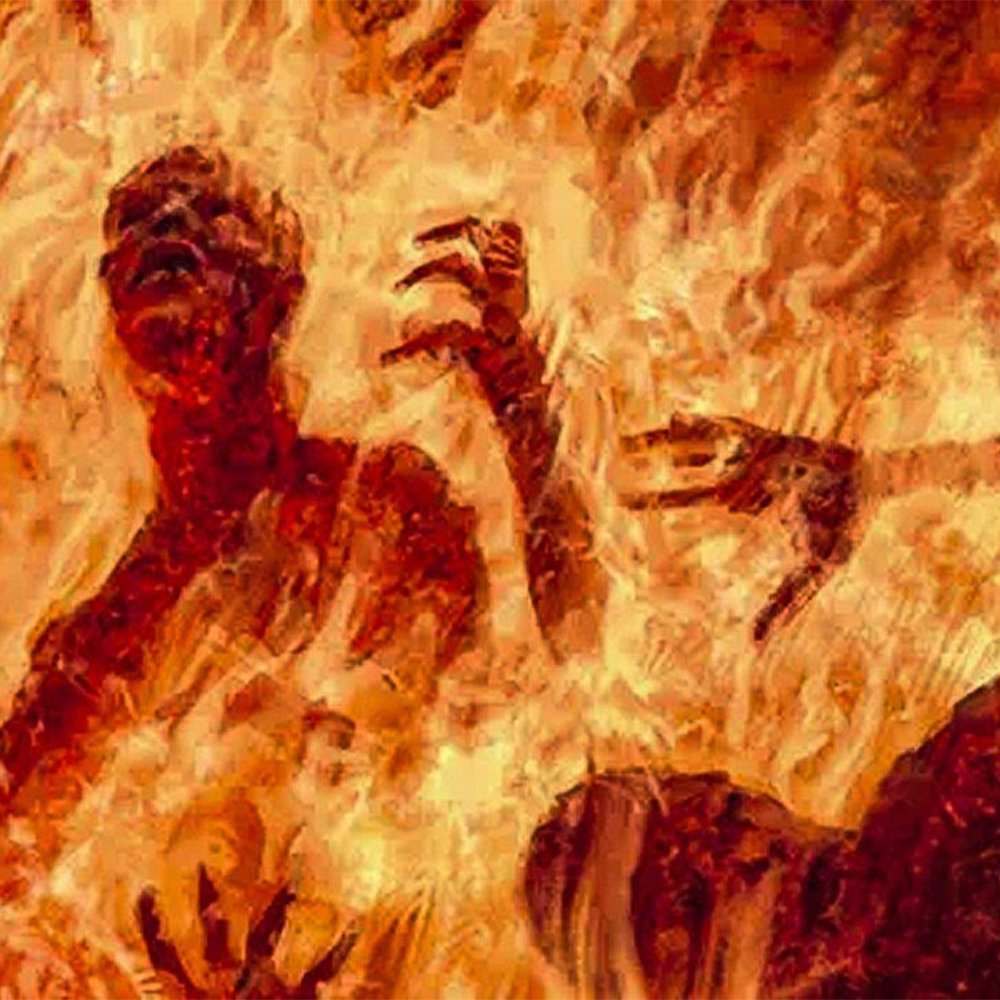
Purgatory is one of the most characteristically Catholic doctrines — most deeply rooted in the Tradition of the Church and, at the same time, most contested by Protestants since the sixteenth century. Understanding it with theological precision and with the love it deserves requires starting from an absolutely fundamental principle: Purgatory is not a second chance of salvation for the damned. It is a state of final purification for those already saved.
This distinction is crucial. The souls in Purgatory are saved with absolute certainty. They died in a state of grace and friendship with God. Their entry into Paradise is certain and irreversible. What delays them is not a doubt about their eternal destiny, but the necessity of a purification that renders them fully worthy to see God face to face, in His absolute and infinite holiness.
Purgatory is, therefore, above all, an act of divine mercy. It is the love of God that refuses to allow any impurity, however slight, to enter His presence — not because God is petty or cruel, but because the very nature of the beatific vision demands total purity of the soul that receives it. No impure eye can contemplate the divine light without being consumed.
Saint Augustine summarized this truth with a formula that would become classic in Western theology: it is impossible for the impure soul to see God, because God is supremely pure. The purification of Purgatory is not a punishment in the sense of divine vengeance; it is an ontological necessity arising from the nature of God and from the nature of the human soul.
PART I: THE DOGMATIC DEFINITION OF PURGATORY
1.1 The Defined Dogma
Purgatory is a dogma of faith of the Catholic Church, solemnly defined by the Council of Florence (1439) and reaffirmed with greater precision by the Council of Trent (1563). A dogma of faith is a truth revealed by God that the Magisterium of the Church has solemnly defined and which all the faithful are obliged to believe.
The Council of Trent defined the following in the Decree on Purgatory (Session XXV, 1563):
“Purgatory exists, and the souls detained there are helped by the suffrages of the faithful, and especially by the acceptable sacrifice of the altar. Therefore the holy Council commands the bishops to diligently ensure that the sound doctrine of Purgatory, received from the holy Fathers and the sacred Councils, be believed, maintained, taught, and everywhere preached to the faithful of Christ.”
— Council of Trent, Decree on Purgatory, Session XXV
What the Church defines as dogma regarding Purgatory can be synthesized in three fundamental propositions:
Purgatory exists as a real state of post-mortem purification for souls that died in a state of grace but still owe temporal penalties for sins already forgiven.
The souls of Purgatory are helped by the suffrages of the faithful — that is, by prayers, Masses, alms, and indulgences offered by the living on their behalf.
The principal means of relief for the souls of Purgatory is the Holy Sacrifice of the Mass.
1.2 What the Church Does NOT Define
It is equally important to know what the Church has not defined about Purgatory, so as not to confuse dogma with the theological hypotheses and poetic images that surround it:
The Church does not define the exact nature of the penalties of Purgatory. The fire of Purgatory is an image widely used in Tradition, but it is not an element defined by dogma. The precise nature of purification remains a mystery.
The Church does not define the duration of Purgatory for each soul. There is no determined time of purification. The very notion of time in the post-mortem intermediate state is a matter of theological debate.
The Church does not define the physical location of Purgatory. Images of a subterranean place or a place between hell and paradise are theological images, not geographical statements.
The Church does not define how many souls are in Purgatory or which ones they are, except in the cases of canonized saints, of whom the Church declares they are definitively in Paradise.
PART II: THE BIBLICAL FOUNDATIONS
2.1 The Old Testament
2 Maccabees 12:38–46: The Founding Text
The most explicit text in the Old Testament concerning prayer for the dead is found in the second book of Maccabees, one of the deuterocanonical books that Protestants removed from their canon in the sixteenth century — precisely because this text grounds the doctrine of Purgatory. The episode is as follows: the Jewish general Judas Maccabeus, after a battle, discovers that some of the fallen soldiers had carried forbidden idolatrous objects in violation of the Law of Moses. Nevertheless, Judas organizes a collection and sends it to Jerusalem so that expiatory sacrifices may be offered for the dead.
The text concludes with one of the most important theological declarations in the Old Testament:
“For if he were not expecting that those who had fallen would rise again, it would have been superfluous and foolish to pray for the dead. But if he was looking to the splendid reward that is laid up for those who fall asleep in godliness, it was a holy and pious thought. Therefore he made atonement for the dead, so that they might be delivered from their sin.”
— 2 Maccabees 12:44–46
This text is extraordinarily precise: it affirms that the dead can be delivered from sin through the prayer and sacrifice of the living; it implies the existence of an intermediate state between death and definitive liberation; and it grounds the practice of praying for the dead in an explicit theological reflection on the resurrection.
2.2 The New Testament
Matthew 12:31–32: The Sin That Will NOT Be Forgiven in This Age or the Age to Come
Christ declares that blasphemy against the Holy Spirit will be forgiven neither in this age nor in the age to come. The theological implication of this statement is powerful: if some sins are not forgiven in the age to come, it is because others can be forgiven after death. This implication was noted by the Fathers of the Church as an indication of the possibility of post-mortem purification.
“Whoever speaks a word against the Son of Man will be forgiven, but whoever speaks against the Holy Spirit will not be forgiven, either in this age or in the age to come.”
— Matthew 12:32
1 Corinthians 3:10–15: Purification by Fire
Saint Paul describes the judgment of each person’s works using the image of fire that tests and purifies. The one whose works are destroyed by fire will suffer loss, yet will be saved, but only as through fire. This text is one of the most frequently invoked by Tradition as the biblical foundation of Purgatory:
“Each one’s work will become manifest, for the Day will disclose it, because it will be revealed by fire, and the fire will test what sort of work each one has done. If the work that anyone has built on the foundation survives, he will receive a reward. If anyone’s work is burned up, he will suffer loss, though he himself will be saved, but only as through fire.”
— 1 Corinthians 3:13–15
Saint Paul speaks of a soul that is saved, but whose works are destroyed by fire, and which must pass through fire to be saved. The state described is not Paradise, because there is suffering and loss. It is not Hell, because the soul is definitively saved. It is an intermediate state of purification: Purgatory.
Matthew 5:25–26: The Adversary and the Prison
In the parable of the adversary, Christ speaks of a debtor who is cast into prison and will not be released until he has paid the last penny. The Fathers of the Church widely interpreted this prison as an image of Purgatory: a state of temporary detention from which the soul departs when it has fully paid its spiritual debt.
“Come to terms quickly with your accuser while you are going with him to court, lest your accuser hand you over to the judge, and the judge to the guard, and you be put in prison. Truly, I say to you, you will never get out until you have paid the last penny.”
— Matthew 5:25–26
1 Peter 3:18–20 and 4:6: The Preaching to the Dead
Saint Peter mentions that Christ went and proclaimed to the spirits in prison, and that the Gospel was proclaimed even to those who are dead. These texts indicate the continuation of God’s action after death and suggest that the post-mortem state is not one of total impassibility, but a state in which the soul is still oriented toward God and can be assisted.
2.3 The Apostolic Practice: Prayer for the Dead
Beyond the explicit biblical texts, the very practice of the primitive Church of praying for the dead is a weighty argument. If the souls of the dead were immediately in Paradise or in Hell, prayers for the dead would be completely useless: those in Paradise do not need prayers; those in Hell cannot be helped by them.
The fact that prayer for the dead was a universal and constant practice of the Church from the most ancient times — attested by inscriptions in the Roman catacombs, by the oldest liturgical texts, and by the writings of the Fathers — is the clearest sign that the Church always believed in the existence of an intermediate state in which souls can be helped.
The Roman catacombs, which date from the second and third centuries, are covered with inscriptions requesting prayers for the dead and recording the Masses celebrated by the faithful on behalf of their beloved deceased. These early Christians were not professional theologians; they were ordinary people expressing an organic belief they had received from the Apostles.
PART III: THE PATRISTIC FOUNDATIONS
3.1 Tertullian
Tertullian (c. 160–220), one of the earliest Latin writers of Christianity, mentions the practice of offering the Eucharist for the dead on the anniversaries of their deaths: “We make oblations for the dead on their annual day.” This practice presupposes the belief in an intermediate state in which the dead can be assisted by the living.
3.2 Saint Augustine of Hippo
Saint Augustine (354–430) is the great systematizer of the doctrine of Purgatory in the West. He was profoundly shaped by the experience of his mother’s death — Saint Monica — for whom he prayed fervently and requested Masses. His reflections on the state of souls after death are among the most profound in all of Patristics.
Augustine clearly distinguished three categories of souls after death: the perfectly good, who go immediately to Paradise; the perfectly wicked, who go immediately to Hell; and the moderately good, who need purification and can be helped by the suffrages of the living.
“It is not to be doubted that the prayers for the dead bring them relief; but for those who lived in such a way that they can be helped after death.”
— Saint Augustine, Enchiridion, 110
In his Confessions, Augustine explicitly requests prayer for his deceased parents, Patrick and Monica, revealing the depth to which this belief was rooted in his personal life and spirituality:
“Inspire, my Lord God, inspire your servants, my brothers, your children, my masters, whom with heart and voice and writings I serve, that as many as shall read these pages may at your altar remember Monica your servant.”
— Saint Augustine, Confessions IX, 13
3.3 Saint John Chrysostom
Saint John Chrysostom (347–407), Patriarch of Constantinople and Doctor of the Church, vigorously defends the usefulness of prayers and alms for the dead. In his homilies, he exhorts the faithful to pray for the dead, to offer alms in their name, and to celebrate the Eucharist on their behalf:
“Not in vain was it ordained by the Apostles that mention should be made of the dead in the dread Mysteries; they knew that great gain resulted to them, great benefit.”
— Saint John Chrysostom, Homily on 1 Corinthians, 41
3.4 Saint Gregory the Great
Saint Gregory the Great (540–604), one of the greatest popes in the history of the Church, devoted a significant portion of his Dialogues to recounting stories of apparitions of souls from Purgatory and to developing the doctrine of the Mass as a suffrage for the dead. Gregory affirmed that the Mass was the most efficacious means of relief for the souls of Purgatory, because in the Mass Christ himself is offered to the Father for the good of souls.
The Gregorian Masses — a cycle of thirty consecutive Masses celebrated for a deceased soul — bear their name from Gregory the Great, to whom Tradition attributes the institution of this practice. The belief in the special efficacy of these thirty Masses for the liberation of a soul from Purgatory became one of the most popular expressions of the doctrine in the medieval Church and beyond.
3.5 Saint John of Damascus
Saint John of Damascus (676–749), the great theologian of the East and Doctor of the Church, defends prayer for the dead with arguments both scriptural and rational, and affirms that the practice was received from the Apostles and must be faithfully maintained by the Church.
“It is useful and necessary to pray for the dead, and to make oblations in their name, for the Tradition of the Apostles has established this.”
— Saint John of Damascus, Discourse on Those Who Fell Asleep in the Faith
PART IV: THE NATURE OF PURGATORY
4.1 Purgatory as Purification, NOT as Condemnation
The first and most important truth about the nature of Purgatory is that it is radically different from Hell. The souls in Purgatory are saved. They are not in a state of condemnation but in a state of purification. They love God, and God loves them. They are certain that they will reach Paradise.
This certainty of salvation is a source of peace and even of deep joy for the souls of Purgatory, even amid the suffering of purification. The mystics who describe the souls of Purgatory — especially Saint Catherine of Genoa in her Treatise on Purgatory — insist that the souls of Purgatory do not wish to leave Purgatory before they have been completely purified, for they understand that purification is necessary and ardently desire the perfection that will allow them to see God.
“The souls of Purgatory are so conformed to God’s will that they are content to remain there for as long as He wills. They would rather remain there for ten thousand years than reach Paradise a single moment before God has determined.”
— Saint Catherine of Genoa, Treatise on Purgatory
4.2 The Penalty of Loss and the Penalty of Sense
Traditional theology distinguishes two types of suffering in Purgatory, in analogy with the two types of punishment in Hell, but with the radical difference that in Purgatory both are temporary and purifying:
TYPE OF PENALTY | NATURE IN PURGATORY |
Penalty of Loss (poena damni) | The pain of longing for God: the soul that knows God and knows it is temporarily separated from Him suffers with an intensity proportional to its love. The greater its love, the more it suffers in waiting. This is the most intense of the penalties of Purgatory. |
Penalty of Sense (poena sensus) | The active purification of disordered attachments that persisted in the soul. The image of fire, used in Scripture and Tradition, expresses this active purification. The precise nature of this penalty is not defined by dogma. |
Saint Thomas Aquinas teaches that the penalty of loss in Purgatory — that is, the pain of temporary separation from God — is more intense than any suffering that can be experienced in this life. This is because the soul that has already known the love of God directly, and knows that it will be separated from Him only temporarily, suffers with an agony of longing that no physical pain can equal.
4.3 Purgatory and Fire
The image of purifying fire is one of the most constant in the description of Purgatory in the Tradition of the Church. It is rooted in the text of 1 Corinthians 3:15 (“saved, but only as through fire”), in the visions of the mystics, and in the writings of the Fathers. Saint Gregory the Great, Saint Bernard of Clairvaux, Saint Thomas Aquinas, and countless other theologians use the image of fire to describe the purification of Purgatory.
Scholastic theology debated whether the fire of Purgatory is a real material fire or a spiritual image. Saint Thomas Aquinas, following Saint Gregory the Great, taught that the fire of Purgatory could be a real fire that acts upon separated souls in a way analogous to how fire acts upon bodies. The question remains theologically open, as it is not defined by dogma.
What matters theologically is not the materiality or immateriality of the fire, but what it symbolizes: a real, active, painful, and efficacious purification that removes the last vestiges of disordered attachments from the soul and prepares it for the vision of God.
4.4 The Duration of Purgatory
The Church does not define the duration of Purgatory for any particular soul. Time in the post-mortem intermediate state may be very different from the linear time we experience in this life. Medieval theologians speculated that the duration of purification is proportional to the impurities the soul carries: the more purified the soul at the moment of death, the briefer Purgatory will be.
Saint Robert Bellarmine taught that a single moment of Purgatory is more intense than all the sufferings of this life combined. This intensity is proportional to proximity to God: the closer to God the soul is, the more acute its perception of any impurity and the more ardent its desire for total purification.
The duration may be shortened by the suffrages of the living: Masses, prayers, alms, and indulgences applied for the souls of Purgatory can reduce the time of purification. This is one of the most beautiful expressions of the Communion of Saints: the living can help the dead, just as the dead intercede for the living.
4.5 The Necessary Purification
To understand Purgatory, one must understand the doctrine of the remission of sins and its consequences. When a sin is forgiven through the Sacrament of Penance, two distinct realities occur:
The guilt of sin (reatus culpae) and the separation from God it entails are entirely removed by sacramental absolution. The penitent recovers friendship with God and the life of grace.
The temporal penalty owed for sin (reatus poenae temporalis) may persist even after the guilt has been forgiven. Just as a thief who is pardoned for his crime may still be required to restore what he stole, the pardoned sinner must still satisfy divine Justice for the consequences of his sins.
This temporal penalty can be paid in this life through sacramental penance, voluntary mortifications, works of charity, and indulgences. What has not been paid in this life must be paid in Purgatory. For this reason, the intensity and duration of Purgatory depend greatly upon the intensity of the Christian’s life of penance in this life.
The doctrine of indulgences — which generated such scandal at the time of the Reformation — has its foundation precisely in the doctrine of Purgatory: an indulgence is the total or partial remission of the temporal penalty owed for sins, granted by the Church in the name of Christ from the Treasury of the Church, that is, from the infinite merits of Christ and the supererogatory merits of the Saints.
PART V: SUFFRAGES FOR THE DEAD
5.1 What Are Suffrages
Suffrages (from the Latin suffragium: help, assistance, vote) are the acts of piety that living members of the faithful offer on behalf of the souls in Purgatory. The doctrine of suffrages is one of the most beautiful and most consoling aspects of all Catholic theology: it affirms that the bonds of love are not severed by death, and that we can truly help our loved ones who have already departed.
The theological foundation of suffrages is the doctrine of the Communion of Saints: all members of the Mystical Body of Christ — whether on earth (the Church Militant), in Purgatory (the Church Suffering), or in Heaven (the Church Triumphant) — are united by a single bond of supernatural charity. The merits and prayers of the members of one group can benefit the members of the others.
5.2 The Principal Means of Suffrage
The Holy Mass
The Holy Mass is the suffrage par excellence, the most efficacious and most precious of all means of assistance for the souls of Purgatory. In the Mass, Christ himself is offered to the Father in sacrifice for the good of the living and the dead. The infinite merits of the Sacrifice of Calvary, renewed in an unbloody manner upon the altar, are applied to the souls for whom the Mass is offered.
The Mass for the dead has very ancient roots in the liturgy of the Church: the Masses of Requiem, with their own spirituality, their Offertory (Domine Jesu Christe, Rex gloriae), their Dies Irae, and their Communion (Lux aeterna), are one of the most beautiful expressions of the Church’s love for her deceased children. The tradition of celebrating Masses on the anniversaries of death, on the third, seventh, and thirtieth days after death, and on the days of the dead dates back to the earliest centuries.
Personal Prayer
Prayer for the dead — whether the Rosary, the Office of the Dead, litanies, or the spontaneous prayer of the heart — is one of the most accessible and most constant means of suffrage. The Church has specified certain prayers with plenary or partial indulgences applicable to the souls of Purgatory, such as visiting cemeteries during the month of November, reciting certain prayers, and other acts of piety.
Indulgences
An indulgence is the remission, granted by the Church, of the temporal penalty owed for sins whose guilt has already been forgiven. Indulgences may be applied for the souls of Purgatory, thus assisting in the reduction of their penalties. The Church has a rich repertoire of indulgences associated with prayers, visits to sacred places, reception of the sacraments, and works of mercy.
The doctrine of indulgences is based on the notion of the Treasury of the Church: the entirety of the infinite merits of Christ and the supererogatory merits of the Virgin Mary and the Saints, from which the Church may distribute to its members. This Treasury cannot be increased, but it can be communicated and distributed to those whom the Church determines.
Works of Charity and Penance
Almsgiving, fasting, vigils, mortifications, and all works of charity performed by the living can be offered as suffrages for the souls of Purgatory. The goodness and penance of the living, when consciously offered to God on behalf of the dead, constitute a powerful suffrage that the Church has always encouraged.
Spiritual and Sacramental Communion
The reception of Holy Communion with the intention of offering the merits of this Eucharistic act for the souls of Purgatory is one of the most intimate and most efficacious forms of suffrage. Communion is the act by which we unite ourselves most intimately with Christ, and to offer this union for the good of the dead is an act of love of incomparable spiritual value.
5.3 All Souls’ Day and the Month of November
The Church dedicates the month of November, and especially November 2, to the liturgical commemoration of all the faithful departed. All Souls’ Day — instituted by the Benedictine abbot Saint Odilo of Cluny in the tenth century and universalized throughout the Church in the eleventh century — is the most solemn liturgical expression of the solidarity of the living with the dead.
Visiting cemeteries, placing flowers and candles on tombs, celebrating Masses for the dead, and intense prayer throughout the month of November are gestures that express the faith of the Church in the Resurrection, in the Communion of Saints, and in the efficacy of suffrages. These practices are not pagan superstitions: they are theologically grounded acts rooted in the doctrine of the Communion of Saints and in the Christian love that is not conquered by death.
PART VI: PURGATORY IN MYSTICAL THEOLOGY
6.1 Saint Catherine of Genoa and the Treatise on Purgatory
Saint Catherine of Genoa (1447–1510) wrote the most profound and most influential mystical text on Purgatory: the Treatise on Purgatory, which forms part of her larger work known as The Purgation and Purgatory of Saint Catherine. This text is not the result of specific visions of a particular place or particular souls, but of a mystical intuition about the nature of divine purification that Catherine lived in her own soul during her lifetime.
For Catherine, Purgatory is not primarily a place of external torment imposed by God as punishment. It is the result of love: the love of God drawing the soul toward Him, and the soul feeling unworthy of fully responding to that love until it is completely purified. The intensity of Purgatory comes not from without but from within — from the tension between the love the soul feels for God and the awareness of its own impurity.
“God, by His mercy, created the soul and endowed it with a natural instinct of love for Him. This love, impeded by any stain, is the cause of the suffering of Purgatory. It is love itself that purifies.”
— Saint Catherine of Genoa, Treatise on Purgatory
6.2 Dante Alighieri and the Divine Comedy
Although Dante Alighieri’s Divine Comedy (1265–1321) is a literary poem and not a definitive theological text, it is the most famous and most influential representation of Purgatory in the history of Western culture. Dante’s Purgatory, the second canticle of the work, presents Purgatory as a mountain of seven terraces, each corresponding to one of the seven capital sins, through which souls ascend progressively in purification.
Dante’s genius lies in his vision of Purgatory as a place of hope and ascent, in contrast to Hell as a place of descent and despair. In Purgatory, souls sing, pray, and encourage one another. The suffering is real, but it is the suffering of those who know they are on their way to Paradise. The final scene of the Purgatorio, when Dante crosses the river Lethe and enters the Earthly Paradise, is one of the most beautiful in all of universal literature.
6.3 The Mystics and Apparitions of Souls from Purgatory
Throughout the history of the Church, many saints and mystics have reported apparitions and communications with souls from Purgatory. Saint Margaret Mary Alacoque, Saint Padre Pio, Saint Faustina Kowalska, and many other saints of the twentieth century recounted experiences with souls from Purgatory who asked for prayers and Masses.
These apparitions are not objects of divine faith, as they are not public revelations. They are private revelations whose content, when approved by the Church, may be proposed as worthy of belief without obliging the faithful to accept them. What they reveal, consistently, is that the souls of Purgatory are conscious, that they suffer, that they love God, and that they are deeply grateful for the prayers and Masses offered on their behalf.
PART VII: PURGATORY AND THE PROTESTANT CONTROVERSY
7.1 The Protestant Rejection of Purgatory
Martin Luther rejected the doctrine of Purgatory for reasons that were both theological and reactive to the abuses in the practice of indulgences that he had witnessed. For Luther, justification is entirely by faith, without works, and the grace of Christ covers the sinner completely. There is no need for additional purification after death, because the blood of Christ is sufficient for all.
Luther removed the deuterocanonical books of the Old Testament, especially 2 Maccabees, which contained the principal scriptural foundation of Purgatory. Calvin was even more radical, asserting that Purgatory was an invention of Satan that obscured the glory of Christ’s Redemption.
7.2 The Catholic Response
The Catholic response to the Protestant rejection of Purgatory has several elements:
The scriptural foundation of Purgatory does not depend exclusively on 2 Maccabees. The texts from 1 Corinthians 3, Matthew 12 and 5, and 1 Peter 3–4 — all from the New Testament — indicate the possibility of post-mortem purification.
The universal and ancient practice of prayer for the dead, which predates any theological controversy and predates the sixteenth century, is an argument from Apostolic Tradition that no biblical criticism can refute.
The doctrine of justification by faith does not eliminate the need for purification. The forgiveness of sins removes guilt and eternal condemnation, but not necessarily all the consequences and temporal penalties of sins. This distinction is implicitly present in the very penitential practice of the primitive Church, which Protestants cannot ignore.
The rejection of Purgatory creates a serious theological problem: what happens to souls who died in a state of grace but imperfectly — carrying unresolved attachments, half-formed virtues, incomplete repentances? Immediate and automatic holiness at death seems contrary to the doctrine of human freedom and responsibility.
PURGATORY AS AN ACT OF DIVINE LOVE
Purgatory is, in the final analysis, an act of God’s love for His creatures. It would be easier, from the perspective of cold juridical logic, for God simply to condemn or acquit each soul without the possibility of subsequent purification. Purgatory reveals a God who refuses to abandon His creatures so long as there remains even the slightest possibility of purifying them and leading them to Himself.
The doctrine of Purgatory is, at the same time, a powerful stimulus for the Christian life in this world. If the intensity and duration of Purgatory depend upon the level of purification with which the soul departs from this life, then the life of penance, prayer, mortification, and ardent love of God is not an optional extra for souls of spiritual elite: it is the most sensible and most merciful path any human being can walk.
The Communion of Saints, expressed in the doctrine of suffrages, reveals that Christian love does not end with death: it passes through death and continues to operate in time and eternity. Praying for the dead, offering Masses, doing penance in their name — these are among the most beautiful and most specifically Catholic expressions of the love that God pours into the hearts of His children.
“Eternal rest grant unto them, O Lord, and let perpetual light shine upon them. May they rest in peace.”
— Antiphon of the Vespers of the Dead