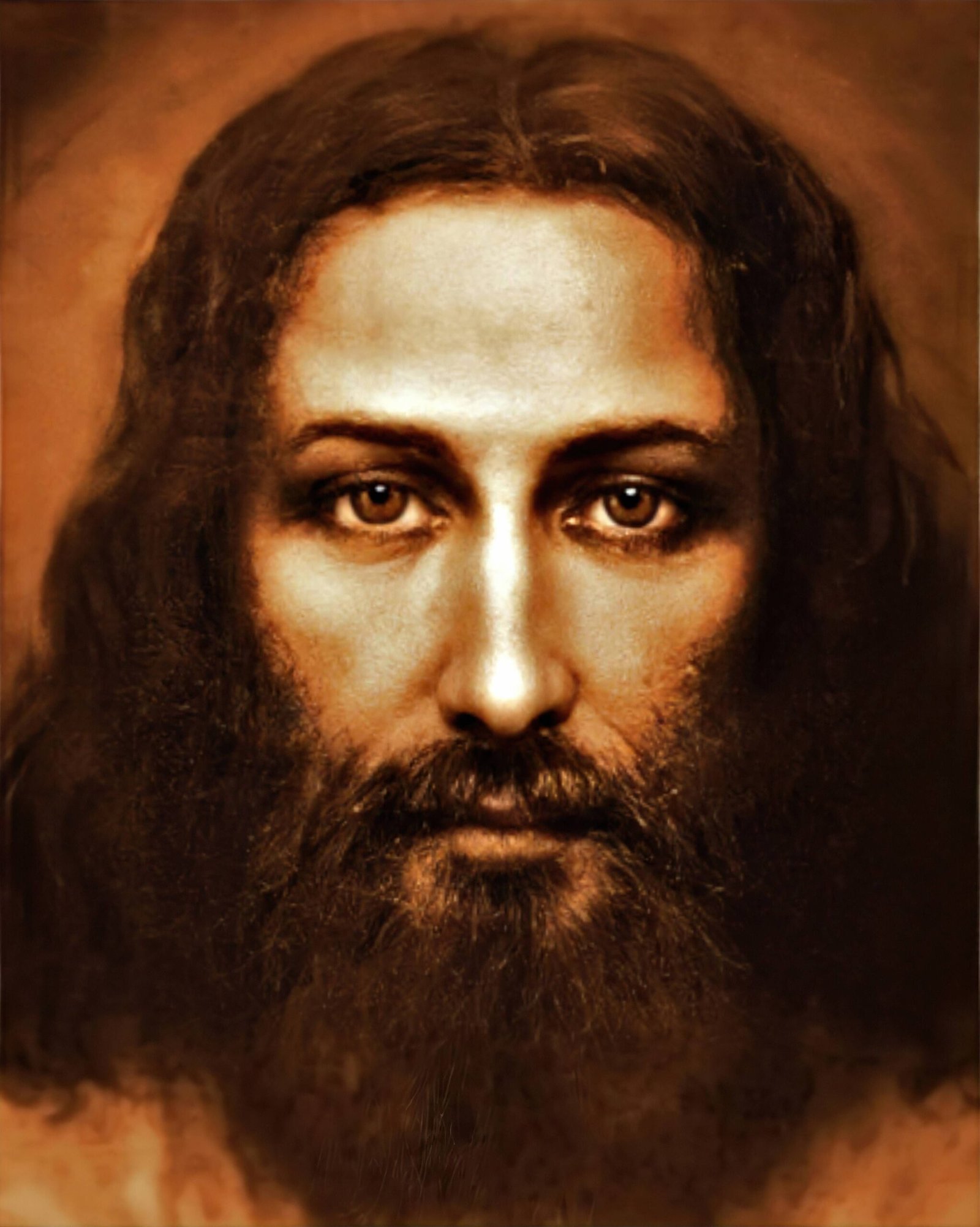
Sacra Sindone
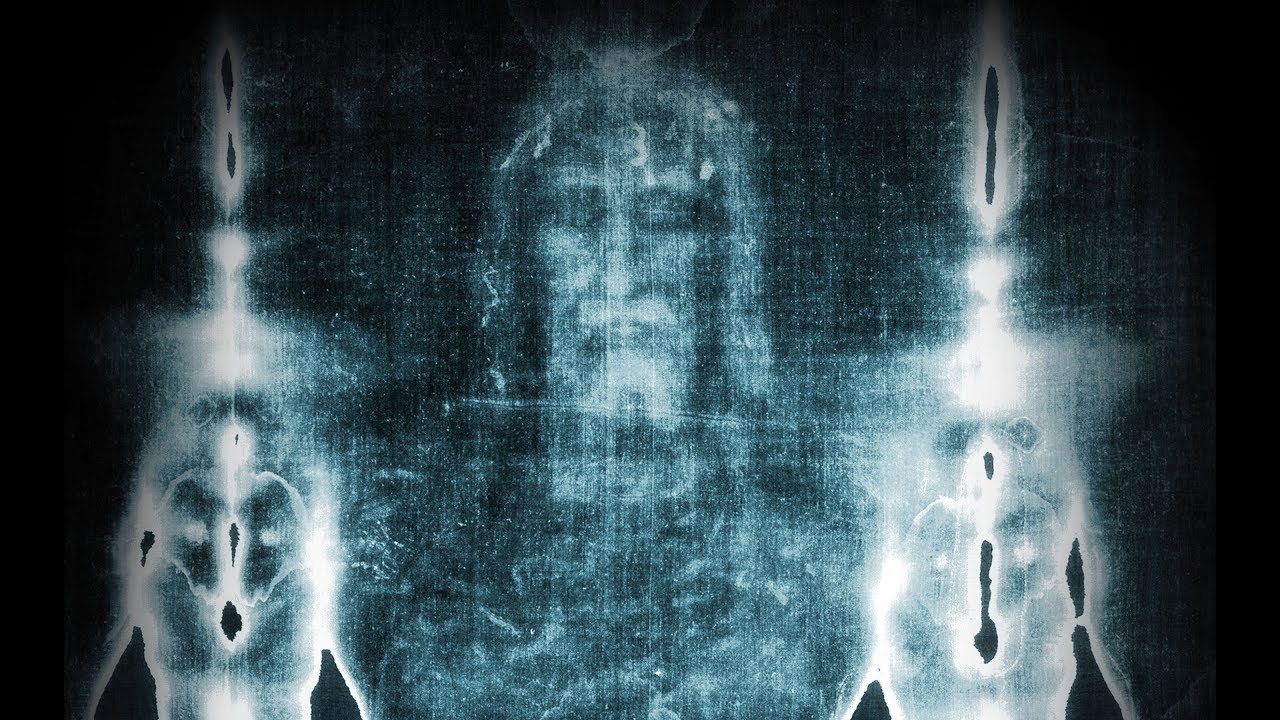
What is the Shroud of Turin?
The Holy Shroud, or Shroud of Turin , is a linen relic that, according to Catholic tradition, wrapped the body of Jesus Christ in the tomb. It is one of the most studied and debated objects in history.
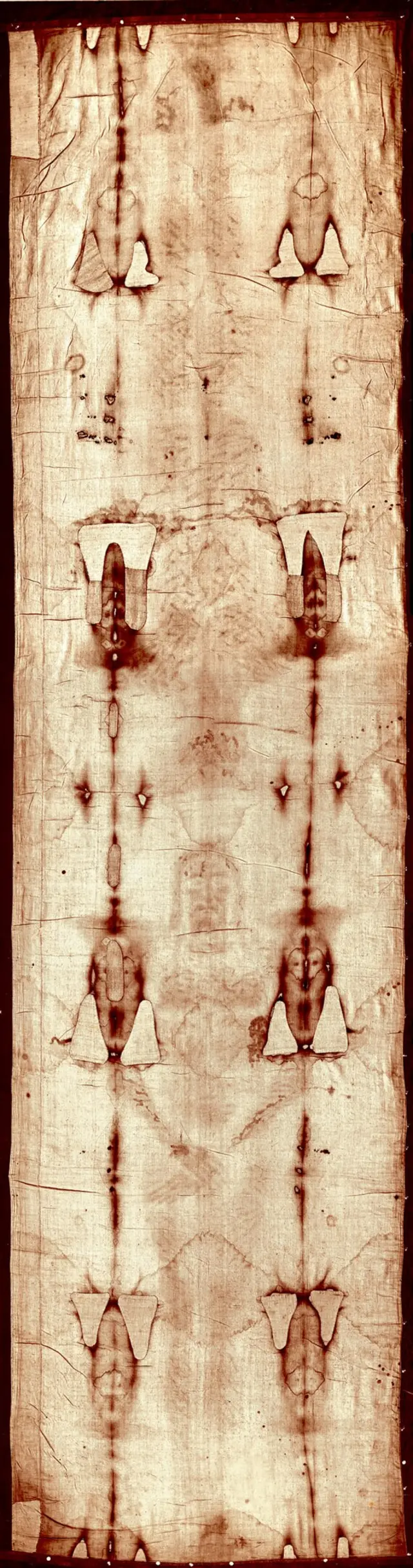
This is a linen sheet (approximately 4.4m x 1.1m) that features a double (front and back) negative image of an adult man, with marks of torture and crucifixion that include, in impressive detail, the Gospel description of the Passion of Christ.
Physical characteristics and notable features:
Body Image: The figure is a natural photographic negative, visible only from a distance. Up close, they are just blotches. Their chemical formation (a superficial dehydration and oxidation of the fibers) remains without a definitive scientific explanation.
Marks of Flagellation: The entire body shows traces of flagellation with a Roman double-pronged instrument ( flarum taxillatum ).
Wound on the side: There is a large wound on the right side of the vehicle, consistent with the throwing blow described in the Gospel of John.
Marks on the Head: Numerous punctures in the scalp and forehead, consistent with a crown of thorns.
Crucifixion wounds: Marks on the wrists (not palms) and feet reduce the number of nail attachment points. The angle of the body suggests the crucifixion positions.
Absence of Decomposition: The image is of a body that has not yet begun the process of decomposition, leaving only brief contact with the fabric.
The Position of the Catholic Church: Tradition, Devotion, and Science
The Catholic Church’s approach to the Shroud of Turin is marked by a balance between respect, veneration, and an attitude of openness to investigation. We can summarize it in several fundamental points:
Official Status: Freedom of Devotion, not Dogma.
The Church has never officially declared the Shroud as authentic in a dogmatic or infallible way. Belief in its conviction is not a binding article of faith . However, the Church officially confirms its value as an icon and permits, with great benefit, its public veneration. The position is one of deep respect for the tradition that identifies it with the burial shroud of Christ, regardless of the importance of that view.
The Shroud as a “Mirror of the Gospel” and “Fifth Gospel”
The Church’s main stance is to present it as a powerful instrument of meditation. Pope Benedict XVI stated that it is a “mirror of the Gospel.” Regardless of historical debates, it is seen as a silent and moving visual representation of the Passion, making Christ’s suffering palpable. Because of its wealth of detail, many have called it the “Fifth Gospel,” an unwritten witness that confirms and illustrates the narrative of the four canonical evangelists.
The Relationship with Science and the Question of Authenticity:
The Church accepts dialogue with science. The controversial Carbon-14 dating of 1988, which indicated a medieval origin (1260-1390), is treated with caution, given that many scientists point to possible contamination of the fabric (fire of 1532, repairs) that could have altered the results. The current stance is one of prudence : welcoming scientific debate, but emphasizing that the spiritual value of the Shroud does not depend exclusively on a dating. The mystery of its image remains.
Integration into Catholic Spirituality
The Shroud is deeply connected to the pillars of Catholic spirituality:
Passion and Redemption: It is the ultimate icon of the Paschal Mystery (Passion, Death, and Resurrection).
Sacred Heart of Jesus: A wound in the side is a focal point in devotion to the Heart of Christ.
Faces of Christ: Along with the Veil of Veronica, it is considered a “true effigy” (acheiropoieta – not made by human hands) of Jesus.
The Precision of the Marks
The forensic medical studies provide gruesome and precise details that go beyond evangelical norms, creating a coherent and realistic picture:
Rigor Mortis and Body Position: The cadaveric pain corrected the body into an unusual position: raised shoulders, head tilted forward, legs flexed. This is consistent with death by asphyxiation on the cross, where the weight of the body pulls on the arms, preventing breathing. The image was captured in the post-mortem instant, but before muscle relaxation.
Blood: Serum and Clots
The main stains are of actual blood (confirmed by multiple testicular activities, including hemoglobin and bilirubin). Analysis shows that blood flowed both before and after death .
The marks from the whippings are venous blood, darker in color, that flowed throughout life .
The wound on the side shows a clear separation between a blood serumcoágulo (the clear, watery part of the blood) and a whole blood clot. This is a precise forensic indication: the serum drained post-mortem , when the blood began to separate, after the spear thrust.
The Hands: Clasped at the Wrists
The image shows wounds on the wrists (carpal region), not the palms. Nails in the palms would tear under the weight of the body. Artistic tradition has fixed the palms, but forensic science and the Shroud indicate the wrists. There is a crucial detail: in the wrist, the median nerve is damaged, causing an involuntary contraction of the wrist, which is not visible in the image of the Shroud. This anatomical precision would be almost impossible for a medieval forger.
The Theology of the Image: An Icon “Acheiropoieta”
The most profound theological concept associated with the Shroud is that of acheiropoieta (from the Greek: αχειροποίητα , “not made by human hands”). In the Eastern and Western Christian tradition, this category is reserved for images considered to be of miraculous origin, such as the Mandylion of Edessa .
A Divine “Negative”: The Church sees the nature of the Shroud’s “photographic negative” (only completed after the invention of photography in 1898) as profoundly symbolic. The image was not “painted” in the human sense; it appears to have been imprinted by a process of energy and light. This resonates with the Christian theology of the Incarnation: the divine Word “imprinted” his suffering humanity on the cloth, just as he “imprinted” himself on history. It is the “photograph” of the Resurrection, a moment of intense luminous and transformative energy.
The Image of the Invisible God: The Shroud shows the face of a tortured man, but at the same time conveys a strange serenity. For faith, this is the face of the God-Man , who takes on the violence of the world and is transformed from within. He makes the invisible God visible precisely at the moment of his greatest humiliation, fulfilling the words of Saint Paul: “He is the image of the invisible God” (Col 1:15).
The Jewish Context of the 1st Century: Burial Practices
The historical peculiarity also extends to its compatibility with Jewish attire of the time.
The Type of Weave: The linen of the Shroud is a 3:1 herringbone twill , a sophisticated and expensive technique, but the fabric belonged to someone of means (like Joseph of Arimathea).
The Washing Ritual and the Shroud: Jewish Law (Halakha) permits bodies to be washed and anointed before burial. The man of the Shroud was not washed – the blood is intact and dry on the skin. This only makes sense in a context of extreme emergency: the body is required to be buried quickly before the start of Shabbat (Friday at sunset). The haste described in the Gospels (“they wrapped him in a linen cloth”) perfectly matches this forensic fact.
Coins on the Eyes? Some researchers, such as the French scientist Pierre Barbet and later studies using digital processing, suggest the presence of small round objects on the rectangular ones. These could be leptons (low-value Jewish coins) placed to keep the eyes closed, a documented practice. Analyses point to possible inscriptions compatible with coins of Pontius Pilate minted around 29-32 AD.
The Enigma of Image Formation: The Scientific Hypotheses
How was the image formed? There is no possibility of a natural or artificial replica of all its characteristics. This is the core of the scientific mystery.
Unique Characteristics:
Superficiality: The dyeing only affects the most superficial fibers (20-30 micrometers) of each thread. There is no penetration into the tissue.
Absence of Directionality: There are no brushstrokes, rubbing, or direct contact. The image density is a function of the distance between the body and the fabric , creating a “3D mapping” effect.
Chemical Stability: The image is the result of accelerated dehydration and oxidation of cellulose fibers , similar to very rapid aging. It resembles a very mild burn, but without pyrolysis (carbonization).
Main Hypothesis:
Radiation Hypothesis (Coronel and Rinaudo): A brief and intense emission of radiation in the ultraviolet/visible spectrum , originating from the entire body volume, could cause superficial dehydration. According to this belief, this energy is associated with the moment of the Resurrection.
Vapor Hypothesis (Jackson and Jumper): Chemical reactions of the body (ammonia, vapors) with a thin coating of carbonates on the linen (resulting from washing in hard water) created the image.
Mechanical-Chemical Contact Hypothesis (Fanti): A slight contact, facilitated by aromatic oils (myrrh and aloes, mentioned in the Gospel) used in the burial, would have transferred the image through a Maillard process (chemical reaction between sugars and proteins).
The Historical Journey: From the “Mandylion” to the Shroud of Turin
The documented history of the Shroud before the 14th century is a subject of research and tradition.
The Mandylion of Edessa Theory: A more fascinating hypothesis, defended by historians such as Ian Wilson, proposes that the Shroud and the Mandylion (the “cloth of Edessa,” a miraculous image of Christ) are the same object. The Shroud, folded in such a way as to show only the face (in tetradiplon – folded eight times), would have been venerated in Edessa (present-day Turkey) and later in Constantinople until 1204. This explains the lack of records in Europe during that period and the strong tradition of “acheiropoieta” icons with the same physiognomy.
The Apparition in the West: After the sack of Constantinople in the Fourth Crusade (1204), a relic is said to have arrived in Europe. Its first documented appearance in the West is in 1357 , in Lirey, France, in the possession of the knight Geoffrey de Charny. Controversies about its coincidences soon arose (Bishop Pierre d’Arcis wrote a memorandum against it), but popular devotion persisted.
For the Catholic Church, the Holy Shroud is much more than a potential archaeological relic. It is a powerful sacramental sign, a bridge between faith and reason , and a permanent invitation to contemplation . Its strength lies in its ability to make visible, in a unique and unsettling way, the depth of God’s love manifested in the wounded flesh of Christ. The Church’s attitude is therefore one of respectful veneration, encouragement of the piety of the faithful, and openness to study, always emphasizing that its ultimate meaning is theological and spiritual, transcending any definitive scientific verdict.