Devotio
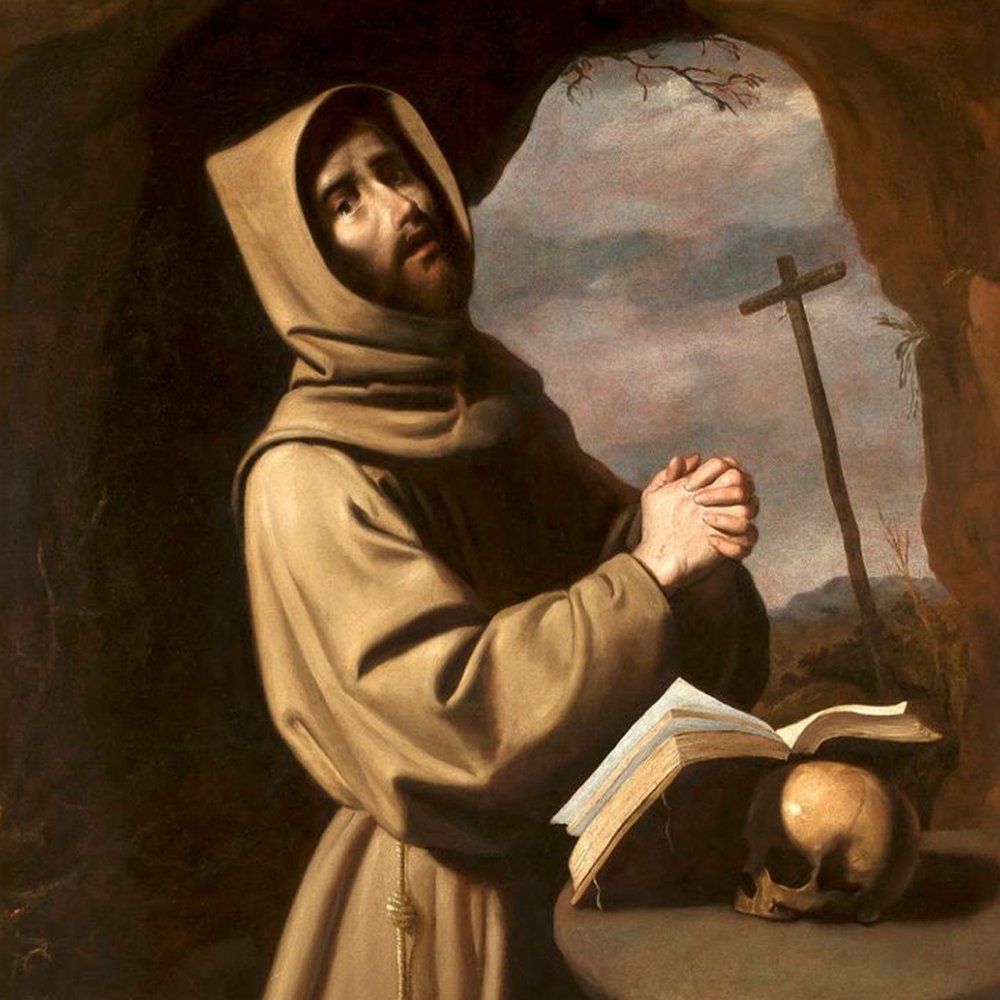
The Intercession of the Saints
Revelation 5:8 – “The twenty-four elders… had golden bowls full of incense, which are the prayers of the saints.”
It shows saints in heaven offering prayers to God.
Model of heavenly intercession
Revelation 8:3-4 – Angel offers incense with the prayers of the saints.
Explicit angelic intercession
James 5:16 – “The prayer of a righteous person is powerful and effective.”
If the prayers of the righteous are powerful on earth, how much more so in heaven?
2 Maccabees 15:12-14 – Vision of Onias and Jeremiah (both deceased) interceding
Precedent of deceased saints praying for the living.
(Deuterocanonical book, accepted by Catholics)
The Communion of Saints
Hebrews 12:1 – “We are surrounded by a great cloud of witnesses”
The saints in heaven are not inactive or unconscious.
They are active witnesses of the Church militant (on earth).
Hebrews 12:22-23 – “You have come to the spirits of the righteous made perfect.”
Mystical union between the earthly and heavenly Church
1 Corinthians 12:12-27 – The Body of Christ
The Church is one body.
Death does not break this fundamental bond.
The Historical Context: The Early Church
The Catholic Church argues that its practices reflect original Christianity, not medieval innovations.
Roman Catacombs (1st-3rd centuries)
Archaeological evidence:
Catacomb of Priscilla (2nd century): paintings of Mary with the infant Jesus
Catacomb of Saint Callixtus: images of Peter, Paul, and other saints.
Christian symbols: fish, anchor, good shepherd
Context: Persecuted Christians would not create images if they considered it idolatry. They risked their lives to maintain these representations, indicating that they saw no contradiction with the commandment.
Early Church Fathers
Saint Athanasius (296-373) defended the veneration of saints: “Those who touch the bones of martyrs participate in holiness through grace.”
Saint Jerome (347-420) On intercession: “If the Apostles and martyrs, while still in the flesh, could pray for others… how much more so after their crowns of victory?”
Saint Augustine (354-430) “We do not build temples and ordain priesthoods and sacrifices to martyrs, for they are not our gods, but their God and ours is God.”
Clear distinction between veneration and worship.
Saint John Damascene (675-749) Great defender of sacred images: “Formerly God had neither body nor form and could not be represented. But now that God has made himself seen in the flesh… I make an image of the visible God.”
Second Council of Nicaea (787 AD)
Dogmatic definition:
He condemned iconoclasm (destruction of images).
He clearly distinguished between adoration (latria) and veneration (dulia).
He stated that the honor bestowed upon the image is transferred to the prototype.
7th Ecumenical Council – accepted by Catholics and Orthodox Christians
Official decree: “The honor paid to an image passes to its prototype; whoever venerates an image venerates the person represented in it.”
Catholic theology establishes three distinct levels of worship, each with a specific nature and purpose:
I. LATRIA (WORSHIP)
This is the supreme, absolute, and exclusive worship due only to God – Father, Son, and Holy Spirit. When a Catholic kneels before the Blessed Sacrament (the Eucharist), he is worshipping Christ present in the sacrament. This is latria.
Characteristics of latria:
Recognition of absolute divinity
Total and unconditional submission
Recognition of God as creator and ultimate end.
Offering of sacrifice (the Mass)
Practical example: When a Catholic genuflects before the tabernacle containing the Blessed Sacrament, they are adoring Christ. This gesture would never be appropriate before an image of a saint.
II. DULIA (VENERATION)
It is the honor bestowed upon saints and angels. The word comes from the Greek “douleia” (service). It is fundamentally different from worship.
Dulia’s characteristics:
Recognition of the holiness attained through God’s grace.
Honoring the example of Christian life
Request for intercession (not a direct granting of favors)
Admiration for heroic virtues
Practical examples:
Just as we honor admirable living people (parents, national heroes, great leaders), Catholics honor those who have led exceptionally holy lives.
When we ask Saint Joseph to intercede for us, it’s like asking a friend to pray for us – we’re not saying he has any power of his own.
III. HYPERDULIA (SPECIAL VENERATION OF MARY)
A superior form of veneration, but still inferior to the worship due to God.
Why does Mary receive special honor?
Mother of Jesus Christ (Theotokos – Mother of God)
Perpetual Virgin
Immaculate Conception
Assumption into Heaven
Mediatrix of all graces (submissive to Christ)
Example: When praying the Hail Mary, a Catholic does not worship Mary, but asks for her intercession: “pray for us sinners” – it is a request, not worship.
Catholic Biblical Arguments
The Commandment Correctly Interpreted
Exodus 20:4-5 – “You shall not make for yourself an idol… you shall not bow down to them or worship them.”
The Catholic Church argues that context is crucial:
The prohibition was against pagan idols worshipped as gods.
The Israelites came from Egypt, surrounded by pagan idolatry (Apis, Ra, etc.).
It was not an absolute ban on all visual representation.
God Himself ordained sacred images.
Biblical examples of images ordained by God:
Exodus 25:18-22 – Golden Cherubim on the Ark of the Covenant
God commands: “You shall make two cherubim of gold… at the ends of the mercy seat.”
The Israelites bowed down before the Ark (but they worshipped God who was present there).
Numbers 21:8-9 – The bronze serpent
God commands Moses to make a bronze serpent.
Whoever looked at her would be healed.
Jesus himself refers to this in John 3:14: “Just as Moses lifted up the serpent in the desert.”
1 Kings 6:23-29 – Solomon’s Temple
Full of images: cherubs, lions, bulls, palm trees, flowers.
Walls covered with sculptures
God approved and dwelt in this temple (1 Kings 8:10-11)
Ezekiel 41:17-20 – Vision of the future Temple
It describes walls decorated with cherubs and palm trees.
Divine prophecy including sacred images
Protestantism and Idolatry
The controversy over idolatry is one of the deepest theological divisions between Catholics and Protestants since the 16th-century “Reformation.” The traditional Catholic Church maintains that the Protestant reformers made a fundamental error of interpretation by equating the veneration of saints and the use of sacred images with pagan idolatry.
The Protestant “Error”
1. Oversimplification
Protestants, according to the Catholic view, apply the commandment literally and out of context:
Problem identified:
They are unaware that God ordained images in the Temple itself.
They do not distinguish between pagan idols and pedagogical Christian images.
They apply inconsistent standards (many have family photos, national flags, but reject religious images).
Example of inconsistency: If all images were idolatry, Protestant churches could not have:
Crosses (visual representation)
Stained glass windows with biblical scenes
Illustrations in children’s Bibles
Photos of loved ones (honoring creatures)
2. Break with Apostolic Tradition
Catholic argument:
For 1,500 years, Christianity has used images.
The Apostles did not condemn this practice in the churches they founded.
The Protestant Reformation of the 16th century broke historical continuity.
Catholic principle: “Lex orandi, lex credendi” (the law of prayer is the law of faith)
How the Church has always prayed reveals what it has always believed.
Universal and ancient practices reflect apostolic faith.
3. Misunderstanding about Intercession
Protestant confusion identified: Equating requests for intercession with attributing divine power to saints.
Catholic analogy:
If I ask my pastor to pray for me, I am not denying that Christ alone is the mediator.
Christ is the ONLY necessary and sufficient mediator.
Saints are mediators subordinate to and dependent on Christ.
1 Timothy 2:1 – Paul asks for intercessory prayers for one another.
Practical example: When someone asks “pray for me,” they are not denying Christ’s mediation. They are acknowledging that:
Christ is the primary mediator.
The prayers of the faithful have value (James 5:16)
The Church is a body where the members help one another.
4. Iconoclasm: Repeating a Historical Error
Historical parallel: Catholics argue that Protestantism repeats Byzantine iconoclasm (8th-9th centuries), which was already condemned by the Church.
Consequences of Protestant iconoclasm:
Destruction of priceless sacred art during the Reformation.
Catholic churches looted in England, Germany, and the Netherlands.
Loss of centuries of cultural and religious heritage.
Saint Thomas More executed by Henry VIII (1535)
Examples of destruction:
England (1530-1540): dissolution of monasteries, destruction of relics and images.
Netherlands (1566): “Iconoclastic Fury” – mass destruction of churches
Scotland (1559-1560): John Knox led the destruction of “papist idols”
5. Ignoring the Pedagogical Aspect
“Biblia Pauperum” (Bible of the Poor): For centuries, most people were illiterate. Images served as:
Visual education about biblical stories
Reminders of Christian virtues
Inspiration for prayer and meditation
Saint Gregory the Great (540-604): “What writing presents to readers, painting presents to the ignorant who contemplate it… therefore, especially for nations, painting can replace reading.”
Argument: If God used physical objects (the Ark, the Temple, the bronze serpent), why can’t we use images to draw closer to Him?
Practical Examples of the Difference:
Scenario 1: In front of an Image of Saint Francis
Catholic:
Kneel, but mentally address God.
Ask Saint Francis to intercede.
He admires the example of evangelical poverty.
It does not attribute divine power to the saint.
Protestant understanding (according to Catholics, erroneous):
He sees the Catholic kneeling and assumes worship.
He does not understand the mental distinction between veneration and worship.
It concludes that idolatry exists where there is only honor and requests for intercession.
Scene 2: Procession with the Image of Our Lady
Catholic perspective:
Community celebration of faith
Honor to the Mother of Jesus
Remembrance of Marian virtues (humility, faith, obedience)
Expression of popular religious culture
Protestant critique:
Appearance of pagan worship
Special treatment for the creature
Catholic response: Just as military parades honor national heroes without considering them gods, processions honor spiritual heroes.
Scenario 3: Relics of Saints
2 Kings 13:21 – “The dead man who touched Elisha’s bones came back to life.”
God worked a miracle through a physical relic.
Biblical precedent for the veneration of relics
Acts 19:11-12 – “God performed extraordinary miracles through Paul, so that even handkerchiefs and aprons that had touched him were taken to the sick.”
Material objects as channels of grace
Catholic practice:
Relics remind us that the saint was a real person.
Physical continuity with the heroes of faith.
It’s not magic, but reverence for God’s work in the person.
The Question of Mary: A Special Case
Why Does Mary Receive Special Veneration?
Biblical titles:
“Full of grace” (Luke 1:28)
“Blessed among women” (Luke 1:42)
“All generations will call me blessed” (Luke 1:48)
Catholic argument: If Mary herself prophesied that she would be honored by all generations, Protestants disobey the prophecy by neglecting it.
Luke 1:43 – Elizabeth calls Mary “the mother of my Lord”
If Jesus is God (Lord), Mary is Theotokos (Mother of God).
Title defined at the Council of Ephesus (431)
Protestant Objections and Catholic Responses
Objection: “Only Jesus is the mediator” (1 Timothy 2:5)
Catholic response:
Jesus is the ONLY necessary and sufficient mediator between God and men.
This does not exclude secondary and subordinate mediation.
Paul himself asks for prayers: “Brothers, pray for us” (1 Thessalonians 5:25)
If prayers on earth are valid, why not in heaven?
Objection: Jesus rebuked those who called Him blessed because of Mary (Luke 11:27-28)
Catholic response:
Jesus did not deny Mary’s blessedness.
He expanded the concept: blessed are those who hear and keep the Word.
Mary is the first and perfect disciple who kept everything in her heart (Luke 2:51).
Catholic Perspective
The traditional Catholic Church maintains that:
Solid biblical basis: The distinction between worship and veneration is grounded in Scripture and in the practice of God himself (who ordained images in the Temple).
Historical continuity: For 1,500 years, since the Apostles, the Church has practiced the veneration of saints and the use of images without seeing any contradiction with the commandment.
Protestant hermeneutical error: The Reformation applied literal and decontextualized interpretation, ignoring fundamental theological distinctions.
Theological coherence: The veneration of saints flows naturally from the doctrine of the Communion of Saints and the Body of Christ.
Spiritual fruit: Millions have found inspiration and spiritual growth through the veneration of saints, producing fruits of holiness.
Protestantism, with good intentions of purifying the faith, has discarded authentic apostolic practices, impoverishing devotional life and breaking with the tradition of the undivided Church. The accusation of idolatry reveals more theological misunderstanding than the reality of authentically lived Catholic practice.