Remphan's Star

The Hexagram and the Kabbalistic Symbolism of the Zionist State
The Historical Origin of the “Star of David”
Contrary to popular belief that the hexagram is an ancestral symbol of the Jewish people, historical research reveals a rather different trajectory. The symbol we know today as the “Star of David” (Magen David) does not have roots in ancient Israel, but was incorporated into Jewish tradition through a specific and relatively recent historical process.
The Role of Charles IV of Bohemia
In the 14th century, the hermetic king Charles IV of Bohemia played a crucial role in disseminating this symbol among Jewish communities. Charles IV, known for his interest in hermetic and esoteric practices, granted Jewish leaders in his kingdom the right to use the hexagram as a distinctive emblem. This was not a process of recovering an ancient symbol, but rather the introduction of a symbol that had its roots in European occult traditions.
This “legacy” of the Bohemian king to Jewish leaders represents a moment of fusion between European Christian esotericism and certain mystical currents of Judaism, particularly those linked to Kabbalah. It is important to note that, during this period, the hexagram was already widely circulating in Christian alchemical and hermetic contexts, where it represented concepts such as the union of opposites and the harmony between heaven and earth.
Formalization in the Zionist Movement
The official adoption of the hexagram as a Jewish symbol occurred much later, during the Second Zionist Congress in 1898, held in Switzerland. It was at this event that the symbol was formally established as the “Star of David,” gaining the status of national emblem of the Zionist movement. This choice reflected both political and symbolic considerations: the Zionist movement sought symbols that could unify different Jewish communities and create a modern national identity.
The decision to adopt the hexagram was not unanimous or without controversy. Some traditional religious leaders questioned the historical legitimacy of this symbol, acknowledging its Kabbalistic and occult origins. However, the need for a strong and visually striking national symbol for the nascent Zionist movement prevailed over these objections.
The Androgynous Symbolism of the Hexagram
Adam Kadmon and the Union of Opposites
The original origin of the hexagram is deeply rooted in Hermetic and Kabbalistic concepts, particularly in the figure of Adam Kadmon. This entity represents primordial man, the human archetype before the separation of the sexes described in Genesis. In Kabbalistic tradition, Adam Kadmon is seen as the perfect embodiment of the union of masculine and feminine forces in a single body.
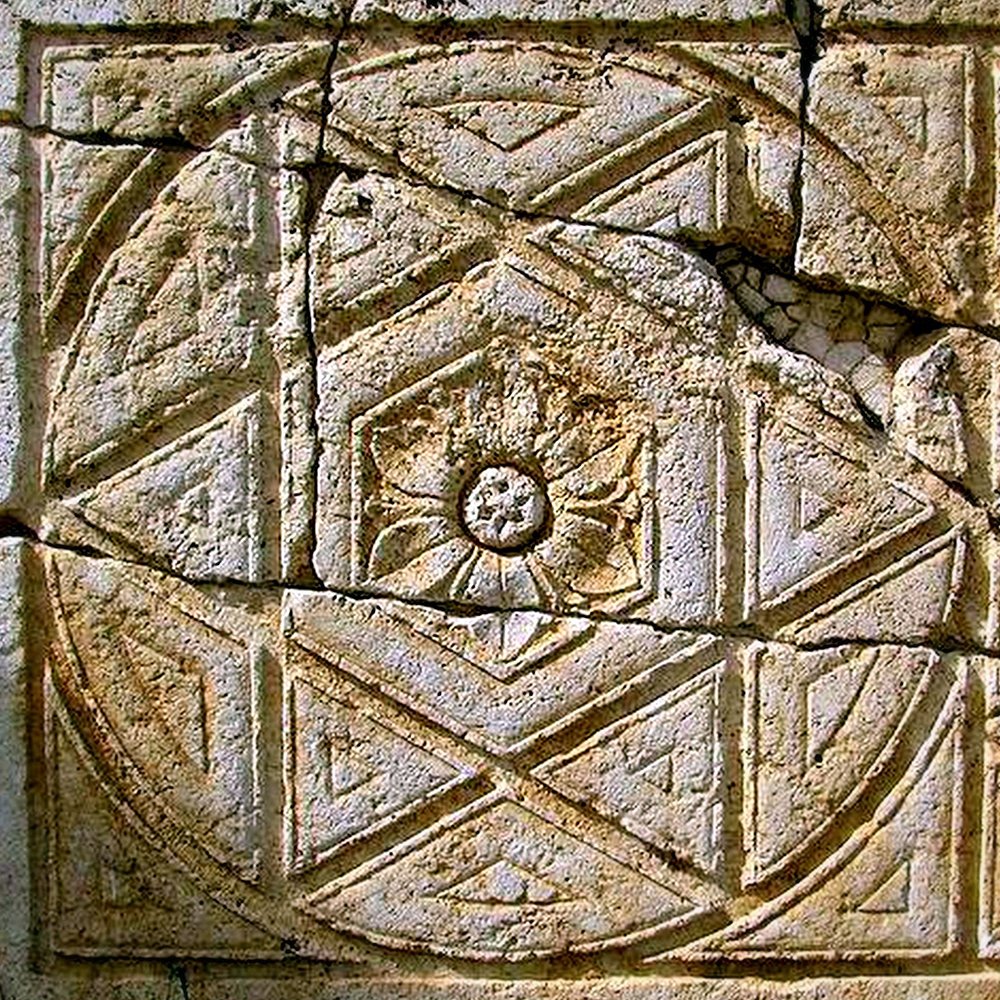
The hexagram, formed by the overlapping of two equilateral triangles, visually expresses this union:
- The upward-pointing triangle (△) represents the masculine principle, fire, the sky, the active force.
- The downward-pointing triangle (▽) represents the feminine principle, water, earth, and receptive force.
This overlapping creates a symbol of perfect balance, where opposites not only coexist but interpenetrate and complement each other. This concept is central to alchemy, where the union of the king and queen, the sun and the moon, sulfur and mercury, represents the Great Work of spiritual transformation.
The Kabbalistic Interpretation
In Kabbalah, the hexagram took on additional, complex meanings. It came to represent not only the union of opposites, but also the interaction between different sefirot (divine emanations) in the Kabbalistic Tree of Life. Some Kabbalists interpreted the hexagram as the union of Tiferet (Beauty/Harmony) with Malkut (Kingdom/Manifestation), representing the descent of divine light into the material world.
This androgynous and hermetic interpretation of the hexagram explains why the symbol was initially viewed with suspicion by traditional rabbinical authorities, who perceived in it elements foreign to orthodox Jewish tradition.
Practical Kabbalah and the Demonic World
Gershom Scholem and Academic Research
Gershom Scholem (1897-1982), a professor at the Hebrew University of Jerusalem, was the most important academic scholar of Jewish mysticism in the 20th century. His monumental work on Kabbalah revealed aspects of this tradition that were often kept hidden or minimized. In his seminal work “Kabbalah,” Scholem extensively documents the magical practices that developed within Kabbalistic Judaism.
Scholem was not an external or hostile critic; he was a secular Jew deeply interested in understanding the mystical currents of his own tradition. His research, based on original Kabbalistic manuscripts and primary sources, reveals an aspect of esoteric Judaism that contrasts sharply with the public image many have of this religion.
Amulets, Talismans and Magical Practices
According to Scholem’s documentation, the Kabbalistic tradition developed a vast repertoire of magical practices that include:
Protective Amulets and Talismans : Physical objects inscribed with divine names, angels, or geometric figures (including hexagrams) intended to protect the wearer against illness, the evil eye, or demonic influences. These amulets often contained permutations of the Tetragrammaton (four-letter divine name) and other sacred names derived from gematria (Hebrew numerology) practices.
Demon Invocation : Ritual practices intended to summon, control, or negotiate with demonic entities. These practices were not necessarily seen as “Satanic” in the Christian sense, but as ways of manipulating the hidden forces of the universe. Practical Kabbalists believed that certain demons could be controlled through knowledge of the appropriate divine names.
Incantations and Spells : Specific verbal formulas, often in Aramaic or Hebrew, intended to produce magical effects in the material world. These incantations could be used for healing, protection, prosperity, or even to cause harm to enemies (a practice known as pulsa de-nura or “fire whip”).
Sexual Magic : Ritual practices involving human sexuality interpreted in Kabbalistic terms, related to the union of the masculine and feminine sefirot. These practices were particularly developed in the Sabbatarian movement (followers of Sabbatai Zevi in the 17th century).
Necromancy : The practice of communicating with the dead, often through specific rituals. Although officially condemned by traditional Jewish law (halakhah), these practices persisted in certain Kabbalistic circles, justified by esoteric interpretations of the tradition.
The Baal Shem: Master of the Name
Scholem explains that as early as the Geonic period (7th-11th centuries AD), the figure of the “baal shem” or “master of the name” emerged. This title designated specialists in practical Kabbalah who mastered the use of divine names for magical purposes. These practitioners were experts in:
- Creating and distributing amulets for various purposes.
- Invoking angels to obtain knowledge or assistance.
- Summoning and controlling demons
- Performing healings through Kabbalistic methods.
- To protect communities against plagues, epidemics, or persecution.
The most famous Baal Shem was Israel ben Eliezer (1698-1760), known as Baal Shem Tov (“Master of the Good Name”), founder of the Hasidic movement. Although Hasidism later developed toward a more devotional spirituality, its origins are clearly linked to the tradition of practical and magical Kabbalah.
The Demonic Pantheon of Kabbalah
The Shedim Yehuda’im: Jewish Demons
Kabbalistic cosmology recognizes the existence of a vast pantheon of demonic entities. Scholem documents that, within this tradition, there exists a special category known as “shedim Yehuda’im” or “Jewish demons.” This concept, which may seem paradoxical at first glance, reveals a unique dimension of Kabbalistic demonology.
These demons are described as entities that, although belonging to the realm of dark forces (sitra achra), maintain a special relationship with the Jewish people and their religious practices. According to Scholem, these demons:
They submit to the Torah : Unlike other demons, these recognize the authority of Jewish Law. Scholem specifies that “Torah” in this context means not only the five books of Moses, but includes both the Talmud and the Tanakh (Hebrew Bible). This submission implies that these demons operate within the parameters of Jewish cosmology.
They are ruled by Ashmedai (Asmodeus) : This is the king of demons in Jewish tradition, a central figure in both the Talmud and Kabbalistic texts. Asmodeus appears in rabbinic literature as a complex figure, sometimes malevolent, sometimes helpful to Jewish sages.
They possess “good character” : According to Scholem, certain demons are considered willing to help and do favors for humans, particularly those who know how to invoke them correctly. This relative benevolence distinguishes the “Jewish demons” from other, more malevolent demonic entities.
Textual Sources: Hasidei Ashkenaz and Zohar
Scholem identifies two important sources that discuss these Jewish demons:
Hasidei Ashkenaz (Pious Ones of Germany) : This medieval mystical movement (12th-13th centuries) in Germany produced texts that describe in detail the demonic world and ways to interact with it. The main text, the Sefer Hasidim (Book of the Pious), contains extensive discussions about demons, their nature, and how to protect oneself against them or, in some cases, use them for specific purposes.
The Zohar (Book of Splendor) : This fundamental Kabbalistic text, compiled in 13th-century Spain but attributed to the 2nd-century Rabbi Shimon bar Yochai, contains numerous passages describing the demonic realm. The Zohar presents a complex cosmology where demons occupy a defined place in the structure of reality, emanating from the “other face” (sitra achra) of divine creation.
Asmodeus: The King of Demons
Asmodeus deserves special attention, as he is the central figure in the Jewish demonic pantheon. His appearances in literature include:
In the Talmud : The Tractate Gittin contains a detailed narrative about how King Solomon captured Asmodeus using a magic ring inscribed with the divine name, forcing him to assist in the construction of the Temple in Jerusalem. This story establishes the precedent that even the king of demons can be controlled through appropriate Kabbalistic knowledge.
In the Book of Tobit (deuterocanonical text): Asmodeus appears as a demon who kills Sarah’s successive husbands. He is finally expelled by the angel Raphael through a ritual involving the heart and liver of a fish.
In Kabbalistic Literature : Asmodeus is often identified with the sexual and seductive aspect of evil. He is seen as the ruler of demons who tempt humans through lust and other carnal appetites.
Theological and Practical Implications
The Relationship between Kabbalah and Talmud
When Scholem states that these demons “submit to the Torah,” he clarifies that for a Jewish scholar, “Torah” encompasses both the Talmud and the Tanakh. This observation is crucial for understanding the integration between Kabbalistic demonology and the broader rabbinic tradition.
The Talmud, compiled between the 2nd and 6th centuries CE, contains numerous references to demons, magical practices, and methods of protection against occult forces. Although the rabbinical elite often attempted to downplay or rationalize these practices, they remained an integral part of popular Jewish religiosity and were later systematized in Kabbalah.
The Persistence of Magical Practices
Scholem’s documentation reveals that magical practices were not marginal or heretical within Judaism, but represented a continuous current that existed parallel to rabbinic orthodoxy. This coexistence generated tensions, but also interesting syntheses, where respected figures in the Jewish community could simultaneously be Talmudic scholars and practitioners of magical Kabbalah.
The Modern Context
The adoption of the hexagram as Israel’s national symbol in 1948 therefore represents the institutionalization of a symbol with deep Kabbalistic and occult roots. Many modern Israelis are completely unaware of these origins, viewing the “Star of David” simply as a secular national symbol or a traditional religious symbol.
However, for those familiar with the symbol’s esoteric history, it continues to carry these layers of hermetic, kabbalistic, and magical meaning, representing a continuity between the mystical practices documented by Scholem and modern Israeli national identity.
Acts 7:42-43
“But God turned away from them and gave them over to the worship of the heavenly bodies, as it is written in the book of the prophets: ‘Did you bring me sacrifices and offerings during the forty years in the wilderness, O house of Israel? Instead, you carried the tabernacle of Moloch and the star of your god Rephan, idols that you made to worship. Therefore, I will send you into exile beyond Babylon.’”
Amos 5:25-27
“You offered me sacrifices and offerings in the wilderness for forty years, O house of Israel! But you erected the tabernacle of your Moloch and Chiun, your idols, the star of your gods that you made for yourselves. Therefore, I will take you captive beyond Damascus.”
Analysis of Textual Variations
Differences between the versions:
Element | Hebrew Text (Amos) | Septuagint (70) | Acts 7 (Stephen) |
|---|---|---|---|
Name of the god | Who/Kiyyun | Rompha/Raiphan | Renfã/Rephan |
Destiny of exile | Damascus | Damascus | Babylon |
Explanation of the changes:
Quium → Renfã: Probably refers to the same god. “Quium” may be a form of the Akkadian “Kaiwan” (Saturn).
Damascus → Babylon: Stephen adapted this for his audience, as the Babylonian exile was more historically significant for the Jews.
The Golden Calf (Exodus 32)
The worship of the golden calf was not an isolated incident, but the beginning of a persistent pattern:
In the Desert: Israel mixed Egyptian elements (the worship of Apis) with promises from Yahweh.
Progression of Idolatry: From the golden calf → astral cults → complete syncretism
Culmination: Deportation to Babylon (586 BC)
A Prophetic Critique of Sacrifices
Jeremiah 7:22-23: “For I never spoke to your fathers, nor did I command them on the day that I brought them out of Egypt, concerning burnt offerings or sacrifices. But this I commanded them, saying, ‘Obey my voice, and I will be your God.’”
Amos 5:21-24: “I hate, I despise your festivals… Take away from me the noise of your songs… But let justice roll on like a river, righteousness like a never-failing stream!”
Central point: The prophets did not condemn sacrifices themselves, but the hypocrisy of empty rituals lacking obedience and justice.
Demonological Identification of Renfã
1. Possible Identities
a) Saturn (most widely accepted interpretation)
Quium/Kaiwan: Akkadian-Assyrian name for Saturn.
In Mesopotamian astrology, Saturn was associated with death, destruction, and time.
Astral worship common among Semitic peoples
b) Other theories:
Egyptian deity associated with the stars.
Syrian-Phoenician god incorporated into the syncretistic Israelite pantheon
Representation of Venus (less likely)
2. Nature of Worship
The cult of the “star of Renfã” involved:
Astrology and divination: Consulting the stars for guidance.
Astral idolatry: The worship of celestial bodies as deities.
Syncretism: A mixture of Yahwism with paganism.
Portable objects: Tabernacles and images that could be carried (Amos 5:26)
3. Theological Significance
Deuteronomy 4:19 specifically warns: “And when you lift up your eyes to heaven and see the sun, the moon and the stars… do not be seduced into bowing down to them or serving them.”
2 Kings 23:5 confirms the practice: “He also removed the priests… who burned incense… to the sun, the moon, the planets, and all the host of heaven.”
Stephen used this passage to demonstrate:
Historical pattern of rebellion: From the desert, Israel rejected God.
Illegitimacy of the Temple: True worship never depended on buildings or sacrifices.
Prophetic judgment: The rejection of Jesus was a continuation of the historical rejection of God.
Warning: Just as idolatry led to the Babylonian exile, rejecting the Messiah would bring consequences.
Why mention Babylon?
Historical significance: The Babylonian exile profoundly marked Jewish identity.
Symbolism: Babylon represented complete judgment and the loss of the promised land.
Contemporary application: Stephen warned of a new spiritual “exile” for rejecting Christ.
Theological Lessons
The danger of syncretism: Mixing true worship with pagan practices leads to spiritual destruction.
Priority of the heart: God desires genuine obedience, not external rituals.
Consequences of idolatry: The persistent rejection of God results in judgment.
Timeless warning: Every generation faces the choice between true worship and cultural idols.
Contemporary Relevance
Although they don’t literally worship “Renfã” today, the principles remain:
New idols: Materialism, success, power, self-worship.
Modern syncretism: Mixing Christianity with incompatible philosophies.
Empty rituals: External religiosity without internal transformation.
Consulting the “stars”: Horoscope, esotericism, New Age