Aeternitas
Eternity is considered an attribute of God. God is eternal because he is outside of time, without beginning or end, without change and without succession. He is the same always, and everything is present before Him. Saint Thomas Aquinas defines eternity as “the total, perfect and simultaneous possession of an endless life” (Suma Theologiae, I, q.10, a.1). This means that, for God, there is no past or future; everything is present.
Traditional Catholic theologians distinguish three modes of duration: time, aevum, and eternity. Time is the mode of duration of material creatures, who live in a succession of moments (before and after). Aevum, or eviternity, is the mode of duration of angels and separated souls; it is not temporal, but it is not full eternity either, as it allows for certain accidental changes (such as new acts of knowledge). Eternity, properly speaking, is God’s exclusive way of being, absolutely immutable and outside of any succession.
In relation to human souls, after death and private judgment, each soul enters a fixed and unchanging state. Righteous souls enter into the vision of God, called the beatific vision, and participate in eternal life. Souls who die in a state of damnation enter eternal separation from God, which is hell. Souls in need of purification go through purgatory, a temporary state that ends with entry into heaven. After the final judgment, all souls reunited with their resurrected bodies will participate in an immutable eternity: the righteous in eternal happiness, the damned in eternal punishment.
Traditional Catholic theology affirms that both the blessedness of the righteous and the punishment of the damned are eternal, according to the words of Christ in Matthew 25:46: “And these will go to eternal punishment, and the righteous to eternal life.” This eternity does not mean an infinite succession of time, but the definitive fixation of the state of the soul, without change and without end.
Time is the mode of duration of material creatures; aevum is the mode of duration of created spiritual beings; and eternity is God’s way of being. Man, created in time, is called to participate in divine eternity through the grace and vision of God.
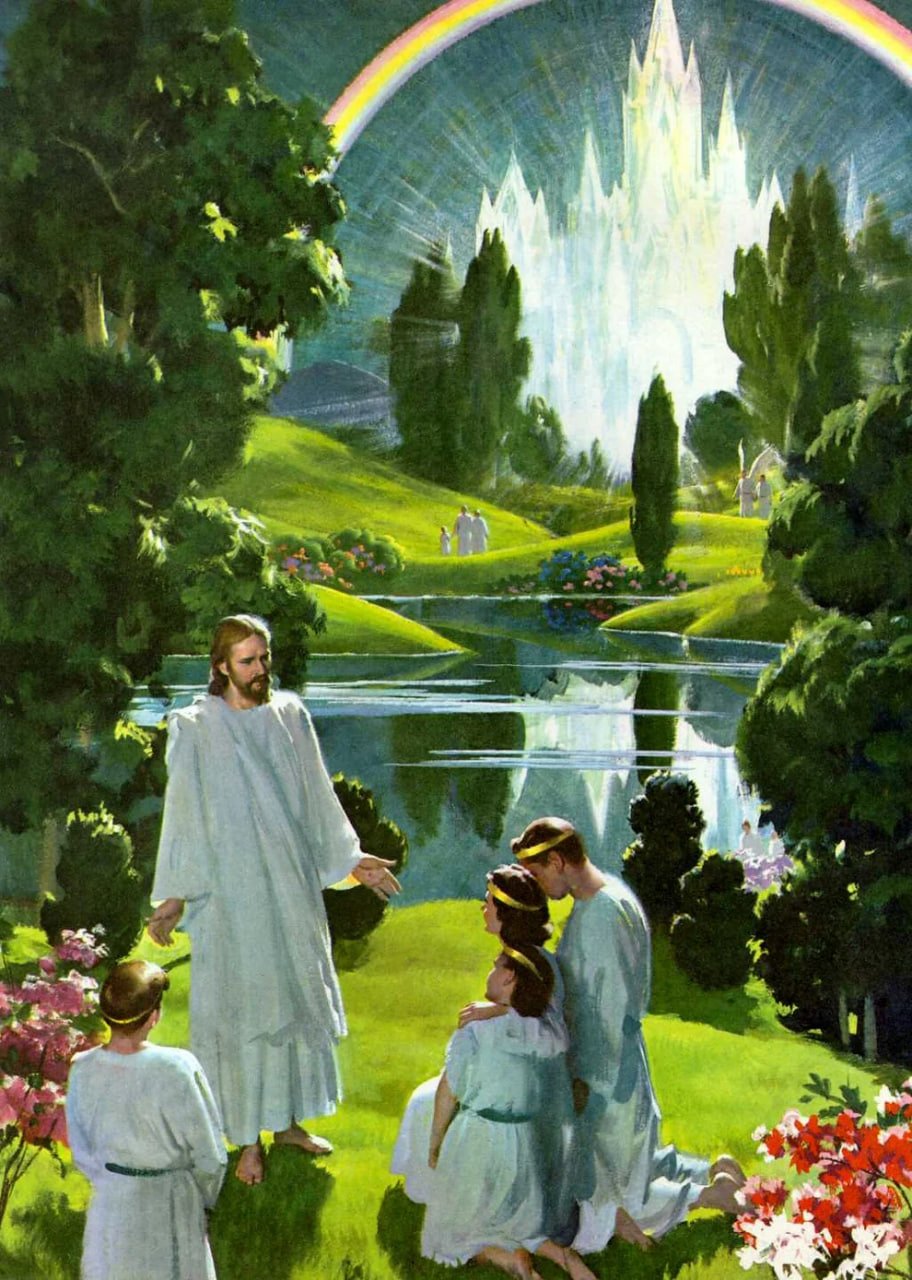
life in Heaven is not comparable to life on earth. It does not consist of material activities, physical labor, or leisure in the human sense, but in the full and perfect union of the soul with God — the so-called “state of bliss” or “beatific vision.”
The essence of heavenly life is the possession of God. Souls see God “face to face”, that is, they know His essence directly, without intermediaries, and in Him they find all the truth, goodness and happiness they have always desired. Saint Thomas Aquinas teaches that this vision of God is man’s ultimate end: the soul only reaches its perfection when it is united with God, the source of all good.
In Heaven there is no suffering, sadness, error or tiredness. There is no need for work, because everything that is needed is already fully possessed. Happiness is complete and permanent, without fear of loss or change. It is a pure, constant and unchanging joy. This joy, however, is not passive: the soul is in a continuous act of love, adoration and contemplation of God. It is an active life in a spiritual sense, not a physical one.
The saints participate in the glory of God in different degrees, depending on the degree of charity and fidelity they had in this life. Each one is completely happy, but there is a diversity of glories, like stars that shine with different intensities in the same sky. This is taught by Saint Paul in 1 Corinthians 15:41: “One is the glory of the sun, another the glory of the moon, and another the glory of the stars; and star differs from star in glory.”
Although there is no work or play as we know it, theologians say there is a kind of “spiritual activity”: the blessed communicate, know and love one another in God, participate in the communion of saints and praise God eternally. This life is totally orderly, harmonious and peaceful. There is perfect communion between everyone, without envy, division or conflict.
After the resurrection of the bodies, at the end of time, the righteous will also have their bodies glorified, free from pain, illness or limitation. These bodies will participate in the glory of the soul, and the beatitudes will include a sensitive dimension: a perfect harmony between body and soul. But even so, the source of happiness will continue to be the contemplation of God.
Therefore, life in Heaven is a life of contemplation, love and perfect joy in God, without effort, without loss and without boredom. It is absolute rest and, at the same time, the fullest dynamism of the spirit, which finds in God everything it has always sought.