Pius IV
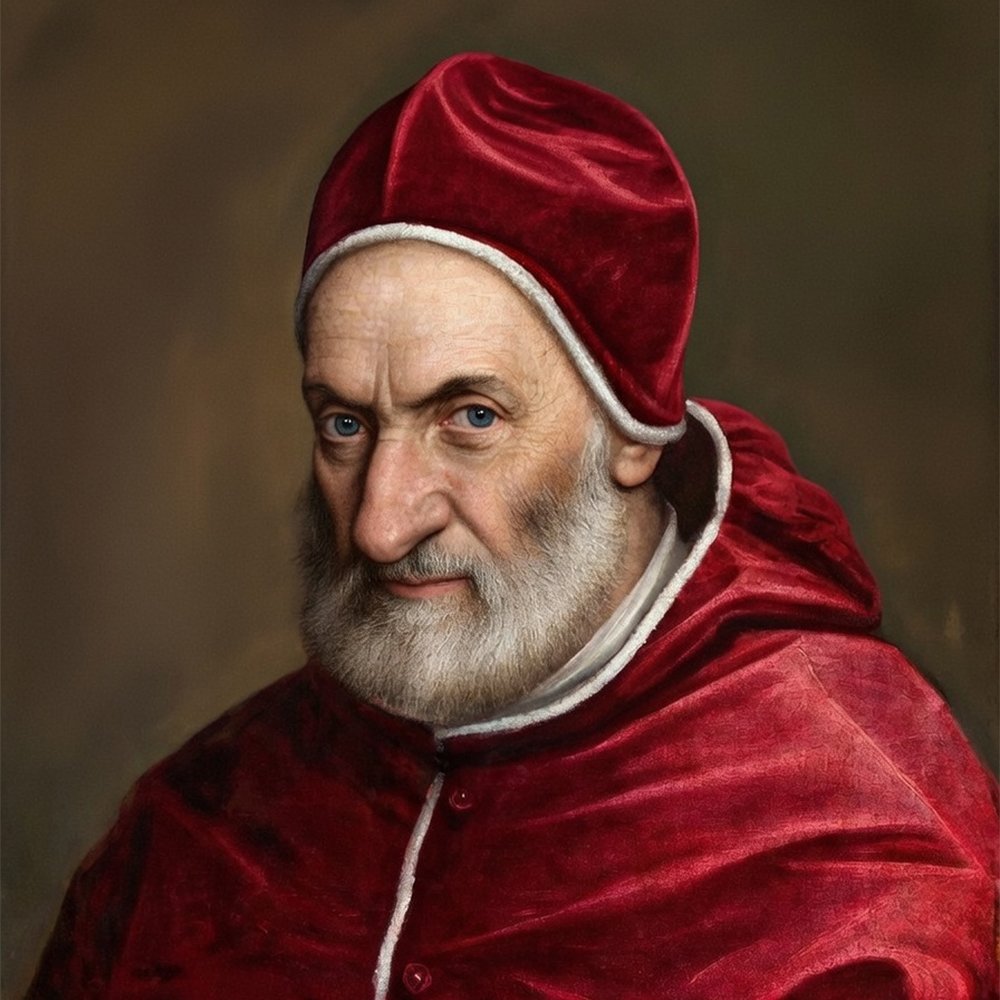
Pope Pius IV (1559-1565)
BIOGRAPHICAL DATA
Birth name: Giovanni Angelo Medici (de’ Medici)
Birth: March 31, 1499, Milan, Duchy of Milan (Italy)
Papal election: December 25, 1559 (Christmas Day!)
Coronation: January 6, 1560 (Epiphany)
Pontificate: December 25, 1559 – December 9, 1565 (5 years, 349 days)
Death: December 9, 1565, Rome (66 years old)
Burial: Santa Maria degli Angeli e dei Martiri, Rome
Religious order: Secular clergy (did not belong to a religious order)
Papal motto: None officially recorded
Cognomen: “The Conciliator Pope”, “Finisher of Trent”, “The Diplomatic Pope”, “Uncle of St. Charles”, “The Moderate”
NOTE: Successfully concluded the Council of Trent (1545-1563) after 18 years and three different popes, achieving one of the most important ecclesiastical councils in Church history! Remembered for diplomatic skill, successful family nepotism (promoted nephew St. Charles Borromeo, who justified the appointment!), moderate Counter-Reformation approach balancing reform with pragmatism, and masterful political maneuvering. Despite earlier scandalous personal life (three illegitimate children before entering Church career!), became effective reforming pope. NOT related to the famous Florentine Medici banking family, despite identical surname!
FORMATION AND EARLY LIFE
Milanese Origins – Medici Family (NOT the Florentine Medici!)
Crucial clarification:
- Giovanni Angelo Medici: NOT related to famous Florentine Medici family (Lorenzo the Magnificent, Medici popes Leo X and Clement VII)
- Different family entirely: minor Milanese nobility, same surname by coincidence
- Confusion: historical sources sometimes unclear, contemporaries also confused
- Social standing: respectable but not wealthy/powerful like Florentine Medici
Family background:
Parents:
- Bernardino de’ Medici: father, minor nobleman/professional class
- Legal/administrative background (likely notary or minor official)
- Modest means, not impoverished but not wealthy
- Clelia Serbelloni: mother, also minor Milanese nobility
- Serbelloni family: somewhat more prominent than Medici (ironically)
Siblings:
- Several brothers and sisters: sources vary on exact number
- Gian Giacomo Medici (Medeghino): older brother (possibly half-brother)
- Important: condottiero (mercenary captain), eventually Marquis of Marignano
- Controversial: brutal military career, enriched through warfare
- Later connection: would facilitate Giovanni Angelo’s ecclesiastical career
- Complex relationship: Giovanni Angelo both benefited from and distanced himself from brother’s reputation
Childhood and youth (1499-1515):
Milan context:
- Duchy of Milan: wealthy, strategic, constantly contested
- Foreign domination: French, Spanish, Holy Roman Empire all vying for control
- Political instability: Giovanni Angelo grew up amid warfare, regime changes
- Cultural sophistication: despite political chaos, Milan = center of Renaissance culture
Early years:
- 1499-1515: childhood in Milan
- Education: basic education in Milan
- Latin, humanities (standard for educated class)
- Family could afford decent tutoring (not extensive, but adequate)
- Character developing: intelligent, observant, adaptable (survival skills in unstable Milan)
- Vocation: not initially directed toward Church (unlike many future clerics)
Secular Life – The Scandalous Years
Young adulthood (1515-1527): LAYMANSHIP
Crucial biographical fact:
- Giovanni Angelo lived as layman: until late twenties/early thirties
- Did NOT enter seminary young: unlike most future popes
- Career: initially secular legal/administrative work
- Personal life: VERY secular – fathered three illegitimate children!
The three illegitimate children:
Historical documentation:
- Well-attested: not hidden scandal, openly acknowledged
- Three children: two sons, one daughter (born before ecclesiastical career)
- Mother(s): unclear if one woman or multiple relationships
- Sources discreet/vague (typical for era regarding illegitimacy)
- Likely: one relationship, possibly informal marriage (not sacramental but recognized)
Children’s identities:
- Carlo Borromeo (NOT the saint – different person): son
- Later: legitimized, minor positions
- Not particularly distinguished
- Gian Federico Borromeo: son
- Later: legitimized, ecclesiastical positions through papal nepotism
- Eventually Archbishop of Milan (through uncle’s influence)
- One daughter: name uncertain in sources
- Later: advantageous marriage arranged (when Giovanni Angelo became pope)
Legitimization:
- After becoming pope: formally legitimized children
- Ecclesiastical law: pope could legitimate (remove canonical disabilities from illegitimacy)
- Social integration: children given Borromeo surname (mother’s family? or honorific?)
- Nepotism: natural – typical papal behavior for era
Career during lay years:
Legal studies:
- Universities:
- Bologna: primarily (renowned law faculty)
- Pavia: possibly also studied there
- Degree: doctorate in both civil and canon law (in utroque iure)
- Achieved by mid-1520s (age ~25-27)
- Student: competent, successful (not brilliant but solid)
Legal practice:
- Milan: practiced law in Milan
- Clients: various (notarial work, representation)
- Reputation: capable, reliable lawyer
- Income: modest but adequate
Personal characteristics (lay years):
- Worldly: clearly not ascetic celibate type!
- Ambitious: seeking advancement through law, family connections
- Intelligent: shrewd, calculating
- Pragmatic: adaptable to circumstances
- Not particularly pious: conventional religiosity but not devout
Why enter Church career? (Speculative but reasonable)
Motivations:
- Opportunity: ecclesiastical career = advancement possibility
- Brother’s influence: Gian Giacomo’s military success created connections
- Illegitimate children grown: personal obligations lessened (children old enough)
- Pragmatism: Church = path to wealth, power for capable lawyer
- Genuine conversion? Possibly some religious awakening, but primarily practical
ECCLESIASTICAL CAREER (1527-1559)
Entry into Church Service
Transition to clerical state (late 1520s-early 1530s):
Age ~28-33: relatively late entry to ecclesiastical career
- Ordained priest: ~1527-1530 (sources imprecise, but around this period)
- Circumstances:
- Sack of Rome (1527): chaos created opportunities for those with legal skills
- Post-sack reconstruction: need for capable administrators
- Brother’s connections: Gian Giacomo’s military/political influence opened doors
Early positions (1530s):
Vice-legate of Bologna:
- Date: early 1530s
- Responsibility: papal administration in Bologna (key Papal States city)
- Performance: competent, efficient
- Characteristics:
- Good administrator: detail-oriented, thorough
- Pragmatic: solved problems rather than creating them
- Non-controversial: avoided factional conflicts
- Reputation building: established himself as reliable papal servant
Rise Through Papal Service (1535-1549)
Governor of various cities in Papal States:
Sequential appointments:
- Parma (1535-1540s): governor during complex period
- Challenge: Parma contested between Pope and Farnese family
- Medici’s approach: navigated diplomatically, avoided worse conflicts
- Other cities: various governorships throughout 1530s-40s
- Perugia, Piacenza (sources vary on exact sequence/dates)
Skills demonstrated:
- Administration: capable, organized governance
- Diplomacy: balanced competing interests
- Financial: generally sound management (avoided major debt/corruption scandals)
- Legal expertise: resolved disputes using canonical/civil law knowledge
- Political acumen: survived in dangerous papal politics
Relationship with Pope Paul III (Farnese, 1534-1549):
Trusted administrator:
- Paul III: recognized Medici’s capabilities
- Appointments: progressive responsibilities
- Distance maintained: Medici not in inner Farnese circle (good – avoided factional dangers)
Characteristics (1530s-40s):
- Careful: avoided making powerful enemies
- Competent: delivered results
- Ambitious: clearly seeking higher positions
- Moderate: not ideologically extreme (reform or conservative)
- Worldly wisdom: understood political realities
Nuncio to Florence (1549)
Appointment:
- Date: 1549
- Position: Papal nuncio to Grand Duchy of Tuscany
- Significance: important diplomatic posting
Context:
- Florence: under Medici rule (the FAMOUS Florentine Medici – Cosimo I)
- Irony: Giovanni Angelo Medici (unrelated) representing Pope to Medici duke
- Confusion: contemporaries sometimes thought he WAS related (he didn’t discourage this!)
Performance:
- Successful: navigated complex Florentine politics
- Cosimo I relations: maintained good working relationship with duke
- Papal interests: protected while not antagonizing powerful Tuscany
- Duration: 1549-1555/56 (approximately 6-7 years)
Reputation enhanced:
- Diplomatic skill: proven capability in sensitive posting
- Political sophistication: understood Italian state system
- Moderate approach: neither pro-Spanish nor pro-French extremism (valuable in divided Italy)
Cardinal (1549-1559)
Created Cardinal by Paul III (April 1549):
Age: 50 years old (relatively mature appointment)
Title: Cardinal-Priest (various titular churches over years)
Circumstances:
- Timing: just before nunciature to Florence (or concurrent – sources vary slightly)
- Reasons:
- Reward for loyal administrative service
- Recognition of legal expertise
- Brother Gian Giacomo’s influence (possibly – mercenary captain had leverage)
- Genuine capability (not just nepotism – Medici was competent)
Cardinal-Archbishop of Ragusa (Dubrovnik, 1553):
- Appointment: titular archbishopric
- Never visited: typical absent archbishop (normal for cardinals with titular sees)
- Symbolic: status elevation, not pastoral role
Service under multiple popes:
- Paul III (1534-1549):created him cardinal
- Relationship: loyal servant, trusted administrator
- Julius III (1550-1555):continued favor
- Retained positions: continuity despite papal change
- Nunciature to Florence: continued/completed under Julius III
- Marcellus II (April 1555 – 22 days!):brief pontificate
- No significant changes: Marcellus died too quickly
- Paul IV (Carafa, 1555-1559):TENSE relationship
Paul IV’s reign – Difficult years:
Pope Paul IV (Gian Pietro Carafa):
- Character: severe, uncompromising, reforming zealot
- Policies:
- Extreme anti-Spanish
- Harsh Inquisition (had been Grand Inquisitor)
- Anti-Jewish policies (created Roman ghetto, 1555)
- Nepotism (despite reform rhetoric, enriched worthless nephews)
- Disastrous war with Spain (1556-1557)
Medici’s position:
- Uncomfortable:
- Paul IV’s severity vs. Medici’s moderation
- Anti-Spanish policy vs. Medici’s pragmatic neutrality
- Suspicion: Paul IV distrusted anyone not zealous
- Survival strategy:
- Low profile: avoided prominence during Paul IV’s reign
- Careful: didn’t oppose openly (dangerous with Carafa!)
- Waiting: survived until Paul IV’s death
- Never in inner circle: Paul IV favored more extreme reformers
Characteristics as Cardinal (1549-1559):
Administrative:
- Curial positions: various congregations, administrative roles
- Competent: reliable, efficient service
- Legal expertise: valued for canonical knowledge
Personal:
- Worldly: enjoyed good living (food, comfort) – not ascetic
- Intelligent: shrewd political operator
- Moderate: avoided extremes (theological, political)
- Pragmatic: focused on practical solutions over ideological purity
- Diplomatic: skilled at managing relationships
Family:
- Illegitimate children: now grown, careers/marriages arranged
- Brother Gian Giacomo (died 1555): mercenary captain’s death removed both asset and liability
- Nephew Carlo Borromeo (born 1538): beginning to emerge
- Future saint: Giovanni Angelo noticed nephew’s exceptional qualities
- Planning: already considering promoting Carlo if opportunity arose
Theological positions:
- Orthodox: conventionally Catholic, not innovative/controversial
- Moderate on reform: favored disciplinary reforms, not radical restructuring
- Anti-Protestant: conventional opposition to Protestantism
- Not zealot: unlike Paul IV, didn’t see heretics everywhere
- Conciliar: supported completing Council of Trent (suspended 1552)
Conclave preparation:
Paul IV’s declining health (1559):
- Unpopular: Paul IV widely disliked (harsh, disastrous policies, worthless nephews)
- Anticipation: cardinals preparing for inevitable conclave
- Medici positioning:
- Not prominent: low profile = hadn’t made enemies
- Competent reputation: known as capable administrator
- Moderate: appealing after Paul IV’s extremism
- Mature: 60 years old, experienced
- Broadly acceptable: no strong factional identity
CONCLAVE OF 1559-1560 – ELECTION
Pre-Conclave Context
Death of Paul IV (August 18, 1559):
Paul IV’s catastrophic legacy:
- Roman riots: immediate riots upon death (Romans hated him!)
- Inquisition palace attacked: mob destroyed records
- Nephew’s statue: dragged through streets, beheaded
- Unprecedented: such violent public celebration of pope’s death
- Spanish war disaster: humiliating military defeat, financial ruin
- Nepotism scandal:
- Carlo Carafa (nephew): cardinal-nephew, corrupt, incompetent
- Other Carafa nephews: enriched unjustly
- Hypocrisy: Paul IV preached reform while practicing nepotism
- Alienated everyone:
- Spain: open warfare
- France: unreliable ally
- Cardinals: many imprisoned/suspected by his Inquisition
- Romans: hated severity, failed war, taxation
- Jews: ghetto, forced baptism attempts, persecution
Church situation (August 1559):
Council of Trent suspended (since 1552):
- Problem: Protestant crisis unresolved, reforms incomplete
- Need: resume Council, complete work
- Obstacle: political divisions prevented reconvening
Protestant expansion continuing:
- Germany: Peace of Augsburg (1555) – cuius regio, eius religio (ruler’s religion = subjects’ religion)
- Accepted: permanent Protestant presence in Empire
- Mixed: pragmatic but acknowledged Catholic defeat
- England: Elizabeth I (1558) – establishing Protestant church
- Reversal: Mary I’s (1553-1558) Catholic restoration undone
- Settlement (1559): Anglican church structure
- France: Wars of Religion brewing (would explode 1562)
- Huguenots: growing Calvinist movement
- Political crisis: weak monarchy, noble factions
- Netherlands: Protestant discontent under Spanish rule (revolt brewing)
- Scotland: Protestant Reformation establishing (1559-1560)
Catholic Church needs:
- Trent completion: urgent necessity
- Spain-France reconciliation: stop Catholic powers fighting each other
- Reform continuation: Paul IV started some good reforms despite failures
- Moderate leadership: after Paul IV’s extremism
- Diplomatic skill: navigate complex political situation
- Financial recovery: Paul IV left treasury depleted
Cardinals wanted:
- Moderate: someone unlike Paul IV!
- Diplomatic: capable of managing Catholic powers
- Administrative: competent governance
- Reform-minded: but pragmatic, not zealot
- Conciliar: committed to reconvening Trent
- Broadly acceptable: not factionally divisive
The Conclave – Extremely Long
Start: September 5, 1559
Duration: 111 days! (September 5 – December 25, 1559)
- One of longest conclaves: in papal history
- Christmas Day election: symbolic (new beginning?)
Size: ~60 cardinals (sources vary: 58-60)
Factions:
- Spanish faction (largest, ~20 cardinals):
- Led by: Cardinals representing Philip II’s interests
- Goals:
- Pro-Spanish pope (or at least not anti-Spanish)
- Reverse Paul IV’s disastrous anti-Spanish policy
- Someone who would cooperate with Spanish interests
- Veto power: Philip II gave explicit exclusion list (certain candidates unacceptable)
- Problem: too obvious Spanish candidate would alienate French faction
- French faction (~15 cardinals):
- Led by: Cardinal Charles de Guise (Cardinal of Lorraine), others
- Goals:
- Support French interests
- Counter Spanish dominance
- Someone sympathetic to French position on Huguenots (complicated)
- Weakness: France divided by nascent Wars of Religion, less unified than Spain
- Strategy: block Spanish candidate, find compromise
- Reform faction (zealots, ~10 cardinals):
- Carafa party survivors: some still loyal to Paul IV’s severity
- Other hardliners: Ghislieri (future Pius V!), other Inquisition-associated
- Goals:
- Continue severe reform approach
- Uncompromising on doctrine/discipline
- Anti-Protestant militancy
- Candidate: initially Carlo Carafa (Paul IV’s nephew cardinal) – impossible (too hated)
- Problem: too associated with Paul IV’s failures
- Moderate reform faction (~10-15 cardinals):
- Characteristics:
- Favor reform but not zealotry
- Diplomatic approach
- Complete Trent
- Potential candidates: various, including Medici (though not initially prominent)
- Imperial faction (small, ~5 cardinals):
- Holy Roman Emperor Ferdinand I: some influence
- Goals: generally aligned with Spain but distinct interests
- Not decisive: smaller faction
- “Politiques”/independents (~10 cardinals):
- No strong factional loyalty:
- Priorities: competent administrator, avoid disaster
- Decisive: these swing voters would determine outcome
Ballot progression (summary – detailed ballots not fully documented):
Early ballots (September-October):
Attempted candidates:
- Ippolito d’Este (Cardinal of Ferrara):
- French candidate: strongly backed by France
- Problem: Spanish veto (too pro-French)
- Support peaked: couldn’t reach two-thirds majority
- Blocked: Spanish faction adamant
- Giovanni Morone:
- Reformer: respected, moderate, diplomatic
- Major problem: Paul IV had imprisoned him for suspected heresy!
- Charges: never proven, Morone eventually vindicated
- Taint: association with heresy accusation (even if false) disqualified
- Spanish support: actually favored by Spain
- Vetoed: by hardline reform faction (suspicion remained despite innocence)
- Various Spanish candidates:
- Too obvious: French faction blocked
- Names: several proposed, none succeeded
Deadlock (October-November):
- Stalemate: no candidate could achieve two-thirds
- Spanish-French rivalry: paralyzing process
- Frustration: cardinals exhausted, Rome awaiting
- Winter approaching: urgency increasing (conclave uncomfortable)
Compromise search (late November-December):
Requirements emerging:
- Not Spanish candidate: French wouldn’t accept
- Not French candidate: Spanish wouldn’t accept
- Not too reformist: moderates concerned
- Not too moderate: reformers concerned
- Competent: after Paul IV disaster, needed capable administrator
- Acceptable to Philip II: Spanish veto had to be avoided
Medici emerges as compromise (December):
Factors favoring Giovanni Angelo Medici:
- Not factionally divisive:
- No strong Spanish ties: despite pragmatic relations
- No strong French ties: despite Florence nunciature
- Moderate: acceptable to both sides
- Low profile under Paul IV: hadn’t been prominent partisan
- Administrative competence:
- Proven: governorships, nunciature successful
- Legal expertise: valuable for Trent completion
- Experience: decades of papal service
- Age: 60 – mature but not ancient
- Moderate reformer:
- Favored reform: supported disciplinary improvements
- Not zealot: unlike Paul IV extremism
- Conciliar: committed to Trent completion
- Pragmatic: would balance ideals with realities
- Broadly acceptable personally:
- No major scandals: (illegitimate children long past, common for era anyway)
- No enemies: careful career meant few had strong animus
- Personable: diplomatic skill made him likeable
- Intelligent: respected for competence
- Name confusion advantage (possibly!):
- “Medici” name: some thought him related to Florentine Medici
- Florentine Medici popes: Leo X, Clement VII (both controversial but prestigious family)
- Confusion: Giovanni Angelo may have benefited from positive associations
- He never clarified: diplomatically vague about family connections
- Irony: elected partly due to name he didn’t deserve!
- Spanish non-objection:
- Philip II: no veto (Medici not on exclusion list)
- Acceptable: preferable to French candidate
- Not threatening: Medici seemed manageable
- French acquiescence:
- Better than Spanish candidate: compromise acceptable
- Exhaustion: after 3+ months, needed resolution
- Hope: Medici might be malleable
Final balloting (December 24-25):
December 24 (Christmas Eve):
- Medici gaining: support coalescing
- Near majority: close but not quite two-thirds
December 25, 1559 (Christmas Day):
- Final ballot: Giovanni Angelo Medici elected
- Vote: achieved two-thirds majority (exact count not recorded, but sufficient)
- Time: early Christmas Day (symbolism: new birth for Church?)
- Acceptance: Medici accepted (reportedly with humble surprise – conventional modesty or genuine?)
Name chosen: PIUS IV
Reasoning:
- Pius III (1503): brief pontificate (26 days), but gentle, reform-minded
- Pius II (Piccolomini, 1458-1464): humanist pope, respected
- NOT: Pius = pious (though convenient pun!)
- Diplomatic: honoring previous Pius popes, non-controversial choice
Age at election: 60 years old
CORONATION AND IMMEDIATE ACTIONS
Coronation: January 6, 1560 (Epiphany)
Ceremony:
- Traditional: full papal coronation ritual
- Attendance: large, enthusiastic (relief after Paul IV!)
- Mood: hopeful (anything better than predecessor!)
- Symbolism: Epiphany = manifestation, revelation (new direction for Church)
Immediate priorities announced:
- Reconvene Council of Trent: complete suspended ecumenical council
- Reform continuation: disciplinary improvements (but moderate approach)
- Reconciliation: Spain-France peace efforts
- Financial recovery: repair papal treasury
- Justice: reverse some of Paul IV’s excesses
PONTIFICATE (1560-1565)
Immediate Actions – Reversing Paul IV’s Disasters
First weeks/months (January-June 1560):
- Carafa nephews prosecution:
Background:
- Carlo Carafa (cardinal-nephew): Paul IV’s principal nephew
- Corruption: embezzled vast sums
- Incompetence: military disaster in Spanish war
- Murder: allegedly involved in assassination of Duchess of Palliano
- Other Carafa nephews: similarly corrupt, violent
- Public outrage: Romans demanded justice
- Precedent question: could pope prosecute predecessor’s relatives?
Pius IV’s action:
- Trial ordered (1560):
- Carlo Carafa and others arrested
- Charged: embezzlement, murder, treason
- Controversial: pope judging cardinals (Carlo = cardinal)
- Verdict (March 1561):
- Guilty: Carlo and brother Giovanni (Duke of Palliano)
- Sentences: death
- Execution (March 4, 1561):
- Carlo Carafa: strangled (cardinal status = no public beheading)
- Giovanni Carafa: beheaded
- Unprecedented: executing predecessor’s cardinal-nephew!
- Public approval: Romans celebrated (Carafas hated)
- Message: new direction, justice over nepotism
Significance:
- Political: distanced Pius IV from Paul IV
- Justice: genuine crimes punished
- Precedent: even papal relatives not above law
- But ironic: given Pius IV’s own coming nepotism!
- Jewish policy moderation:
Paul IV’s harshness:
- Cum nimis absurdum (1555): created Roman ghetto, forced badges, economic restrictions
- Forced conversions: attempted
- Persecution: severe
Pius IV’s approach:
- Maintained ghetto: didn’t abolish (would have been too radical)
- Eased restrictions:
- Some economic activities permitted
- Reduced forced sermon attendance
- Less harassment
- Pragmatism: recognized Jewish banking = economically necessary
- Moderate: neither philosemitic nor as harsh as Paul IV
- Limited improvement: still terrible, but less catastrophic
- Inquisition moderation:
Paul IV’s severity:
- Terror: imprisoned even cardinals (Morone case)
- Excessive: prosecuted on mere suspicion
- Index: extremely restrictive book prohibitions
Pius IV’s reforms:
- Cardinal Morone released (1560):
- Vindication: declared innocent
- Rehabilitation: restored to positions
- Symbol: justice over zealotry
- Inquisition procedures:
- More careful: stricter evidence standards
- Less torture: (relatively – still used but less casually)
- Fewer executions: more imprisonment/penance
- Index revision:
- Less restrictive: some books removed from prohibition
- Scholarly exceptions: qualified readers could access some banned works
- Still censorship: but less draconian
- Spanish relations normalized:
Paul IV’s war: disaster
- 1556-1557: Pope + France vs. Spain
- Spanish victory: humiliating papal defeat
- Result: Spanish domination of Italy increased
Pius IV’s diplomacy:
- Peace: accepted Spanish hegemony pragmatically
- Cooperation: worked with Philip II constructively
- Trent: needed Spanish cooperation for Council
- Reform: Spain actually supported many reforms
- Balance: maintained some independence, not puppet
- Pragmatic: recognized realities of Spanish power
- Financial recovery:
Paul IV’s legacy:
- Treasury depleted: war costs enormous
- Debt: significant papal debt
- Taxation: Romans exhausted by taxes
Pius IV’s measures:
- Fiscal discipline: controlled spending (relatively)
- Debt management: renegotiated some obligations
- Taxation: kept high (unavoidable) but more efficient collection
- Economies: reduced some court expenses
- BUT: also increased spending on family (nepotism) and building projects
Assessment of early actions:
- Positive: reversed Paul IV’s worst policies
- Pragmatic: balanced justice with political reality
- Moderate: neither radical reform nor reaction
- Diplomatic: skillful management of expectations
- Popular: Romans relieved, grateful
The Nephew – St. Charles Borromeo
Most significant act of nepotism in papal history – because it worked!
Carlo Borromeo (later St. Charles Borromeo, canonized 1610):
Background:
- Born: October 2, 1538, Arona (Lombardy)
- Family: nephew of Giovanni Angelo Medici
- Mother: Margherita Medici (Giovanni Angelo’s sister)
- Father: Count Gilberto Borromeo (aristocratic family)
- Education: studied law at Pavia (uncle’s encouragement)
- Age at uncle’s election: 21 years old (finishing studies)
Immediate promotion (1560):
February 1560 (one month after coronation!):
Multiple positions simultaneously:
- Cardinal: created Cardinal-Deacon (age 22!)
- Unprecedented youth: one of youngest cardinals ever
- Title: Cardinal of Santa Prassede
- Cardinal-nephew: official papal secretary
- Chief minister: effectively prime minister of Papal States
- Correspondence: managed all papal business
- Archbishop of Milan (nominated 1560, installed 1564):
- One of most important sees: major archdiocese
- Held in absentia: initially remained in Rome
- Secretary of State: de facto (title later formalized)
- Papal legate: to various territories
- Multiple benefices: accumulated church revenues (standard nepotism)
Contemporary reaction:
- Scandal: obvious, extreme nepotism
- Criticism: even at time, some cardinals objected
- Pius IV’s defense: “He’s capable!” (actually true, remarkably)
- Expectation: typical worthless papal nephew
BUT – Charles Borromeo proved exceptional:
Immediate demonstration of ability (1560-1565):
Administrative genius:
- Papal States governance: extraordinarily efficient
- Correspondence: managed enormous volume
- Decisions: quick, intelligent
- Coordination: unified various departments
- Trent organization: crucial role in reconvening Council
- Logistics: arranged housing, security, supplies for hundreds
- Communication: coordinated between Rome and Trent
- Documentation: organized record-keeping
- Diplomatic skill: represented uncle in sensitive negotiations
Personal transformation:
Initial years (1560-1562):
- Worldly: enjoyed aristocratic lifestyle
- Fine clothes, hunting, social events
- Not scandalous but conventional noble cardinal
- Competent: but not obviously saintly
Crisis: Brother’s death (1562):
- Federico Borromeo (brother): died unexpectedly
- Inheritance: Charles now heir to Borromeo family estates/title
- Decision point:
- Option 1: resign cardinalate, inherit, marry, continue family line
- Option 2: remain cardinal, renounce inheritance, embrace full priesthood
Conversion:
- Chose priesthood: renounced inheritance (gave to other relatives)
- Ordained priest (1563): had been cardinal-deacon, now priestly orders
- Transformed: became austere, intensely devout
- Mortification: hairshirt, fasting, penance
- Charity: gave away wealth to poor
- Prayer: hours daily
- Study: theological depth
- Maintained efficiency: spiritual transformation enhanced rather than impaired administrative ability
Role at Trent (1562-1563):
- Pius IV’s representative: coordinated papal diplomacy
- Procedural management: helped navigate complex negotiations
- Draft documents: worked on final decree formulations
- Crisis management: resolved deadlocks
- Success: Trent’s successful conclusion partly his achievement
After Pius IV’s death (1565):
Finally to Milan (1566):
- Residence: actually went to archdiocese (revolutionary – most cardinals stayed Rome!)
- Reform: model Tridentine bishop
- Diocesan synods: implemented Trent systematically
- Clergy education: founded seminaries
- Visitations: personally visited every parish
- Discipline: reformed lax clergy
- Charity: plague ministry (1576) – personally cared for sick
- Result: Milan = model reformed diocese
Later career:
- Provincial councils: organized implementation across northern Italy
- Writing: catechisms, reforms texts
- Continued influence: advised multiple popes
- Death: 1584 (age 46, exhausted from labors)
- Canonization: 1610 (only 26 years after death – rapid recognition)
- Feast: November 4
- Legacy: model Counter-Reformation bishop
Pius IV’s nepotism vindicated:
- Only case: where papal nepotism produced saint!
- Talent recognition: Pius IV correctly identified nephew’s exceptional ability
- Training ground: papal service prepared Charles for Milan reforms
- Legacy: Pius IV’s greatest achievement = recognizing/promoting nephew’s gifts
Irony:
- Most blatant nepotism: became most justified
- Scandal initially: triumph ultimately
- Critics silenced: Charles’s sanctity/effectiveness undeniable
The Council of Trent – Defining Achievement
Context: The suspended Council
Council of Trent (Concilium Tridentinum):
- Convoked: Paul III (1545)
- Purpose: respond to Protestant Reformation, reform Catholic Church
- Sessions:
- First period (1545-1547): initial doctrinal work
- Second period (1551-1552): more doctrine, some Protestants attended briefly
- Suspended (1552): political/military reasons (wars prevented continuation)
- Gap: 1552-1562 (TEN YEARS!)
Why suspended:
- Wars: Habsburg-Valois conflicts, German Protestant conflicts
- Political impossibility: couldn’t safely convene bishops
- Papal changes:
- Julius III (1550-1555): continued second period, then suspended
- Marcellus II (1555): 22 days, no time for Council
- Paul IV (1555-1559): opposed Council! (feared bishops would limit papal power)
By 1559:
- Incomplete: many doctrines undefined, reforms not enacted
- Urgent: Protestant expansion continuing
- Necessary: Catholic Church needed clarity, reform
- Controversial: political obstacles remained
Pius IV’s commitment:
From election: clear priority
- Campaign promise: effectively ran on Trent completion
- Personal conviction: believed Council necessary
- Diplomatic preparation: needed to secure Catholic rulers’ cooperation
Diplomatic groundwork (1560-1561):
Securing cooperation:
- Philip II (Spain):
- Crucial: Spanish cooperation essential
- Negotiation: Pius IV worked carefully
- Concessions: acknowledged some Spanish concerns
- Assurances: Council wouldn’t threaten Spanish interests
- Agreement: Philip II supported reconvening
- Ferdinand I (Holy Roman Emperor):
- More difficult:
- Ferdinand religiously moderate (concerned about Protestant subjects)
- Wanted concessions to Protestants (Communion in both kinds, married priests)
- Negotiation:
- Pius IV: willing to discuss (moderate approach)
- Compromise: Council would consider, not guarantee
- Agreement: secured with reservations
- France:
- Complex:
- Catherine de Medici (Queen Mother, regent): wanted Council
- Gallican bishops: suspicious of papal control
- Politique faction: wanted accommodation with Huguenots
- Guise faction: hardline Catholic
- Colloquy of Poissy (1561): French attempt at separate Catholic-Protestant dialogue
- Failed: predictably
- Result: demonstrated need for proper Council
- Agreement: French bishops would attend Trent
- Protestant participation (attempted):
- Invitations sent: to Protestant princes, theologians
- Offer: safe conduct, hearing at Council
- Response:
- Most refused: rejected Council’s legitimacy (already condemned Luther)
- Few attended: briefly, accomplished nothing
- Failure: inevitable (positions irreconcilable)
Reconvening (January 18, 1562):
Bull: Ad Ecclesiae regimen (November 29, 1560):
- Announced: Council reconvening
- Date set: Easter 1561 (later postponed to January 1562)
- Invitation: all Catholic bishops
Third Period – Session XVIII (January 18, 1562):
- Location: Trent (Trento, northern Italy – strategic, accessible)
- Attendance: grew to ~250 bishops (largest session)
- Leadership:
- Papal legates: Cardinals leading on behalf of pope
- Pius IV: directed from Rome through legates + Charles Borromeo coordination
- Duration: January 1562 – December 1563 (nearly 2 years)
Major sessions and achievements (1562-1563):
Doctrinal definitions (Sessions XVIII-XXV):
Session XXI (July 16, 1562): Communion in both kinds:
- Issue: Protestants gave laity both bread and wine; Catholics only bread
- Debate:
- Some wanted concession: give chalice to laity (might reconcile Protestants)
- Conservatives: opposed any change
- Decision:
- Doctrinally: both kinds not necessary (Christ fully present in either)
- Disciplinarily: pope could permit chalice in some areas (compromise)
- Result: limited permission granted to some German territories
Session XXII (September 17, 1562): Sacrifice of the Mass:
- Central doctrine: Mass = true sacrifice (vs. Protestant memorial view)
- Definition:
- Eucharist: Christ truly present (transubstantiation reaffirmed)
- Sacrifice: Mass re-presents Calvary sacrifice
- Priesthood: ordained priest necessary
- Anathemas: condemned Protestant positions
- Significance: defended core Catholic understanding vs. Protestant challenge
Session XXIII (July 15, 1563): Sacrament of Orders:
- Priesthood: sacramental (vs. Protestant functional view)
- Hierarchy: bishops, priests, deacons (divinely instituted)
- Ordination: sacramental character (indelible)
- Celibacy:
- Debate: some wanted married priesthood (especially for Germany)
- Decision: maintained celibacy (disciplinary not doctrinal, but enforced)
Session XXIV (November 11, 1563): Marriage:
- Sacramental: marriage = true sacrament (vs. Protestant contract view)
- Clandestine marriages: major problem (secret marriages, validity disputes)
- Solution: Tametsi decree:
- Required: marriages before priest + witnesses (prevented clandestine)
- Registration: parish records mandated
- Revolutionary: created modern marriage registration system
- Divorce: reaffirmed indissolubility (vs. Protestant allowance)
Session XXV (December 3-4, 1563): Final session:
Purgatory:
- Affirmed: existence (vs. Protestant denial)
- Moderation: excessive speculation discouraged
- Indulgences: reformed (abuses curtailed but practice maintained)
Saints, relics, images:
- Veneration: legitimate (vs. Protestant iconoclasm)
- Abuses: condemned (superstition, false relics)
- Regulation: bishops oversee proper use
Reform decrees (Sessions XVIII-XXV):
Episcopal residence (finally enforced!):
- Decree: bishops MUST reside in dioceses
- Penalties: lose revenues if absent without permission
- Revolutionary: ended centuries of absenteeism
- Result: gradually effective (took decades, but eventually bishops actually lived in sees!)
Diocesan seminaries (Session XXIII):
- Mandate: every diocese establish seminary
- Curriculum: standardized theological education
- Age: boys from ~12, through ordination
- Discipline: regulated lifestyle
- Significance: ENORMOUS
- Created modern priest formation
- Improved clergy education dramatically
- Model: lasted until Vatican II reforms
Preaching obligation:
- Bishops: must preach regularly
- Priests: Sunday/holy day sermons mandatory
- Content: Scripture, doctrine, morals (not just fundraising!)
- Language: vernacular (people could understand!)
Clergy discipline:
- Concubinage: severely punished
- Simony: prohibited (selling offices/sacraments)
- Pluralism: limited (holding multiple benefices)
- Visitations: bishops must inspect parishes regularly
Religious orders:
- Reform: lax monasteries/convents must reform
- Enclosure: strict cloister for nuns
- Property: regulated
- Exemptions: some reduced (bishops gained more authority)
Diocesan synods:
- Annual: bishops must hold yearly synod of clergy
- Provincial councils: regional gatherings every 3 years
- Implementation: mechanism for applying reforms
Music and liturgy:
- Sacred music: reform (clarity of text, avoid theatrical excess)
- Latin: maintained (but intelligibility emphasized)
- Uniformity: tendency toward standardization
Major controversies during sessions:
- Episcopal divine right:
- Issue: Are bishops divinely instituted or papal delegates?
- Debate:
- Spanish bishops: divine institution (limits papal absolutism)
- Curialists: papal delegation (maximizes papal power)
- Pius IV: nervous (feared limiting papal authority)
- Resolution:
- Ambiguous: avoided explicit definition
- Compromise wording: satisfied neither side fully
- Practical: bishops have real authority, but from/under pope
- Clerical reform vs. doctrinal definition:
- Tension: reform-minded vs. doctrine-focused cardinals
- Resolution: both accomplished (parallel tracks)
- National vs. universal:
- French Gallicans: wanted national autonomy
- Curialists: universal papal authority
- Resolution: papal supremacy affirmed but some local flexibility
- Protestant reconciliation attempts:
- Futile: positions too divergent
- Result: Council = defining Catholic identity vs. Protestantism
Final closing (December 4, 1563):
Acclamation:
- Formula: “Anathema to all heretics!” repeated
- Approval: decrees accepted by acclamation
- Submission: sent to pope for confirmation
- Conclusion: Council concluded (finally!)
Papal confirmation:
Bull: Benedictus Deus (January 26, 1564):
- Confirmed: all Trent decrees
- Mandated: implementation throughout Catholic Church
- Authority: papal supremacy affirmed (Council = pope’s council)
Profession of Faith (1564):
- Required: all clergy must profess Tridentine faith
- Content: summarized Trent doctrines
- Oath: binding on bishops, priests, teachers
- Enforcement: mechanism for orthodoxy
Commission for implementation:
- Created: Congregation for implementation of Trent
- Task: coordinate worldwide application
- Challenge: enormous (centuries of customs to change)
Significance of Trent:
Immediate:
- Defined Catholic identity: vs. Protestantism clearly
- Reformed clergy: education, discipline, residence
- Standardized: doctrine, liturgy, practice
- Organized: structure for implementation
Long-term:
- Created “Tridentine Catholicism”: lasted 400 years (until Vatican II)
- Seminary system: modern priesthood formation
- Catechesis: standardized teaching
- Prevented collapse: Catholic Church might have fragmented without Trent
- Missionary expansion: clear identity facilitated worldwide evangelization
Pius IV’s role – essential:
Without him:
- Council might never have reconvened: Paul IV opposed, successor might have too
- Might have failed: needed diplomatic skill to manage
- Charles Borromeo: organizational genius made logistics possible
Personal involvement:
- Directed legates: constant communication from Rome
- Diplomatic pressure: on rulers to cooperate
- Crisis management: resolved deadlocks through intermediaries
- Balanced: reformers vs. curialists, national vs. universal
- Confirmed: gave decrees full papal authority
Assessment:
- Greatest achievement: completing Trent = Pius IV’s historical significance
- Skill demonstrated: diplomatic, administrative, theological (working with advisors)
- Moderate approach worked: neither reactionary nor radical, pragmatic
- Legacy secured: everything else overshadowed by this accomplishment
Other Significant Policies and Actions
- Index of Forbidden Books – Tridentine Index (1564):
Background:
- Paul IV’s Index (1559): extremely restrictive, impractical
- Trent mandate: revise Index more reasonably
Tridentine Index (1564):
- Less restrictive: than Paul IV’s
- Categories:
- Class I: heretical authors (all works prohibited)
- Class II: specific dangerous works (by otherwise acceptable authors)
- Class III: anonymous works (often condemned)
- Exceptions: scholars with permission could read some prohibited books
- Censorship continued: but more rationally
- Enforcement: variable (Venice particularly resistant)
Significance:
- Intellectual control: maintained Catholic intellectual boundaries
- Moderation: improvement over Paul IV
- Limit: still significant restriction on inquiry
- Papal States administration:
Governance:
- Competent: Pius IV’s legal/administrative background served well
- Cardinal-nephew: Charles Borromeo = extraordinarily efficient chief minister
- Justice: generally fair (Carafa prosecution demonstrated independence)
- Taxation: high (necessary for finances) but efficient
- Banditry: ongoing problem (never fully solved)
Economic:
- Recovery: from Paul IV’s war devastation
- Debt management: reduced but didn’t eliminate papal debt
- Revenue: maintained through various sources
- Taxation
- Papal States income
- Ecclesiastical fees
- Some simony reduction (reform) reduced income, but maintained legitimacy
Military:
- Modest forces: small papal army maintained
- Defense: adequate for Papal States security
- No adventures: avoided military conflicts (wise after Paul IV disaster)
- Art and architecture:
Major projects:
Porta Pia (Rome):
- Designed: Michelangelo (last architectural work, 1561-1565)
- Purpose: gate in Aurelian Walls (urban planning)
- Style: Mannerist masterpiece
- Legacy: still standing, significant monument
Santa Maria degli Angeli e dei Martiri:
- Conversion: Baths of Diocletian → church
- Architect: Michelangelo (1563-1564)
- Pius IV’s burial site: eventually (body transferred there)
- Significance: adaptive reuse of Roman ruins
Vatican improvements:
- Casino Pio IV (Vatican Gardens):
- Pleasure palace: small villa for relaxation
- Architecture: elegant Renaissance/Mannerist
- Function: papal retreat, meetings
- Decorations: frescoes, stucco work (Federico Zuccari, others)
- Survives: still in Vatican
Other commissions:
- Churches: various restoration/construction projects
- Fortifications: some Papal States defensive works
- Urban planning: Rome improvements (roads, fountains)
Artistic patronage:
- Michelangelo: late works commissioned/supported
- Died 1564: Pius IV present for final years
- Funeral: honored by pope
- Other artists: supported (but not lavish patron like Julius II/Leo X)
Assessment:
- Significant: important architectural legacy
- Moderate: not excessive spending given era
- Tasteful: good aesthetic judgment
- Balance: building projects while maintaining fiscal responsibility (relatively)
- University and education:
Seminary implementation:
- Trent mandate: executed
- Roman seminary: model established
- Other dioceses: encouraged/pressured to establish
Universities:
- Oversight: maintained academic standards
- Theology: ensured Tridentine orthodoxy
- Degrees: regulated (preventing corrupt/inadequate education)
Printing/books:
- Licensing: printers required approval
- Index enforcement: attempted (variably successful)
- Censorship: less draconian than Paul IV, still substantial
- Missionary activity:
Support for missions:
- Jesuits: supported Jesuit expansion
- Asia: Francis Xavier’s successors in India, Japan
- Americas: missionary work in Spanish/Portuguese colonies
- Europe: missions to Protestant areas
- Other orders: Franciscans, Dominicans also supported
- Bishops: appointed to new missionary territories
Trent impact on missions:
- Standardization: clear Catholic identity helped missionary clarity
- Education: seminary training improved missionary preparation
- Catechesis: Tridentine catechism provided teaching tool
- Relations with Catholic rulers:
Spain (Philip II):
- Generally good: cooperation on Trent
- Tensions:
- Ecclesiastical appointments: Spanish crown claimed extensive control
- Inquisition: Spanish Inquisition independent of Rome
- Milan: Philip II wanted control of archdiocese
- Balance: Pius IV navigated carefully (needed Spanish support)
France:
- Wars of Religion beginning (1562):
- Huguenot crisis: Protestant minority growing
- Catherine de Medici: regent, politique approach (religious tolerance for peace)
- Guise faction: ultra-Catholic, wanted extermination of Huguenots
- Pius IV’s position:
- Supported Catholics: naturally
- But cautious: avoided pushing France into chaos
- Diplomatic: tried to balance factions
- Limited influence: France increasingly independent of papal direction
Holy Roman Empire:
- Ferdinand I (1558-1564):
- Moderate: religiously tolerant (pragmatic)
- Concessions wanted: Communion in both kinds, married priests (for Protestant reconciliation)
- Pius IV: allowed limited concessions reluctantly
- Maximilian II (1564-1576):
- Even more tolerant: religiously ambiguous personally
- Concern: Pius IV worried about Emperor’s orthodoxy
- But pragmatic: needed imperial cooperation
Poland-Lithuania:
- Generally supportive: Polish monarchy Catholic
- Concern: Polish religious tolerance unusual
- Jesuits sent: to strengthen Catholicism
Portugal:
- Good relations: Portuguese expansion supported
- Missions: Portuguese colonial missions encouraged
- Padroado: Portuguese royal patronage system accepted
England (Elizabeth I):
- No relations: Elizabeth’s Protestant settlement (1559) = schism
- Policy:
- No recognition: of Elizabeth’s legitimacy
- Support: for English Catholic exiles, seminary priests
- But no excommunication: Pius IV avoided Paul IV’s/Pius V’s extreme step
- Pragmatic: recognized impossibility of changing situation
- Religious orders:
Reform continuation:
- Trent implementation: applied reform decrees to orders
- Visitations: investigated religious houses
- Discipline: enforced vows, cloister
Support for new/reformed orders:
Jesuits:
- Strongly supported: valued their education, missionary work, orthodoxy
- Expansion: approved new Jesuit provinces/houses
- Privileges: granted various exemptions/faculties
Discalced Carmelites:
- St. Teresa of Ávila: beginning reform (1562)
- Support: Pius IV approved (initial permission for reformed houses)
Other reforms:
- Franciscans: Capuchin branch supported
- Various orders: reform movements generally encouraged
Suppressions:
- Humiliati (1571 – just after Pius IV): process begun under him
- Reason: corruption, resistance to reform, violence
- Precedent: willingness to suppress unreformable orders
- Canonizations and beatifications:
Limited during reign:
- No major canonizations: processes slow, Pius IV focused on Trent
- Causes promoted: several causes advanced (completed by successors)
Personal spirituality:
- Conventional: not particularly mystical or austere
- Dutiful: fulfilled papal religious obligations
- Pragmatic: religion more institutional than contemplative
Final Illness and Death
Health decline (1565):
Chronic conditions:
- Age: 66 – not ancient but elderly for era
- Gout: suffered from (painful, common aristocratic ailment – rich diet)
- General weakness: years of administrative stress taking toll
- Overweight: enjoyed good living, food (not ascetic like Pius V would be)
Summer-Fall 1565:
Declining strength:
- Fatigue: increasing difficulty maintaining schedule
- Gout attacks: more frequent, severe
- Fever: intermittent (possibly recurrent infection)
- Continued working: attempted to maintain duties despite illness
November-December 1565:
Final deterioration:
- Bed-ridden: increasingly confined
- Medical treatment:
- Bloodletting: standard (useless/harmful)
- Herbal remedies: various (ineffective)
- Prayer: religious remedies
- Lucid: mentally clear despite physical weakness
- Last rites: received Extreme Unction (sacrament of sick)
Last days:
December 7-8, 1565:
- Weakness extreme: clearly dying
- Charles Borromeo: nephew at bedside (genuinely devoted despite initial nepotism)
- Cardinals: gathered
- Confession: final sacramental preparation
- Prayers: Commendation of dying
Last words/concerns:
- Trent implementation: urged continuation of reforms
- Charles: entrusted some final instructions to nephew
- Church: commended to cardinals’ care
- Forgiveness: asked/gave (conventional)
Death:
December 9, 1565:
- Time: night
- Place: Vatican Palace, Rome
- Age: 66 years old
- Reign: 5 years, 349 days
- Cause: likely combination: gout complications, infection, general organ failure
Deathbed scene (reported):
- Peaceful: death not agonizing (sources report)
- Conscious: until near end
- Sacraments: fully received
- Attended: cardinals, Charles Borromeo, household
Funeral and Burial
Immediate aftermath:
Public reaction:
- Rome:
- Respect: generally positive (competent pope)
- Relief some: (from Jews – Pius V’s succession would reverse this)
- Gratitude: for Trent completion
- Catholic world: widespread recognition of achievements
- Cardinals: genuine appreciation (mostly – some resented nepotism)
Funeral:
December 11-13, 1565:
- Lying in state: St. Peter’s Basilica
- Attendance: large crowds, cardinals, diplomats
- Ceremonies:
- Requiem Masses: multiple
- Eulogies: praised Trent completion, moderation, diplomatic skill
- Relatively elaborate: befitting successful pontificate
Burial:
Initial:
- St. Peter’s Basilica: temporary burial
- Tomb: initial monument commissioned
Transfer:
- Santa Maria degli Angeli e dei Martiri: later transferred
- His church: converted from Baths of Diocletian during his reign
- Appropriate: buried in church he created
- Tomb:
- Location: prominent position in church
- Design: appropriate to papal status
- Inscription: noting Trent completion, reform achievements
Body:
- No incorruption claims: (unlike some popes/saints)
- Standard preservation: typical burial
Immediate Successor and Conclave
Conclave 1566:
Context:
- Trent completed: major accomplishment, now needed implementation
- Reform momentum: continuation required
- Charles Borromeo: powerful influence (young cardinal)
Duration: 19 days (December 20, 1565 – January 7, 1566)
Result: Michele Ghislieri = Pius V
Character: COMPLETE OPPOSITE of Pius IV!
- Severe: vs. Pius IV’s moderation
- Ascetic: vs. Pius IV’s comfort
- Inquisitor: vs. Pius IV’s lawyer-diplomat
- Uncompromising: vs. Pius IV’s pragmatism
Ironic succession:
- Pius IV: moderate, diplomatic, pragmatic, worldly (in youth), nepotistic (but effectively)
- Pius V: severe, rigorous, ascetic, anti-nepotistic, uncompromising
- Both: implemented Trent (different styles)
- Continuity: reform agenda continued
- Method: radically different approaches
Charles Borromeo’s role:
- Influential: in Pius V’s election (supported hardline reformer)
- Continued service: under Pius V (initially, then to Milan)
- Vindication: of uncle’s nepotism (Charles proved worthy)
HISTORICAL LEGACY
Assessment by Historians
Contemporary (16th century):
Catholic sources:
- Praised: Trent completion, moderate reform
- Appreciated: reversal of Paul IV’s extremes
- Some criticism: nepotism (though Charles vindicated it)
- Recognized: diplomatic skill
Protestant sources:
- Criticized: naturally (Trent = anti-Protestant)
- Acknowledged: more moderate than Paul IV/Pius V
- Condemned: Tridentine definitions
Later Catholic historians (17th-19th century):
Generally positive:
- Hero: of Counter-Reformation
- Savior: completed Trent (saved Church)
- Moderate: compared favorably to severe popes
- Nepotism excused: Charles’s sanctity justified uncle’s promotion
Criticism:
- Some: thought insufficiently severe (compared to Pius V)
- Ultramontanes: wanted more papal absolutism
Modern historians (20th-21st century):
Academic consensus:
Positive assessments:
- Trent completion: singular achievement
- Prevented Catholic collapse: provided coherent identity
- Reform momentum: created structure for improvement
- Diplomatic triumph: managed complex political situation
- Moderate approach: balanced reform with pragmatism
- Administrative competence: effective governance
- Cultural patronage: significant architectural legacy
- Nephew: recognized Charles Borromeo’s talent
Negative assessments:
- Nepotism: egregious promotion of family (even if Charles proved worthy)
- Limited reform depth: moderate vs. radical (compared to Pius V)
- Worldliness: earlier scandalous life (three illegitimate children)
- Carafa execution: some question justice (though popular)
- Index: continued censorship (though less than Paul IV)
Balanced view:
- Product of era: must understand 16th-century context
- Effective: achieved primary goal (Trent)
- Pragmatic: chose achievable over ideal
- Lucky: Charles Borromeo turned out exceptional (nepotism gamble paid off)
- Significant: historically important pontificate
Comparison with other popes:
Counter-Reformation popes:
Paul III (1534-1549):
- Started Trent: convoked Council
- Pius IV: completed it
- Complementary: needed both to achieve result
Paul IV (1555-1559):
- Opposite: Pius IV reversed his extremes
- Contrast: moderation vs. fanaticism
- Reaction: Pius IV = relief after Paul IV
Pius V (1566-1572):
- Successor: opposite personality, similar goal (reform)
- Methods: Pius IV diplomatic, Pius V severe
- Together: defined Counter-Reformation (different approaches)
Gregory XIII (1572-1585):
- Similar: continued moderate reform approach
- Calendar: Gregorian calendar = parallel achievement to Trent (Gregory XIII)
Among “moderate” popes:
- Relatively effective: compared to many who talked reform but didn’t achieve
- Practical: vs. merely theoretical reformers
Historical significance ranking:
- Major: Trent alone makes him historically significant
- Not greatest: but clearly important Counter-Reformation figure
- Underrated: sometimes overshadowed by more dramatic popes (Pius V, Sixtus V)
Lasting Influences
- Council of Trent – ENORMOUS:
400 years of influence (1563-1963):
- Tridentine Catholicism: Pius IV’s Council defined Catholic identity
- Lasted: until Vatican II
- Seminary system: still fundamentally Tridentine
- Catechesis: pattern continued
- Liturgy: Tridentine Mass (Pius V formalized, but based on Trent)
- Discipline: clerical standards
Counter-Reformation:
- Prevented collapse: Catholic Church might have fragmented without Trent
- Clear identity: vs. Protestantism definitively
- Mission expansion: clear doctrine facilitated evangelization
- Reform: clergy quality genuinely improved (over generations)
Modern echoes:
- Vatican II (1962-1965): consciously updated Trent
- Still referenced: Trent remains authoritative in many areas
- Historical turning point: modern Catholicism’s foundation
- Nepotism paradox:
St. Charles Borromeo:
- Vindicated: uncle’s promotion spectacularly
- Model bishop: Tridentine ideal
- Milan reforms: pattern for worldwide implementation
- Canonization (1610): uncle’s greatest “achievement”?
Lesson:
- Talent recognition: Pius IV correctly identified genius
- Training ground: papal service prepared Charles
- Exception proves rule: only papal nepotism producing saint!
- Complicated legacy: wrong means (nepotism), right result (Charles’s ministry)
- Moderate reform model:
Alternative to severity:
- Showed: reform possible without Paul IV/Pius V extremism
- Diplomatic: achieved through persuasion, cooperation
- Practical: focused on achievable goals
- Effective: Trent success proved moderation could work
Legacy:
- Later popes: some followed moderate model (Gregory XIII, Clement VIII)
- Others: preferred severity (Pius V, Sixtus V)
- Debate: which approach more effective (probably context-dependent)
- Architectural:
Roman landscape:
- Porta Pia: Michelangelo masterpiece survives
- Santa Maria degli Angeli: adaptive reuse model
- Casino Pio IV: Vatican gem
- Urban planning: contributed to Renaissance Rome
- Tridentine Profession of Faith:
Required oath (1564):
- Content: summarized Trent doctrines
- Required: all clergy, teachers
- Duration: used for 400 years (modified 1967)
- Significance: orthodoxy enforcement mechanism
- Church-State relations:
Catholic rulers:
- Cooperation model: showed working with monarchs (vs. Paul IV’s confrontation)
- Pragmatism: accepted political realities
- Limits: recognized papal temporal power’s limits
- Balance: maintained spiritual authority while accommodating temporal
- Counter-Reformation culture:
Defined parameters:
- Orthodoxy: clear boundaries (Index, Profession of Faith)
- Discipline: standards for clergy, religious
- Education: seminary system
- Worship: liturgical direction (leading to Pius V’s standardization)
PERSONAL CHARACTERISTICS
Virtues
- Diplomatic skill:
- Master negotiator: Trent completion required extraordinary political acumen
- Balance: managed competing Catholic factions
- Patience: persisted through long negotiations
- Persuasion: convinced reluctant parties to cooperate
- Administrative competence:
- Effective: governed Papal States well
- Organized: systematic approach to problems
- Delegated wisely: Charles Borromeo promotion = inspired choice
- Legal expertise: background served Church well
- Pragmatism:
- Realistic: accepted what was achievable vs. ideal
- Flexible: adapted to circumstances
- Practical: focused on results over ideology
- Moderate: avoided extremes (left/right)
- Intelligence:
- Shrewd: politically sophisticated
- Learned: legal/canonical knowledge
- Strategic: long-term thinking
- Quick: responded effectively to crises
- Moderation:
- Balanced: reform with tradition
- Reasonable: avoided fanaticism
- Temperate: (in governance if not food/drink!)
- Centrist: neither reactionary nor radical
- Patronage appreciation:
- Aesthetic: good artistic taste
- Michelangelo: honored great artist’s final years
- Architecture: commissioned lasting monuments
- Culture: valued learning, beauty
Vices/Weaknesses
- Worldliness:
- Scandalous youth: three illegitimate children!
- Good living: enjoyed comfort, food, luxury
- Not ascetic: conventional piety, not deep spirituality
- Appearance: sometimes valued image/status
- Nepotism:
- Egregious: Charles Borromeo promotion blatant
- Family enrichment: illegitimate children legitimized, advanced
- Benefices: accumulated revenues for relatives
- Era’s standards: typical, but still problematic
- Limited prophetic vision:
- Administrator: not visionary reformer
- Pragmatic: sometimes too cautious
- Institutional: focused on structures over spiritual renewal
- Conventional: not innovative theologically
- Indecisiveness (sometimes):
- Trent: occasionally hesitant on controversial issues
- Compromise: sometimes excessive (though often necessary)
- Caution: avoided strong positions (prudent? or weak?)
- Jewish policy:
- Maintained ghetto: didn’t abolish (though eased somewhat)
- Theological anti-Judaism: conventional prejudices
- Limited improvement: though better than Paul IV, still unjust
- Delayed vocation:
- Late entry: lived worldly life first (three children!)
- Opportunism: Church career partly pragmatic advancement
- Conversion: whether genuine spiritual awakening unclear
Paradoxes
- Scandalous youth, reforming pope:
- Three illegitimate children: before priesthood
- Yet: completed Council defining Catholic morality!
- Hypocritical? Or: genuine reform despite personal failings?
- Blatant nepotism producing saint:
- Charles Borromeo: most egregious papal nephew promotion
- Yet: Charles became model Tridentine bishop, canonized!
- Wrong means, right result: ethical complexity
- Moderate reformer, significant achievement:
- Not radical: neither Paul IV zealotry nor Pius V severity
- Yet: accomplished more (Trent) than either!
- Pragmatism won: moderate approach succeeded where extremes failed
- Worldly, yet effective:
- Enjoyed comfort: food, luxury, good living
- Not ascetic: unlike many reforming popes
- Yet: implemented reforms effectively
- Administrative vs. personal: effectiveness ≠ personal sanctity
- Diplomat who enforced:
- Negotiated: Trent through persuasion
- Yet: imposed Index, executed Carafas (when necessary)
- Velvet glove + iron fist: knew when each appropriate
DOCUMENTS AND TEACHINGS
Major Bulls and Documents
- Ad Ecclesiae regimen(November 29, 1560) – Reconvening Trent:
- Announced: Council’s third period
- Invitation: to all Catholic bishops
- Significance: made Trent completion reality
- Benedictus Deus(January 26, 1564) – Confirming Trent:
- Most important: confirmed all Tridentine decrees
- Authority: gave full papal weight to Council
- Implementation: mandated worldwide application
- Lasting: basis for 400 years of Tridentine Catholicism
- Tridentine Profession of Faith (1564):
- Content: summarized Trent’s doctrines
- Required: all clergy, teachers, converts
- Oath: binding commitment to orthodoxy
- Duration: used until 1967 (modified)
- Tridentine Index (1564):
- Revised: Paul IV’s excessive Index
- Categories: prohibited books classified
- Moderation: less restrictive (relatively)
- Censorship: continued intellectual control
- Various reform bulls:
- Seminary establishment: implementing Trent
- Clergy discipline: enforcement decrees
- Religious orders: reform mandates
Theological Positions
Tridentine orthodoxy:
- Followed Trent: accepted conciliar definitions
- Seven Sacraments: reaffirmed vs. Protestant reduction
- Transubstantiation: real presence defended
- Justification: faith + works (vs. sola fide)
- Scripture + Tradition: both authoritative (vs. sola scriptura)
- Papal supremacy: affirmed (though within conciliar framework)
Not innovative:
- Administrator: not theologian
- Conventional: orthodox Catholic positions
- Trent implementation: rather than original thinking
Moderate positions:
- Chalice to laity: allowed limited concession
- Married priests: considered (rejected, but discussed)
- Protestant reconciliation: attempted (failed, but tried)
CULTURAL IMPACT
Art and Architecture
Commissioned works:
- Porta Pia: Michelangelo’s last architecture
- Santa Maria degli Angeli: conversion masterpiece
- Casino Pio IV: Vatican jewel
- Various churches: Rome, Papal States
Michelangelo’s final years:
- Honored: great artist in old age
- Commissioned: late works
- Funeral (1564): papal tribute
- Legacy: associated with last Michelangelo works
Artistic policy:
- Sacred art: promoted devotional purpose
- Trent influence: art should teach/inspire (Council decree)
- Modest censorship: less than Paul IV (covered some nudes)
- Renaissance continuity: maintained cultural patronage tradition
Literary Legacy
About him:
- Scholarly works: numerous historical studies
- Trent focus: usually examined in Council context
- Underrated: sometimes overshadowed by more dramatic popes
Primary sources:
- Bulls, letters: official correspondence
- Trent documents: conciliar records
- Diplomatic: correspondence with rulers
FINAL ASSESSMENT
The Man
Giovanni Angelo Medici / Pius IV – paradoxical figure:
Worldly background:
- Three illegitimate children: before priesthood
- Late vocation: entered Church ~30s (pragmatic? converted?)
- Comfortable living: enjoyed food, luxury, social life
- Not ascetic: conventional piety, not profound spirituality
Yet effective reformer:
- Trent completed: singular achievement
- Moderate approach: balanced, pragmatic
- Administrative skill: competent governance
- Diplomatic genius: navigated complex politics
The contradiction:
- Personal vs. institutional:
- Personally: not saint (scandalous youth, worldly)
- Institutionally: achieved major reform
- Pragmatic: focused on possible over ideal
- Successful: precisely because moderate, realistic
The Pope
As ecclesiastical leader: HIGHLY SUCCESSFUL
Achievement:
- Council of Trent: completion = defining accomplishment
- 18 years: previous popes couldn’t finish
- Diplomatic triumph: united fractious parties
- Historical impact: shaped Catholicism for 400 years
- Reform implementation: created structures for improvement
Governance:
- Competent: Papal States well-administered
- Justice: generally fair (Carafa prosecution, Morone vindication)
- Finances: recovered from Paul IV disaster
- Moderate: avoided extremes (Paul IV severity, Renaissance corruption)
Nepotism:
- Blatant: Charles Borromeo promotion scandalous
- Justified: Charles became saint, model bishop!
- Paradox: wrong method, right result
- Unique: only papal nepotism producing canonized saint
As political figure: SKILLED
Diplomacy:
- Masterful: managed Spain, France, Empire cooperation
- Balanced: maintained independence while cooperating
- Pragmatic: accepted political realities
- Effective: achieved goals through negotiation
Limitations:
- No miracles: couldn’t reconcile Protestants (impossible task)
- Limited reach: France, England increasingly independent
- Temporal power: continued decline (accepted gracefully)
As reformer: MODERATE SUCCESS
Positive:
- Trent: systematic reform structure created
- Seminary system: implemented (long-term impact enormous)
- Clergy: discipline improved (gradually)
- Liturgy: standardization begun (Pius V formalized)
Limitations:
- Not radical: some wanted more severe reform
- Gradual: changes took generations to implement
- Incomplete: many problems remained
- Moderate: pragmatism sometimes limited scope
Historical Significance
Defining Counter-Reformation:
Central figure:
- Trent completion: without this, Counter-Reformation might have failed
- Catholic identity: Council defined Catholicism vs. Protestantism
- Reform structures: seminary system, disciplinary mechanisms
- Lasting: Tridentine Catholicism = 400 years
Prevented collapse:
- Crisis point: by 1559, Catholic Church hemorrhaging territory
- Trent provided:
- Doctrinal clarity: what Catholics believe
- Disciplinary reform: how Catholics should live
- Organizational structure: how Church should function
- Missionary foundation: what to teach converts
- Result: Catholic Church stabilized, expanded globally
Legacy:
Immediate:
- Reform momentum: continued by successors
- Pius V: implemented Trent severely
- Gregory XIII: continued moderately
- Sixtus V: organized administratively
- Foundation: Pius IV’s Trent = basis for all
Long-term:
- Until Vatican II (1962-1965): Tridentine Catholicism dominated
- Seminary system: still fundamentally Tridentine structure
- Doctrine: Trent definitions remain authoritative
- Liturgy: Tridentine Mass celebrated still (Extraordinary Form)
Comparative:
- Among Counter-Reformation popes: arguably most consequential
- Paul III: started Trent (important)
- Pius IV: completed Trent (crucial)
- Pius V: implemented Trent (necessary)
- Together: saved Catholic Church
Underrated:
- Overshadowed: by more dramatic popes (Pius V’s severity, Sixtus V’s energy)
- But foundational: their successes built on his achievement
- Should be recognized: as one of most important popes in history
CONCLUSION
Pope Pius IV (1559-1565) occupies a unique position in Catholic history: a man of worldly background and moderate temperament who achieved one of the most significant accomplishments in Church history – completing the Council of Trent.
His background was scandalous by later clerical standards: three illegitimate children before entering Church service in his late twenties/early thirties, a comfortable lifestyle enjoying good food and luxury, conventional rather than profound piety. He was no mystic, no ascetic, no saint. He was a pragmatic lawyer-administrator who saw ecclesiastical career as opportunity for advancement.
Yet this worldly man accomplished what more “holy” popes could not: he reconvened and successfully completed the Council of Trent after it had been suspended for a decade. Through brilliant diplomatic maneuvering, he convinced the fractious Catholic powers of Spain, France, and the Holy Roman Empire to cooperate. Through patient negotiation, he guided the Council through contentious theological and disciplinary debates. Through political skill, he secured the acceptance of the final decrees throughout the Catholic world.
The result was nothing less than the salvation of the Catholic Church. Trent provided:
- Doctrinal clarity: defining Catholic belief vs. Protestant positions
- Disciplinary reform: especially the revolutionary seminary system for educating clergy
- Liturgical foundation: leading to the standardized Tridentine Mass
- Organizational structure: for implementing reforms worldwide
- Catholic identity: clear, coherent, missionary-ready
This “Tridentine Catholicism” would last 400 years, until Vatican II. The seminary system Trent mandated still fundamentally shapes priestly formation. The doctrinal definitions remain authoritative. The Tridentine Mass is still celebrated. Pius IV’s achievement echoes across centuries.
His nepotism was blatant: promoting his 22-year-old nephew Charles Borromeo to cardinal, Secretary of State, and Archbishop of Milan simultaneously was scandalous even by 16th-century standards. Yet this became his greatest “success” – Charles Borromeo proved to be a administrative genius who made Trent’s completion logistically possible, then became the model Tridentine bishop in Milan, implementing reforms so effectively he was canonized as St. Charles Borromeo in 1610. It remains the only case in papal history where nepotism produced a saint.
He was no Pius V: While his successor would live as a Dominican friar even as pope, wearing hairshirt and giving away all papal income, Pius IV enjoyed comfortable living. While Pius V would be canonized for personal sanctity, Pius IV would be remembered for administrative achievement. While Pius V imposed reforms through severity and fear, Pius IV accomplished them through diplomacy and persuasion.
Yet arguably Pius IV achieved more: Trent’s completion required skills Pius V didn’t possess – patience, flexibility, diplomatic subtlety, political acumen. The moderate approach worked where Paul IV’s severity had failed and where Pius V’s rigidity would later cause problems (Elizabeth I excommunication disaster).
His contradictions define him:
- Scandalous youth yet reforming pope
- Blatant nepotism producing saintly nephew
- Worldly personality achieving spiritual reform
- Moderate temperament accomplishing radical change
- Administrator not theologian defining Catholic theology
These paradoxes reveal a profound truth: ecclesiastical effectiveness doesn’t require personal sanctity. Pius IV was no saint – but he was exactly what the Catholic Church needed in 1559-1565. His pragmatism, diplomatic skill, administrative competence, and moderate approach succeeded where more “holy” popes might have failed.
When he died in December 1565, he left the Catholic Church in immeasurably better condition than he found it:
- Trent completed: after 18 years, finally finished
- Reform structures: in place for implementation
- Catholic identity: clearly defined vs. Protestantism
- Diplomatic relations: stabilized with Catholic powers
- Papal States: well-governed, financially recovering
- Cultural legacy: significant architectural achievements
History has been ambivalent about Pius IV: He’s neither celebrated like Pius V nor reviled like Paul IV. He lacks dramatic stories – no Battle of Lepanto, no extreme asceticism, no spectacular scandals in office. He was competent, moderate, pragmatic, successful – qualities historians sometimes find less interesting than extremes.
But competence matters. In the crisis of the 16th century, when the Catholic Church faced potential fragmentation and collapse, it needed someone who could navigate impossible political complexities, achieve consensus among hostile parties, and create institutional structures for long-term reform. It needed an administrator, a diplomat, a pragmatist.
It needed Pius IV.
His legacy is the Catholic Church itself – or at least the form it would take for four centuries. Every priest educated in a Tridentine seminary, every Catholic taught from the Roman Catechism, every Mass celebrated according to the Tridentine rite, every convert professing the Tridentine faith – all trace back to the Council this worldly, moderate, politically skilled pope completed.
The shepherd boy Pius V would become a canonized saint. The lawyer-administrator Pius IV would change history.
Sometimes the Church needs saints. Sometimes it needs skilled administrators.
Pius IV was the latter – and that’s what saved the Catholic Church in the 16th century.
Requiescat in pace – in Santa Maria degli Angeli, the church he created from ancient Roman baths, a fitting monument: taking something old and transforming it into something new, beautiful, and functional.
Just as he took the old, corrupted, fragmented Church of 1559 and – through one great Council – transformed it into the reformed, unified, missionary Tridentine Catholic Church that would evangelize the world for four centuries.
Not through sanctity, but through competence.
Not through severity, but through moderation.
Not through vision, but through pragmatism.
Pope Pius IV: the moderate who achieved the impossible.