Pius V
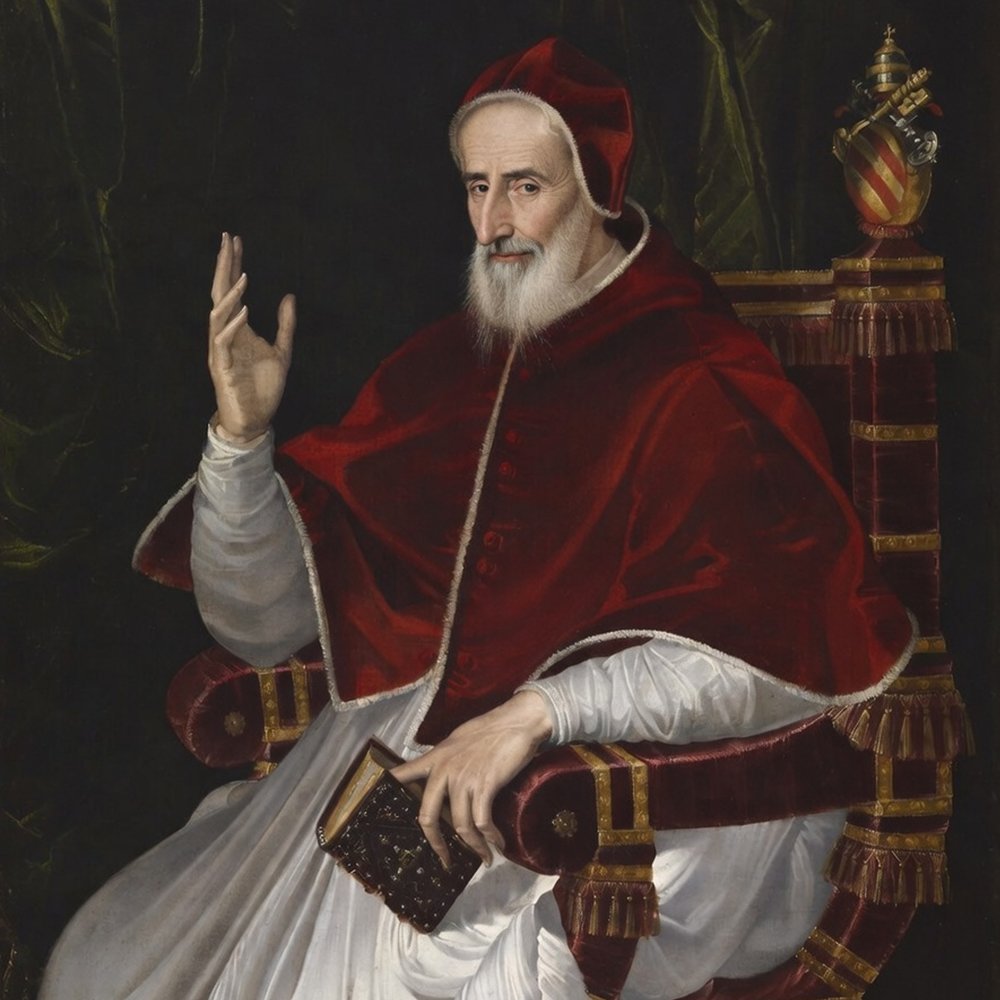
St. Pius V (1566-1572)
BIOGRAPHICAL DATA
Birth name: Antonio (Michele) Ghislieri
Birth: January 17, 1504, Bosco Marengo, Duchy of Milan (Italy)
Papal election: January 7, 1566
Coronation: January 17, 1566 (his 62nd birthday!)
Pontificate: January 7, 1566 – May 1, 1572 (6 years, 114 days)
Death: May 1, 1572, Rome (68 years old)
Burial: Santa Maria Maggiore, Rome (later transferred to Cappella Sistina within basilica)
Religious order: Order of Preachers (Dominicans – OP)
Papal motto: None officially recorded
Cognomen: “The Inquisitor Pope”, “Defender of Christendom”, “Pope of Lepanto”, “The Austere Reformer”, “Hammer of Heresy”
Canonization: May 22, 1712 by Pope Clement XI (beatified May 1, 1672 by Clement X – exactly 100 years after death!)
Feast day: April 30 (Catholic Church)
NOTE: One of only two popes from post-Reformation era to be canonized as saint (with Pius X, 1903-1914)! Remembered primarily for implementing Council of Trent reforms with iron discipline, organizing the Holy League victory at Battle of Lepanto (1571) against Ottoman Empire, issuing standardized Roman Missal and Breviary, and establishing Roman Catechism. Also controversial for severity as Grand Inquisitor, harsh treatment of Jews, excommunication of Queen Elizabeth I, and uncompromising rigidity. A pope of dramatic contrasts: profound personal sanctity alongside institutional ruthlessness!
FORMATION AND RELIGIOUS LIFE
Humble Origins – Ghislieri Family
Family background:
- Bosco Marengo (Alessandria, Piedmont): small town in Duchy of Milan
- Paolo Ghislieri: father, humble background (likely agricultural laborer or minor tradesman – sources vary but consistently indicate poverty)
- Domenica Augeria: mother, equally humble origins
- Family: genuinely poor, working-class background (rare for future pope!)
- Antonio: eldest or among eldest children
- Economic situation: family struggled financially, could not provide formal education
Childhood and youth (1504-1518):
- Poverty: genuine hardship in early years
- Basic education: initially minimal (family couldn’t afford tutoring)
- Shepherding: Antonio worked as shepherd boy (confirmed biographical detail)
- Tended sheep for local families
- Limited formal schooling during these years
- Developed habits: solitude, prayer, contemplation during shepherding
- Turning point (age ~13-14): local Dominican friars recognized intelligence
- Charity education: Dominicans in Voghera took interest in bright poor boy
- Offered basic education, religious instruction
- Antonio: showed remarkable intellectual aptitude despite late start
Dominican Formation
Entry into Dominican Order (1518):
- Age: 14 years old
- Location: Voghera (initially), then Vigevano
- Motivation: genuine religious vocation combined with opportunity for education
- Religious name: Michele (Michael) – took at profession
- Would use “Michele Ghislieri” throughout religious life until papacy
- Novitiate: standard Dominican formation
- Strict discipline: poverty, chastity, obedience
- Dominican charism: preaching, study, poverty
- Young Michele: exceptionally fervent, austere even by Dominican standards
Philosophical and Theological Studies (1518-1528):
University studies:
- Bologna: primary location for advanced studies
- Curriculum: scholastic philosophy, Thomistic theology
- St. Thomas Aquinas: became foundational influence (as typical for Dominicans)
- Medieval scholasticism: rigorous logical training
- Canon law: also studied extensively
- Student: brilliant, disciplined, exceptionally rigorous
- Perfect memory: renowned among contemporaries
- Theological precision: exact, uncompromising understanding of doctrine
- Asceticism: practiced severe personal mortification even as student
Priestly Ordination: 1528 (age 24)
- Dominican priest: now fully incorporated into Order of Preachers
- Early reputation: already known for learning, austerity, uncompromising orthodoxy
Early Priestly Ministry (1528-1542)
Teaching and Preaching:
Professor of theology (1528-1542):
- Pavia University: taught theology for sixteen years
- Thomistic theology: specialized in St. Thomas Aquinas
- Reputation: brilliant but demanding teacher
- Students: found him intimidating, rigorously orthodox
- Preaching ministry: concurrent with teaching
- Dominican charism: Order of Preachers’ fundamental mission
- Style: forceful, uncompromising, focused on sin/judgment more than mercy
- Subjects: heresy danger, moral reform, strict observance
- Effect: powerful but severe (inspired fear more than love)
Personal characteristics (emerging pattern):
- Extreme austerity:
- Personal mortification: hairshirt, fasting, minimal sleep
- Poverty: refused any personal comfort beyond absolute minimum
- Discipline: rigorous prayer schedule, exactitude in all observances
- Uncompromising orthodoxy:
- Zero tolerance for doctrinal deviation
- Suspicious of anything resembling Protestant ideas
- Harsh toward perceived laxity in clergy
- Intellectual brilliance:
- Masterful theologian: particularly in Thomistic thought
- Legal expertise: canon law equally mastered
- Perfect memory: could quote texts verbatim extensively
THE INQUISITOR (1542-1566)
Rise Through Inquisitorial Ranks
Context: Counter-Reformation Intensity
Protestant Reformation crisis (by 1542):
- Luther (1517-): Germany, Scandinavia largely lost
- Calvin (1536-): Geneva, spreading through France, Netherlands
- England (1534): Henry VIII’s schism, later Protestant turn under Edward VI
- Italy threatened: Protestant ideas infiltrating despite geographic proximity to Rome
- Valdesianism: spiritualist movement with Protestant affinities
- Italian reformers: various figures questioning Catholic orthodoxy
- Papal alarm: real fear of losing Italy itself
Papal Inquisition reorganization:
- Paul III (1542): established Roman Inquisition (Congregation of the Holy Office)
- Carafa (future Paul IV): chief organizer, extremely severe
- Purpose: combat heresy systematically, prevent Protestant spread
- Need: capable, utterly orthodox personnel
Michele Ghislieri recruited (1542):
- Age: 38
- Recommendation: reputation for learning, absolute orthodoxy
- Appointment: Inquisitor of Como and Bergamo
- Strategic location: northern Italy, close to Switzerland/Protestant influences
- Mission: root out any heretical infiltration
Inquisitor of Como and Bergamo (1542-1550)
Approach to office:
Severity and thoroughness:
- Zero tolerance: even suspected heresy pursued relentlessly
- Interrogation methods:
- Used torture when deemed necessary (standard Inquisition practice)
- Prolonged questioning: exhaustive examination of suspects
- Assumed guilt: better to punish innocent than risk heretic escaping
- Punishments imposed:
- Execution: for obstinate, unrepentant heretics
- Imprisonment: lengthy sentences for those who recanted
- Penances: public humiliation, confiscation of property
- No leniency: reputation for harshness even among Inquisitors
Cases and controversies:
- Valdesian sympathizers: particularly targeted
- Clergy suspects: priests/religious with suspected Protestant leanings harshly investigated
- Jewish converts: “New Christians” suspected of crypto-Judaism also scrutinized
- Reputation developing: feared throughout region
- Some fled jurisdiction to avoid investigation
- Others praised his “defense of faith”
- Growing controversy: even some Catholics thought him excessive
Personal characteristics (continued):
- Incorruptible: absolutely no bribes, influence, nepotism in decisions
- Austere lifestyle maintained: lived as poor friar despite Inquisitorial authority
- Convinced of righteousness: genuinely believed severity was mercy (saving souls from damnation)
- No personal malice: not sadistic, but absolutely convinced heresy was spiritual cancer requiring surgical removal
Commissioner General of the Inquisition (1550-1558)
Promotion by Julius III (1550):
- Age: 46
- Position: Commissioner General – effectively second-in-command of entire Roman Inquisition
- Reason: proven effectiveness, absolute reliability, theological expertise
- Responsibility: oversee all Inquisitorial operations throughout Papal States and coordinate with other jurisdictions
Expanded authority:
Administrative role:
- Systematization: organized Inquisitorial procedures more efficiently
- Documentation: insisted on meticulous records (still exist in Vatican archives!)
- Training: established standards for local inquisitors
- Centralization: brought more control to Rome, consistency across territories
Major cases supervised:
- Pietro Carnesecchi (eventually executed 1567): prominent humanist with Protestant sympathies – Ghislieri pursued relentlessly for years
- Various Italian reformers: systematic campaign against Protestant-leaning intellectuals
- Morone case (Cardinal Giovanni Morone): accused distinguished cardinal of heresy
- Controversial: even at time, many thought accusation against prince of Church excessive
- Later vindicated: Morone eventually cleared (after Ghislieri became pope, ironically had to partially back down)
- Shows: Ghislieri’s tendency toward severity sometimes exceeded evidence
Growing reputation:
- Among orthodox: champion of faith, incorruptible defender
- Among moderates: excessive, dangerously rigid
- Among suspected: terrifying, merciless prosecutor
Relationship with Paul IV (Carafa, 1555-1559):
- Perfect alignment: Paul IV equally severe, uncompromising
- Mutual respect: two hardliners reinforcing each other
- Jewish persecution intensified:
- 1555: Paul IV issued Cum nimis absurdum – harsh anti-Jewish bull
- Ghislieri: enthusiastically enforced (created Roman ghetto, forced wearing of badges, economic restrictions)
- Beginning pattern: anti-Jewish policies would continue under Ghislieri’s own papacy
Cardinal and Grand Inquisitor (1558-1566)
Created Cardinal by Paul IV (March 15, 1557, announced 1558):
- Age: 53
- Title: Cardinal-Priest of Santa Maria sopra Minerva (later changed)
- Reason: reward for inquisitorial zeal, ensure continuation of hard line
Grand Inquisitor appointment (1558):
- Supreme position: head of entire Roman Inquisition
- Authority: second only to pope in matters of heresy
- Tenure: 1558-1566 (until his own papal election)
As Grand Inquisitor (1558-1566):
Intensified operations:
- Systematic: more organized, thorough pursuit of heresy
- Index of Forbidden Books: helped develop and enforce
- Censorship: extensive prohibition of suspect texts
- Enforcement: printers, booksellers monitored
- Severity: better to ban questionably than risk doctrinal contamination
- Clergy discipline: particularly harsh on priests suspected of doctrinal or moral laxity
- Geographic expansion: extended Inquisitorial reach where possible
Controversies:
- Cardinal Morone case (continued): imprisoned fellow cardinal despite limited evidence
- Excessive severity: even some supporters began questioning extremism
- Political tensions: inquisitorial activities sometimes conflicted with diplomatic considerations
Personal life as Cardinal:
- Continued austerity: refused cardinal’s typical lifestyle
- Lived in simple cell
- Wore hair-shirt under cardinal’s robes
- Continued extreme fasting, mortification
- Gave away income to poor (kept only minimum for survival)
- Prayer life: hours daily in contemplation
- No nepotism: refused to advance family members (contrast with era’s norm!)
- Reputation: holy but terrifying – combination of sanctity and severity
Under Pius IV (1559-1565):
- Tension: Pius IV (Medici) more moderate, diplomatic than Paul IV
- Policy conflicts:
- Pius IV: wanted reconciliation with Protestants where possible
- Ghislieri: believed any compromise = betrayal of faith
- Morone case resolution: Pius IV eventually released Morone, tacit rebuke of Ghislieri’s excess
- Despite tensions: Ghislieri’s orthodoxy, personal sanctity gave him continuing influence
Council of Trent (final sessions, 1562-1563):
- Ghislieri’s role: theological consultant, enforcer of orthodoxy
- Positions: consistently most conservative/uncompromising
- Against any concessions to Protestants
- For strictest discipline/reform measures
- Suspicious of anything resembling Protestant positions
- Influence: significant on final decrees’ rigorous character
CONCLAVE OF 1565-1566 – ELECTION
Pre-Conclave Context
Death of Pius IV (December 9, 1565):
- Legacy: moderate pope, concluded Council of Trent (1563), began implementation
- Need: someone to continue Trent implementation rigorously
- Situation: Council ended, but actual reforms barely begun
Church situation (December 1565):
Protestant challenge continuing:
- Germany: solidly divided (Lutheran north, Catholic south)
- France: Wars of Religion intensifying (1562-1598)
- Netherlands: revolt brewing (would explode 1566-1648)
- England: Elizabeth I (1558-) establishing Protestant church
- Scotland: Presbyterian Kirk established
- Scandinavia: entirely Lutheran
Catholic response needed:
- Trent implementation: urgent necessity
- Disciplinary reform: clergy corruption still widespread despite Council
- Doctrinal clarity: systematic teaching of Trent reforms
- Militant defense: against Protestant expansion
Cardinals wanted:
- Strength: uncompromising implementation of Trent
- Personal sanctity: to inspire reform by example
- Theological competence: to guide doctrinal clarification
- Severity: many wanted hard line after Pius IV’s moderation
The Conclave – Unusually Long
Start: December 20, 1565
Duration: 19 days (December 20, 1565 – January 7, 1566) – relatively long for era
Factions:
- “Spirituali” (reformers seeking severe discipline):
- Wanted: uncompromising reformer
- Candidate: Michele Ghislieri (Cardinal Alessandrino)
- Support: Charles Borromeo, other reform cardinals
- Argument: Church needs severity to implement Trent, combat Protestantism
- Moderate faction:
- Wanted: continuation of Pius IV’s diplomatic approach
- Concern: Ghislieri too severe, would alienate even Catholic rulers
- Resistance: feared his inquisitorial harshness
- Spanish faction:
- Philip II’s influence: strong pro-Spanish cardinals
- Initially uncertain: about Ghislieri
- Eventually supportive: recognized his orthodoxy, anti-Protestant credentials
- French faction:
- Opposed: Ghislieri (correctly) seen as pro-Spanish
- Concern: would not support French Catholic position vs. Huguenots diplomatically
Factors favoring Ghislieri:
- Personal sanctity (undeniable):
- Reputation: genuinely holy life, extreme austerity
- Poverty: lived as poor friar despite cardinal status
- Incorruptibility: absolutely no scandal, venality
- Prayer: known for hours in contemplation
- Example: could inspire reform through personal witness
- Theological expertise:
- Brilliant: master of Thomistic theology
- Trent veteran: participated in Council deliberations
- Doctrinal precision: exactly what implementing Trent required
- Proven administrator:
- Inquisition: organized, efficient despite controversial
- Discipline: could impose order systematically
- Uncompromising orthodoxy:
- Zero tolerance for heresy: exactly what many wanted
- No compromise: would implement reforms without weakening
- St. Charles Borromeo’s strong advocacy:
- Borromeo: nephew of Pius IV, already emerging as major reform figure
- Influence: carried weight among reformers
- Conviction: Church needed Ghislieri’s severity
Factors against Ghislieri:
- Excessive severity:
- Reputation: harsh even by Inquisition standards
- Morone case: unjust treatment of fellow cardinal
- Fear: would alienate through extremism
- Lack of diplomatic experience:
- Career: entirely theological/inquisitorial
- No nunciature: unlike many cardinal-electors
- Concern: couldn’t handle complex political situations
- Age and health:
- 62 years old: not ancient but not young
- Health: already showing signs of condition that would eventually kill him (kidney/bladder stones, general weakness)
- Concern: might not live long enough to accomplish reforms
- Anti-Jewish reputation:
- Known severity: toward Jewish communities
- Economic concerns: Jewish banking important in Papal States economy
The decisive vote:
Spanish support secured:
- Philip II’s cardinals: eventually recognized Ghislieri as best for anti-Protestant struggle
- Tipped balance: combined with reform faction
Election: January 7, 1566
- Achieved majority: after 19 days deliberation
- Ghislieri’s reaction: reportedly tried to refuse (genuine humility vs. conventional modesty – sources suggest genuine reluctance)
- Accepted: only under obedience
- Name chosen: Pius V
- Honoring: Pius IV (despite policy differences – gracious gesture)
- Or perhaps: Pius II (Piccolomini, 1458-1464, humanist but also crusade advocate)
Coronation: January 17, 1566
- Coincidence: his 62nd birthday!
- Ceremony: relatively simple by papal standards (refused excessive pomp)
- Symbolism: immediately established austere tone
PONTIFICATE (1566-1572)
Personal Papal Style – Revolutionary Austerity
Immediate changes to papal lifestyle:
- Continued Dominican observance:
- Unprecedented: continued living essentially as Dominican friar
- White habit: wore Dominican habit under/instead of papal vestments whenever possible
- Visual symbol: constantly reminded everyone of religious vows
- Later iconography: almost always shown in white habit rather than red/gold papal garments
- Cell instead of apartments: refused luxurious papal quarters
- Simple room with minimal furniture
- Hard bed (reportedly slept on boards)
- No decorations except crucifix
- Monastic schedule:
- Rose very early (3-4 AM)
- Hours of prayer before dawn
- Continued even when ill
- Extreme personal austerity:
- Hair-shirt: wore constantly under clothing
- Fasting: rigorous, far beyond canonical requirements
- Minimal food even on non-fast days
- Reportedly sometimes only bread and water
- Self-mortification: continued private penances
- No personal comfort: refused heating even in winter, minimal lighting
- Poverty maintained:
- Papal income: gave vast majority to poor, church building/repair, religious houses
- Personal possessions: virtually nothing beyond absolute necessities
- Refused gifts: wouldn’t accept presents (revolutionary for papal court!)
- Anti-nepotism:
- Extraordinary: appointed only ONE family member to position (later made cardinal, but qualified)
- Contrast: contemporary popes typically enriched entire families!
- Ghislieri family: remained in modest circumstances despite one of them being pope!
- Papal court transformed:
- Expenses slashed: eliminated vast amounts of Renaissance papal luxury
- Etiquette simplified: reduced elaborate ceremonies where possible
- Personnel reduced: fewer courtiers, servants
- Moral discipline imposed:
- Clergy behavior: strict monitoring of all clergy in Rome
- Prostitution: aggressive campaign to suppress
- Gambling: prohibited
- Theater/entertainments: curtailed if deemed immoral
- Sunday observance: enforced strictly (businesses closed)
- Result: Rome transformed (at least temporarily) into much more austere city
Contemporary reactions:
Admiration:
- Reformers: inspired by pope practicing what he preached
- Common people: many loved his obvious sanctity, charity to poor
- Clergy: some genuinely inspired to reform
Resentment:
- Roman nobility: hated loss of papal patronage, elegant court life
- Courtiers: lost positions, income
- Pleasure-seekers: resented moral crackdown
- Clergy: many disliked being held to stricter standards
Historical assessment:
- Genuine sanctity: clearly not political theater – lived austerely even privately
- Revolutionary: no pope before or since lived so monastically while holding office
- Inspiration: for later reform movements, including St. Charles Borromeo’s even more intense personal austerity
Implementation of Council of Trent Reforms
The enormous task:
Council of Trent (1545-1563):
- Duration: 18 years (interrupted multiple times)
- Result: massive corpus of doctrinal definitions, reform decrees
- Problem by 1566: most decrees existed only on paper
- Bishops hadn’t implemented
- Clergy often ignorant of contents
- Local resistance widespread
- No systematic implementation mechanism
Pius V’s systematic approach:
- Roman Catechism (Catechismus Romanus, 1566):
Background:
- Trent decree: ordered creation of universal catechism for clergy instruction
- Previous attempts: begun under Pius IV but incomplete
- Pius V’s push: made this absolute priority
Promulgation: September 1566
- Structure: four parts
- Creed (Apostles’ Creed explained)
- Sacraments
- Ten Commandments
- Lord’s Prayer
- Audience: primarily for parish priests, to teach laity
- Language: Latin (later translated to vernaculars)
- Theological basis: Thomistic, scholastic precision
- Purpose: standardize Catholic teaching worldwide
Significance:
- First: universal systematic catechism in Catholic history
- Influence: remained standard until 1992 (!) catechism
- Implementation: Pius V mandated use throughout Catholic world
- Success: actually achieved wide distribution, usage
- Roman Breviary (1568):
Background:
- Breviary: Divine Office – prayers priests obligated to pray daily
- Problem: hundreds of local variations, some corrupt/superstitious
- Need: standardized, purified version
Promulgation: Quod a nobis (July 9, 1568)
- Structure: revised, standardized liturgical hours
- Basis: ancient Roman practice, purged of medieval accretions
- Mandatory: all clergy unless diocese could prove 200+ year tradition
- Effect:
- Unified Catholic liturgical prayer
- Eliminated many questionable local practices
- Imposed Roman conformity widely
Characteristics:
- Conservative: sought to restore ancient tradition, not innovate
- Rigid: little flexibility allowed
- Thomistic: reflected theological precision
- Lasting: remained substantially unchanged until 1911 reforms
- Roman Missal (1570):
Background:
- Mass variations: even more problematic than breviary
- Medieval proliferation: countless local uses, some theologically questionable
- Protestant challenge: needed clear Catholic liturgical identity
Promulgation: Quo primum (July 14, 1570)
- Structure: standardized Mass structure, prayers, calendar
- Basis: ancient Roman rite, reformed
- Mandatory: same exception clause (200+ year tradition)
- Preserved: Ambrosian (Milan), Mozarabic (Toledo), some religious order rites
- Eliminated: hundreds of local variations
- Rubrics: exact, detailed ceremonial instructions
- Latin: universal language (no vernacular)
Significance:
- IMMENSE: defined Catholic liturgical identity for four centuries!
- “Tridentine Mass”: this Missal = what’s meant by term
- Remained standard: until Vatican II (1962-1965) reforms
- Still celebrated: “Extraordinary Form” authorized 2007
- Pius V’s most lasting legacy: this more than anything else
Characteristics of the Missal:
- Theological precision: every prayer reflected Trent’s doctrinal definitions
- Anti-Protestant: clearly distinguished Catholic from Protestant worship
- Uniformity: intentionally eliminated diversity for unity
- Aesthetic: reverent, solemn, hieratic (sacred distance emphasized)
- Clerical: priest-centered, minimal lay participation
- Bishops and clergy discipline:
Episcopal appointments:
- Scrutiny: Pius V personally examined candidates thoroughly
- Criteria:
- Theological competence (required!)
- Moral character (no scandals)
- Pastoral commitment (not just administrators)
- Residence requirement: absolutely insisted bishops actually live in dioceses (major Trent reform often ignored)
- Removals: deposed bishops who wouldn’t comply with Trent
- Controversial: but Pius V uncompromising
- Regular visitation: mandated episcopal visitations of parishes
Clergy formation:
- Seminaries: Trent mandated establishment of diocesan seminaries
- Pius V: aggressively enforced implementation
- Funding: sometimes provided papal assistance for poor dioceses
- Curriculum: standardized theological education
- Result: slow but real improvement in clergy education
- Religious orders: also reformed
- Visitations: investigated religious houses
- Suppressed: houses that wouldn’t reform
- Carmelite reform: supported St. Teresa of Ávila’s reformed Carmelites
Clergy discipline:
- Concubinage: priests living with women severely punished
- Roman streets: regular patrols arrested priests in taverns, brothels
- Penalties: suspension, imprisonment for repeat offenders
- Simony: selling church offices prosecuted
- Pluralism: holding multiple benefices curtailed
- Absenteeism: bishops/priests not residing in sees/parishes removed
- Moral reform of Rome:
Prostitution campaign:
- Severe restrictions: forced registration, limited zones
- Closures: brothels shut down
- Alternative: provided economic alternatives (dowries for former prostitutes to marry or enter convents)
- Partial success: reduced but couldn’t eliminate
Public morality:
- Sunday observance: businesses closed, Mass attendance expected
- Blasphemy: public cursing punished
- Dress codes: immodest clothing prohibited
- Carnival: traditional excesses curtailed
- Theater censorship: plays examined for orthodoxy/morality
Results:
- Rome transformed: noticeably more austere during his reign
- Mixed legacy: reforms partially lasted, partially reversed after his death
- Symbolic: demonstrated pope’s commitment to reform by example
- Inquisition and Index:
Continued severity:
- Maintained: inquisitorial activities from before papacy
- Index expansion: more books prohibited
- Talmud: banned (continued anti-Jewish policy)
- Humanist works: some classics prohibited for moral/doctrinal concerns
- Protestant books: obviously prohibited entirely
- Enforcement: printers required licenses, inspections
- Venice: major conflict over enforcement of Index in Republic
- Compromises: eventually reached but tensions remained
Notable cases:
- Pietro Carnesecchi (1567): finally executed after decades-long pursuit
- Controversial: humanist with Protestant sympathies, but prominent figure
- Demonstrated: Pius V’s uncompromising approach
- Continued prosecutions: of suspected Protestants, crypto-Jews, witches
The Battle of Lepanto (1571) – Defining Moment
Ottoman threat context:
Ottoman Empire expansion (16th century):
- Süleyman the Magnificent (1520-1566): conquered much of Hungary, besieged Vienna (1529)
- Mediterranean dominance: Ottoman navy controlled much of sea
- Christian territories threatened:
- Cyprus (Venetian): under attack 1570
- Southern Italy: raiding
- Malta (1565): Great Siege barely defeated Ottomans
- Perception: existential threat to Christian Europe
Pius V’s crusading vision:
From election onward:
- Priority: uniting Christian princes against Ottomans
- Model: medieval crusades (though different military reality)
- Theological understanding: defense of Christendom = sacred duty
- Personal commitment: saw this as essential papal responsibility
Obstacles:
- Catholic division: France, Spain, Austria pursuing rival interests
- Protestant conflict: Catholic rulers fighting each other or Protestants instead of Ottomans
- Expense: warfare incredibly costly
- Previous failures: numerous attempts at “crusade” leagues had collapsed
The Holy League formation (1571):
Context: Cyprus crisis:
- Ottoman invasion (1570): Cyprus (Venetian possession) attacked
- Famagusta siege: brutal, prolonged
- Venetian desperation: needed allies
- Appeal to pope: Venice sought Holy League formation
Pius V’s diplomatic triumph:
Negotiations (1570-1571):
- Personal involvement: Pius V directly managed diplomacy
- Parties:
- Spain (Philip II): most powerful, essential participant
- Venice: needed help desperately
- Papal States: pope’s own military contribution
- Others: Genoa, Savoy, Knights of Malta, etc.
- Challenges:
- Spanish-Venetian rivalry: centuries of distrust
- Cost-sharing: who pays what?
- Command structure: who leads?
- Strategic goals: differing priorities
League treaty signed (May 25, 1571):
- Participants: Spain, Venice, Papal States (formally)
- Terms:
- Combined naval force
- Shared expenses
- Joint command
- Command: Don Juan of Austria (Philip II’s half-brother, 24 years old)
- Pius V’s insistence: overcame initial Spanish reluctance
- Inspired choice: young, energetic, charismatic
- Papal contribution:
- 12 galleys
- Significant financial subsidy
- Spiritual leadership
Pius V’s spiritual preparation:
Prayer campaign:
- Rosary: promoted rosary praying throughout Catholic world for victory
- Belief: Marian intercession essential
- Organization: confraternities organized rosary praying
- Fasting: called for days of fasting, penance
- Processions: penitential processions in Rome, elsewhere
- Personal: spent hours in prayer for fleet’s success
The Battle of Lepanto (October 7, 1571):
Location: Gulf of Patras (Lepanto), Greece
Date: October 7, 1571
Forces:
- Holy League:
- ~206 galleys, 6 galleasses
- ~30,000 soldiers
- Don Juan of Austria commanding
- Ottoman:
- ~230 galleys
- ~30,000+ soldiers
- Ali Pasha commanding
Battle:
- Naval engagement: galley warfare (ramming, boarding)
- Fierce fighting: brutal, hours-long combat
- Holy League victory: decisive
- Ottoman fleet: destroyed (180+ galleys captured/sunk)
- Casualties:
- Ottoman: ~30,000 killed/wounded, 8,000+ captured
- Holy League: ~7,500 killed, 20,000 wounded
- Liberated: ~15,000 Christian galley slaves freed from Ottoman ships
Significance:
- Strategic: ended Ottoman naval supremacy in Mediterranean
- Psychological: shattered myth of Ottoman invincibility
- European morale: electrified Christian Europe
- Turning point: though Ottomans rebuilt navy, never again same threat level
Pius V’s miraculous knowledge (legend):
October 7, 1571 (during battle):
- Pius V: in Rome, meeting with officials
- Reported: suddenly stood, went to window, looked south, said “This is not a time for business; let us go and thank God, for at this very moment our fleet has gained a victory over the Turks”
- Timing: allegedly precisely during battle conclusion (hundreds of miles away, communication impossible)
- Later verification: when news arrived weeks later, timing matched
- Interpretation:
- Believers: miraculous divine revelation
- Skeptics: retroactive legend-making
- Historical fact: widely reported in sources, contributed to his sanctification process
Celebration and thanksgiving:
When news officially arrived (October):
- Rome: jubilation, processions, Te Deum
- Pius V’s reaction:
- Thanksgiving: attributed victory to Virgin Mary
- Humility: gave God credit, not just military prowess
- Feast established: “Our Lady of Victory” (October 7)
- Later: changed to “Our Lady of the Rosary” by Gregory XIII
- Rosary connection: credited rosary praying for victory
- Permanent: feast still celebrated in Catholic calendar
Aftermath and disappointment:
Holy League dissolution:
- Venice: made separate peace with Ottomans (1573), abandoned League
- Pius V’s fury: felt betrayed
- Venetian pragmatism: couldn’t sustain warfare economically
- Spain: pursued own Mediterranean strategy
- No follow-up: crusade to liberate Holy Land never materialized
- Pius V’s frustration: spent last months trying to revive League
- Unsuccessful: couldn’t overcome national interests
- Died (1572): before achieving broader crusading goals
Historical assessment of Lepanto:
Military significance:
- Decisive: ended Ottoman Mediterranean dominance
- Limited: didn’t translate to broader Christian reconquest
- Symbolic: more important psychologically than strategically long-term
Pius V’s role:
- Essential: without his diplomatic skill, League never formed
- Vision: provided spiritual/ideological framework
- Limitation: couldn’t maintain unity after victory
- Legacy: Lepanto inseparably associated with his pontificate
Anti-Jewish Policies – Dark Legacy
Context: Medieval anti-Judaism:
Traditional Catholic teaching:
- Theological anti-Judaism: Jews held collectively responsible for Christ’s death
- Social restrictions: Jews relegated to marginal economic roles, segregated housing
- Forced conversions: periodic attempts throughout medieval period
- Blood libels: false accusations of ritual murder
- Expulsions: Jews expelled from England (1290), France (repeatedly), Spain (1492), Portugal (1497)
Renaissance relative improvement:
- Some popes: relatively tolerant (Leo X, Clement VII)
- Jewish communities: established in Rome, Papal States
- Economic role: money-lending, trade
- Intellectual contributions: medicine, scholarship
Paul IV’s reversal (1555):
- Cum nimis absurdum (1555): harsh anti-Jewish bull
- Roman ghetto: created, Jews confined
- Economic restrictions: limited to rag trade, money-lending
- Badges: forced wearing of yellow badges
- Church attendance: compulsory sermons (conversion attempts)
- Property: severe restrictions
- Ghislieri’s enforcement: as Inquisitor, enthusiastically implemented
Pius V’s intensification (1566-1572):
- Hebraeorum gens (1569) – Expulsion:
Promulgation: February 26, 1569
Provisions:
- Expulsion: all Jews from Papal States except Rome and Ancona
- Justification:
- Accused of usury
- Claimed corrupting Christian morals
- Alleged practicing magic
- “Perfidy”: refusing to convert to Christianity
- Timeline: three months to leave
- Exceptions: Rome, Ancona (major cities where could be monitored in ghettos)
Implementation:
- Thousands expelled: from small towns throughout Papal States
- Economic devastation: Jewish communities destroyed
- Refuges:
- Some fled to Rome/Ancona ghettos
- Others to more tolerant Italian states (Venice, Mantua, Ferrara)
- Some to Ottoman Empire
- Property confiscation: often couldn’t sell in time, lost possessions
- Rome/Ancona ghetto hardening:
Existing ghettos (from Paul IV):
- Overcrowding: increased with refugees from expulsion
- Unsanitary: deliberately poor conditions
- Economic strangling: limited occupations
Pius V’s additional restrictions:
- Talmud banned: ordered burning of Talmudic texts
- Intellectual devastation: centuries of rabbinical learning destroyed
- Resistance: some texts hidden, but enormous loss
- Forced sermons: intensified conversion preaching
- Compulsory attendance: Jews required to attend Christian sermons regularly
- Conversions: some genuine, many coerced or pragmatic
- Social separation: tightened segregation rules
- Medical practice: Jewish physicians banned from treating Christians
- Exception: sometimes violated when Christian patients specifically requested Jewish doctors (renowned skills)
- Inquisitorial prosecution:
Crypto-Judaism pursuit:
- “New Christians”: former Jews/descendants who converted
- Suspicion: assumed many secretly practicing Judaism
- Investigations: intense scrutiny, torture to extract confessions
- Punishments: property confiscation, execution for “relapsed heretics”
Theological justification (Pius V’s perspective):
Genuine belief:
- Saving souls: thought harshness necessary to prompt conversions (eternal salvation)
- Protecting Christians: feared Jewish influence would “corrupt” Christian faith
- Traditional theology: Jews’ suffering = punishment for rejecting Christ, incentive to convert
- Eschatology: Jewish conversion believed necessary before Second Coming
Not racial: theological/religious, not racial (converted Jews theoretically equal – though often still suspected)
Inconsistency: personally charitable to poor, yet cruel to Jews – cognitive dissonance typical of era but especially stark in his case
Economic consequences:
Papal States damage:
- Lost expertise: Jewish merchants, physicians, craftsmen expelled
- Economic decline: money-lending networks disrupted
- Tax revenue: lost tax base from expelled communities
- Ironic: Pius V’s own financial difficulties partly self-inflicted through expulsions
Jewish community devastation:
- Poverty: economic restrictions reduced most to destitution
- Cultural loss: Talmud burning, intellectual disruption
- Demographic: population decline through conversion, flight, death
Comparison with contemporaries:
More severe than:
- Venice: Venetian ghetto existed but less harsh economically
- Ferrara: Este dukes relatively protective
- Poland-Lithuania: relatively tolerant period
- Ottoman Empire: better treatment generally
Similar to:
- Spain: post-1492 Inquisition similarly severe
- Portugal: likewise harsh
Less severe than:
- England, France: total expulsion already completed centuries before
Later papal reversals:
Immediate successors:
- Gregory XIII (1572-1585): maintained most restrictions
- Sixtus V (1585-1590): actually relaxed some economic restrictions (pragmatism)
Eventual reforms:
- Gradual easing: over centuries
- Ghetto abolition: only with Italian unification (1870)
- Church reversal: Vatican II (1962-1965) finally repudiated theological anti-Judaism
Pius V’s canonization (1712) controversy:
Issue:
- Anti-Jewish policies: clearly problematic even by 18th century
- Sanctity claims: personal holiness vs. institutional cruelty
Resolution:
- Canonized anyway: personal piety, Lepanto, Trent implementation outweighed
- Troubling precedent: saint despite policies now recognized as gravely sinful
Modern Catholic reckoning:
- Vatican II: repudiated anti-Judaism theologically
- John Paul II (1998): apologized for Catholic anti-Semitism
- Benedict XVI (2008): Good Friday prayer revision removed “perfidious Jews”
- Francis: continued reconciliation efforts
But:
- Pius V still venerated: saint status unchanged (canonization considered irreversible)
- Uncomfortable legacy: his anti-Jewish policies embarrassment to modern Church
- Historical honesty: requires acknowledging even saints’ grave sins
The Elizabeth I Excommunication (1570) – Diplomatic Disaster
Context: English Reformation:
Henry VIII (1509-1547):
- Break with Rome (1534): Act of Supremacy, Henry = Supreme Head
- Motivation: initially dynastic (divorce), later theological
- Dissolution: monasteries seized, church wealth confiscated
Edward VI (1547-1553):
- Protestant turn: thoroughgoing Protestantization
- Book of Common Prayer: Cranmer’s liturgical reform
- Doctrine: increasingly Calvinist
Mary I (1553-1558):
- Catholic restoration: attempted return to Rome
- Persecution: “Bloody Mary” – burned ~280 Protestants
- Failure: died after five years, no heir, restoration collapsed
Elizabeth I (1558-1603):
Accession (1558):
- Legitimacy questioned: Catholic view = illegitimate (daughter of Henry VIII + Anne Boleyn, seen as adultery)
- Religious policy: “Elizabethan Settlement” (1559)
- Act of Supremacy: Elizabeth = Supreme Governor (not “Head” – slight moderation)
- Act of Uniformity: Book of Common Prayer required
- Via media: attempted middle way between Catholic/Protestant extremes
- Reality: Protestant church, but retaining some Catholic elements (bishops, liturgy)
Catholic perspective (1558-1570):
- Initially: some hoped Elizabeth would convert or compromise
- Seminary priests: English Catholics trained abroad, sent back to minister
- Recusancy: Catholics refusing Anglican services (fined)
- Mary Stuart (Mary Queen of Scots): Catholic claimant to throne (Elizabeth’s cousin)
- Threat: focus for Catholic plots
- Eventually imprisoned: by Elizabeth
Pius V’s position:
Uncompromising view:
- Heretic: Elizabeth’s Protestantism = heresy
- Illegitimate: bastard daughter of adultery (Catholic legal view)
- Usurper: rightful queen = Mary Stuart
- Schismatic: leading England into damnation
The Bull: Regnans in Excelsis (February 25, 1570):
Title: “Reigning on High”
Provisions:
- Excommunication:
- Elizabeth: declared excommunicated
- Heretic: formally condemned as Protestant heretic
- Bastard: her legitimacy denied
- Deposition:
- Removed: from throne
- No authority: her rule declared null
- Subjects released: from allegiance oath
- Catholics forbidden from obeying:
- Conscience obligation: English Catholics told they CANNOT obey her
- Penalties: those obeying her = excommunicated themselves
- Effect: Catholics must choose: queen or pope
Text (key passages):
“Elizabeth, the pretended Queen of England and the servant of crime… We declare the aforesaid Elizabeth to be a heretic and favorer of heretics… We declare her to be deprived of her pretended title to the kingdom… And we command and enjoin all and singular nobles, subjects, peoples and others that they presume not to obey her or her orders, laws and commandments, binding under the same curse those who do anything to the contrary.”
Promulgation:
- May 25, 1570: affixed to Bishop of London’s door by John Felton (English Catholic)
- Felton executed: hanged, drawn, quartered (later beatified as martyr)
Immediate consequences:
For English Catholics (catastrophic):
- Impossible position:
- Loyalty dilemma: obey queen (excommunication) or pope (treason)
- Most chose: quiet conformity, trying to satisfy both
- Minority: actively recusant, risking persecution
- Tragic: many genuinely loyal to Elizabeth AND Catholic faith – bull made this impossible
- Intensified persecution:
- Government response: saw all Catholics as potential traitors
- 1571 Treason Act: made bringing in papal bulls = treason
- 1581: recusancy fines massively increased
- Priest-hunting: seminary priests hunted, executed horribly
- Tyburn: dozens executed over following decades
- Methods: hanging, drawing, quartering
- Martyrs: many later canonized/beatified
- Suspicion: all Catholics suspected of plots
- Actual plots encouraged:
- Ridolfi Plot (1571): immediately after bull, plot to replace Elizabeth with Mary Stuart
- Discovered: participants executed
- Spanish involvement: Philip II implicated
- Later conspiracies: Throckmorton Plot (1583), Babington Plot (1586)
- Babington: led directly to Mary Stuart’s execution (1587)
- Bull’s role: gave theological justification to conspiracies
For international relations:
- Anglo-Spanish rupture:
- Philip II: initially cautious, but bull pushed toward confrontation
- Dutch Revolt: English support for Dutch Protestants increased
- Armada (1588): eventual result of deteriorating relations
- Propaganda victory for Protestants:
- Demonstrated: papal “interference” in national affairs
- Confirmed: Protestant fears of Catholic disloyalty
- Strengthened: English Protestant identity (against foreign pope)
- Precedent concern:
- Other rulers: worried similar excommunications possible
- Papal authority: challenged increasingly
Criticism even among Catholics:
Contemporary Catholic concerns:
- Philip II: annoyed (undermined his own English diplomacy)
- Catholic moderates: thought it counter-productive
- English Catholic nobility: many furious (endangered their positions)
Later assessment:
- Cardinal Allen: later admitted it was mistake
- Jesuit criticism: some Jesuits thought it strategically disastrous
- Gregory XIII: Pius V’s successor, implicitly backed away (didn’t insist on enforcement)
Pius V’s perspective (why he did it):
Theological conviction:
- Duty: as pope, obligated to condemn heresy
- Souls: believed Elizabeth leading millions to damnation
- Precedent: medieval popes had deposed rulers (his model)
Inquisitorial mindset:
- No compromise: heresy = absolute evil, no accommodation
- Political naivete: didn’t understand new political realities
- Medieval worldview: still thought papal authority could depose princes
Lepanto parallel:
- Success there: organizing Holy League against Ottomans
- Thought: similarly could organize against Protestant England
- Miscalculation: England ≠ Ottoman naval threat, Catholic rulers wouldn’t cooperate same way
Historical assessment:
Complete failure:
- Didn’t depose Elizabeth: reigned another 33 years successfully
- Harmed English Catholics: turned bad situation catastrophic
- Strengthened Protestantism: rallied English to Elizabeth
- Damaged papacy: demonstrated limits of papal temporal power
- Strategic disaster: achieved opposite of intentions
Symbolic significance:
- End of era: last serious attempt at papal deposition of monarch
- Medieval to modern: showed medieval papal political pretensions obsolete
- Westphalian order emerging: nation-states supreme, papal authority limited to spiritual
Contrast:
- Trent success: where implemented through cooperation with willing rulers
- Elizabeth failure: where tried to impose against powerful monarch
- Lesson: post-Reformation papacy needed different strategies
Modern perspective:
- Pius V’s sanctity: canonized despite this disaster
- Theological correctness vs. prudence: may have been “right” theologically (by his lights) but catastrophically imprudent
- Good intentions, bad results: classic case study
Other Significant Policies and Actions
- Clerical celibacy enforcement:
Concubinage campaign:
- Problem: many priests kept concubines openly
- Pius V’s severity:
- Investigations: inquisitorial examination
- Penalties:
- First offense: suspension, fines
- Repeat: permanent deposition, imprisonment
- Notorious cases: public humiliation
- Women: concubines expelled from priests’ houses, sometimes imprisoned
- Results:
- Some improvement in major cities
- Rural areas: harder to enforce
- Resentment: significant clergy resistance
- Papal finances:
Revenue challenges:
- Reduced income: Pius V’s austerity reduced traditional papal revenue sources
- Simony: refused to sell offices
- Nepotism: didn’t enrich family (who would have spent/taxed)
- Indulgences: curtailed abuses (reduced income)
- Increased expenses:
- Lepanto: Holy League subsidy enormous
- Church building: repairs, constructions
- Poor relief: extensive charity
- Seminary support: funding clergy education
Financial management:
- Careful administration: despite austerity, managed reasonably well
- Avoided bankruptcy: unlike some predecessors/successors
- Papal debt: moderate (controlled compared to later popes)
- Church construction and art:
Paradox:
- Personal austerity: Pius V lived in poverty
- Church beautification: supported church building/decoration
- Logic: glory of God vs. personal comfort (typical Catholic distinction)
Major projects:
- Santa Maria Maggiore: work continued
- Vatican: some renovations (modest by Renaissance standards)
- Churches throughout Papal States: repairs, improvements
- Dominican houses: special support for his order
Artistic patronage:
- Limited: compared to Renaissance popes (Julius II, Leo X)
- Focused: sacred art for devotional purposes
- Censorious:
- Nudes: ordered covering of nudes in churches
- Michelangelo’s Last Judgment: wanted to destroy/cover, persuaded to only cover most offensive parts (fig leaves added)
- Classical statues: some removed from display
- Saints and devotions:
Canonizations:
- St. Diego of Alcalá (1588, posthumously completed): process begun under Pius V
Devotional promotion:
- Rosary: intensely promoted (especially after Lepanto)
- Roman Breviary/Missal: standardized devotional life
- Litanies: approved various litanies
- Scapular: promoted Scapular devotion
- Religious orders:
Dominican favoritism (natural):
- His own order: supported generally
- Reform: insisted even Dominicans follow strict observance
- Appointments: promoted Dominicans to positions (though not excessively)
Other orders:
- Jesuits: supported (valued their orthodoxy, education work)
- St. Francis Borgia: worked with closely
- Carmelites: supported St. Teresa of Ávila’s reform
- Franciscans: promoted observant reform branches
- Suppressed: houses that wouldn’t reform
- Universities and education:
Promotion:
- Seminary education: primary focus (Trent implementation)
- University reform: insisted on orthodox theology teaching
- Thomism: promoted St. Thomas Aquinas as normative theologian
- Declared St. Thomas “Doctor of the Church” (1567)
- Curriculum: required Thomistic theology in Catholic universities
- Censorship: academic theological speculation restricted
- Papal States governance:
Administration:
- Justice: harsh but impartial
- Crime: severe penalties (death penalty frequently)
- Banditry: major problem, suppressed violently
- Corruption: prosecuted (officials held to high standards)
- Taxation:
- Burden: taxes high (to support reforms, charity, Lepanto)
- Fairness: attempted equitable assessment
- Public works:
- Roads: some improvement
- Grain supply: attention to food security (famine prevention)
- Diplomacy:
Relations with Catholic rulers:
Philip II (Spain):
- Generally good: shared Counter-Reformation zeal
- Lepanto: cooperation excellent
- Tensions: sometimes over ecclesiastical appointments, Spain’s Italian territories
France:
- Complicated: Wars of Religion (1562-1598)
- Supported: Catholic side (Duke of Guise faction)
- Opposed: Huguenots absolutely
- Catherine de Medici: distrusted her politique moderation
- St. Bartholomew’s Day Massacre (1572): occurred just after his death, but policies contributed to climate
Holy Roman Empire:
- Maximilian II: tensions (Maximilian religiously ambiguous, tolerant of Protestants)
- Support: for Catholic princes against Protestant
- Hungary: concern over Ottoman threat
Poland:
- Generally good: supported Catholic monarchy
- Concern: Polish religious tolerance (unusual for era)
Protestant rulers:
- No relations: refused any diplomatic contact with Protestant princes
- England: excommunication (discussed above)
- German Protestants: condemned uniformly
Final Illness and Death
Health decline (1571-1572):
Chronic conditions:
- Kidney stones / Bladder stones: excruciating painful condition
- No effective treatment: medieval medicine helpless
- Symptoms: blood in urine, severe pain, urinary difficulties
- Prognosis: progressive, eventually fatal
- General weakness: age, austerity, stress taking toll
- Continued austerity despite illness: refused to moderate lifestyle
Final months (early 1572):
January-April 1572:
- Increasing pain: stone condition worsening
- Continued duties: worked despite suffering
- Lepanto follow-up: still trying to maintain Holy League (futile)
- Administrative work: continued reform efforts
- Audiences: received visitors until very end
- Spiritual preparation:
- Confessions: frequent
- Prayer: intensified (if possible)
- Last rites: received multiple times as condition fluctuated
Deathbed:
April 30 – May 1, 1572:
- Final decline: clear he was dying
- Lucid: conscious, coherent to end
- Cardinals summoned: gathered at bedside
- Last words (reported):
- Prayers: continuous prayer
- Forgiveness: asked forgiveness from those he might have wronged
- Recommendations: urged cardinals to continue reforms
- “I command you to continue what I have begun” (substance of final exhortation)
Death:
- May 1, 1572: died early morning
- Age: 68 years old
- Reign: 6 years, 114 days
- Cause: kidney/bladder stone complications, likely including infection/uremia
Deathbed scene details (hagiographical sources):
- Dominican habit: wore until death (naturally)
- Crucifix: held throughout final hours
- Rosary: praying rosary
- Peaceful: despite pain, sources report peaceful death
- Last breath: reportedly said “Lord, increase my sufferings and my patience”
Funeral and Burial
Immediate aftermath:
Public reaction:
- Rome:
- Mixed: some genuinely mourned holy pope
- Others: relieved (found his severity oppressive)
- Jews: likely quiet relief
- Broader Church:
- Reformers: mourned loss of champion
- Moderates: hoped for less rigid successor
Funeral:
May 3-5, 1572:
- Lying in state: St. Peter’s Basilica
- Attendance: large crowds (curious, reverent, or both)
- Ceremonies:
- Requiem Masses: multiple
- Eulogies: praising sanctity, Lepanto, reforms
- Simple: by papal standards, reflecting his austerity
Burial:
- Santa Maria Maggiore: his choice (beloved basilica)
- Cappella Sistina (Sistine Chapel – not the famous one!): side chapel within basilica
- His commission: had chapel built during life
- Dominican connection: dedicated to Dominican saints
- Tomb: eventually elaborate monument constructed
- Domenico Fontana: architect
- Bronze: Pius V praying (in Dominican habit, naturally)
- Inscriptions: praising Lepanto, reforms, sanctity
Relics:
- Body: initially intact
- Later:
- Beatification/canonization: body exhumed for verification
- Incorrupt: reported partially incorrupt (hagiographical claim)
- Relics distributed: some parts given to churches, particularly Dominican
Immediate Successor
Conclave 1572:
Context:
- Needed: someone to continue reforms but perhaps less severe
- Candidates: various factions
- Result: Gregory XIII (Ugo Boncompagni, 1572-1585)
- Character: reformer but more diplomatic
- Policy: continued Trent implementation, less harshly
- Lepanto: couldn’t maintain Holy League (Venice defected)
- Calendar: Gregorian calendar reform (1582) = major legacy
- Reign: long (13 years), generally competent
Pius V’s shadow:
- Standard: set high bar for reform
- Legacy: successors judged against his zeal
- Impossible to replicate: unique combination sanctity/severity
BEATIFICATION AND CANONIZATION
Road to Sainthood
Immediate reputation:
Sanctity recognized:
- Personal life: austerity, prayer, charity undeniable
- Miracles claimed: some attributed to intercession even immediately after death
- Cult: popular devotion began, especially among:
- Dominicans: naturally promoted their pope
- Reformers: valued his uncompromising stance
- Lepanto veterans: attributed victory to his prayers
Process begun:
Under Gregory XIII:
- Informative process: testimony collection began
- Dominican promotion: Order of Preachers pushed cause vigorously
- Documentation: witnesses interviewed, writings examined
Obstacles:
- Controversies:
- Anti-Jewish policies: even then some questioned
- Severity: some thought excessive harshness un-saintly
- Elizabeth excommunication: obvious failure
- Time: canonization processes slow
Beatification: May 1, 1672 (exactly 100 years after death!)
- Pope Clement X: declared Blessed
- Timing: centenary symbolic
- Recognition: personal sanctity, Trent implementation, Lepanto
Canonization: May 22, 1712
- Pope Clement XI: declared Saint
- Title: St. Pius V
- Feast: April 30 (eve of death)
- Patronage:
- Bosco Marengo: hometown
- Various causes: against Church’s enemies, for Christian unity
Canonical process highlights:
Virtues examined:
- Faith: unquestionable orthodoxy
- Hope: trust in God despite difficulties
- Charity: personal charity to poor, zeal for souls
- Prudence: [controversial – Elizabeth excommunication clear imprudence, but overall governance…]
- Justice: [harsh, but incorruptible…]
- Fortitude: uncompromising despite opposition
- Temperance: extreme austerity
Miracles verified:
- Required: several miracles attributed to intercession
- Examined: medical testimony, witness accounts
- Approved: sufficient evidence (by standards of era)
Controversies addressed:
- Jewish policies:
- Defense: acting according to conscience, era’s norms
- Questionable: even then, some unease
- Severity:
- Defense: necessary for reform, zeal for souls
- Medieval precedents: many severe saints (Dominic, Bernard)
Cult and Veneration
Feast day celebration:
- April 30: celebrated in Catholic Church
- Dominicans: special celebration within order
- Rank: varies by calendar (currently optional memorial)
Churches dedicated:
- Multiple: throughout Catholic world, especially Italy, Dominican churches
- Bosco Marengo: basilica built in hometown
Iconography:
- Typical representation:
- White Dominican habit: almost always
- Papal tiara: sometimes
- Rosary: frequently (Lepanto association)
- Crucifix: often
- Book: representing learning, Roman Catechism/Missal/Breviary
- Lepanto reference: sometimes battle depicted
Famous images:
- Tomb statue: Santa Maria Maggiore
- Paintings: numerous, by various artists
- Usually: austere, praying, holding rosary
Relics:
- Primary: body at Santa Maria Maggiore
- Secondary: distributed to various churches
- Veneration: pilgrimage site
Devotion patterns:
- Rosary connection: particularly invoked for rosary intentions
- Against Church enemies: traditional invocation
- For orthodoxy: maintaining pure faith
HISTORICAL LEGACY
Assessment by Historians
Immediate successor perspectives (16th-17th century):
Catholic historians:
- Hagiographical: emphasized sanctity, Lepanto, reforms
- Hero: defender of faith against Protestantism, Ottomans
- Model: ideal pope for Counter-Reformation
- Minimized: failures (Elizabeth), controversies (Jewish persecution)
Protestant historians:
- Villain: epitome of Catholic intolerance
- Persecutor: cited in martyrologies (English martyrs)
- Fanatic: example of papal overreach
- Lepanto: even enemies acknowledged achievement
Enlightenment period (18th century):
Critical reassessment:
- Voltaire, etc.: criticized intolerance, severity
- Index, Inquisition: seen as obscurantist
- Jewish persecution: condemned
- But: personal virtue still generally acknowledged
19th century:
Catholic revival:
- Ultramontanism: Pius V as model of strong papacy
- Anti-liberal: his uncompromising stance valued
- Lepanto romanticism: battle celebrated
Liberal criticism:
- Intolerance: condemned as backwards
- Temporal power: his policies cited against papal political role
20th century to present:
Vatican II and after:
- Complicated legacy:
- Liturgical: Tridentine Mass = “Pius V’s Mass” (oversimplification but common)
- Trent implementation: valued positively
- Lepanto: still celebrated
- BUT Jewish policies: deeply embarrassing
- Elizabeth excommunication: acknowledged failure
Academic historians:
Positive assessments:
- Genuine sanctity: personal holiness undeniable
- Administrative ability: Trent implementation major achievement
- Lepanto: diplomatic/spiritual leadership crucial
- Standardization: Roman Catechism, Missal, Breviary = lasting contributions
- Reform commitment: genuinely tried to improve Church
- Incorruptibility: rare for era, admirable
- Anti-nepotism: extraordinary restraint
Negative assessments:
- Jewish persecution: inexcusable even by era’s standards
- Excessive severity: harshness counter-productive often
- Elizabeth excommunication: disastrous strategic blunder
- Inflexibility: inability to adapt to new political realities
- Inquisitorial ruthlessness: cruel, unjust prosecutions
- Theological narrowness: stifled legitimate intellectual inquiry
- Limited vision: couldn’t imagine other valid approaches
Balanced view:
- Product of era: must understand 16th-century context
- Contradictions: genuine saint who did terrible things
- Medieval mind in modern world: applying medieval solutions to new problems
- Sincere: genuinely believed he was saving souls
- Tragic: good intentions, often disastrous results
Comparative Assessment
Among Counter-Reformation popes:
Contemporary comparisons:
Paul IV (Carafa, 1555-1559):
- More severe: even harsher than Pius V (hard to imagine!)
- Less effective: administrative chaos, nepotism
- Similarity: Inquisitorial background, anti-Jewish
- Pius V: shared severity but more effective, less nepotistic
Pius IV (Medici, 1559-1565):
- Moderate: more diplomatic
- Trent conclusion: successfully concluded Council
- Contrast: Pius V implemented what Pius IV negotiated
- Complementary: needed both approaches
Gregory XIII (1572-1585):
- Successor: continued reforms, less severe
- Calendar: Gregorian reform = major legacy
- Lepanto follow-up: couldn’t maintain, but tried
- More balanced: Pius V’s zeal + more prudence
Sixtus V (1585-1590):
- Similar energy: also former inquisitor, reformer
- More pragmatic: relaxed some Jewish restrictions (for economic reasons)
- Administrative genius: reorganized curia brilliantly
- Comparison: Sixtus V = Pius V’s effectiveness without extreme severity?
Among canonized popes:
Medieval saintly popes:
- Gregory VII (1073-1085): similar uncompromising severity, reform zeal
- Innocent III (1198-1216): powerful, reforming, but more politically successful
Modern era (post-Reformation):
- Only two canonized: Pius V, Pius X (1903-1914)
- Similarity: both anti-modernist, uncompromising
- Difference: Pius X’s struggles = intellectual (Modernism) not military (Ottomans)
Contrast with most popes:
- Typical pope: politically adept, moderate, some corruption/nepotism
- Pius V: politically naive, severe, absolutely incorruptible
- Unique: combination sanctity + effectiveness rare
Lasting Influences
- Liturgical legacy (ENORMOUS):
Roman Missal (1570):
- “Tridentine Mass”: = Pius V’s standardization
- Lasted: 400 years (1570-1970) substantially unchanged
- Suppressed: Vatican II reforms (1969-70 Missal of Paul VI)
- Revived: 2007 (Benedict XVI) “Extraordinary Form”
- Traditionalist movements: celebrate “Pius V’s Mass”
- Symbolic: his liturgy = orthodox Catholic identity for some
- Influence: even new Mass retains much structure
- Historical: defined Catholic worship for centuries
Roman Breviary:
- Clergy prayer: standardized Divine Office
- Lasted: until 1911 reforms (Pius X)
- Influence: shaped Catholic clerical spirituality
Roman Catechism:
- Teaching: standard until 1992
- Influence: theological formation for 400+ years
- Counter-Reformation completion:
Trent implementation:
- Without Pius V: Council decrees might have remained paper
- He enforced: made Trent real through systematic implementation
- Legacy: Tridentine Catholicism = largely his creation
- Seminary system: educated clergy
- Standardized liturgy: universal Catholic identity
- Disciplined clergy: (attempted) moral reform
- Clear doctrine: Roman Catechism
- Rosary devotion:
Lepanto association:
- Our Lady of the Rosary feast: directly from his thanksgiving
- Rosary popularity: massively increased after Lepanto
- Dominican devotion: spread universally
- Lasting: rosary remains central Catholic devotion
- Papal model (contested):
For some:
- Ideal: uncompromising orthodoxy, personal sanctity
- Model: what pope should be (vs. worldly Renaissance popes)
- Traditionalists: often invoke his example
For others:
- Warning: excessive severity, imprudence
- Caution: sanctity ≠ good policy
- Critique: intolerance, inflexibility
- Jewish-Catholic relations (negative):
His policies:
- Ghetto system: his intensification lasted until 1870
- Theological anti-Judaism: reinforced worst traditions
- Modern repudiation: Vatican II had to overcome his legacy
- Obstacle: to Jewish-Catholic reconciliation
- Church-State relations:
Elizabeth excommunication:
- Demonstrated: limits of papal temporal power
- Contributed: to Westphalian system (national sovereignty)
- Last: serious attempt at papal deposition
- Lesson: Church needed different approach to secular states
- Inquisitorial legacy:
Roman Inquisition:
- Systematized: under him, continued long after
- Methods: his thoroughness became institutional
- Reputation: Catholic intolerance stereotype partly from his era
- Eventually: transformed into Congregation for Doctrine of Faith (1965)
PERSONAL CHARACTERISTICS (SYNTHESIS)
Virtues (Undeniable)
- Personal sanctity:
- Austerity: extreme, genuine (not for show)
- Prayer: hours daily, deep contemplative life
- Poverty: lived as poor friar despite papal wealth
- Chastity: absolutely no scandal (rare for era!)
- Obedience: to vows despite supreme authority
- Incorruptibility:
- No bribes: couldn’t be bought
- No nepotism: (virtually) unique among early modern popes
- Justice: harsh but impartial
- Integrity: genuinely believed what he preached
- Courage:
- Uncompromising: stood firm despite opposition
- Lepanto: organized league despite obstacles
- Reform: pushed through resistance
- Convictions: never wavered (for better or worse)
- Intellectual brilliance:
- Theologian: masterful Thomistic theology
- Canonist: expert in church law
- Memory: reportedly could quote extensively verbatim
- Systematic: organized, methodical thinker
- Administrative ability:
- Organized: systematized Inquisition, implemented Trent efficiently
- Detail-oriented: attended to minutiae
- Persistent: followed through on initiatives
- Effective: actually accomplished reforms (unlike many popes who just talked)
- Charity to poor:
- Generous: gave away vast amounts to impoverished
- Hospitals: supported medical care
- Famine relief: attended to food security
- Personal: visited sick, poor personally sometimes
Vices/Weaknesses (Equally Clear)
- Excessive severity:
- Harsh: punishments often disproportionate
- Merciless: limited compassion for those he deemed wrong
- Inquisitorial: assumed guilt, used torture
- Climate of fear: created oppressive atmosphere
- Inflexibility:
- Inability to compromise: even when prudent
- Medieval mindset: couldn’t adapt to new political realities
- One approach: severity, regardless of context
- Elizabeth disaster: prime example
- Anti-Jewish bigotry:
- Cruel policies: expulsion, ghettoization inexcusable
- Theological justification: doesn’t excuse
- Intensified suffering: made bad situation worse
- Blind spot: couldn’t see injustice
- Political naivete:
- Diplomatic failures: Elizabeth, Holy League dissolution
- Overestimated: papal authority in new era
- Underestimated: nationalism, state interests
- Medieval template: applied to different world
- Narrow vision:
- Single approach: couldn’t imagine other valid methods
- Suspicious: of anything different
- Intolerant: intellectually, religiously, culturally
- Stifling: limited legitimate diversity
- Harshness outweighing mercy:
- Imbalanced: emphasized justice over mercy (theological imbalance)
- Contrast with Gospel: Jesus’ approach more merciful
- Counter-productive: often hardened resistance rather than converting
Paradoxes
- Saint who persecuted:
- Genuine holiness: + grave injustice (especially to Jews)
- Both real: not contradiction but tragic reality
- Sainthood question: can persecutors be saints? (Church says yes, problematically)
- Personally charitable, institutionally cruel:
- Gave to poor: personally generous
- Harsh policies: structurally oppressive
- Cognitive dissonance: saw no contradiction
- Brilliant yet naive:
- Intellectually: masterful theologian
- Politically: disastrous diplomat
- Academic vs. practical: intelligence different types
- Effective reformer, failed crusader:
- Trent implementation: huge success
- Lepanto organization: brilliant
- Lepanto follow-up: complete failure
- Elizabeth: disaster
- Mixed record: context determined success
- Medieval man in modern world:
- Mindset: 13th century
- Reality: 16th century
- Disconnect: applied outdated solutions
- Occasionally worked: (liturgical standardization)
- Often failed: (political interventions)
DOCUMENTS AND TEACHINGS
Major Bulls and Documents
- Quo primum(July 14, 1570) – Roman Missal:
- Most famous: promulgating Tridentine Mass
- Perpetual obligation: claimed (controversially) permanent binding force
- Standardization: universal except ancient rites
- Lasting influence: defined Catholic worship 400 years
- Quod a nobis(July 9, 1568) – Roman Breviary:
- Divine Office: standardized clergy prayer
- Structure: reformed liturgical hours
- Universal: imposed throughout Church
- Regnans in excelsis(February 25, 1570) – Elizabeth excommunication:
- Most controversial: deposed English queen
- Complete failure: strategically disastrous
- Historical importance: last serious papal deposition attempt
- Hebraeorum gens(February 26, 1569) – Jewish expulsion:
- Most shameful: expelled Jews from Papal States (except Rome/Ancona)
- Cruel: devastating consequences
- Stain: on his legacy
- Various reform bulls:
- Clerical discipline: multiple bulls enforcing Trent reforms
- Religious orders: reform mandates
- Universities: theological education standards
Theological Positions
Thomism promotion:
- St. Thomas Aquinas: declared Doctor of Church (1567)
- Normative theology: made Thomism standard
- Seminary curriculum: required Thomistic approach
- Lasting influence: Thomism = Catholic theology norm for centuries
Trent orthodoxy:
- Strict interpretation: no deviation from Trent definitions
- Anti-Protestant: clearly distinguishing Catholic from Protestant
- Sacramental theology: traditional seven sacraments
- Transubstantiation: real presence in Eucharist
- Justification: faith + works (vs. Protestant sola fide)
Papal authority:
- Supreme: affirmed papal supremacy
- Temporal: claimed (unsuccessfully) deposition power
- Infallibility: not yet defined (Vatican I, 1870) but assumed in practice
Mariology:
- Rosary: intensely promoted
- Intercession: emphasized Mary’s mediation
- Lepanto: attributed to her intervention
CULTURAL AND ARTISTIC LEGACY
Art and Architecture
Artistic patronage (limited):
- Pius V: not major patron like Renaissance popes
- Focused: sacred art for devotional purposes
- Censorious: covered/removed nudes
- Michelangelo’s Last Judgment: wanted to destroy, settled for covering genitals
Architecture:
- Santa Maria Maggiore: Cappella Sistina (his burial chapel)
- Domenico Fontana: architect
- Lavish: despite personal austerity, glory of God justified
- Churches: repairs, modest building throughout Papal States
- Practical: not monumental projects
Iconography of Pius V:
- White habit: defining visual element
- Austere: never luxurious representations
- Rosary: frequently included
- Praying: typical pose
- Lepanto: sometimes battle scene included
Famous artworks:
- Tomb statue: Santa Maria Maggiore (praying in habit)
- Various paintings: especially by later artists (hagiographical)
Literary Legacy
About him:
- Hagiographies: numerous lives of saint
- Historical studies: countless scholarly works
- Controversial assessments: from all perspectives
His own writings:
- Bulls, letters: official correspondence
- Theological works: limited (administrative career didn’t allow much writing)
- Sermons: some survive
Popular Culture
Traditionalist Catholicism:
- Hero: among Latin Mass communities
- Model pope: uncompromising orthodoxy
- Liturgical identity: “Pius V’s Mass” = rallying cry
Broader culture:
- Lepanto: occasionally referenced in Western culture
- G.K. Chesterton poem: “Lepanto” (1911) celebrates battle
- Generally: less culturally prominent than Renaissance popes (Julius II, Leo X)
FINAL ASSESSMENT
The Man
Michele Ghislieri / Pius V – one of history’s most paradoxical figures:
Genuinely holy:
- Personal sanctity: undeniable
- Austerity: extreme, authentic
- Prayer: deep contemplative life
- Charity: generous to poor
- Incorruptibility: rare integrity
Yet capable of great cruelty:
- Jewish persecution: inexcusable
- Inquisitorial harshness: torture, executions
- Inflexibility: caused unnecessary suffering
- Narrow vision: intolerant of difference
The contradiction:
- Both aspects real: not illusion or propaganda
- Medieval worldview: genuinely believed severity = mercy (eternal salvation)
- Cognitive dissonance: couldn’t see injustice in his policies
- Sincerity: thought he was saving souls
Modern evaluation:
- Cannot dismiss: either sanctity or sins
- Must hold together: complicated reality
- Canonical saint: yet committed grave injustices
- Lesson: sanctity ≠ infallibility or perfect judgment
The Pope
As ecclesiastical reformer: SUCCESSFUL
Achievements:
- Trent implementation: systematically enforced Council reforms
- Liturgical standardization: created unified Catholic worship (400 years!)
- Clergy education: seminary system established
- Catechesis: Roman Catechism standardized teaching
- Discipline: improved (though imperfectly) clerical behavior
- Administrative: organized, efficient despite personal austerity
Limitations:
- Excessive severity: counter-productive harshness
- Inflexibility: one-size-fits-all approach
- Cultural imperialism: imposed Roman uniformity, destroyed legitimate diversity
- Intellectual narrowness: stifled legitimate inquiry
As political leader: MIXED/FAILED
Success:
- Lepanto: organized Holy League, decisive victory
- Spiritual leadership: provided moral authority for Christian resistance
Failures:
- Elizabeth excommunication: complete strategic disaster
- Holy League maintenance: couldn’t keep alliance together after victory
- Jewish policy: economically damaging, morally indefensible
- Diplomatic naivete: couldn’t navigate new political realities
As spiritual figure: PROFOUND
Positive:
- Personal example: transformed papal lifestyle
- Prayer: modeled contemplative life
- Poverty: rejected nepotism, luxury
- Rosary: devotional legacy lasting
Negative:
- Severity: emphasized judgment over mercy
- Intolerance: spiritually narrow
- Fear: created oppressive climate
Historical Significance
Defining Counter-Reformation:
Pius V = quintessential Counter-Reformation pope:
- Implemented Trent: made reforms real
- Defined Catholic identity: liturgically, doctrinally, institutionally
- Militant resistance: to Protestantism, Islam
- Reformed Church: moral discipline, educated clergy
- Tridentine Catholicism: largely his creation
Lasting four centuries:
- Until Vatican II (1962-1965): his reforms substantially unchanged
- Liturgy: Tridentine Mass = Catholic worship
- Theology: Thomistic scholasticism = norm
- Structure: seminary system, standardized catechesis
- Mentality: anti-Protestant defensiveness, Counter-Reformation mindset
Impact:
- Positive: prevented Catholic collapse, created coherent identity, improved clergy
- Negative: excessive rigidity, cultural imperialism, intellectual narrowness, Jewish persecution
Turning point:
- Medieval to modern: last pope to seriously attempt temporal deposition
- Old to new: his failures showed papacy needed different approach
- Uniformity: imposed Roman conformity ending medieval liturgical diversity
The Saint
Canonization (1712): problematic but understandable
Arguments for:
- Personal holiness: genuine sanctity in private life
- Heroic virtue: poverty, chastity, obedience extraordinary
- Church reform: saved Church from collapse
- Lepanto: defended Christendom
- Good intentions: genuinely trying to save souls
- Miracles: attributed to intercession
Arguments against:
- Jewish persecution: grave injustice
- Inquisitorial cruelty: torture, unjust executions
- Elizabeth disaster: imprudent, harmful
- Severity: lack of mercy un-Christlike
- Intolerance: violated human dignity
Resolution:
- Church’s position: personal sanctity despite policy failures
- Distinction: private virtue vs. public actions
- Context: judged by era’s standards (problematic excuse)
- Complicated saint: neither all good nor all bad
Modern implications:
- Uncomfortable: saint who persecuted
- Question: what does sanctity mean?
- Lesson: even saints can commit grave sins
- Caution: authority ≠ righteousness
Ultimate Legacy
For Catholic Church:
Positive:
- Reformed: prevented worse corruption
- Unified: created coherent Catholic identity
- Educated: improved clergy formation
- Worshipped: standardized liturgy
- Survived: helped Church weather Protestant crisis
Negative:
- Rigidity: excessive uniformity
- Intolerance: reinforced worst tendencies
- Jewish relations: poisoned for centuries
- Intellectual: stifled legitimate inquiry
- Diplomatic: damaged Church’s political credibility
For broader history:
Significant:
- Lepanto: major military turning point
- Counter-Reformation: defining figure
- Catholic identity: shaped for centuries
- Church-state: demonstrated limits of papal power
- Liturgy: created worship form lasting 400 years
For individuals:
Inspiration: (for some)
- Uncompromising principle: never wavered
- Personal holiness: genuine sanctity
- Effective reform: accomplished goals
Warning: (for others)
- Fanaticism: excessive zeal dangerous
- Severity: harshness counter-productive
- Intolerance: inflexibility harmful
CONCLUSION
Pope St. Pius V (1566-1572) stands as one of the most complex, contradictory, and consequential figures in Catholic history.
A Dominican friar who never ceased being a friar – even as pope, he lived in a cell, wore a hair-shirt, fasted rigorously, and gave away nearly all papal income to the poor. Yet this personally holy man was also the Grand Inquisitor who tortured suspected heretics, the persecutor who expelled Jews and intensified ghetto oppression, the fanatic who excommunicated Elizabeth I and inadvertently triggered a wave of English Catholic martyrdoms.
As a reformer, he succeeded brilliantly: he took the decrees of the Council of Trent – which had existed mostly on paper for years – and systematically implemented them across the Catholic world. He created the Roman Catechism (standardizing Catholic teaching), the Roman Breviary (unifying clergy prayer), and most famously the Roman Missal of 1570 – creating what became known as the “Tridentine Mass” that would define Catholic worship for exactly four centuries until the reforms of Vatican II.
As a crusader, he achieved the impossible: through brilliant diplomacy, he united the fractious Catholic powers of Spain, Venice, and the Papal States into the Holy League, which under his spiritual leadership achieved the stunning naval victory at Lepanto (1571) – destroying Ottoman naval supremacy in the Mediterranean and saving Christian Europe from potential Islamic conquest. He spent the battle in Rome, praying the rosary – and legend says he knew the exact moment of victory through miraculous revelation.
As a political leader, he failed catastrophically: his excommunication of Elizabeth I (1570) was a strategic disaster that backfired completely – it didn’t depose her, but it did condemn English Catholics to decades of intensified persecution and martyrdom, making them suspect as potential traitors in their own country. It was the last serious papal attempt to depose a reigning monarch – and its complete failure demonstrated that the medieval world of papal temporal supremacy was dead, whether Pius V could accept that reality or not.
As a man, he embodied irreconcilable contradictions: genuinely charitable to Rome’s poor yet cruel to Rome’s Jews; intellectually brilliant yet politically naive; capable of organizing a multinational military alliance yet incapable of imagining that severity might not be the answer to every problem; living in Christ-like poverty yet creating an atmosphere of inquisitorial terror; praying for hours daily yet authorizing torture; canonized as a saint yet responsible for grave injustices that the Church now deeply regrets.
He was a medieval man thrust into the early modern world – applying 13th-century solutions to 16th-century problems. Sometimes this worked (liturgical standardization, when enforced through willing cooperation with Catholic rulers). Often it failed (political depositions, when attempted against powerful nation-states). Always it was uncompromising.
His legacy is enormous and contradictory:
For 400 years, Catholics worldwide attended the Mass he standardized, prayed the Office he reformed, learned their faith from the Catechism he promulgated. The Tridentine Catholic identity – clear, militant, disciplined, universal – was largely his creation. When people speak of “traditional Catholicism,” they almost always mean the Catholicism Pius V defined.
Yet this same pope intensified the ghetto system, expelled thousands of Jews from their homes, burned the Talmud, and reinforced the theological anti-Judaism that would poison Christian-Jewish relations for centuries. The Church has spent the past half-century trying to undo the damage his policies (and those of popes like him) inflicted.
Vatican II (1962-1965) essentially dismantled much of Pius V’s Counter-Reformation Church: replacing his Latin Mass with vernacular liturgy, his Thomistic uniformity with theological pluralism, his anti-Protestant militancy with ecumenical dialogue, his condemnation of Jews with recognition of the Jewish roots of Christianity and repudiation of anti-Semitism.
Yet he remains a canonized saint – St. Pius V, feast day April 30. His canonization poses profound questions: Can someone who committed grave injustices be a saint? What does sanctity mean if it can coexist with persecution? The Church’s answer seems to be that personal holiness in one’s interior spiritual life can coexist with terrible moral blindness in one’s public actions – a troubling answer, but perhaps an honest recognition of human complexity.
For traditional Catholics, he remains a hero: the pope who saved the Catholic Church from Protestant dissolution and Ottoman conquest, who reformed a corrupt clergy, who lived in poverty while others wallowed in luxury, who never compromised the faith, who created a liturgy so perfect it lasted four centuries. They celebrate the Latin Mass of Pius V (granted new permissions in 2007) as an act of communion with his uncompromising orthodoxy.
For progressive Catholics, he represents a warning: the danger of confusing severity with sanctity, of assuming that harshness equals faithfulness, of thinking that uniformity means unity, of believing that any means justify saving souls. His failures – Elizabeth, the Jews, the stifling of intellectual inquiry – demonstrate that good intentions don’t excuse bad policies.
For historians, he is endlessly fascinating: a genuine saint who did terrible things, a brilliant administrator who was politically naive, a successful reformer whose reforms eventually required dismantling, a complex human being who cannot be reduced to hero or villain.
Perhaps the final word should be one of humility: Pius V reminds us that even those recognized as saints remain flawed human beings, capable of both sublime holiness and grave sin; that institutional position doesn’t grant moral infallibility; that sincerity of belief doesn’t justify cruelty; that the Church itself is always ecclesia semper reformanda – a Church always in need of reform, including reform of the reforms of even its saintly popes.
He saved the Catholic Church from collapse in the 16th century.
He also harmed it through his severity, intolerance, and political blunders.
Both are true.
That is the tragedy and triumph of Pope St. Pius V.
Requiescat in pace – in the Cappella Sistina of Santa Maria Maggiore in Rome, wearing still in death the white Dominican habit he never abandoned in life, the shepherd boy from Bosco Marengo who became pope yet remained a friar, the saint and persecutor, the reformer and fanatic, the victor of Lepanto and author of catastrophic excommunication, the creator of the Tridentine Mass that defined Catholic identity for four hundred years.
Sometimes the measure of a historical figure is not their consistency but their consequences – and by that measure, Pius V’s consequences echo still, for good and ill, in the Catholic Church and beyond.