Innocent X
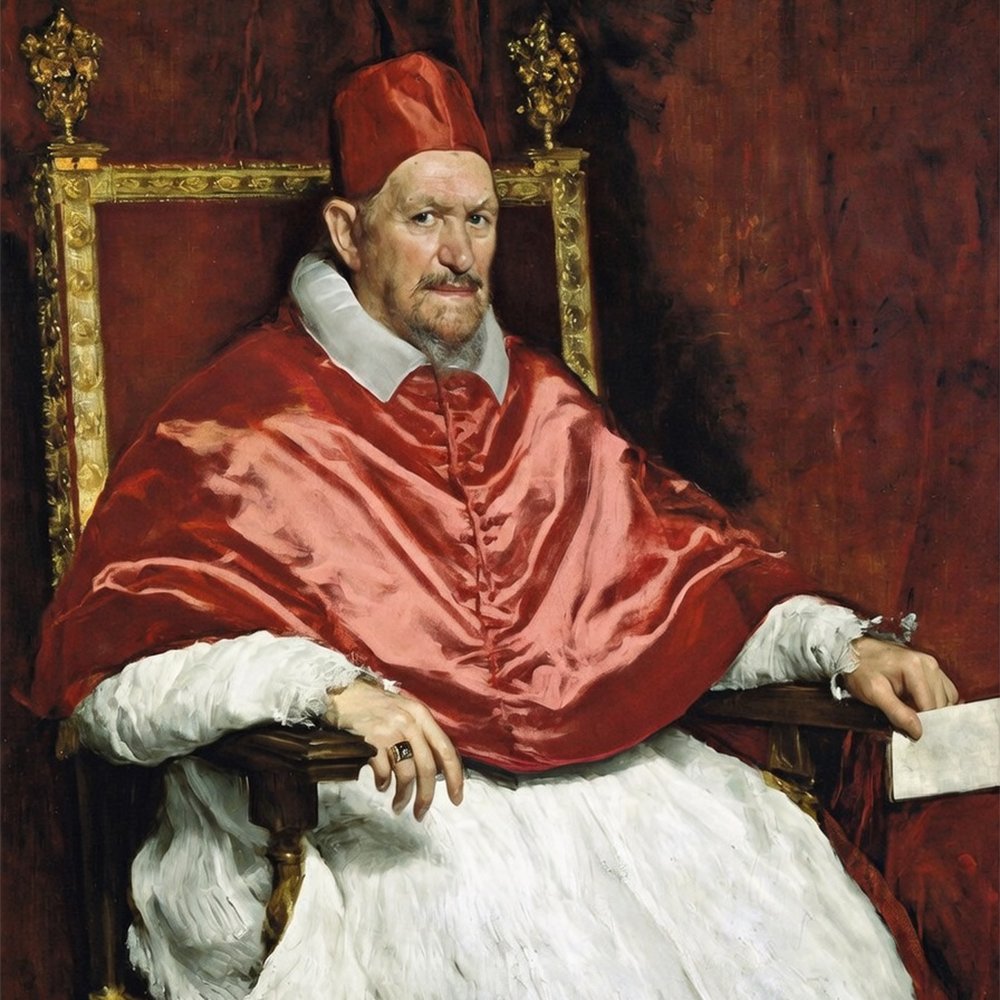
Pope Innocent X (1644-1655)
BIOGRAPHICAL DATA
Birth name: Giovanni Battista Pamphilj (or Pamphili)
Birth: May 6, 1574, Rome, Papal States (Italy)
Papal election: September 15, 1644
Coronation: October 4, 1644
Pontificate: September 15, 1644 – January 7, 1655 (10 years, 3 months, 23 days)
Death: January 7, 1655, Rome (80 years old)
Burial: Sant’Agnese in Agone, Piazza Navona, Rome (family church)
Religious order: Secular clergy (did not belong to a religious order)
Papal motto: None officially recorded
Cognomen: “Donna Olimpia’s Pope”, “The Pamphilj Pope”, “Papa Mongo” (contemptuous – “Pope Weakling”)
NOTE: Dominated by sister-in-law Donna Olimpia Maidalchini – most scandalous nepotism in papal history! BUT: condemned Jansenism definitively, commissioned Bernini masterpieces, opposed Peace of Westphalia. Died abandoned while Olimpia stole papal treasures!
FORMATION AND RELIGIOUS LIFE
Noble Roman Origins – Pamphilj Family
Pamphilj (Pamphili) Family:
- Ancient Roman noble family (claimed descent from ancient Rome – disputed)
- Originally from Gubbio (Umbria), moved to Rome (15th century)
- By 1574: established in Rome, moderate wealth (not among greatest families)
- Purchased: properties, titles (climbing social ladder)
- Camillo Pamphilj: father, nobleman, lawyer
- Maria Cancellieri del Bufalo: mother, from noble Roman family
- Family: ambitious, obsessed with social advancement
- Strategy: ecclesiastical careers (path to power in papal Rome)
- Giovanni Battista: eldest surviving son (destined for Church – family hopes)
Childhood and youth (1574-1590):
- Rome: eternal city, center of Catholic world
- Palazzo Pamphilj: family residence (Piazza Navona – later expanded magnificently)
- Education: typical for Roman aristocrat
- Private tutors: Latin, Italian, rhetoric, humanities
- Religious instruction: deep (Rome = papal capital)
- Giovanni Battista: intelligent, serious, ambitious child
- Not brilliant (like Chigi/Alexander VII) but capable
- Determined: family advancement obsession internalized
- Pragmatic: realistic about power (not idealistic)
- Temperament: reserved, cautious, calculating
- Few friends (trust issues)
- Family-oriented: intense loyalty (tragic flaw)
- Health: robust (would live 80 years – exceptional for era!)
Academic Formation
Collegio Romano (1590-1594):
- Jesuit institution (Rome’s best)
- Philosophy, rhetoric, theology
- Student: diligent (not exceptional but solid)
- Jesuit formation: discipline, method, orthodoxy
University of Rome – Sapienza (1594-1601):
- Canon Law and Civil Law
- In utroque iure (doctorate in both laws)
- Doctorate: 1601 (27 years old)
- Specialization: Church law, benefices, administration
- Competent jurist (not scholar like Chigi, but professional)
Priestly Ordination: 1604 (30 years old)
- Relatively late (completed legal studies first)
- Family strategy: build credentials before ordination
- Ministry: administrative focus (not pastoral – suited temperament)
Early Ecclesiastical Career (1604-1621)
Consistorial Advocate (1604-1621):
- Papal court lawyer
- Argued canonical cases before popes
- Performance:
- Competent, thorough, meticulous
- Won cases (reputation grew)
- Networking: cultivated cardinals, curial officials
- Characteristics:
- Hardworking (12+ hour days – documentation obsessive)
- Ambitious: every case = opportunity to impress
- Strategic: chose influential clients
- Reserved: formal, stiff (not charismatic but respected)
Personal life (1604-1621):
- Lived modestly (saving money – Pamphilj not rich yet)
- No scandals: moral life correct (celibate strictly)
- Family: maintained close ties (especially brother Pamphilio)
- Brother Pamphilio married: Olimpia Maidalchini (1612)
- FATEFUL: this marriage would define Giovanni Battista’s papacy!
- Piety: genuine but not ostentatious (daily Mass, devotions)
DIPLOMATIC CAREER – NUNCIATURES (1621-1625)
Nuncio to Naples (1621-1625)
Appointment (age 47):
- Recognition of competence (two decades curial service)
- Kingdom of Naples: Spanish dominion, important, difficult
- Spanish Viceroy: powerful, often hostile to papal rights
- Church: wealthy but contested (royal vs. papal control)
Challenges:
- Jurisdictional conflicts:
- Spanish crown: claimed rights over Church appointments, taxation, justice
- Papal authority: defended by nuncio
- Pamphilj: negotiated skillfully
- Firm on essentials (papal supremacy in doctrine)
- Pragmatic on details (compromised when prudent)
- No ruptures: maintained working relationship with Viceroy
- Ecclesiastical discipline:
- Neapolitan clergy: numerous, often corrupt
- Bishops: some absentee, negligent
- Pamphilj: pushed reforms (moderate pressure)
- Visitations: organized
- Synods: convened
- Limited success: resistance strong (entrenched interests)
- Inquisition:
- Spanish Inquisition: powerful in Naples
- Papal Inquisition: theoretically supreme
- Tensions: which authority prevails?
- Pamphilj: mediated (avoided open conflict)
Assessment:
- Competent: handled difficult mission (4 years)
- No disasters: maintained papal-Spanish relations
- Realistic: recognized limits of papal power (Spain too strong)
- But: not exceptional (solid professional performance)
Created Cardinal by Gregory XV (July 19, 1627):
- 53 years old
- Cardinal-Priest of Sant’Eusebio
- Reasons:
- Successful Naples mission
- Two decades curial service
- Family Pamphilj: pressure, contributions
- Lobbying: Olimpia Maidalchini already influential!
CARDINAL AND OLIMPIA’S RISE (1627-1644)
The Infamous Donna Olimpia Maidalchini
Who was she?
- Born: Olimpia Maidalchini (1591, Viterbo – minor nobility)
- 1612: Married Pamphilio Pamphilj (Giovanni Battista’s brother)
- Strategic marriage (Maidalchini ambitious, Pamphilj rising)
- Character:
- Intelligent: shrewd, cunning, manipulative
- Ambitious: obsessed with power, wealth
- Greedy: insatiable appetite for money
- Dominant: controlled weaker personalities (husband, brother-in-law)
- Ruthless: eliminated rivals, crushed opposition
- Charming when needed: could be engaging (used strategically)
Relationship with Giovanni Battista:
Early years (1612-1644):
- Sisterly initially: Pamphilio’s wife, family member
- Pamphilio died (1639): widow Olimpia
- Giovanni Battista: increasingly dependent on her
- Why?
- Family loyalty: only close family left (parents dead, brother dead)
- Loneliness: reserved, introverted, few friends (Olimpia filled void)
- Competence: Olimpia capable administrator (managed properties, finances)
- Psychological dominance: Olimpia stronger personality (Giovanni Battista weak-willed with family)
- Guilt/obligation: felt responsible for brother’s widow
- Why?
Nature of relationship (debated):
- Sexual? Probably NOT (despite rumors, gossip)
- No credible evidence of affair
- Olimpia: pragmatic (power, not romance)
- Giovanni Battista: genuinely celibate (moral strictness)
- Emotional dependence: DEFINITELY
- Giovanni Battista: needed her (psychological support)
- Olimpia: exploited this (manipulated ruthlessly)
- Partnership: de facto
- Olimpia: advisor, gatekeeper, enforcer
- Giovanni Battista: relied totally (trusted judgment)
As Cardinal (1627-1644):
Curial activities:
- Congregations:
- Holy Office (Inquisition)
- Bishops and Regulars
- Consistorial (episcopal appointments)
- Good Government (Papal States)
- Participated Conclave 1644: election of Urban VIII (no, wait – Urban VIII died 1644…)
- Correction: Urban VIII elected 1623 (before Pamphilj cardinalate)
- Pamphilj: served under Urban VIII (1623-1644)
Relationship with Urban VIII:
- Pope Urban VIII (Barberini, 1623-1644): nepotistic, warlike, built Baroque Rome
- Pamphilj: correct relations (not intimate)
- Respected Urban VIII’s intellect
- But: disapproved of Barberini nepotism (ironic, given future!)
- Olimpia: maneuvered behind scenes (cultivated Barberini enemies)
Olimpia’s role (1627-1644):
- Cardinal’s household: Olimpia managed
- Finances: controlled (Pamphilj wealth growing)
- Staff: hired, fired
- Visitors: screened (gatekeeper function beginning)
- Networking: Olimpia cultivated cardinals
- Dinners, gifts, favors (building alliances for future conclave)
- Strategic: positioned Giovanni Battista as papabile
Personal characteristics (1627-1644):
- Age: 53-70 (cardinal years)
- Health: excellent (robust constitution)
- Temperament:
- Reserved: formal, stiff (not warm personality)
- Cautious: avoided risks, controversies
- Family-obsessed: Olimpia, Pamphilj interests paramount
- Pious: maintained devotions (genuine but not ostentatious)
- Reputation:
- Competent: solid administrator, jurist
- Orthodox: doctrinally sound (anti-heresy rigorous)
- But dominated: everyone knew Olimpia controlled him
- “Olimpia’s cardinal”: nickname (contemptuous but accurate)
CONCLAVE OF 1644 – ELECTION
Pre-Conclave Context
Death of Urban VIII (July 29, 1644):
- Long pontificate (21 years, 1623-1644)
- Barberini nepotism: extreme (enriched family massively)
- Wars: disastrous (War of Castro – papal finances ruined)
- Art: magnificent (Bernini, Borromini – St. Peter’s Baldachin, etc.)
- Left Church: bankrupt, war-weary, resentful of nepotism
Situation (1644):
- Thirty Years’ War (1618-1648): still raging (devastating Europe)
- Peace negotiations: beginning (Westphalia discussions)
- Papacy: excluded (humiliating – major powers ignoring Rome)
- Papal finances: catastrophic (Urban VIII’s wars, nepotism)
- Nepotism backlash: cardinals wanted reform (end Barberini-style excess)
- Ottoman Turks: threatening (Crete attacked 1645 – just after election)
Cardinals wanted:
- Anti-Barberini: reaction against previous regime
- Financially responsible: restore papal treasury
- Peaceful: no more wars (War of Castro disaster)
- Not too nepotistic: (though complete ban unrealistic)
- Experienced administrator
The Conclave – 17 Days (Quick!)
Start: August 2, 1644
Duration: 17 days (remarkably fast!)
Factions:
- Anti-Barberini:
- Majority: hated Urban VIII’s nepotism, wars
- Wanted: pope who’d reverse Barberini policies
- Pamphilj: IDEAL (had criticized Barberini privately)
- Spanish faction:
- Pro-Spanish Habsburg interests
- Pamphilj: ACCEPTABLE (Naples nuncio experience, not anti-Spanish)
- French faction:
- Pro-French interests (Cardinal Mazarin ruling for Louis XIV)
- Initially wary: Pamphilj seemed pro-Spanish
- But: no veto (acceptable compromise)
- “Squadrone Volante” (Flying Squadron):
- Reform-minded, anti-nepotism
- Pamphilj: SUPPORTED (believed promises to reduce nepotism)
- TRAGIC MISCALCULATION!
Why Pamphilj won decisively:
- Anti-Barberini vote:
- Backlash: cardinals wanted opposite of Urban VIII
- Pamphilj: criticized Barberini (privately – now public)
- Revenge motive: electing Urban VIII’s critic = statement
- Age (70 years old!):
- “Transitional pope” logic:
- Wouldn’t live long (natural assumption)
- Interim while younger cardinals maneuvered
- IRONY: Lived 10+ years! (surprised everyone)
- Experience:
- 40 years Church service (lawyer, nuncio, cardinal)
- Administrative competence proven
- Solid, reliable (not brilliant but professional)
- No powerful enemies:
- Reserved temperament: hadn’t made enemies
- Olimpia’s networking: cultivated support (behind scenes)
- Anti-nepotism promises:
- Pamphilj: PROMISED to limit nepotism
- Cardinals: believed him (tragic naïveté)
- Didn’t foresee: Olimpia’s domination
Election: September 15, 1644
- Quick: achieved 2/3 majority (17 days total)
- Pamphilj: accepted immediately (no false humility)
- Eager: family ambitions (Olimpia’s especially) finally realized
- Chose name: Innocent X
- Homage to Innocent III (1198-1216): great medieval pope (powerful, reformer)
- Number X: continuity
Coronation: October 4, 1644
- St. Peter’s Basilica
- Ceremony: magnificent (Pamphilj appreciated splendor)
- Olimpia: present (prominent position – ominous sign)
- Rome: hopeful (anti-Barberini sentiment satisfied)
PONTIFICATE (1644-1655) – OLIMPIA’S REIGN
Donna Olimpia’s Domination – UNPRECEDENTED SCANDAL
Immediate takeover (October 1644):
Olimpia’s positions:
- NO official title (woman couldn’t hold church office)
- But de facto ruler:
- “La Papessa” (“The She-Pope”) – nickname (contemptuous)
- “Olimpia Maidalchini, Papessa di Roma” (satirical songs)
How she controlled:
- Access to pope:
- Gatekeeper: Olimpia controlled who saw Innocent X
- Apartments: Olimpia resided IN Vatican! (unprecedented for woman)
- Visitors: screened by Olimpia (denied or granted audience)
- Cardinals, ambassadors: had to bribe Olimpia to see pope!
- Decision-making:
- Innocent X consulted Olimpia on EVERYTHING:
- Appointments: episcopal, curial (Olimpia recommended)
- Finances: Olimpia controlled (appropriated funds)
- Policy: foreign, domestic (Olimpia advised – pope obeyed)
- Witnesses: cardinals reported pope asking “What does Donna Olimpia think?”
- Personnel:
- Cardinal-nephew: initially Cardinal Camillo Pamphilj (Olimpia’s son!)
- Created cardinal: November 1644 (immediately!)
- But: Camillo RESIGNED cardinalate (1647!) to marry!
- Scandal: cardinal-nephew abandoning post
- Olimpia: furious (lost direct control)
- Replaced: Cardinal Francesco Maidalchini (Olimpia’s nephew from her family)
- Incompetent but loyal to Olimpia
- Real power: still Olimpia (nephew = puppet)
- Papal household:
- Staff: Olimpia hired, fired
- Finances: Olimpia managed (pope’s personal funds)
- Everything: required Olimpia’s approval
How she enriched herself – SYSTEMATICALLY:
- Sale of offices:
- Curial positions: sold to highest bidder
- Secretaryships, governorships, benefices
- Prices: publicly known (published tariffs!)
- Olimpia’s cut: enormous (percentage of every sale)
- Bribes for audiences:
- Want to see pope? Pay Olimpia!
- Standard practice: gift/bribe to Olimpia (guaranteed access)
- Amounts: varied (bishops paid less, kings’ ambassadors paid fortunes)
- Benefices and pensions:
- Church revenues: appropriated
- Pensions: granted to Olimpia’s relatives, friends
- Papal treasury → Olimpia’s purse (direct pipeline)
- Papal property:
- Sold papal assets: furniture, art, even Vatican treasures!
- Purchased properties: with papal funds (Olimpia’s name)
- Real estate speculation: used inside information
- Monopolies:
- Granted: commercial privileges (grain, salt, etc.)
- Recipients: paid Olimpia (kickbacks)
Amounts:
- Estimated: 500,000+ scudi accumulated by Olimpia (10 years)
- ASTRONOMICAL (papal annual budget ~1 million scudi)
- Single woman appropriated HALF papal budget equivalent!
- Comparison:
- Worse than: any previous nepotism (Barberini, Borghese, all others)
- Unique: WOMAN ruling (not even relative with official position)
Contemporary reactions:
Cardinals:
- Outraged: but POWERLESS
- Complained to pope: Innocent X ignored (Olimpia’s influence total)
- Tried to limit: failed (Olimpia outmaneuvered)
- Resigned: accepted corruption (traditional Rome)
Roman populace:
- Furious: hated Olimpia
- Pasquinades (satirical posters): brutal
- “Olim pia, nunc impia” (“Once pious, now impious” – pun on Olimpia)
- “Who rules Rome? Donna Olimpia!”
- Obscene verses (accused of incest with pope – false but believed)
- Mockery: public (Romans despised her)
- “La Pimpaccia” (“The Evil Hag”) – nickname
- Pasquinades (satirical posters): brutal
Europe:
- Scandalized: Catholic and Protestant
- Protestant propaganda: “See? Roman corruption! Woman ruling!”
- Catholic monarchs: disgusted (but negotiated with Olimpia anyway – pragmatic)
- Ambassadors: reported to courts
- “To get anything done, bribe Donna Olimpia”
- Diplomatic necessity: dealing with her
Innocent X’s psychology:
Why tolerated?
- Emotional dependence: needed Olimpia (only family, psychological support)
- Weak will: couldn’t resist stronger personality (dominated entire life)
- Trust: believed Olimpia loyal (blind spot)
- Isolation: reserved temperament, few friends (Olimpia filled void)
- Old age: 70-80 (tired, let her manage)
- Cognitive dissonance: knew intellectually wrong, but emotionally couldn’t break free
Did he know extent of corruption?
- Probably YES:
- Cardinals complained (he heard)
- Pasquinades: visible (Romans’ hatred obvious)
- Reports: reached him (some)
- But: CHOSE to ignore (willful blindness)
- Olimpia’s explanations: accepted uncritically
- Love/dependence: stronger than duty
Tragic: Brilliant administrator (pre-papacy) became puppet (as pope)
Foreign Policy and Westphalia
Thirty Years’ War (1618-1648):
Context:
- Protestant-Catholic conflict (devastating Germany, Europe)
- 1644: Peace negotiations beginning (Münster, Osnabrück)
- Major powers: Spain, France, Sweden, Holy Roman Empire negotiating
- Papacy: EXCLUDED (humiliating – Catholic powers didn’t consult Rome!)
Peace of Westphalia (1648):
Treaty terms:
- Ended Thirty Years’ War
- Protestant recognition: Lutheranism, Calvinism legal equality (Germany)
- Church properties: secularized (permanently lost to Protestants)
- Papal authority: IGNORED (sovereignty to states, not pope)
Innocent X’s response:
Bull “Zelo Domus Dei” (November 26, 1648):
- “Zeal for God’s House” (biblical reference)
- CONDEMNED Peace of Westphalia totally:
- Declared: “null, void, invalid, unjust, damnable, reprobate, inane, empty of meaning and effect for all time”
- Strongest possible language!
- Reasons:
- Legitimized heresy (Protestantism recognized)
- Confiscated Church property (injustice)
- Ignored papal rights (insult to Holy See)
Result:
- COMPLETELY IGNORED by all signatories!
- Catholic powers (Spain, Austria): ignored pope (signed anyway)
- Protestant powers: laughed (expected papal protest)
- Treaty implemented: papal protest = irrelevant
- Humiliation: papacy POWERLESS in new European state system
- Westphalian system: sovereign states (not papal Christendom)
- Modern international relations born: pope sidelined
Innocent X’s reaction:
- Personally devastated: saw as defeat for Church
- But impotent: couldn’t change reality
- Legacy: last serious papal attempt to veto major European treaty (thereafter, papacy accepted marginalization in secular politics)
Assessment:
- Innocent X: CORRECT theologically (Westphalia DID legitimize heresy, confiscate Church property)
- But politically IRRELEVANT: new world emerging (sovereign nation-states, not papal authority)
- Westphalia = watershed: medieval Christendom → modern Europe (papacy lost political supremacy)
France – Cardinal Mazarin:
Tensions:
- Mazarin: de facto ruler (Louis XIV minor 1643-1661)
- Gallicanism: French Church independence from Rome
- Conflicts:
- Episcopal appointments (Mazarin demanded control)
- Taxation (French crown taxing clergy without papal consent)
- Jansenism (French protection of heretics)
Innocent X:
- Firm: defended papal prerogatives
- But: couldn’t force France (Mazarin too powerful)
- Stalemate: tensions unresolved (exploded under later popes – Alexander VII, Innocent XI)
Spain:
- Relations: correct (Innocent X’s Naples experience helped)
- War of Castro (1641-1644): ended
- Urban VIII’s disastrous war (Papal States vs. Duchy of Castro)
- Innocent X: made peace (reversed predecessor)
- Financially costly: reparations, reconstruction
JANSENISM – DEFINITIVE CONDEMNATION
What was Jansenism?
- Rigorist heresy: named after Cornelius Jansen (Bishop of Ypres, d. 1638)
- Book: “Augustinus” (published 1640 – after Jansen’s death)
- Doctrines:
- Grace: irresistible (humans cannot resist God’s grace if given)
- Predestination: rigid (only elect saved, rest damned)
- Free will: denied/minimized (humans powerless without grace)
- Moral rigor: extreme (most people damned, few saved)
- Sacraments: rare reception (unworthy sinners shouldn’t receive frequently)
- Similarity to Calvinism: very close (Catholic Calvinism essentially)
- Strongholds: France (Port-Royal monastery, intellectuals), Netherlands
Why dangerous:
- Undermined Catholic teaching: free will, universal salvation offer
- Divisive: bitter conflicts (Jansenists vs. Jesuits especially)
- Protected: French crown, intellectuals (political dimension)
Innocent X’s condemnation:
Bull “Cum Occasione” (May 31, 1653):
- CONDEMNED five propositions from “Augustinus”:
- Some of God’s commandments are impossible for just men (even with grace)
- Interior grace is irresistible
- Merit/demerit requires freedom from necessity, not from coercion
- Semi-Pelagianism errs in saying grace can be resisted
- Christ died for all men (Jansenists said only for elect)
- Declared: “heretical, proximate to heresy, false, scandalous”
- Required: submission from all Catholics
Enforcement:
- France: Louis XIV, Mazarin eventually enforced (pressure on Jansenists)
- Port-Royal: some submitted, some resisted (divisions)
- Formulary controversy: subsequent popes required signing anti-Jansenist oath
- Continued conflicts (decades)
- Netherlands: Jansenist communities persisted (eventually separate “Old Catholic” church)
Assessment:
- Innocent X: THEOLOGICALLY CORRECT (Jansenism = heresy, consensus)
- Bull “Cum Occasione”: DEFINITIVE (authoritative condemnation, still stands)
- Legacy: most important doctrinal act of pontificate
- But enforcement: incomplete (Jansenism persisted – political protection, intellectual appeal)
Arts and Architecture – BERNINI’S MASTERPIECES
Patronage of Gian Lorenzo Bernini:
Despite Olimpia’s corruption, Innocent X = MAJOR ART PATRON!
Why?
- Pamphilj family glory: art = immortality (dynastic strategy)
- Papal prestige: magnificence = authority (visual propaganda)
- Personal taste: Innocent X appreciated beauty (genuine aesthetic sense)
- Olimpia’s approval: she wanted Pamphilj monuments (family legacy)
Major commissions:
- Fountain of the Four Rivers (1648-1651):
- Piazza Navona (Pamphilj family square – palace there)
- Bernini’s masterpiece:
- Four river gods: Nile, Ganges, Danube, Rio de la Plata (four continents)
- Egyptian obelisk: center (papal authority universal)
- Theatrical, dynamic (Baroque climax)
- Animals, plants: naturalistic details (astonishing)
- Cost: enormous (papal treasury + Pamphilj funds)
- Still stands: tourists photograph daily (Innocent X’s immortality)
- Sant’Agnese in Agone (1652-1657):
- Pamphilj family church: Piazza Navona
- Architects: Francesco Borromini initially, then Carlo Rainaldi
- Innocent X’s funding: massive (family burial church)
- Baroque façade: dramatic, two bell towers
- Interior: splendid (family tomb inside)
- Pamphilj Palace (Palazzo Pamphilj):
- Piazza Navona: family residence expanded
- Frescoes: Pietro da Cortona (magnificent!)
- Gallery: long, frescoed (glorifying Pamphilj family – mythological)
- Olimpia’s residence: after pope’s death (she lived there until death 1657)
- Now: Brazilian Embassy to Italy (visitors can see)
- Villa Pamphilj (1644-1652):
- Largest public park in Rome (now)
- Casino del Bel Respiro: villa inside park (designed by Alessandro Algardi)
- Gardens: extensive, fountains, sculptures
- Pamphilj country estate: escape from city heat
Other commissions:
- Algardi sculptures: (Bernini’s rival, also employed)
- Tomb of Leo XI (St. Peter’s)
- Relief of Pope Leo I and Attila (St. Peter’s – massive!)
- Paintings: Nicolas Poussin, others
- Velázquez portrait (1650):
- Famous: “Portrait of Pope Innocent X”
- Masterpiece: penetrating psychology (Innocent X’s cunning, suspicion visible)
- Innocent X’s reaction: “Troppo vero!” (“Too true!” – uncomfortable with accuracy)
- Now: Galleria Doria Pamphilj, Rome
Assessment of patronage:
- Artistically: MAGNIFICENT (Fountain Four Rivers = masterpiece, Velázquez portrait = genius)
- Financially: RUINOUS (papal treasury drained)
- Morally: SCANDALOUS (art while Olimpia stole, people starved)
- Legacy: Innocent X remembered for art (Olimpia scandal fades, beauty endures)
Other Aspects of Pontificate
Papal States administration:
- Competent initially: Innocent X experienced administrator
- But corrupted: Olimpia’s interference (offices sold, governors bribed)
- Justice: compromised (Olimpia influenced verdicts – bribery)
- Finances: catastrophic
- Inherited: debt from Urban VIII’s wars
- Worsened: Olimpia’s theft + art patronage
- Result: bankruptcy (worse than before)
Beatifications/Canonizations:
- Few (Innocent X focused on Jansenism condemnation, arts, not saints)
Missions:
- Propaganda Fide: continued support (missions to Asia, Americas)
- China: Jesuits active (Rites controversy simmering – not yet exploded)
Inquisition:
- Active: Innocent X rigorous against heresy
- Jansenism: main focus (after 1653 condemnation)
- But: not excessively cruel (by Inquisition standards)
Nepotism assessment:
- Worst in modern papal history:
- Olimpia: woman ruling (unprecedented)
- Amounts: 500,000+ scudi (astronomical)
- Scandal: universal condemnation (Romans, cardinals, Europe)
- Only rival: perhaps Alexander VIII later (Ottoboni) or Clement XII (Corsini early)
- But Olimpia unique: non-relative ruling directly!
FINAL YEARS AND DEATH (1653-1655)
Declining Health
1653-1654:
- Age 79-80: health declining
- Symptoms:
- Gout: severe (painful, immobilizing)
- Apoplexy (strokes – minor initially)
- Memory: faltering
- Energy: diminishing
Olimpia’s reaction:
- Intensified control: pope weaker = Olimpia stronger
- Prepared for death: securing Pamphilj fortune (transferring assets legally)
December 1654:
- Major stroke: paralyzed partially (left side)
- Speech: impaired (slurred)
- Mind: confused (lucid intermittently)
- Bedridden: couldn’t rise
Death and Olimpia’s Betrayal
Final days (January 1-7, 1655):
Medical condition:
- Multiple strokes: cumulative damage
- Fever: high (infection)
- Consciousness: fading
- Knew death approaching: received Last Rites
Olimpia’s actions – INFAMOUS:
January 6-7, 1655:
- Innocent X dying: Vatican apartments
- Olimpia: IN HIS ROOMS (ostensibly caring)
- But actually: STEALING PAPAL TREASURES!
- Witnesses: saw Olimpia removing:
- Gold coins: papal treasury (bags removed)
- Precious objects: candlesticks, plates, art
- Documents: (destroying evidence of transactions?)
- Furniture: even valuable furnishings!
- Carriages: Olimpia loaded (middle of night)
- Guards: bribed or intimidated (didn’t stop her)
- Witnesses: saw Olimpia removing:
January 7, 1655:
- Morning: Innocent X’s agony
- Olimpia: FLED Vatican!
- Abandoned dying pope: while he was still alive!
- Reason: feared cardinals would stop theft (had to escape before death official)
- ~10am: Innocent X DIED ALONE
- Only servants present (cardinals arrived after)
- Abandoned: by Olimpia (woman he trusted entire life)
- Tragic: died as lived (dominated, used, discarded)
Immediate aftermath:
Cardinals arrived:
- Discovered: Olimpia’s theft (evidence everywhere)
- Empty chests (treasury raided)
- Missing objects (catalogues showed what stolen)
- Witnesses: servants reported seeing Olimpia remove items
- Outrage: universal (but too late – Olimpia escaped)
Olimpia’s fate:
- Fled to Palazzo Pamphilj: barricaded herself
- Cardinals: considered prosecution
- But: politically difficult (family, complexity)
- Decided: let her keep stolen goods (pragmatic)
- Social ostracism: Romans despised her
- Refused burial expenses: for pope! (petty revenge)
- Cardinals: had to pay for Innocent X’s funeral (Olimpia wouldn’t!)
- Scandal: sister-in-law too greedy to bury pope!
- Refused burial expenses: for pope! (petty revenge)
Olimpia’s final years:
- Died: 1657 (2 years after Innocent X)
- Hated: until death (never repented publicly)
- Buried: San Martino ai Monti, Rome
- Legacy: most infamous woman in papal history
- Symbol: corruption, greed, nepotism
- “Papessa” (contemptuous nickname endures)
FUNERAL AND LEGACY
Funeral
January 9-11, 1655:
- Sant’Agnese in Agone: Pamphilj family church (Piazza Navona)
- NOT St. Peter’s (family choice – Pamphilj monument)
- Ceremony: modest (Olimpia wouldn’t pay!)
- Cardinals: funded (embarrassing)
- Attendance: sparse (Romans didn’t mourn)
- No love: Olimpia’s corruption alienated populace
- Respect: professional (long career) but not affection
Burial:
- Sant’Agnese in Agone, Piazza Navona
- Tomb: eventually magnificent (family commissioned)
- Sculpture: shows Innocent X (dignified)
- Irony: beauty funded by stolen money!
Immediate Successor
Conclave 1655:
- Cardinals: DETERMINED to elect OPPOSITE of Innocent X
- Requirements:
- Anti-nepotism: ABSOLUTELY
- Independent: NOT dominated by relatives
- Scholarly: prestige for Church (after Westphalia humiliation)
- Result: Cardinal Fabio Chigi elected = ALEXANDER VII
- Scholar, diplomat, promised anti-nepotism
- But: also fell to nepotism (Cardinal-nephew Flavio Chigi dominated)
- IRONY: reaction against Olimpia produced another nepotist!
- True anti-nepotist: only Innocent XI (1676-1689) – beatified 1956
HISTORICAL LEGACY
Assessment by Historians
Negative – Overwhelming Consensus:
- Olimpia’s domination – WORST NEPOTISM:
- Unprecedented: woman ruling papacy (no official position!)
- Amounts: 500,000+ scudi stolen (half annual papal budget!)
- Scandal: universal (Romans, cardinals, Europe condemned)
- Betrayal: Olimpia abandoned, stole (death scene infamous)
- Legacy: “Donna Olimpia’s Pope” (epithet permanent)
- Political weakness:
- Westphalia: ignored (papal irrelevance exposed)
- France: couldn’t control (Mazarin dominant)
- Dominated: by sister-in-law (weak personality)
- Financial disaster:
- Inherited: debt (Urban VIII)
- Worsened: Olimpia’s theft + art patronage
- Left: bankruptcy (worse than found)
- Personal character:
- Weak-willed: dominated entire life (Olimpia)
- Isolated: few friends (reserved, suspicious)
- Died alone: abandoned by woman he trusted (poetic justice?)
Positive – Limited:
- Jansenism condemnation:
- Bull “Cum Occasione” (1653): DEFINITIVE, authoritative
- Theologically correct: protected Catholic orthodoxy
- Legacy: most important doctrinal act (stands today)
- Arts patronage:
- Bernini masterpieces: Fountain Four Rivers (immortal)
- Velázquez portrait: genius (penetrating psychology)
- Piazza Navona: beautified (still magnificent)
- Legacy: art endures (scandal fades)
- Administrative competence (early career):
- Pre-papacy: capable lawyer, nuncio (40 years service)
- But: as pope, dominated (couldn’t govern independently)
Overall verdict:
- One of WORST modern popes (nepotism scandal)
- But: not worst morally (Alexander VI worse personally)
- Tragic figure: capable man destroyed by weakness (Olimpia)
- “Papa Mongo” (“Pope Weakling”) – nickname apt (cruel but accurate)
Comparisons
With predecessor (Urban VIII, 1623-1644):
- Both: extreme nepotists (Barberini vs. Olimpia)
- Urban VIII: more capable (governed despite nepotism)
- Innocent X: weaker (dominated by nepote)
- Urban VIII: worse financially (wars ruinous)
- Innocent X: worse scandal (woman ruling unprecedented)
With successor (Alexander VII, 1655-1667):
- Both: nepotists (despite promises)
- Alexander VII: scholar (brilliant), Innocent X: administrator (competent)
- Alexander VII: Cardinal-nephew Flavio Chigi dominated
- Innocent X: sister-in-law Olimpia dominated (worse – not even cardinal!)
- Pattern: anti-nepotism promises → nepotism reality (tragic cycle)
With other nepotistic popes:
- Worst nepotism:
- Innocent X: Olimpia (woman, unprecedented, 500,000 scudi)
- Alexander VIII: Ottoboni (200,000 scudi, 16 months)
- Urban VIII: Barberini (massive but over 21 years)
- Clement XII: Corsini (significant)
- Innocent X unique: WOMAN dominating (even worse than male nepotism)
With anti-nepotist popes:
- Innocent XI (1676-1689): OPPOSITE
- Abolished nepotism (personal example – NO Odescalchi enriched)
- Strong (resisted Louis XIV heroically)
- Defeated Turks (Vienna 1683)
- Beatified 1956 (only modern pope beatified)
- Innocent X: cautionary tale (what happens when weak pope trusts wrong person)
CULTURAL IMPACT – OLIMPIA IN HISTORY
Literature and Popular Culture
Olimpia Maidalchini – INFAMOUS:
17th century:
- Pasquinades: brutal satires (poems, posters)
- “La Pimpaccia di Piazza Navona” (The Evil Hag of Piazza Navona)
- Sexual innuendos (false but believed – incest accusations)
- Protestant propaganda: exploited ruthlessly
- “Papessa Olimpia” (The She-Pope)
- Proof of Roman corruption
18th-19th centuries:
- Historical accounts: universally negative
- Chroniclers: detailed corruption (sources: cardinals’ reports)
- Enlightenment writers: used as anti-papal example
20th-21st centuries:
- Biographies: several books devoted to Olimpia
- Eleanor Herman: “Mistress of the Vatican” (2008) – popular history
- Others: academic studies (psychology, gender, power)
- Fiction: novels, plays featuring Olimpia
- Tourism: Piazza Navona guides mention “Olimpia’s palace”
Legacy:
- Symbol: nepotism, corruption, female manipulation
- Warning: dangers of unaccountable power
- Fascination: powerful woman in male-dominated world (however corrupt)
VELÁZQUEZ PORTRAIT – ARTISTIC IMMORTALITY
“Portrait of Pope Innocent X” (1650):
Diego Velázquez:
- Spanish master (greatest portrait painter)
- In Rome (1649-1651): studying, painting
Commission:
- Innocent X: sat for Velázquez
- Purpose: papal image (propaganda)
Masterpiece:
- Technique: breathtaking (silk, flesh tones, psychological depth)
- Psychology: Innocent X’s cunning, suspicion, intelligence, weakness ALL visible!
- Eyes: penetrating but wary (distrustful)
- Mouth: thin, determined but not strong
- Expression: shrewd calculator (political animal)
- Totality: complex personality (genius portraiture)
Innocent X’s reaction:
- “Troppo vero!” (“Too true!”)
- Uncomfortable: saw himself too clearly (unflattering honesty)
- But: recognized genius (kept painting)
Legacy:
- One of greatest portraits ever painted (art historical consensus)
- Francis Bacon: later painted variations (20th century – homage)
- Innocent X’s immortality: painting endures (more than nepotism scandal)
- Now: Galleria Doria Pamphilj, Rome (Pamphilj family collection – tourists visit)
PERSONAL CHARACTERISTICS SUMMARY
Virtues (Limited)
Competence:
- Pre-papacy: capable (lawyer, nuncio, administrator – 40 years service)
Orthodoxy:
- Doctrinally sound: condemned Jansenism (theologically correct)
Aesthetic sense:
- Art patronage: genuine appreciation (Bernini, Velázquez supported)
Celibacy:
- Morally strict: no sexual scandals (unlike some popes)
Vices/Weaknesses
Weak will:
- Dominated: by Olimpia (entire life, especially as pope)
- Couldn’t resist: stronger personality (psychological weakness)
Family obsession:
- Pamphilj advancement: paramount (even above papal duty)
- Olimpia’s exploitation: enabled by his loyalty
Isolation:
- Reserved: few friends (suspicious temperament)
- Lonely: made vulnerable to Olimpia’s manipulation
Greed (indirect):
- Tolerated Olimpia’s theft: complicity (even if not personally stealing)
Political cowardice:
- Westphalia: protested but impotent (couldn’t enforce)
CURIOSITIES AND ANECDOTES
- “Troppo vero!”:
- Velázquez showed portrait
- Innocent X: shocked by psychological accuracy
- “Too true!” = discomfort (saw own cunning, weakness)
- But kept painting: recognized genius
- Olimpia’s daily routine:
- Morning: audiences (people seeking papal access)
- Payment required: bribes disguised as “gifts”
- Afternoon: with Innocent X (advising, controlling)
- Evening: counting money (literally – witnesses reported)
- Fountain Four Rivers inauguration:
- 1651: ceremony (Innocent X present)
- Piazza Navona: Pamphilj square (palace overlooks)
- Bernini’s triumph: masterpiece revealed
- Innocent X: proud (family monument)
- Olimpia: calculating cost (appropriated funds!)
- Death scene horror:
- Morning January 7, 1655: Innocent X dying
- Servants: “Where is Donna Olimpia?”
- Answer: “She left hours ago… with bags…”
- Cardinals arrived: pope dead, rooms ransacked
- Shock: even hardened Romans appalled
- Funeral payment refusal:
- Cardinals to Olimpia: “Pay for funeral”
- Olimpia: “I’m poor widow!” (LIES – stole 500,000 scudi!)
- Cardinals: paid themselves (humiliating)
- Romans: fury (petty greed even in death!)
- Pasquinade on Olimpia:
- Posted in Rome: “Olim pia, nunc impia, semper pia… pecunia!”
- Translation: “Once pious, now impious, always devoted… to money!”
- Wordplay: Olimpia → Olim pia (clever Latin pun)
DOCUMENTS AND WRITINGS
Official Documents
Bulls:
- “Zelo Domus Dei” (1648): condemned Peace of Westphalia (ignored but principled)
- “Cum Occasione” (1653): condemned Jansenism (DEFINITIVE, authoritative)
Briefs:
- Various administrative documents (routine)
- Diplomatic correspondence (competent – pre-Olimpia domination)
No Personal Writings
Innocent X:
- NOT scholar (unlike Chigi/Alexander VII, Lambertini/Benedict XIV)
- Administrator: practical, not intellectual
- Letters: official (no personal literary legacy)
CHRONOLOGY SUMMARY
- 1574: Birth in Rome (Pamphilj family)
- 1601: Doctorate in both laws (27 years old)
- 1604: Priestly ordination (30 years)
- 1612: Brother Pamphilio married Olimpia Maidalchini (FATEFUL!)
- 1621-1625: Nuncio to Naples (competent)
- 1627: Created cardinal by Gregory XV (53 years old)
- 1639: Brother Pamphilio died – Olimpia widowed (Innocent X increasingly dependent)
- 1644 (September 15): Papal election (70 years old!)
- 1644-1655: OLIMPIA’S REIGN – nepotism scandal (500,000 scudi stolen!)
- 1648: Peace of Westphalia – condemned but ignored (papal irrelevance)
- 1648-1651: Fountain Four Rivers (Bernini masterpiece) – Piazza Navona
- 1650: Velázquez portrait (“Troppo vero!”)
- 1653: Bull “Cum Occasione” – condemned Jansenism definitively
- 1655 (January 7): Death in Rome, 80 years old – ABANDONED by Olimpia (who stole papal treasures and fled!)
FINAL ASSESSMENT
Pope Innocent X remains the ultimate cautionary tale of nepotism and weakness. A capable administrator who served Church competently for 40 years, he became prisoner of his own family loyalty when elevated to papacy at age 70.
The Tragedy
Dominated entirely:
- Donna Olimpia Maidalchini: sister-in-law ruled papacy (unprecedented)
- “La Papessa” (The She-Pope): nickname apt (woman with all power, no office)
- Innocent X: puppet (psychologically dependent, weak-willed)
Worst nepotism in history:
- 500,000+ scudi: stolen by Olimpia (half annual papal budget!)
- Systematic corruption: offices sold, bribes required, papal property appropriated
- Universal scandal: Romans, cardinals, Europe condemned
- Death betrayal: Olimpia abandoned dying pope, stole treasures, fled (infamous!)
The Contrast
BUT:
Jansenism condemnation:
- Bull “Cum Occasione” (1653): DEFINITIVE, authoritative
- Protected Catholic orthodoxy: theologically correct, brilliant
- Legacy: stands today (most important doctrinal act)
Arts patronage:
- Bernini: Fountain Four Rivers (masterpiece, immortal)
- Velázquez: portrait (genius, psychological depth)
- Piazza Navona: beautified (tourists visit daily)
- Paradox: beauty from corruption (art funded by stolen money)
The Lesson
Political:
- Westphalia (1648): papal irrelevance exposed (ignored totally)
- New world: sovereign states (not papal Christendom)
- Last gasp: serious papal attempt to veto major European treaty (thereafter, acceptance of marginalization)
Personal:
- Weakness destroys: capable man ruined by inability to resist manipulation
- Family loyalty dangerous: when becomes blindness (Olimpia exploited)
- Isolation vulnerability: reserved temperament made dependent (no friends = Olimpia filled void)
Historical Position
Among popes:
- Not WORST morally: (Alexander VI worse personally – murder, incest)
- But WORST nepotism: (Olimpia = unprecedented scandal)
- Tragic figure: competent administrator became puppet
Legacy summary:
- Remembered for: Olimpia’s domination (negative), Jansenism condemnation (positive), Bernini fountain (positive)
- “Donna Olimpia’s Pope”: epithet permanent (deserved)
- Velázquez portrait: “Troppo vero!” (too true – saw own weakness)
Epitaph (Brutal but Honest)
“Here lies Innocent X Pamphilj, who ruled Rome for ten years but was ruled himself by Donna Olimpia for all of them. He condemned Jansenism with theological brilliance while tolerating corruption with moral blindness. He commissioned Bernini’s fountain with papal funds while Olimpia stole papal treasures. He protested Westphalia’s humiliation of papacy while being humiliated daily by sister-in-law. He died abandoned, robbed, alone – as he lived: dominated, used, weak. The fountain endures; the scandal fades; the weakness remains eternal warning. ‘Troppo vero’ – too true indeed.”
Modern Relevance
Warnings:
- Nepotism corrupts: absolutely (even capable people)
- Weakness invites exploitation: strong-willed manipulators will dominate weak
- Family loyalty limits: when becomes blindness (duty to institution > family)
Paradoxes:
- Beauty from corruption: can great art come from stolen money? (Fountain Four Rivers proves YES – but morally?)
- Orthodoxy ≠ governance: theologically sound (Jansenism) but administratively catastrophic (Olimpia)
Pope Innocent X – “Donna Olimpia’s Pope” – capable man destroyed by his own weakness. May his Jansenism condemnation be remembered; may Olimpia’s theft be condemned; may Bernini’s fountain inspire; may Velázquez’s portrait warn: “Troppo vero” – beware self-knowledge comes too late.
Requiescat in pace – in Sant’Agnese, Piazza Navona, where his fountain plays eternally and Olimpia’s ghost counts stolen gold that bought neither redemption nor oblivion.
The water flows. The scandal echoes. The warning endures: weak popes become puppets, and puppets’ masters steal everything – even dignity in death.