Clement X
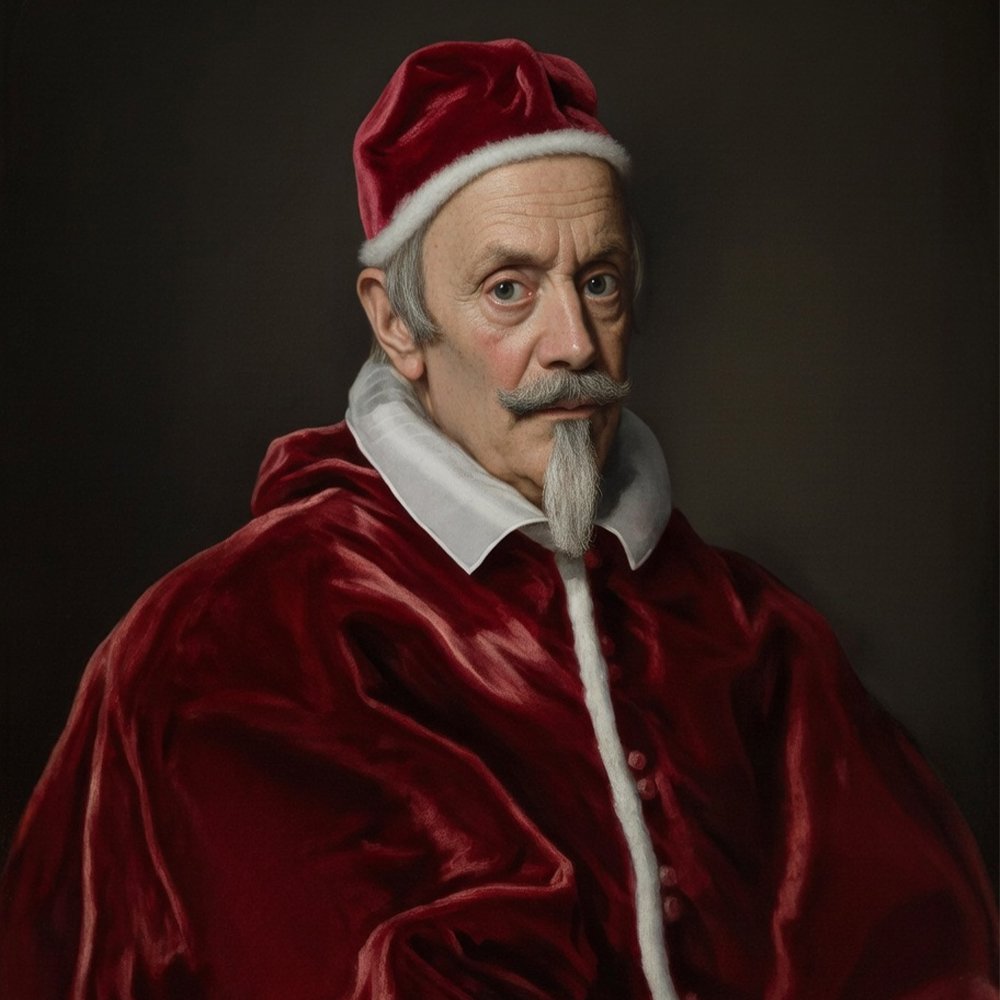
Pope Clement X (1670-1676)
BIOGRAPHICAL DATA
Birth name: Emilio Bonaventura Altieri
Birth: July 13, 1590, Rome, Papal States (Italy)
Papal election: April 29, 1670
Coronation: May 11, 1670
Pontificate: April 29, 1670 – July 22, 1676 (6 years, 2 months, 23 days)
Death: July 22, 1676, Rome (85 years old)
Burial: St. Peter’s Basilica, Vatican City
Religious order: Secular clergy (did not belong to a religious order)
Papal motto: None officially recorded
Cognomen: “The Aged Pope”, “Pope Altieri”, “The Weak Pope”
NOTE: Elected at 79 years old – one of the oldest popes ever elected. Dominated by cardinal-nephew Paluzzo Altieri, revived nepotism, but supported war against Ottoman Turks!
FORMATION AND RELIGIOUS LIFE
Aristocratic Origins – Altieri Family
Altieri Family:
- Ancient noble Roman family (claimed descent from medieval Roman aristocracy)
- Lorenzo Altieri: father, patrician, moderate wealth
- Vittoria Delfini: mother, from another Roman noble family
- Family: respectable but not among the wealthiest Roman dynasties
- Palazzo Altieri: in Rome (near Gesù church, still exists)
- Properties: some estates in Lazio
- Status: upper nobility but not princely
- Emilio Bonaventura: third son (elder brothers inherited properties)
Childhood and youth (1590-1608):
- Rome: eternal city, center of Catholic world
- Education: typical for Roman aristocrat
- Private tutors: Latin, rhetoric, humanities
- Religious instruction: deep (Rome = papal capital)
- Emilio: intelligent, pious, studious child
- Health: generally robust (would live 85 years!)
- Family piety: genuine (not just social convention)
- Vocation: clear from youth (ecclesiastical career intended)
Academic Formation
Roman College (Collegio Romano, 1608-1612):
- Jesuit institution (most prestigious in Rome)
- Curriculum: philosophy, rhetoric, scholastic theology
- Student: diligent, pious (not brilliant like Lambertini, but solid)
- Jesuit formation: shaped his spirituality (disciplined, methodical)
Sapienza University, Rome (1612-1616):
- Canon Law and Civil Law
- In utroque iure (doctorate in both laws)
- Studies: focused on ecclesiastical jurisprudence
- Doctorate: 1616 (26 years old)
- Specialization: benefices, Church-State relations, papal administration
Priestly Ordination: 1624 (34 years old)
- Relatively late ordination (studied law extensively first)
- Preparation: thorough (spiritual exercises, retreats)
- Ministry: initially focused on Curial service (not parish pastoral work)
Early Ecclesiastical Career (1624-1644)
Referendary of the Apostolic Signatura (1624-1627):
- Supreme judicial tribunal of Church
- Role: legal assessor, prepared cases
- Demonstrated: juridical competence, attention to detail
Governor of Orvieto (1627-1632):
- First significant administrative position
- Orvieto: important city in Papal States (Umbria)
- Government:
- Competent administration (no major scandals)
- Justice: fair, by-the-book
- Relations with local nobility: correct
- Reputation: reliable, honest, unspectacular
Governor of Camerino (1632-1635):
- Another city in Papal States (Marche)
- Similar performance: competent, honest, moderate
- No innovations, no disasters (steady hand)
Auditor of the Rota (1635-1644):
- Return to Rome
- Rota Romana: supreme ecclesiastical court
- Judge of canonical cases (complex jurisprudence)
- Performance:
- Solid jurist (not brilliant, but reliable)
- Decisions: orthodox, careful
- Respected by colleagues
- Characteristics:
- Methodical, thorough
- Conservative (followed precedents)
- Honest (incorruptible in era of corruption)
Personal life (1624-1644):
- Lived modestly (by Roman aristocratic standards)
- Palazzo Altieri: maintained, but without excessive luxury
- Piety: sincere (daily Mass, prayer, devotions)
- Charity: moderate (supported some poor, but not heroically like Odescalchi)
- No scandals: moral life irreproachable
- Health: good (no major illnesses)
NUNCIATURE AND CARDINALATE (1644-1670)
Diplomatic Career
Nuncio to Naples (1644-1654):
- Crucial appointment (age 54)
- Kingdom of Naples: Spanish dominion, large, important
- Largest city in Italy (300,000+ inhabitants)
- Spanish Viceroy: powerful, often hostile to papal rights
- Church: wealthy but contested (royal control vs. papal authority)
Challenges faced:
- Jurisdictional conflicts:
- Spanish crown: claimed rights over Church appointments, taxation, justice
- Papal authority: contested constantly
- Altieri: mediator
- Negotiated compromises (pragmatic, not confrontational)
- Defended essential papal rights
- But: avoided ruptures (Spain too powerful)
- Masaniello Revolt (1647):
- Popular uprising against Spanish taxation
- Masaniello: fisherman leader, revolt exploded
- Naples: chaos for months (Spanish viceroy fled!)
- Altieri’s role:
- Remained in city (danger!)
- Mediated between rebels and authorities
- Protected Church properties
- Helped restore order (eventually)
- Reputation: courageous, prudent
- Ecclesiastical administration:
- Bishops: many absentee, corrupt
- Altieri: pushed for reforms (moderate pressure)
- Clergy: indisciplined
- Some improvements achieved (limited)
Assessment of Naples mission:
- Competent: handled difficult situation
- Pragmatic: compromised when necessary
- Not heroic: didn’t achieve dramatic reforms
- Reliable: Rome trusted him
Nuncio to Poland (1654-1655):
- Brief mission (1 year only)
- Context:
- Poland: vast kingdom, Catholic but politically chaotic
- King John II Casimir: weak, facing rebellions
- Sweden: invaded (1655 – “Deluge”)
- Altieri’s mission:
- Diplomatic support for Polish king
- Coordination with papal policy
- Cut short: Swedish invasion made position untenable
- Returned to Rome (1655)
Cardinal (1660-1670)
Created Cardinal by Clement IX (November 29, 1660):
- 70 years old (elderly for elevation, but not unprecedented)
- Cardinal-Priest of San Lorenzo in Damaso
- Reasons for promotion:
- Long service (40+ years)
- Competence demonstrated (Naples especially)
- Family Altieri: pressure (modest but present)
- No major enemies (universally respected, if not admired)
Activity in College of Cardinals (1660-1670):
Congregations:
- Holy Office (Inquisition)
- Bishops and Regulars
- Council (interpretation of Trent)
- Ceremonial
- Good Government (Papal States administration)
Participation in Conclaves:
- 1667: Election of Clement IX
- Altieri: not candidate (too old, 77)
- Voted moderately (no strong factional alignment)
Position in Curial politics:
- Moderate: not zealot, not excessively accommodating
- Pro-Spanish (mildly): natural from Naples experience
- Respected: decades of service earned universal esteem
- Not ambitious: genuinely content as cardinal
- Old age: increasingly frail (70s advancing)
Personal characteristics (1660-1670):
- Age: 70-79 years (elderly even by cardinal standards)
- Health: declining gradually
- Gout: painful episodes
- Hearing: diminishing
- Vision: weakening
- Mobility: reduced (walked with difficulty)
- Mind: still sharp (lucid, memory good)
- Lifestyle:
- Palazzo Altieri: lived quietly
- Avoided social functions (fatigue)
- Daily Mass, prayer (piety maintained)
- Few close friends (reserved temperament)
CONCLAVE OF 1670 – ELECTION
Pre-Conclave Context
Death of Clement IX (December 9, 1669):
- Short pontificate (2.5 years, 1667-1669)
- Clement IX: good pope (charitable, pious)
- But: left unresolved issues (war with Turks, conflicts with Louis XIV, nepotism)
Situation of Church/Europe (1670):
Ottoman Turks:
- Expanding aggressively (Crete campaign ongoing – Venice fighting)
- Threat to Christendom (Hungary already largely conquered)
- Needed: pope who’d support anti-Turkish efforts
France – Louis XIV:
- “Sun King” at height of power
- Gallicanism: asserting control over French Church
- Wanted: accommodating pope
Spain:
- Declining power (but still major Catholic state)
- King Charles II: weak, sickly (reign 1665-1700)
- Wanted: pro-Spanish pope
Papal States:
- Financial problems (chronic debt)
- Administration: needed reform
- Nepotism: still prevalent (Clement IX moderate, but didn’t abolish)
The Conclave – Four Months!
Start: December 20, 1669
Duration: 131 days! (one of the longest of 17th century)
Factions:
- “Squadrone Volante” (Flying Squadron):
- Reform-minded cardinals
- Anti-nepotism (moderate)
- Wanted: capable, not too old pope
- Did NOT favor Altieri initially (too old!)
- French faction:
- Pro-Louis XIV
- Wanted: accommodating pope
- Candidates: cardinals friendly to France
- Spanish faction:
- Pro-Spanish interests
- Opposed French candidates
- Eventually supported Altieri (crucial!)
- Zelanti (“Zealous”):
- Pro-papal independence
- Anti-French (opposed Louis XIV’s absolutism)
- Various candidates
Initial candidates:
- Cardinal Brancaccio: favorite of reformers (but vetoed by Spain!)
- Cardinal Azzolino: brilliant (but too pro-French for zelanti, too independent for France – paradox!)
- Cardinal Rospigliosi (nephew of Clement IX): nepotistic choice (rejected)
- Cardinal Odescalchi: reform favorite (but vetoed by France! – too austere, independent)
- This veto would be overridden in 1676, when Odescalchi finally became Innocent XI
Deadlock (December 1669 – April 1670):
- No candidate: achieved 2/3 majority
- Vetoes: blocked strong candidates
- Factions: immovable
- Heat: Roman spring arriving (uncomfortable in Vatican)
- Cardinals: exhausted, frustrated, some dying during conclave!
Why Altieri emerged:
“Compromise of exhaustion”:
Arguments for Altieri:
- Age (79 years old!):
- “Transitional pope” logic:
- Won’t live long (natural assumption)
- Factions: could wait for better candidate next time
- Temporary solution to deadlock
- “Safe choice”: wouldn’t make dramatic changes
- Universal acceptability:
- No powerful enemies: decades of moderate service
- Not factional: not identified strongly with any party
- Spanish support: Naples experience (Spain liked him)
- French acceptance: not hostile to Louis XIV
- Reformers tolerant: not ideal, but acceptable temporarily
- Experience:
- 50+ years Church service
- Administrative competence proven
- Diplomatic experience (Naples, Poland)
- Piety:
- Personal life: irreproachable
- Respected for integrity
- Health (paradoxically):
- Obviously declining: wouldn’t pontificate long (thought cardinals)
- Factions: preferred short interim to continued deadlock
The irony:
- Cardinals: elected old man expecting short pontificate
- Altieri: lived 6+ years as pope! (surprised everyone)
Election: April 29, 1670
- Voting: finally achieved 2/3 majority
- Altieri: SHOCKED (genuinely not expecting)
- Initial response: “I am too old, too weak!”
- Cardinals: insisted (no alternative, exhausted)
- Acceptance: reluctant
- “If this is God’s will, I submit”
- “But I fear I am unequal to this burden”
Chose name: Clement X
- Homage to Clement IX (immediate predecessor, friend)
- Number X: continuity
Coronation: May 11, 1670
- St. Peter’s Basilica
- Ceremony: abbreviated (Altieri too weak for full ritual!)
- Had to be carried part of way (couldn’t walk entire ceremony)
- Symbolic: weak pope physically from day one
- Rome: concerned (elderly, frail pope)
PONTIFICATE (1670-1676) – WEAKNESS AND NEPOTISM
Physical Incapacity from Beginning
Health conditions:
- Age: 79-85 (during pontificate)
- Gout: severe, frequent attacks (couldn’t walk during episodes)
- Hearing: significantly impaired (had to shout at him)
- Vision: deteriorating (cataracts developing)
- Stamina: minimal (exhausted easily)
- Memory: still good (mental faculties preserved)
Impact on government:
- Could NOT govern directly (physically impossible)
- Audiences: brief, infrequent
- Ceremonies: abbreviated or delegated
- Reading documents: difficult (vision problems)
- Dependence on advisors: TOTAL (couldn’t supervise personally)
Daily routine (limited):
- 8am: Rise (late for popes – couldn’t manage early)
- 9am: Mass (attended, rarely celebrated personally)
- 10am-12pm: Audiences (very few, very short)
- 12pm: Lunch, rest (needed extended breaks)
- 2pm-4pm: Documents read to him (couldn’t read much himself)
- 4pm-6pm: Rest, prayer
- 6pm: Vespers
- 7pm: Dinner, retire early
Result:
- Actual government: fell to others
- Clement X: figurehead (not by choice – incapacity)
- Cardinal-nephew: filled power vacuum (inevitably)
NEPOTISM – CARDINAL PALUZZO PALUZZI ALTIERI
The Altieri Family Problem:
- Clement X: no direct nephews!
- Elderly, his generation dying
- Brothers: deceased
- Nephews: already dead or unqualified
- Solution: adopted grand-nephew!
Paluzzo Paluzzi degli Albertoni:
- Original family: Paluzzi Albertoni (not Altieri!)
- Connection: distant relative through marriage
- Age: ~40 years old (1670)
- Clement X’s action:
- ADOPTED him legally!
- Changed name to: Paluzzo Paluzzi Altieri
- Made him Cardinal-Nephew (July 1670, 2 months after election!)
- Created Cardinal: September 1670
Character of Paluzzo:
- Ambitious, capable administrator
- Intelligent, energetic
- Greedy: determined to enrich family
- Ruthless: eliminated rivals, controlled access to pope
- But: not as corrupt as worst nepotes (Coscia under Benedict XIII)
- Competent administrator
- Didn’t collapse government
- Just enriched family massively
How Paluzzo Dominated Pontificate
Control mechanisms:
- Access to pope:
- Gatekeeper: Paluzzo controlled who saw Clement X
- Appointments: required Paluzzo’s approval
- Documents: filtered through Paluzzo (pope couldn’t read easily)
- Decisions: Paluzzo “advised” (= directed)
- Official positions:
- Cardinal-Nephew: traditional power (Secretary of State equivalent)
- Multiple Curial appointments
- Governor of key territories
- Pope’s incapacity:
- Clement X: couldn’t supervise (too weak)
- Relied totally on Paluzzo (trust + necessity)
- Relationship: genuine affection (adopted nephew)
- Clement X: loved Paluzzo (family feeling)
- Blind to corruption (or couldn’t stop it)
Nepotistic Enrichment
How Altieri family enriched:
- Palazzo Altieri:
- Massively expanded (still stands in Rome – magnificent!)
- Papal funds: diverted to construction
- Art collection: accumulated
- Became one of grandest palaces in Rome
- Properties:
- Estates: purchased throughout Papal States
- Duchy of Soriano: acquired (made Paluzzo duke!)
- Income: enormous from properties
- Benefices and offices:
- Curial positions: sold or granted to Altieri allies
- Church revenues: appropriated
- Monopolies: granted (commercial privileges)
- Art and treasure:
- Commissioned works from leading artists
- Antiquities: purchased
- Jewelry, precious objects: accumulated
Amounts:
- Estimated: 100,000+ scudi transferred to Altieri family (6 years)
- Significant but not as extreme as Alexander VIII later (200,000+ in 16 months)
- Still scandalous (undid much of Clement IX’s moderation)
Reactions:
Cardinals:
- Reformers: disgusted (but powerless while pope lived)
- Others: tolerated (traditional nepotism, even if excessive)
Roman populace:
- Pasquinades (satirical posters): brutal
- “Clement sleeps, Altieri steals”
- “Old man pope, young man robs”
- Resentment: palpable but not violent
Europe:
- Noted disapprovingly
- But: traditional nepotism (not shocking by 17th century standards)
- Protestant propaganda: exploited (“Roman corruption!”)
Clement X’s awareness:
- Probably knew but:
- Loved Paluzzo (adopted family)
- Couldn’t control (too weak)
- Traditional mentality (nepotism = normal)
- Blind spot (family loyalty overwhelming)
Foreign Relations and Diplomacy
War Against Ottoman Turks – Main Achievement
Context:
- Crete: Venice fighting Turks (1645-1669)
- Last Venetian stronghold: Candia (Heraklion)
- 1669: FELL (just before Clement X’s election)
- Venetian morale: collapsed
- Hungary: mostly conquered by Turks
- Poland: southern territories raided
- Threat: continuing Ottoman expansion
Clement X’s policy:
- Financial support:
- Subsidies to Christian powers:
- Venice: naval support funded
- Austria: modest subsidies
- Poland: some support
- Despite nepotism: still allocated funds for anti-Turkish war
- Papal treasury: strained (nepotism + war expensive)
- But: priority maintained
- Diplomatic coordination:
- Tried to organize coalition (limited success)
- Austria (Emperor Leopold I): engaged but cautious
- Poland (John II Casimir, then Michael Wiśniowiecki): internal problems
- France (Louis XIV): REFUSED to help (fighting Spain instead)
- Clement X: pleaded with Louis XIV (ignored)
- Scandal: Catholic king ignoring crusade!
- Spiritual mobilization:
- Prayers ordered: throughout Catholic world
- Rosary devotion: promoted (Marian intercession)
- Jubilee Year 1675: declared
- Pilgrims to Rome: thousands
- Indulgences, spiritual renewal
- Raised morale (if not armies)
Results during Clement X’s pontificate:
- Limited military success:
- Crete: lost (before pontificate, but confirmed)
- Hungary: stalemate (no major Christian victories)
- But: Ottoman advance slowed (preparation for later victories)
- Foundation laid:
- Coalition building: begun (would culminate in Holy League 1684)
- Papal commitment: demonstrated (financial support despite poverty)
- Innocent XI (successor): built on this foundation
- Vienna 1683: Clement X’s subsidies helped prepare Christian defense
Assessment:
- Clement X: well-intentioned (supported anti-Turkish war)
- But limited impact: incapacity prevented vigorous leadership
- Credit: maintained papal commitment (didn’t abandon cause)
France – Louis XIV:
Gallicanism beginning:
- Louis XIV: increasingly assertive (controlling French Church)
- Clement X: WEAK response
- Protested mildly
- But: couldn’t resist effectively (too weak, politically and physically)
- Contrast with Innocent XI (successor): would fight Louis XIV relentlessly
Relations:
- Cordial superficially (Louis XIV respected aged pope)
- But: Louis XIV ignored papal wishes (refused to fight Turks, advanced Gallicanism)
- Clement X: frustrated but impotent
Spain:
- King Charles II: weak, sickly (1665-1700)
- Relations: correct (Spain friendly to Altieri family)
- No major conflicts
Venice:
- Loss of Crete: devastating
- Clement X: sympathetic, supportive
- But: couldn’t save Venetian empire
Holy Roman Empire:
- Emperor Leopold I: focused on Turkish threat
- Relations: cooperative (papal subsidies appreciated)
Ecclesiastical Administration
Appointments:
- Bishops: Paluzzo controlled nominations
- Some qualified (Paluzzo not entirely incompetent)
- Some: patronage (allies, relatives)
- Mixed quality
Cardinals created:
- Total: 27 (6-year pontificate)
- Included: future Innocent XI (Odescalchi) – promoted 1670!
- Irony: Clement X/Paluzzo created man who’d abolish nepotism
- Also: various Italians, some foreigners
Curial administration:
- Paluzzo: ran efficiently (credit where due)
- Corruption: present but government functioned
- Finances: drained by nepotism but didn’t collapse
Papal States:
- Governors: Paluzzo appointees
- Administration: routine (no major reforms)
- Justice: standard (no improvements)
Doctrinal and Spiritual Issues
Jansenism:
- Rigorist heresy (persisting in France, Netherlands)
- Clement X: renewed condemnations (continuity with predecessors)
- But: ineffective enforcement (weak pontificate)
- Problem: continued unchecked
Quietism:
- Excessive mysticism controversy beginning
- Miguel de Molinos: Spanish priest in Rome
- Clement X: allowed his activity (didn’t condemn yet)
- Later condemned by Innocent XI (1687)
- Clement X: didn’t recognize danger (or too weak to act)
Moral theology:
- Debates: probabilism, laxism
- Clement X: no major pronouncements
- Left for Innocent XI (who condemned laxism 1679)
Beatifications/Canonizations:
Canonizations during pontificate:
- St. Rose of Lima (1671): FIRST saint of Americas!
- Peruvian mystic (1586-1617)
- Process: advanced under predecessors
- Clement X: completed canonization
- Historic: recognition of New World sanctity
- St. Francis Borgia (1671): Jesuit saint
- Spanish duke who became Jesuit
- Third Superior General of Jesuits
- St. Gaetano dei Thiene (1671): founder of Theatines
- St. Philip Benizi (1671): Servite saint
- St. Luis Beltrán (1671): Dominican missionary
Assessment:
- Active canonization program: positive aspect of pontificate
- Multiple saints: demonstrated Church’s vitality
- But: processes prepared by predecessors (Clement X completed them)
Jubilee Year 1675:
- Holy Year: declared (25-year cycle tradition)
- Pilgrims: thousands came to Rome
- Indulgences: granted
- Clement X personally:
- Appeared at ceremonies (when health permitted)
- Opened Holy Door (St. Peter’s): dramatic moment
- Had to be supported (couldn’t stand alone)
- Symbolic: weak pope, but office endures
- Financial: profitable (pilgrims spent, but nepotism consumed revenues)
Cultural Patronage
Limited (due to nepotism draining funds):
Architecture:
- Palazzo Altieri: expanded (nepotistic, but culturally significant – still stands)
- Churches: some restorations (minor)
- No major papal construction projects
Art:
- Altieri family: commissioned works
- Portraits of Clement X
- Religious paintings
- But: papal patronage minimal (compared to Urban VIII, Alexander VII)
Music:
- Continued support for Cappella Sistina (papal choir)
- Some composers patronized (by Altieri family more than pope)
Scholarship:
- Libraries: maintained (no expansion)
- Vatican Archives: preserved
- But: no major intellectual initiatives
Assessment:
- Modest cultural legacy: nepotism prioritized over patronage
- Altieri family: benefited culturally (art collection)
- Church/Rome: minimal lasting artistic achievement
FINAL YEARS AND DEATH (1674-1676)
Accelerating Decline
1674-1675 (age 84-85):
- Health: further deterioration
- Gout: almost constant (couldn’t walk)
- Hearing: nearly deaf (people shouted at him)
- Vision: very poor (cataracts advanced)
- But: mind still relatively sharp (memory, judgment intact)
Routine reduced:
- Audiences: rare (only essential)
- Ceremonies: appearances minimal
- Government: entirely Paluzzo’s (Clement X = figurehead)
1676 (final year):
- Spring-Summer: rapid decline
- Fever: recurrent (infections – poor hygiene, medicine primitive)
- Eating: difficulty (digestion problems)
- Weakness: extreme (bedridden increasingly)
Last months (May-July 1676):
- Confined to bed (June onwards)
- Lucid intermittently
- Received cardinals (farewells)
- Concerned about:
- War against Turks (urged continuation)
- Paluzzo’s future (worried for “son”)
- Soul (confession, communion frequent)
Death
Final weeks:
- July: intense Roman heat (no air conditioning!)
- Fever: high, persistent
- Delirium: occasional
- Physicians: helpless (old age, multiple organ failure)
Last days:
- July 20-21: agony
- Last Rites: administered (Extreme Unction)
- Family Altieri: around him (Paluzzo especially)
- Cardinals: vigil
July 22, 1676:
- Morning: unconscious
- ~11am: DEATH
- Age: 85 years, 9 days (one of longest-lived popes)
- Cause: old age, multiple organ failure
Last words (reported):
- “Jesus, Mary” (devotional formula)
- Or: “Paluzzo… Church… Turks…” (fragmented – unclear)
Immediate reaction:
Rome:
- Mixed emotions:
- Respect for aged pope (personal piety acknowledged)
- But: relief (nepotism would end, stronger pope needed)
- No mass mourning (unlike beloved popes)
Paluzzo Altieri:
- Immediate action: secured family wealth!
- Documents: gathered
- Assets: transferred legally to Altieri family
- Before conclave: fortune protected
- Grief: probably genuine (loved adopted uncle)
- But: practical (ensured family benefited)
Cardinals:
- Urgency: needed strong pope (Turkish threat, French problems)
- Respect for Clement X personally (piety, intentions good)
- But: universal agreement – weak pontificate
Europe:
- Noted passing (routine)
- No major impact (Clement X not influential internationally)
- Expectation: next pope must be stronger
FUNERAL AND IMMEDIATE LEGACY
Funeral
July 24-26, 1676:
- St. Peter’s Basilica
- Ceremony: solemn (protocol required)
- Attendance: moderate (not massive crowds)
- Veneration: respectful but not enthusiastic
- No miracles claimed (unlike holy popes)
Burial:
- St. Peter’s Basilica
- Tomb: initially simple
- Later: monument commissioned (by Altieri family)
- Sculpture: shows Clement X blessing
- Paid by Altieri fortune (nepotism funded memorial!)
- Irony: wealth stolen from Church immortalized him
Immediate Successor
Conclave 1676:
- Determined: elect STRONG pope (not another aged figurehead)
- Result: Blessed Innocent XI (Odescalchi)
- Age 65 (younger than Clement X at election)
- Vigorous, austere, reforming
- Complete opposite of weak, nepotistic Clement X
- Abolished nepotism: direct reaction to Altieri scandal
Innocent XI’s reforms:
- Nepotism: prohibited (personal example – no Odescalchi enriched)
- Finances: restored (Altieri/Paluzzo had drained treasury)
- Turks: defeated (Vienna 1683 – built on Clement X’s subsidies but with real leadership)
- Louis XIV: resisted (Gallicanism fought)
Contrast:
- Clement X: weak, nepotistic, good intentions but ineffective
- Innocent XI: strong, austere, effective (beatified 1956!)
HISTORICAL LEGACY
Assessment by Historians
Negative aspects (consensus):
- Physical incapacity:
- Elected too old (79!)
- Couldn’t govern (physically impossible)
- Should have declined election (but duty-bound to accept?)
- Nepotism:
- Revived after Clement IX’s moderation
- Altieri family: enriched massively
- Paluzzo: dominated pontificate
- Treasury: drained
- Weak leadership:
- France: Louis XIV unopposed
- Turks: supported but feebly
- Reforms: none (couldn’t initiate)
Positive aspects (limited):
- Good intentions:
- Personal piety: genuine
- Supported anti-Turkish war (financially)
- No personal moral scandals
- Canonizations:
- St. Rose of Lima: historic (first American saint)
- Multiple saints: promoted Church’s spiritual life
- Avoided disasters:
- Didn’t cause major crises (unlike some bad popes)
- Government: functioned (Paluzzo competent administrator)
- Jubilee 1675:
- Successfully organized
- Spiritual renewal (pilgrims, indulgences)
Overall verdict:
- “Weak pope” consensus: one of least effective modern pontiffs
- Not evil (unlike Alexander VI)
- Not corrupt personally (unlike some nepotists)
- But: ineffective, dominated by nephew, wasted opportunity
Comparisons
With predecessor (Clement IX, 1667-1669):
- Clement IX: brief but good (charitable, moderate nepotism)
- Clement X: longer but worse (extreme nepotism, weak)
With successor (Blessed Innocent XI, 1676-1689):
- Polar opposites:
- Clement X: weak, nepotistic
- Innocent XI: strong, anti-nepotistic
- Innocent XI: corrected Clement X’s weaknesses
With other aged popes:
- Gregory XV (1621-1623): elected 67, nepotistic but competent
- Clement X: elected 79, too old, incompetent
- Lesson: age matters! (Cardinals learned – avoided extremely elderly candidates after)
With worst nepotistic popes:
- Not as bad as:
- Alexander VIII (1689-1691): 200,000 scudi to Ottoboni (16 months!)
- Benedict XIII (1724-1730): Coscia’s corruption worse
- But: bad enough (100,000+ scudi to Altieri)
CURIOSITIES AND PERSONAL DETAILS
Personality
Virtues:
- Piety: sincere, lifelong
- Honesty: personally incorruptible
- Humility: aware of limitations
- Kindness: gentle, not cruel
- Patience: bore physical suffering stoically
Weaknesses:
- Family loyalty: excessive (blind to Paluzzo’s greed)
- Passivity: couldn’t resist nephew’s dominance
- Old age: accepted papacy when too weak
- Lack of vigor: never energetic reformer
Physical Appearance
Descriptions/portraits:
- Face: deeply wrinkled, elderly
- Eyes: watery, cataracts visible
- Posture: bent (gout, age)
- Voice: weak (had to strain to hear him)
- Hands: gnarled (arthritis, gout)
- Mobility: required assistance (cane, carried in chair)
Portraiture:
- Multiple portraits survive
- Show: dignified old man, but clearly frail
- Famous portrait (by Gaulli): Clement X blessing
- Captures: gentleness, weakness simultaneously
Daily Life (limited)
Residence:
- Papal apartments (Vatican)
- Simple furnishings (personal taste)
- But: Paluzzo ensured comfort (cushions, heating)
Food:
- Soft foods (digestion problems)
- Wine: moderate (watered)
- Ate little (appetite minimal)
Prayer life:
- Daily Mass: attended (rarely celebrated – too weak)
- Rosary: daily (Marian devotion strong)
- Breviary: recited (when able – vision problems)
- Confessions: frequent
Recreation:
- Minimal (too weak)
- Occasionally: walked in gardens (supported)
- Enjoyed: music (couldn’t see, but could hear – initially)
Relationships
Paluzzo Altieri:
- Deep affection: adopted “son” (legally, emotionally)
- Dependence: total (couldn’t function without him)
- Blind trust: didn’t see (or ignored) corruption
- Tragic: love exploited by ambitious nephew
Cardinals:
- Respect: universally (personal piety)
- But frustration: weak leadership
- Some: compassion (pitied his incapacity)
- Others: impatience (wanted him to die – harsh but true)
Servants:
- Treated kindly
- Grateful for care (needed constant assistance)
- No mistreatment (gentle temperament)
Anecdotes
- Coronation struggle:
- May 11, 1670: coronation ceremony
- Clement X: nearly collapsed
- Had to sit repeatedly (couldn’t stand through ceremony)
- Abbreviated ritual (unprecedented)
- Cardinals: whispered nervously (“Will he survive his own coronation?”)
- Deaf pope:
- Cardinal: audience with pope
- Shouted: “SANTO PADRE, THE TURKS…”
- Clement X: “What? Speak up!”
- Cardinal (louder): “THE TURKS ARE ADVANCING!“
- Clement X: “Yes, yes, we must pray”
- Cardinal left frustrated (pope barely heard, couldn’t respond effectively)
- Paluzzo’s control:
- Ambassador: sought audience about urgent matter
- Paluzzo: “His Holiness is indisposed”
- Ambassador: waited days
- Finally admitted: 10 minutes
- Clement X: clearly hadn’t been briefed (Paluzzo controlled all information)
- Ambassador: realized pope was figurehead
- Jubilee Year 1675:
- Opening of Holy Door: traditional ceremony
- Clement X: had to be held up by two cardinals
- Hammer: placed in his hand (to strike door symbolically)
- Too weak to swing: cardinal guided his hand
- Crowd: silent (moved by aged pope’s struggle)
- Symbolic: Office greater than man (weak pope, eternal Church)
- Last consistory:
- Creating cardinals (1675): final time
- Clement X: could barely speak (weak voice)
- Read formula (haltingly): “We create…”
- Paused frequently: exhausted
- Cardinals: 30 minutes for ceremony that usually took 10
- All knew: pope dying gradually before their eyes
DOCUMENTS AND WRITINGS
Official Documents
Bulls and Briefs:
- Canonization bulls: St. Rose of Lima, others (1671)
- Jubilee bull: “Apostolicum Pascendi” (1674 – announcing Holy Year 1675)
- Various administrative documents (routine)
Diplomatic correspondence:
- Letters to Louis XIV (pleading for anti-Turkish support – ignored)
- Letters to Emperor Leopold I (encouraging war effort)
- Letters to Polish kings (support)
Limited Personal Writings
No major theological works:
- Clement X: administrator/diplomat, not theologian/writer
- Some letters survive (routine, formal)
- No spiritual writings (unlike mystical popes)
Style:
- When he wrote: clear, juridical (legal training showed)
- Later years: dictated (couldn’t write – vision)
CHRONOLOGY SUMMARY
- 1590: Birth in Rome (Altieri family)
- 1616: Doctorate in Canon and Civil Law (26 years)
- 1624: Priestly ordination (34 years)
- 1627-1635: Governor of Orvieto, then Camerino
- 1635-1644: Auditor of Rota (Rome)
- 1644-1654: Nuncio to Naples (10 years – including Masaniello Revolt)
- 1654-1655: Nuncio to Poland (brief – Swedish invasion)
- 1660: Created cardinal by Clement IX (70 years old)
- 1670 (April 29): Papal election (79 years old! Oldest ever elected)
- 1670 (May 11): Coronation (nearly collapsed)
- 1670 (July-September): Adopted Paluzzo, created him cardinal-nephew (nepotism begins!)
- 1671: Multiple canonizations (St. Rose of Lima – first American saint!)
- 1674: Declared Jubilee Year 1675
- 1675: Holy Year celebrated (opened Holy Door despite weakness)
- 1676 (July 22): Death in Rome, 85 years old (one of longest-lived popes)
FINAL ASSESSMENT
Pope Clement X represents the dangers of electing the aged and infirm to the papal throne. A man of personal piety and good intentions, he was simply too old and too weak to govern effectively.
The Tragedy
Personal level:
- Dutiful: accepted papacy when elected (obedience)
- Pious: maintained prayer life despite suffering
- Kind: no cruelty, no personal scandals
- Victim: of his own incapacity (couldn’t control nephew)
Institutional level:
- Weak government: 6 years of effective rule by nephew
- Nepotism revived: Altieri family enriched (undid Clement IX’s moderation)
- Opportunities lost: Turks could have been fought more vigorously, France resisted
- Precedent set: showed dangers of electing incapable pope
The Lessons
For Church:
- Age matters: 79 too old for papacy (consensus after)
- Health screening needed: physical capacity essential
- Nepotism danger: weak pope = nephew dominance
- Conclave reform: “transitional pope” logic flawed (lived 6 years!)
Cardinals learned:
- 1676 Conclave: elected Innocent XI (65, vigorous, austere)
- Never again: elected someone as old as Clement X
- Standard set: must be capable of governing
Positive Legacy (limited)
- Anti-Turkish support:
- Financial subsidies: continued papal commitment
- Foundation: for Innocent XI’s Holy League (1684) and Vienna victory (1683)
- Canonizations:
- St. Rose of Lima: HISTORIC (first American saint – 1671)
- Multiple saints: spiritual enrichment
- Jubilee 1675:
- Successfully organized
- Pilgrims: spiritual renewal
- No disasters:
- Didn’t cause major crises
- Church: functioned (even if weakly)
- Contrast:
- Made Innocent XI look even better by comparison
- Demonstrated: need for reform (Innocent XI provided)
Historical Position
Among popes:
- Not among worst: (Alexander VI, John XII worse morally)
- Not among best: (Leo I, Gregory VII, Innocent III incomparable)
- Among weakest: definitely (few governed less effectively)
17th century popes ranking:
- Best: Innocent XI (beatified 1956)
- Good: Clement IX (charitable, moderate)
- Mediocre: Alexander VII (nepotistic but cultured)
- Weak: Clement X (ineffective, nepotistic)
- Worst: Urban VIII (extreme nepotism, financial disasters)
Epitaph (honest assessment)
Historical: “Here lies Clement X Altieri, who ascended the papal throne at 79 years old and proved that age and infirmity are insurmountable obstacles to effective governance. A man of personal piety and good intentions, he was dominated by his adopted nephew Paluzzo, who enriched the Altieri family while the pope prayed and suffered. He supported the war against the Turks and canonized St. Rose of Lima, first saint of the Americas. He lived to 85, surprising those who elected him as ‘transitional.’ He taught the Church that duty and capacity are not the same, and that accepting office beyond one’s strength serves neither God nor the faithful.”
Sympathetic: “Clement X – a good man in an impossible situation. Too old, too weak, too kind to resist his nephew’s ambition. He prayed while others governed in his name. He meant well but could do little. May God judge his intentions more than his results.”
Harsh (but fair): “Elected as compromise of exhaustion, governed through nephew’s greed, died having enriched family and weakened papacy. Proof that good intentions without capacity equal failure.”
Pope Clement X – lesson in humility, warning about age, reminder that even the papacy requires strength, not just sanctity.
Requiescat in pace – but let his pontificate warn future conclaves: capability matters.