Clement XI
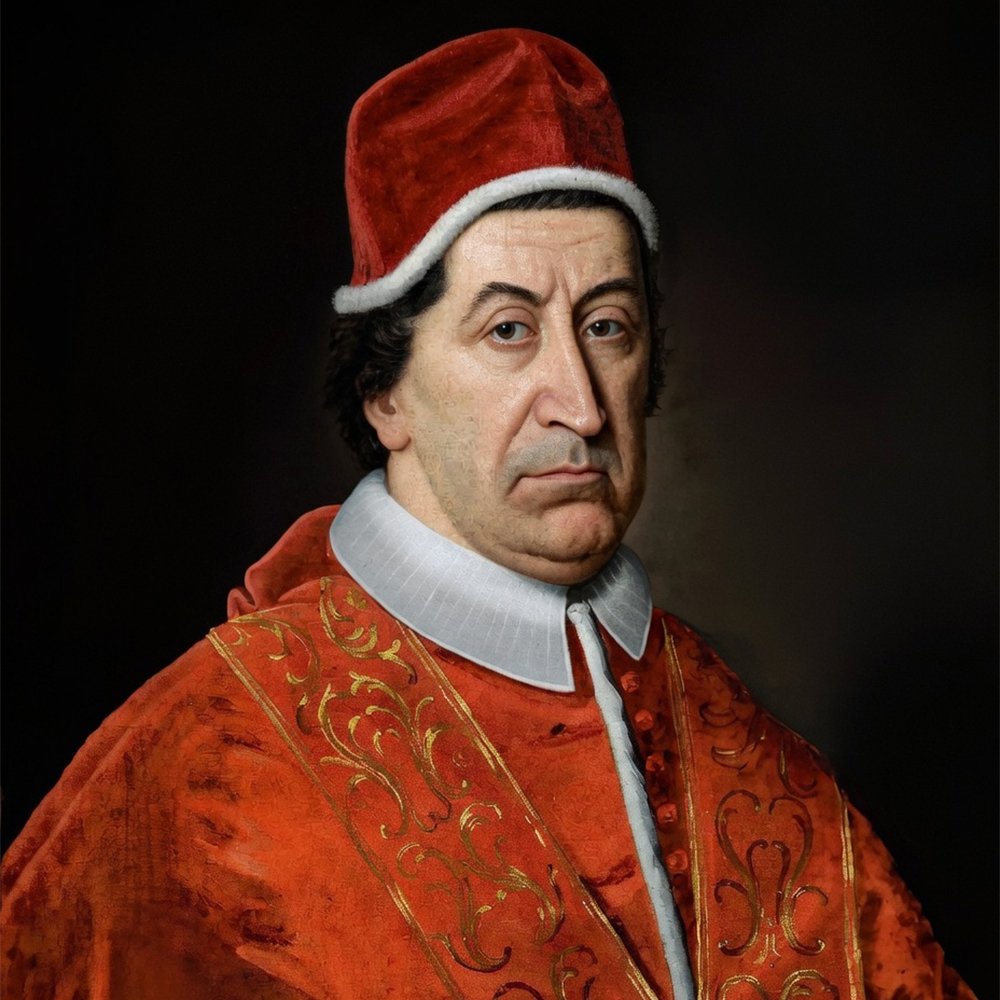
Clement XI (1700-1721)
BIOGRAPHICAL DATA
Birth name: Giovanni Francesco Albani
Birth: July 23, 1649, Urbino, Papal States
Papal election: November 23, 1700
Coronation: December 8, 1700
Pontificate: November 23, 1700 – March 19, 1721 (20 years, 3 months, 24 days)
Death: March 19, 1721, Rome, Papal States (71 years old)
Burial: St. Peter’s Basilica, Vatican City (pavement tomb)
Religious order: Secular clergy (diocesan priest)
Papal motto: None officially recorded
Cognome: “Pope of the Jansenist Controversy,” “Pope of the Chinese Rites,” “Patron of Learning,” “The Albanian Pope”
NOTE: His pontificate, one of the longest of the 18th century, was dominated by the War of the Spanish Succession, the Jansenist controversy (culminating in the bull Unigenitus), and the Chinese Rites controversy, which led to the collapse of the Catholic mission in China. He was a patron of scholarship who greatly enriched the Vatican Library.
EARLY LIFE AND FORMATION
Albani Family – Albanian Origins
The Albani of Urbino:
Distinguished noble family of Albanian origin in central Italy
Original surname: Lazzi (Laçi) , changed to Albani in memory of their Albanian heritage
Family had migrated from Albania to Italy, settling in Urbino
Tradition of scholarship and ecclesiastical service
Parents:
Carlo Albani (1623–1684): father, a patrician of Urbino
Elena Mosca (1630–1698): mother, from the noble Mosca family of Pesaro
Maternal descent: partly from the Staccoli family (patricians of Urbino) and the Giordani (nobles of Pesaro)
Family Connections:
Annibale Albani: uncle, distinguished scholar, Prefect of the Vatican Library
Grandfather: held for thirteen years the honorable office of Senator of Rome under Pope Urban VIII
Family deeply embedded in papal administration and Roman intellectual circles
Connection to Homeland:
Francesco Albani funded an expedition to Albania to locate the exact settlement of his family’s origins
Final report presented two most probable locations: Laç near Lezhë and Laç near Kukës, both in northern Albania
Retained lifelong interest in Albanian affairs
Childhood and Education
Early Years (1649-1660):
Born in Urbino, a cultural center of the Papal States
Early education: humanistic formation in classical languages and literature
Showed precocious intellectual gifts
Roman College (1660-1668):
Sent to Rome at age eleven (1660) to study at the Collegio Romano, the premier Jesuit institution
Curriculum: humanities, rhetoric, philosophy, theology
Made rapid progress in classical studies
Known as an author at age eighteen, translating from Greek into elegant Latin
Became a very proficient Latinist
Patronage of Queen Christina of Sweden:
Attracted notice of Queen Christina of Sweden (1626-1689), patroness of Roman literati
Before coming of age, enrolled in her exclusive Accademia
Frequented the academy, engaging with leading intellectuals of Rome
Connections: opened doors to Roman intellectual and ecclesiastical circles
Higher Studies:
Applied himself with equal ardor and success to theology and canon law
Created doctor of canon and civil law (in utroque iure)
Brilliant intellect combined with “stainless morals and piety”
Early Curial Career
Papal Prelate (age 28, c. 1677):
At age twenty-eight, made a papal prelate
Rapid advancement due to reputation and connections
Governor of Provincial Cities:
Rieti: governed as prelate
Sabina: governed
Orvieto: governed
Reputation: everywhere acceptable “on account of his reputation for justice and prudence”
Administrative experience in Papal States governance
Recalled to Rome:
Appointed Vicar of St. Peter’s Basilica
Important pastoral position at the heart of Christendom
Secretary of Papal Briefs (1687-1700):
Succeeded Cardinal Slusio in this crucial position
Held for thirteen years (1687-1700)
Responsibilities: drafting papal briefs (less formal but important papal documents)
Command of classical Latinity singularly fitted him for this role
Wrote the severe condemnation of nepotism issued by Pope Innocent XII
Cardinalate
Created Cardinal (February 13, 1690):
Elevated by Pope Alexander VIII (1689-1691)
Age: 40 years old
Accepted despite his protests
Reason: merit, intellectual reputation, curial service
Titular Churches:
Initially: Cardinal-Deacon of Santa Maria in Aquiro
Later: opted for Diaconia of Sant’Adriano al Foro
Later: Cardinal-Priest with titulus of San Silvestro in Capite
Role under Innocent XII:
Continued as Secretary of Papal Briefs
One of three cardinals entrusted by Pope Innocent XII with advising on the Spanish succession question
Advised the pope to pronounce secretly in favor of the will of Charles II of Spain (this would later prove significant)
Ordination to Priesthood (September 1700):
Ordained in September 1700, shortly before his election
Celebrated his first Mass in Rome on October 6, 1700
Had been a cardinal for ten years before ordination (not unusual for curial cardinals)
Character and Reputation Before Election
Intellectual Qualities:
Brilliant classical scholar
Proficient Latinist and translator
Doctor of both laws
Experienced administrator (governor of three cities)
Thirteen years as Secretary of Briefs
Moral Qualities:
“Stainless morals and piety”
Reputation for justice and prudence
Known to oppose nepotism (had drafted Innocent XII’s bull)
Age and Health at Election (1700):
Age: 51 years old
Health: “powerful frame” capable of prodigious work
Experienced but still young enough for active pontificate
CONCLAVE OF 1700 – ELECTION
Context: Death of Innocent XII
Death of Innocent XII (September 27, 1700):
Pontificate: 9 years (1691-1700)
Died at age 85
Had abolished nepotism with bull Romanum Decet Pontificem (1692)
College of Cardinals: approximately 60 electors
Critical Moment in European Politics:
Charles II of Spain (last Spanish Habsburg) had died on November 1, 1700, during the sede vacante
Left vast Spanish Empire (Spain, Naples, Sicily, Milan, Netherlands, Americas) to Philip of Anjou, grandson of Louis XIV
Emperor Leopold I contested the will, claiming Spain for his second son, Archduke Charles
European war imminent (War of the Spanish Succession would begin 1701)
Papacy needed pope capable of navigating crisis
Situation of the Church (1700):
Innocent XII’s reforms: nepotism abolished, curia reformed
France: Louis XIV at height of power, Gallicanism still problematic
Austria: Emperor Leopold I, pious but asserting imperial claims
Jansenism: still simmering in France and Low Countries
Chinese Rites: controversy unresolved
Missions: expanding globally but facing challenges
The Conclave
Dates: October 9 – November 23, 1700
Duration: 46 days
Location: Apostolic Palace, Rome
Opening: October 9, 1700, twelve days after Innocent XII’s death
Major Candidates:
Cardinal Bandino Panciatici: early favorite but lacked sufficient support
Cardinal Galeazzo Marescotti: able cardinal, but vetoed by France
France objected, making his election impossible
Demonstrates continued royal influence over conclaves
Cardinal Giovanni Francesco Albani (51):
Youngest serious candidate
Reputation: virtuous, learned, experienced
Had advised Innocent XII on Spanish succession (unknown to Austria at the time)
Objection: his youth (51 considered young for pope)
But: virtues and ability overbalanced this objection
The Struggle:
First forty days: various candidates considered and rejected
French veto of Marescotti eliminated strongest candidate
Cardinals sought compromise figure acceptable to all factions
Albani’s neutrality and reputation made him increasingly attractive
Why Albani Won:
Reputation for virtue: “stainless morals and piety” universally recognized
Curial experience: thirteen years as Secretary of Briefs, governor of three cities
Intellectual distinction: renowned scholar, Latinist
Neutrality: not aligned with French or Austrian extremes
Connection to Innocent XII: had drafted anti-nepotism bull, seen as reformer
Age paradox: young enough to govern, old enough to have experience
Virtues and ability overbalanced objection of youth
Election (November 23, 1700):
Elected unanimously
Albani: reluctant, spent three days in effort to overcome his reluctance to accept
“Experienced curialist” knew better than anyone the heavy burden of the dignity
Finally persuaded it was his duty to obey the call from Heaven
Chose name: Clement XI
Honoring Pope Clement VIII? Clement I? (likely general tribute)
Significance of Election Timing:
Election occurred after Charles II’s death but before news had reached all parties
Austria: would have vetoed Albani had they known he advised Innocent XII to favor Philip of Anjou
“This was at the time unknown to the emperor, else Austria would have vetoed the election of Albani”
Providential timing: allowed election of most qualified candidate
Episcopate and Coronation
Ordination as Bishop (November 30, 1700):
Consecrated bishop at age 51
Principal consecrator: Emmanuel-Theódose de la Tour d’Auvergne de Bouillon
Unusual: elevation to papacy within three months of priestly ordination
Coronation (December 8, 1700):
St. Peter’s Basilica
Crowned by Cardinal Protodeacon Benedetto Pamphili
Feast of the Immaculate Conception
Possession of St. John Lateran (April 10, 1701):
Traditional ceremony taking possession of the cathedral of Rome
Delayed due to winter and early pontificate business
International Reaction
Catholic World:
Enthusiasm greeted his elevation throughout the world
“Best evidence of his worth”
Sincere Catholic reformers greeted his accession as “the death-knell of nepotism”
Protestant Reaction:
Even Protestants received the intelligence with joy
City of Nuremberg struck a medal in his honor
Remarkable: Protestant city honoring Catholic pope
Testimony to his reputation for virtue and learning
PONTIFICATE (1700-1721) – CRISIS AND CONTROVERSY
Character and Governing Style
Personal Piety:
Daily confession and celebration of Mass
Frequently seen in the confessional
Preached beautiful homilies
Kept rigorously the fasts of the Church despite demanding work
Special devotion to St. Joseph, composed the Office for his feast
Work Habits:
“His capacity for work was prodigious”
Slept but little
Ate so sparingly that “a few pence per day sufficed for his table”
Entered minutely into details of every measure
Prepared with his own hand numerous allocutions, briefs, and constitutions
Though his powerful frame more than once sank under the weight of his labors, he continued
Governing Principles:
Anti-nepotism: “As pontiff, he did not belie his principles”
Ordered his brother to keep at a distance, refrain from adopting any new title, and not interfere in matters of state
Bestowed offices of his court upon the most worthy subjects
Competent administrator of the Papal States
Extremely charitable to the poor
Bettered condition of prisons
Secured food for populace in times of scarcity
Patronage of Arts and Sciences:
Won good will of artists by prohibiting exportation of ancient masterpieces
Commissioned Francesco Bianchini to lay down on the pavement of Santa Maria degli Angeli the meridian of Rome, known as the Clementina
Enriched Vatican Library with manuscript treasures
Patron of archaeology and scholarship
The War of the Spanish Succession (1701-1714)
Background:
Charles II of Spain died November 1, 1700, willing crown to Philip of Anjou (grandson of Louis XIV)
Emperor Leopold I contested, claiming for his son Archduke Charles
Grand Alliance (1701): Austria, England, Dutch Republic, later Portugal and Savoy vs. France, Spain, Bavaria
Clement’s Policy: Neutrality Attempt
Resolved to maintain a neutral attitude
Aim: preserve peace, protect Italy from calamity, maintain papal independence
But: “found to be impossible”
When Philip V was crowned in Madrid amid universal acclamation of Spaniards, Clement acquiesced and acknowledged the validity of his title
Consequences of Acknowledging Philip V:
Embittered Emperor Leopold I
Relations between Austria and Holy See became strained
Clement did not conceal his satisfaction when French and Bavarian troops began march on Vienna (ended disastrously at Blenheim, 1704)
Marlborough’s victory, followed by Prince Eugene’s successful campaign in Piedmont, placed Italy at mercy of Austrians
Emperor Joseph I (1705-1711):
Leopold died 1705, succeeded by oldest son Joseph I
“Worthy precursor of Joseph II” (i.e., hostile to papal claims)
Contest began over Jus primarum precum (crown’s right to appoint to vacant benefices)
Victorious Austrians, masters of Northern Italy, invaded Papal States
Took possession of Piacenza and Parma
Annexed Comacchio
Besieged Ferrara
Clement’s Resistance and Surrender:
Clement at first offered spirited resistance
Abandoned by all, could not hope for success
Strong detachment of Protestant troops under Prince of Hesse-Cassel reached Bologna
Fearing repetition of Sack of Rome (1527), Clement gave way
January 15, 1709: acknowledged Archduke Charles as King of Spain “without detriment to the rights of another”
Promised him investiture of Naples
Reaction of Bourbon Monarchs:
Louis XIV and Philip V had done nothing to aid pope in unequal struggle
Both became very indignant at Clement’s surrender
Retaliated by every means in their power
Peace of Utrecht (1713) and Rastatt (1714):
Rights of pope “studiously neglected”
Papal nuncio not accorded a hearing
Papal dominions parceled out to suit convenience of parties
Papal suzerainty ignored in Kingdom of Naples (including Sicily) and duchies of Parma and Piacenza
“Heavy defeat for Clement”
The Sicilian Question (1713-1718)
Monarchia Sicula:
Ancient but much-disputed privilege of pontifical origin
Allegedly excluded pope from any authority over Church in Sicily
Victor Amadeus II of Savoy (given Sicily by Utrecht) undertook to revive it
Clement’s Response:
Answered with ban and interdict
All clergy (about 3000) who remained loyal to Holy See banished from island
Pope forced to give them food and shelter
Outcome:
Interdict not raised till 1718, when Spain regained possession
Old controversy repeatedly resumed under Bourbons
Through machinations of Cardinal Alberoni, Parma and Piacenza granted to Spanish Infante without regard to papal overlordship
Turkish War and Christian Victory
Ottoman Threat (1715-1718):
Turks took advantage of Christian dissensions to invade Europe by land and sea
Attacked Venetian possessions in Greece (Morea) and threatened Hungary
Clement’s Response:
Proclaimed a jubilee
Sent money and ships to assistance of Venetians
Granted a tithe on all benefices to Emperor Charles VI
Promoted devotion to Holy Rosary for victory
Battle of Petrovaradin (August 5, 1716):
Prince Eugene of Savoy defeated Ottoman army
Lifted Turkish threat to Hungary
Battle of Belgrade (August 16, 1717):
Prince Eugene captured Belgrade from Ottomans
Decisive victory ending Turkish danger
Clement’s Recognition:
“No slight share of the credit was given by the Christian world to the pope and the Holy Rosary”
Clement sent Prince Eugene a blessed hat and sword
Treaty of Passarowitz (July 21, 1718):
Austria gained Banat, Belgrade, northern Serbia
Venice lost Morea but gained Dalmatian footholds
Ottoman threat to Central Europe ended for centuries
Jansenism and the Bull Unigenitus
Background – Jansenism:
Theological movement emphasizing grace, predestination, human depravity
Originated from Augustinus by Cornelius Jansen (d. 1638)
Condemned by Urban VIII (1642), Innocent X (1653), Alexander VII (1656), Clement IX (1668)
Centered in France and Low Countries
Associated with Gallican resistance to papal authority
Pasquier Quesnel (1634-1719):
Oratorian, later Jansenist leader
Published Réflexions morales (1671, expanded 1693-1694)
Presented Jansenist ideas in accessible form
Widely read, especially in France
Condemned by Clement XI in 1708 (not fully effective)
Constitution “Vineam Domini” (July 16, 1705):
First major Jansenist condemnation of Clement’s pontificate
Addressed issues of “respectful silence” (whether Jansenists could remain silent on condemned propositions)
Reaffirmed previous condemnations
Limited effect in France due to Gallican resistance
Background to Unigenitus:
French bishops requested papal condemnation of Quesnel’s work
Clement XI appointed commission to examine Quesnel’s propositions
Gregorio Selleri, lector at the College of St. Thomas (future Pontifical University of St. Thomas Aquinas), contributed significantly
Commission identified 101 propositions as heretical or erroneous
Constitution “Unigenitus” (September 8, 1713):
Most important document of Clement’s pontificate
Issued: September 8, 1713 (Feast of the Nativity of the Virgin)
Condemned 101 propositions from Quesnel’s Réflexions morales
Declared them identical in substance to propositions already condemned in Jansenius
Condemned propositions on:
Nature of grace and free will
Relationship of nature and grace
Church authority
Scripture reading
Penance and contrition
Content of Condemned Propositions (Examples):
“Outside the Church no grace is granted” (condemned as heretical)
“The reading of Scripture is for all” (condemned)
“It is useful and necessary at all times, in all places, and for every kind of person, to study and to know the spirit, the piety, and the mysteries of Sacred Scripture” (condemned)
“Faith is the first grace and the source of all others” (condemned)
Reaction in France:
“Great upheaval in France”
Apart from theological issues, strong Gallican tendency persisted
Resistance of many French ecclesiastics
Refusal of French parlements to register the bull
Controversies extending through greater part of 18th century
Because local governments did not officially receive bull, it was not technically in force in those areas
Appeal and Resistance (1717-1720):
March 5, 1717: four Gallican bishops appealed against Unigenitus to a future general council
Supported by 12 other bishops and more than 3,000 priests
August 1718: Clement excommunicated the four bishops
Action proved ineffectual amid fervid Gallicans
Appeal renewed in September 1720
Controversy continued long after Clement’s death
Significance of Unigenitus:
Defined Catholic teaching on grace and Church authority
Became symbol of papal authority versus Gallican independence
Divided French Church for decades
Remained in force until 20th century
Clement’s last major act before death
Chinese Rites Controversy
Background of the Controversy:
Jesuit missionaries in China (16th-17th centuries): Matteo Ricci, others
Adopted policy of accommodation:
Allowed Chinese converts to continue certain traditional practices
Honoring Confucius (civil ceremony? religious cult?)
Ancestor veneration (filial piety? idolatry?)
Used Chinese terms for God (Tian, Shangdi)
Dominican and Franciscan missionaries opposed these accommodations
Argued practices were superstitious, incompatible with Christianity
Debate submitted to Rome repeatedly
Previous Papal Decisions:
1645: Congregation for Propagation of Faith condemned rites (based on Dominican report)
1656: Same congregation, after hearing Jesuits, permitted rites
1669: Clement IX permitted both decrees to stand pending further investigation
Controversy continued, involving leading European universities and eight popes
Clement XI’s Intervention:
Determined to settle question definitively
Appointed commission to study issue thoroughly
Consulted theologians, missionaries, experts on China
Decision: rites were incompatible with Christian faith
Decree of 1704:
Banned the Chinese rites
Prohibited use of terms “Tian” (Heaven) and “Shangdi” (Lord on High) for God
Required use of “Tianzhu” (Lord of Heaven)
Forbade Catholics from participating in ceremonies honoring Confucius
Forbade ancestor worship in familial temples or homes
Even passive presence at such ceremonies prohibited as “heathen in nature”
Papal Legate to China (1705-1710):
Clement sent Charles-Thomas Maillard de Tournon as legate to China
Mission: present papal decree to Kangxi Emperor
Tournon arrived 1705, received initially with respect
When decree presented, Kangxi rejected it
Kangxi Emperor’s Response:
Initially favorable to Jesuits (1692 edict of toleration)
Considered Confucian rites civil, philosophical, not religious
Rejected papal interference in Chinese customs
Ordered that missionaries must accept Chinese rites to remain in China
Those who refused expelled
Papal Bull “Ex Illa Die” (March 19, 1715):
Reinforced and definitively promulgated 1704 decree
Required all missionaries to take oath accepting prohibition
Demanded absolute obedience under pain of excommunication
No discussion or debate permitted
“Climax of the Rites Controversy”
Kangxi’s Reaction to Bull (1721):
Read the proclamation
Responded with famous edict:
“Reading this proclamation, I have concluded that the Westerners are petty indeed. It is impossible to reason with them because they do not understand larger issues as we understand them in China. There is not a single Westerner versed in Chinese works, and their remarks are often incredible and ridiculous. To judge from this proclamation, their religion is no different from other small, bigoted sects of Buddhism or Taoism. I have never seen a document which contains so much nonsense. From now on, Westerners should not be allowed to preach in China, to avoid further trouble.”
Consequences:
Christianity banned in China (1721)
Missionaries expelled
Churches closed
Flourishing missions ruined
Persecution of Chinese Christians began
“Ban led to a persecution of the Chinese Christians and to the ruin of many flourishing missions”
Prohibition not permanently lifted until Pius XII (1939)
Assessment:
Clement XI acted from conviction that rites were superstitious
Decision based on theological principles, not politics
But practical consequences disastrous for Chinese Christianity
“Much less wise was Clement’s condemnation of the Chinese and Malabar rites”
Remained controversial for centuries
Relations with the Stuart Pretenders
Support for Jacobites:
Clement XI supported James Francis Edward Stuart (1688-1766), the exiled Stuart claimant to British throne
Recognized him as James III and VIII (King of England and Scotland)
Provided residence: Palazzo Muti in Rome
Donated summerhouse near shores of Lake Albano
Marriage to Clementina Sobieska (1719):
Arranged marriage between James Stuart and Princess Maria Clementina Sobieska
Clementina: granddaughter of John III Sobieski, King of Poland (hero of Vienna 1683)
Marriage celebrated in Rome with papal blessing
Baptism of Charles Edward Stuart (1720):
Clement XI performed baptism of James’ son, Charles Edward Stuart (Bonnie Prince Charlie)
Born December 31, 1720, baptized early 1721
Last Catholic claimant to British throne
Clement’s personal involvement: sign of deep commitment to Stuart cause
Political Significance:
Maintained papal claim to dispose of crowns (theoretically)
Irritated Protestant British government
Provided moral and material support to Jacobite cause
Clementina Sobieska: added Polish royal prestige to Stuart claim
Missions and Church Organization
Propaganda Fide:
Continued support for Congregation for Propagation of Faith (founded 1622 by Gregory XV)
Organized missions globally
Sent missionaries to every distant spot
Philippine Islands:
Organized the Church in the Philippine Islands
Established hierarchy, regularized ecclesiastical structure
Spanish colonial patronage balanced with papal authority
Lisbon Patriarchate (December 7, 1716):
Erected Lisbon into a patriarchate
Elevated status of Portuguese capital
Recognized importance of Portuguese patronage in missions
Albanian Synod (1703):
Ordered synod of Catholic bishops in northern Albania
Discussed promotion of Council of Trent decrees in Albanian dioceses
Stemming conversions among locals to Islam
Securing agreement to deny communion to crypto-Catholics who outwardly professed Muslim faith
Personal interest due to Albanian family origins
Eastern Churches:
Maintained contact with Eastern Catholic communities
Supported missionary work among Orthodox
Scholarly and Cultural Patronage
Vatican Library:
“Great benefactor of the Vatican Library”
Enriched with manuscript treasures
Commissioned Joseph Simeon Assemani (Maronite scholar) to research throughout Egypt and Syria
Assemani gathered Syriac, Arabic, Coptic, and other Oriental manuscripts
“Concerted effort to acquire Christian manuscripts in Syriac from Egypt and other places in the Middle East”
Collection of Syriac works greatly expanded
Illyricum Sacrum:
Commissioned the famous Illyricum Sacrum
Written by Jesuit Daniele Farlati and Dom Jacopo Coleti
Multi-volume work on ecclesiastical history of Balkan region
Over 5,000 pages
Today one of the main sources for Balkan medieval history
Archaeology:
Interest in archaeology “credited with saving much of Rome’s antiquity”
Authorized expeditions which succeeded in rediscovering various ancient Christian writings
Authorized excavations of the Roman catacombs
Prohibited exportation of ancient masterpieces
Science:
Commissioned Francesco Bianchini to construct meridian line in Santa Maria degli Angeli
Known as the Clementina
Used for astronomical measurements, calendar verification
Combined scientific precision with papal patronage
Numismatics:
Continued papal tradition of issuing medals
Many beautiful medals from his pontificate survive
Commemorated events, buildings, jubilees
Internal Church Affairs
Canonizations (May 22, 1712):
St. Pius V (1504-1572): Dominican pope, saint of Lepanto victory
St. Andrew Avellino (1521-1608): Theatine reformer
St. Felix of Cantalice (1515-1587): Capuchin friar, first Capuchin saint
St. Catherine of Bologna (1413-1463): Poor Clare abbess, mystic, artist
Later Canonizations:
St. Humility (1226-1310): Vallombrosan abbess, canonized January 27, 1720
St. Stephen of Obazine (1085-1154): Cistercian abbot, canonized 1701
St. Boniface of Lausanne (1181-1260): Bishop of Lausanne, canonized 1702
Beatifications:
Ceslas Odrowaz (Dominican): cultus confirmed August 27, 1712
Jakov Varingez (Franciscan): cultus confirmed December 29, 1700
Peregrine Laziosi (Servite): cultus confirmed September 11, 1702
John of Perugia and Peter of Sassoferrato (Franciscan martyrs): September 11, 1704
Buonfiglio Monaldi (Servite founder): December 1, 1717
Pope Gregory X (1271-1276): cultus confirmed July 8, 1713
Humbeline of Jully (Benedictine, sister of St. Bernard): 1703
Alexis Falconieri, Bartholomew degli Amidei, Benedict Dellantella (Servite founders): December 1, 1717
John Francis Régis (Jesuit): May 24, 1716
Theresa (Queen of Portugal) and Sancha (her sister): May 20, 1705 and May 10, 1705
Doctor of the Church:
February 8, 1720: named St. Anselm of Canterbury (1033-1109) Doctor of the Church
Supplementary titles: “Doctor magnificus” (Magnificent Doctor) and “Doctor Marianus” (Marian Doctor)
Feasts Extended:
1716: extended feast of Our Lady of the Rosary to the Universal Church of the Roman Rite
Made feast of the Conception of the Blessed Virgin Mary a Holy Day of obligation
Consistories and Cardinals:
Created a total of 70 cardinals in 15 consistories
Two cardinals of his own creation later became popes:
Michelangelo dei Conti: his immediate successor, Pope Innocent XIII
Lorenzo Corsini: later Pope Clement XII
Nominated eight cardinals “in pectore” (secretly), later published
Accepted resignation of Cardinal Gabriele Filippucci (June 7, 1706)
Accepted resignation of Cardinal Francesco Maria de’ Medici (June 19, 1709)
Liturgical Contributions:
Composed the special Office for feast of St. Joseph
Promoted devotion to St. Joseph
Encouraged liturgical piety throughout Church
Indulgences and Devotions
Indulgence of 1702:
May 2, 1702: granted indulgence to followers of Christ in district of St. Silvester in city of Nevers, France
Valid for seven years
Confirmed by Edward Vallot, Bishop of Nevers, December 29, 1702
Typical of many indulgences granted during pontificate
Devotional Promotion:
Encouraged Rosary devotion (linked to Turkish victories)
Promoted Forty Hours devotion
Supported confraternities and pious unions
LAST YEARS AND DEATH
Final Years (1718-1721)
Health Decline:
Powerful frame sank repeatedly under weight of labors and cares
But continued rigorous fasting and work schedule
Remained active despite growing weakness
Continuing Controversies:
Unigenitus resistance continued in France
Chinese mission destroyed
Political defeats not reversed
But: scholarly patronage continued, canonizations proceeded
Premonition of Death:
March 10, 1721 (about 11:00 am): meeting with Pierre François Lafitau, Bishop of Sisteron
Clement told bishop his time was drawing to a close, he would soon die
Lafitau protested to contrary
March 14, 1721:
Clement XI took ill
Lafitau was trying to get pope’s nephew to persuade pope to name French Chief Minister Guillaume Dubois to cardinalate
But: Clement was in state of delirium, not responsive to pleas
March 16, 1721 (Quadragesima Sunday):
Pope did not participate in public services
However: celebrated Mass in his private chapel at the Quirinal Palace
Last Mass of his life
Death
March 19, 1721 (Feast of St. Joseph):
Died at 12:45 pm
Age: 71 years, 7 months, 24 days
Cause: complications from illness, exhaustion
Feast of St. Joseph: appropriate, as he had particular devotion to St. Joseph and composed the Office for his feast
Last Words:
Not recorded precisely
Likely: prayers, commendation of soul
Possibly: expressed hope for Church he loved
Reaction:
Rome: mourning for pope of 20 years
Cardinals: immediate preparations for conclave
France: mixed reactions (controversy over Unigenitus)
China: mission already destroyed
Scholars: loss of great patron
Significance of Death Date:
Died on feast of St. Joseph, for whom he had “particular devotion”
Appropriateness noted by contemporaries
Seen as sign of divine favor
Funeral and Burial
Funeral:
St. Peter’s Basilica
Ceremony: standard papal funeral
Presider: Cardinal Dean or senior cardinal
Burial:
Buried in the pavement of St. Peter’s Basilica rather than in an ornate tomb like those of his predecessors
Deliberate simplicity: consistent with anti-nepotism principles
“His remains rest in St. Peter’s”
Location: floor tomb, simple inscription
Monument:
No elaborate monument (unlike predecessors)
Consistent with Innocent XII’s reform of papal simplicity
Contrast with Baroque tombs of 17th-century popes
Fitting end for pope who opposed nepotism and lived simply
LEGACY AND HISTORICAL EVALUATION
Major Achievements
1. The Bull Unigenitus (1713):
Most significant doctrinal document of 18th-century papacy
Defined Catholic teaching on grace, Church authority
Remained in force for centuries
Divided French Church but ultimately prevailed
2. Chinese Rites Decision:
Definitive (if disastrous) settlement of long controversy
Based on theological conviction, not politics
Demonstrated papal authority in mission territories
Consequences: negative for Chinese Christianity until 1939
3. Patronage of Learning:
Enriched Vatican Library with Oriental manuscripts
Commissioned Assemani expeditions
Sponsored Illyricum Sacrum
Excavated catacombs, preserved antiquities
Supported science (Clementina meridian)
4. Turkish Victory Support:
Financial and naval support crucial for Austrian-Venetian victory
Shared credit for Battle of Petrovaradin and Belgrade
Demonstrated papal relevance in defense of Christendom
5. Canonizations:
Pius V, Andrew Avellino, Felix of Cantalice, Catherine of Bologna
Named Anselm Doctor of the Church
Beatified numerous saints of Counter-Reformation
6. Anti-Nepotism:
Refused to enrich family
Ordered brother to stay away from court
Bestowed offices on worthy subjects
Continued Innocent XII’s reform
7. Administrative Competence:
Capable governor of Papal States
Charitable to poor, improved prisons
Secured food supply in times of scarcity
8. Stuart Support:
Palazzo Muti for Jacobite exiles
Baptized Charles Edward Stuart
Maintained Catholic solidarity with persecuted English Catholics
Failures and Criticisms
1. Political Failures:
Unable to maintain neutrality in War of Spanish Succession
Humiliated by Austria (1709 surrender)
Utrecht and Rastatt treaties: papal rights ignored
Lost suzerainty over Parma, Piacenza, Naples
“Diplomatic efforts relatively ineffectual”
2. Chinese Rites Decision:
“Much less wise” condemnation
Led to persecution, ruin of missions
Ban not lifted until 1939
Practical consequences disastrous
3. Jansenist Controversy Unresolved:
Unigenitus provoked 30 years of discord in France
Gallican resistance continued
Clement died with controversy still raging
4. Monarchia Sicula Interdict:
Ineffective: 3000 clergy banished, pope forced to support them
Interdict not raised till 1718
Controversy continued under Bourbons
5. Limited International Influence:
“Political role of the papacy was shrinking”
Great powers ignored papal interests at Utrecht
Papal nuncio not even heard at peace conference
Historiographical Assessment
Catholic Encyclopedia (1913):
Strongly positive: “great and saintly pontiff”
Emphasizes piety, learning, administrative ability
Defends Unigenitus and Chinese Rites decision
Notes political failures but blames circumstances
Presents as model pope of early 18th century
Encyclopedia Britannica:
Balanced: notes shrinking political role, diplomatic failures
Criticizes Chinese Rites decision as “much less wise”
Acknowledges Jansenist controversy, political defeats
But recognizes learning, patronage
Modern Scholarship:
Clement XI: transitional figure between Counter-Reformation and Enlightenment
His pontificate: last great struggle of post-Tridentine theology (Unigenitus)
Chinese Rites decision: viewed critically as cultural misunderstanding
Patronage: recognized as significant for scholarship
Personal piety: universally acknowledged
Comparison with Predecessors:
Clement XI (1700-1721) | Innocent XII (1691-1700) | Alexander VIII (1689-1691) |
|---|---|---|
20-year pontificate | 9-year pontificate | 16-month pontificate |
Unigenitus (1713) | Romanum Decet Pontificem (1692) | Nepotist |
Chinese Rites condemned | Abolished nepotism | Brief reign |
Political defeats | Diplomatic successes | Nephew cardinal |
Patron of learning | Pope of the poor | Venetian controversy |
Comparison with Successors:
Clement XI (1700-1721) | Innocent XIII (1721-1724) | Benedict XIII (1724-1730) | Clement XII (1730-1740) |
|---|---|---|---|
20-year pontificate | 3-year pontificate | 6-year pontificate | 10-year pontificate |
Unigenitus | Accepted Unigenitus | Dominican pope | Corsini family |
Chinese Rites | Continued policy | Reformer | Art patron |
Albanian origin | Conti family | Austere | First Clement XII |
Stuart supporter | Less political | Canonized | Medici connections? |
Personal Assessment
Strengths:
Prodigious worker, slept little, ate sparingly
Daily Mass, confession, preaching
Anti-nepotism: rare for era
Charitable to poor, improved prisons
Great patron of learning and arts
Personally devout, St. Joseph devotion
Weaknesses:
Political naivete? (neutrality impossible from start)
Theological rigidity? (Chinese Rites decision)
Sometimes overwhelmed by circumstances
“Powerful frame more than once sank under weight of labors”
Personality:
Pious, learned, principled
Hardworking, meticulous
Devoted to duty even when ill
Kind to poor, severe on principle
Renaissance man in age of absolutism
Epitaph
Implied:
“He gave the Church its teaching on grace, its Bible from the East, its saints of reform. He sheltered kings in exile and sent fleets against the Turk. But the dragon of Jansenism survived his blow, and the dragon of politics devoured his states. He lies in simple pavement—the scholar pope who served God with prodigious labor and died on St. Joseph’s feast.”
Actual Inscription:
Simple, in pavement of St. Peter’s
Name, dates, perhaps “Clemens XI”
Deliberate humility
The “Albanian Pope”
Significance of Albanian Origin:
Clement XI: only pope of Albanian descent
Proud of heritage: funded expedition to find family origins
Ordered Albanian synod (1703) to strengthen Catholicism in ancestral homeland
Concerned about conversions to Islam under Ottoman rule
Personal link to Balkan Christianity
Albanian Memory:
Remembered in Albanian Catholic tradition
Symbol of Albanian contribution to universal Church
Connection to later Albanian figures (Mother Teresa’s heritage)
Unique in papal history
The Scholar Pope
Intellectual Legacy:
Great benefactor of Vatican Library
Saved much of Rome’s antiquity
Excavated catacombs
Commissioned Illyricum Sacrum
Acquired Syriac manuscripts
Supported Assemani expeditions
Scientific Patronage:
Clementina meridian
Encouraged astronomical research
Connected scientific precision with papal authority
Literary Work:
Composed Office of St. Joseph
Prepared with own hand numerous allocutions, briefs, constitutions
Command of classical Latinity
Preached beautiful homilies
Final Judgment
Pope Clement XI, Giovanni Francesco Albani, reigned for twenty years—one of the longest pontificates of the 18th century, and one of the most consequential. He stands at the crossroads of eras: the last Counter-Reformation pope, the first pope of the Enlightenment age; a man of medieval piety facing modern political realities; a scholar in an age of power; a saintly man in a cynical century.
His greatest positive legacy is cultural and intellectual. The Vatican Library’s Oriental collections owe much to his patronage. The catacombs were excavated under his sponsorship. The meridian line in Santa Maria degli Angeli still bears his name. He preserved Rome’s antiquities for future generations. In an age of war and controversy, he built for eternity.
His greatest doctrinal legacy is Unigenitus. Whatever one thinks of its contents, it defined Catholic teaching on grace and Church authority for centuries. It provoked controversy but ultimately prevailed. It demonstrated that the papacy, even in political decline, could still speak with authority on faith and morals.
His greatest failure is the Chinese Rites decision. Acting from theological conviction, he destroyed one of the most promising missions in Church history. The ban led to persecution, expulsion, and the ruin of flourishing Christian communities. It would take over two centuries to repair the damage. Good intentions, disastrous consequences.
His political legacy is one of defeat. The War of the Spanish Succession demonstrated that the papacy was no longer a major power. Utrecht and Rastatt parceled out papal fiefs without papal consent. The great powers ignored his nuncio. The shrinking of papal political influence, already underway, became unmistakable.
His personal example is one of holiness. Daily Mass and confession. Fasting and prayer. Prodigious work for the Church. Charity to the poor. Simplicity of life. Refusal to enrich his family. He lived what he believed, and he believed deeply.
He died on St. Joseph’s feast—the saint for whom he had “particular devotion,” whose Office he composed. It was a fitting end for a pope who had labored in the shadow of the foster father of Jesus—hidden, faithful, productive, humble.
His simple tomb in St. Peter’s pavement speaks volumes. After the Baroque splendor of Urban VIII, Alexander VII, and even his predecessor Innocent XII (whose tomb is modest but visible), Clement XI chose obscurity. The scholar pope lies beneath the feet of pilgrims, anonymous, humble, at peace.
In the history of the papacy, Clement XI occupies a middle place: not among the greatest, but far from the worst. He was a good man in difficult times, a learned man in an age of power, a pious man in a cynical century. He did what he thought right, and accepted the consequences.
Epitaph (expanded):
“Giovanni Francesco Albani of Urbino, of Albanian blood, Roman by vocation, pope by reluctant consent. He served God with prodigious labor, enriched the Vatican with treasures of the East, gave the Church its teaching on grace, and sheltered exiled kings. He failed in politics but succeeded in holiness. He died on St. Joseph’s feast and lies in simple pavement—the scholar pope who asked nothing for himself and gave everything to the Church.”
Clement XI: the Albanian pope, the scholar pope, the pope of Unigenitus and of the Chinese Rites—a man whose light still shines, whose shadows still linger, whose memory still teaches.