Clement XIV
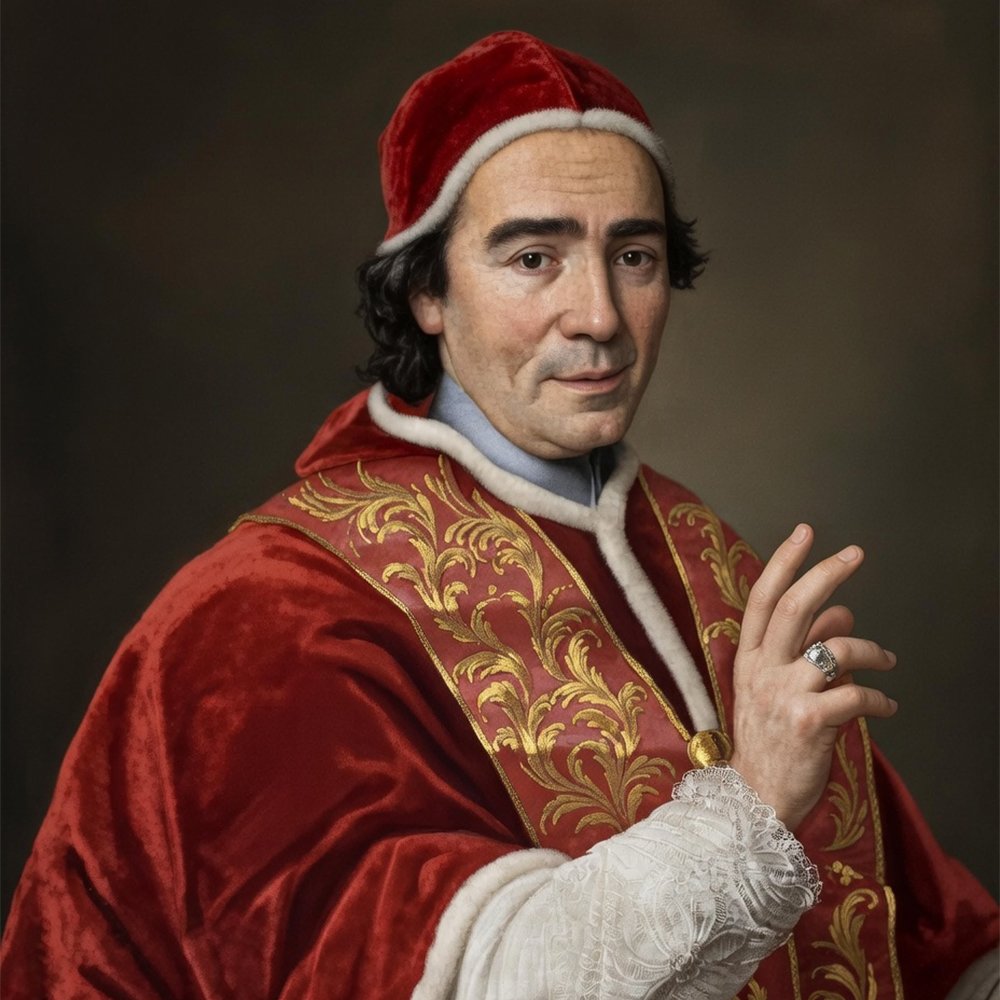
Pope Clement XIV (1769-1774)
BIOGRAPHICAL DETAILS
Birth Name: Giovanni Vincenzo Antonio Ganganelli
Birth: 31 October 1705, Santarcangelo di Romagna, Papal States (Emilia-Romagna, Italy)
Papal Election: 19 May 1769
Coronation: 4 June 1769
Pontificate: 19 May 1769 – 22 September 1774 (5 years, 4 months, 3 days)
Death: 22 September 1774, Rome (68 years old)
Burial: Basilica of the Holy Apostles, Rome
Religious Order: Conventual Franciscans (Order of Friars Minor Conventual)
Papal Motto: None officially recorded
Sobriquets: “Pope of the Suppression” (of the Jesuits), “The Tragic Pope”
NOTE: Short but historically crucial pontificate – he suppressed the Society of Jesus!
FORMATION AND RELIGIOUS LIFE
Humble Origins
Ganganelli Family:
Lorenzo Ganganelli: father, modest doctor
Angela Serafina Maria Mazza: mother
Lower middle-class family (non-aristocratic – rare for a pope!)
Santarcangelo di Romagna: small papal town
Pious, numerous family
Giovanni Vincenzo: one of several children
Childhood:
Primary education: local school
Intelligence noted early
Delicate health since childhood (would mark his entire life)
Franciscan Vocation
Entry into the Order (1723):
18 years old – Order of Friars Minor Conventual
Less rigorous Franciscan branch than Observants or Capuchins
Community life, studies
Convent of Mondaino (near Rimini)
Religious Name: Fra Lorenzo (in honor of St. Lawrence)
Abandoned “Giovanni Vincenzo Antonio”
Became Fra Lorenzo Ganganelli
Intellectual Formation:
Philosophy: studies in the convent
Theology: Urbino, then Rome
Brilliant student
Specialization: scholastic theology, moral theology
Priestly Ordination: 1731 (26 years old)
Career as a Franciscan (1731-1758)
Professor of Theology:
Taught in Franciscan convents:
Ascoli Piceno
Bologna
Milan
Ravenna
Reputation: erudite but moderate
Not an extremist (unlike many theologians of the time)
Specialties:
Moral theology (casuistry)
Religious controversies (Jesuits vs. Jansenists, etc.)
Prolific writer (treatises, articles)
Characteristics:
Prudent: avoided unnecessary polemics
Conciliatory: sought the middle ground
Humble: austere Franciscan life
Studious: extensive personal library
Consultor of the Holy Office (Inquisition):
1740s-1750s
Cases of heresy, prohibited books
Demonstrated moderation (by Inquisition standards!)
Reputation: fair, not fanatical
CARDINAL (1759-1769)
Created Cardinal by Clement XIII (24 September 1759):
54 years old
Cardinal-Priest of San Lorenzo in Panisperna
The only Franciscan in the College of Cardinals (at the time)
Surprise: not an aristocrat, not a diplomat, only a Franciscan theologian
Why did Clement XIII promote him?:
Reputation for erudition
Moderation (Clement XIII wanted to balance extreme zelanti)
Franciscan humility (contrast with aristocratic cardinals)
Activity as Cardinal (1759-1769):
Participated in Congregations (commissions)
Congregation of the Index (prohibited books)
Holy Office
Consulted on the growing Jesuit Question
Position on the Jesuits:
Ambiguous (strategically?)
Publicly: defended the Jesuits (theologically orthodox)
But: not fanatical in defense
Wrote: the Society is useful but not indispensable (!)
Signs: could suppress if necessary (the Bourbons noticed)
Personal Life:
Maintained Franciscan austerity
Residence: simple (not a palace)
Franciscan habit under cardinal’s vestments
Health: always fragile
CONCLAVE OF 1769 – PAPAL ELECTION
Pre-Conclave Context
Death of Clement XIII (2 February 1769):
Pontificate marked by conflict with the Bourbon monarchies
Intransigent defender of the Jesuits
Left the Church in a deep diplomatic crisis
The Jesuit Question Dominated Everything:
Portugal (1759): Jesuits expelled, property confiscated
France (1764): Society suppressed
Spain (1767): dramatic expulsion of 5,000 Jesuits
Naples, Parma: same measures
Pressure: The Bourbons demanded the universal suppression of the Order
Threats from the Bourbon Crowns:
Spain (Charles III), France (Louis XV), Naples, Parma: coordinated Bourbon family
Demand: the new pope MUST suppress the Jesuits
Or: schism, invasion of the Papal States, confiscation of ecclesiastical property
Ambassadors in Rome: open pressure on the cardinals
Factions in the Conclave
Zelanti (“Zealous”):
Defenders of papal independence
Pro-Jesuit
Led by: Cardinal Torrigiani (Clement XIII’s Secretary of State)
Wanted: a firm pope, without concessions to the monarchies
Candidates: intransigent cardinals
“Crown” (Coronisti):
Aligned with the Bourbons
Anti-Jesuit (or pragmatic)
Led by: Cardinal de Bernis (French ambassador, cardinal!)
Wanted: a pope who would suppress the Society
Candidates: flexible towards the crowns
Moderates:
Wanted: to avoid schism, but preserve papal dignity
Ganganelli: perceived as the ideal moderate
The Conclave – 134 Days!
Start: 15 February 1769
Location: Quirinal Palace, Rome
Duration: More than 4 months! (one of the longest of the 18th century)
Impasse:
Zelanti: blocked pro-Bourbon candidates (veto)
Coronisti: blocked pro-Jesuit candidates (Bourbon veto – “exclusive”)
No faction: had the necessary 2/3 majority
Ganganelli’s Rise:
Initially: few votes
Advantages:
Non-aristocrat: no dynastic alliances
Franciscan: not a Jesuit, but a respected religious
Moderate: had written that the Society is “not indispensable”
Theologian: respected by the zelanti
Pragmatic: acceptable to the coronisti
Secret Negotiations:
Bourbon emissaries: pressured Ganganelli
Question: “Will you suppress the Jesuits if elected?”
Ganganelli’s response (oral, ambiguous): “I will do what is best for the Church”
Bourbons interpreted: YES
Zelanti interpreted: perhaps, but with dignity
No written promise (Ganganelli denied it later)
Election: 19 May 1769
3rd vote of the day
Ganganelli: reached the necessary majority (but difficult, not unanimous)
Accepted the name: Clement XIV (homage to his predecessor Clement XIII)
Coronation: 4 June 1769
St. Peter’s Basilica
Solemn but tense ceremony
Jesuits: present, apprehensive
Bourbons: waiting for results
PONTIFICATE (1769-1774)
First Years – Biding Time (1769-1773)
Style of Government:
Moderate, cautious
Tried to appease BOTH sides
But: incessant Bourbon pressure
Initial Measures:
Secretary of State: Kept Cardinal Pallavicini (later Cardinal Caraffa)
Not radical, but not submissive
Appointments: balanced zelanti and coronisti
Diplomatic relations: cautious rapprochement with the Bourbons
Delaying the Jesuit Question:
Clement XIV: tried to postpone the decision
Arguments:
He needed to study the matter further
He wanted peace, not precipitation
He hoped the pressure would diminish (it didn’t!)
Growing Pressure (1770-1773):
Spain: threats to invade Benevento and Pontecorvo (papal enclaves)
France: suspension of payments to the Holy See
Naples: confiscation of ecclesiastical property
Portugal: Pombal demanded suppression as a condition for relations
Ambassadors: weekly intimidating audiences
Clement XIV’s Health:
Deterioration since the election
Insomnia, anxiety, depression
Fear: of poisoning (rumors)
Isolation: increasingly reclusive
The Suppression of the Society of Jesus (1773)
Inevitable Decision:
1773: Clement XIV became convinced (or yielded)
Alternatives: schism, invasion, total loss of authority
Consultation: theologians, canonists (few supported it, but they didn’t prevent it)
Apostolic Brief “Dominus ac Redemptor”:
Date: 21 July 1773
Nature: Brief (technically less solemn than a Bull, but valid)
Content:
Suppression of the Society of Jesus throughout the world
Allegations: the order caused “controversies, dissensions” in the Church
Did NOT condemn Jesuit doctrine (it remained orthodox)
Jesuits: released from vows, could become secular priests or join other orders
Goods: confiscated by states or the local Church
Motivation (according to Clement XIV):
“Peace of the Church” (main official argument)
Political pressure (not mentioned explicitly, but obvious)
Execution:
14 August 1773: official promulgation
Jesuits: obeyed without resistance (vow of obedience to the pope)
Superior General Lorenzo Ricci: imprisoned in Castel Sant’Angelo (died there in 1775)
Approximately 23,000 Jesuits: dispersed globally
Many: became diocesan priests
Some: abandoned the priesthood
Missions: collapsed (Paraguay, China, etc.)
Exceptions (involuntary):
Russia (Catherine II): refused to promulgate the brief (Jesuits survived!)
Prussia (Frederick II): same (needed Jesuit educators)
These Jesuits: became the seed of the restoration (1814)
Reaction:
Bourbons: satisfied, pressure decreased
Zelanti: horrified, some never forgave Clement XIV
Jesuits: obedient but devastated
Ordinary Catholics: confused (why did the pope suppress an orthodox order?)
Protestants/Enlightenment figures: celebrated (saw Jesuits as obscurantists)
Last Months – Remorse and Death (1773-1774)
Mental and Physical Health:
After the suppression: accelerated decline
Deep depression
Paranoia: fear of assassination (vengeful Jesuits?)
Chronic insomnia
Severe stomach pains
Isolation:
Avoided audiences
Trusted few
Prayed obsessively
Last Words (reported):
“Compulsus feci” (“I was forced to do it”)
Remorse? Or justification?
Death:
22 September 1774 (68 years old)
Official cause: fever, stomach problems
Rumors of poisoning: never proven
Jesuits accused (unlikely – they obeyed the pope)
Perhaps an ulcer, stomach cancer
Or simply stress, depression
Funeral:
Discreet
Without great honors (unlike predecessors)
Buried: Basilica of the Holy Apostles, Rome
LEGACY AND HISTORICAL EVALUATION
Positive Achievements (often forgotten)
Administration of the Papal States:
Moderate economic reforms
Reduction of oppressive taxes
Infrastructure improvement (roads, aqueducts)
Patron of the Arts:
Supported Roman archaeological excavations
Expanded the Vatican Museums
Commissioned works of art
International Relations:
Re-established relations with Portugal (1770)
Peace with the Bourbons (temporary)
Avoided war/schism (at what cost?)
Controversies and Criticisms
The Suppression of the Jesuits:
Main criticism: sacrificed a faithful order due to political pressure
Defense: avoided worse schism, invasions
Problem: dangerous precedent (pope yielding to monarchs)
Perceived Weakness:
Unlike combative predecessors (Boniface VIII, Pius V)
Seen as: too conciliatory, lacking a backbone
Unintended Consequences:
Catholic missions: collapsed without the Jesuits
Catholic education: weakened (Jesuits were the best educators)
Enlightenment: strengthened (less intellectual opposition)
Partial Rehabilitations
Modern View (some historians):
Clement XIV: in an impossible situation
Choice: suppress the Jesuits OR see the Church fragmented
Suppression: painful but perhaps necessary for institutional survival
Comparison:
Pius VII: also yielded to Napoleon (Concordat 1801), but later resisted heroically
Clement XIV: had no time for “redemption” (died 1 year after the suppression)
Memory in the Church
Beatification/Canonization:
NEVER proposed
Suppression of the Jesuits: insurmountable obstacle
Even after the restoration of the Society (1814), memory of Clement XIV: controversial
Among Jesuits:
Historically: resentment
Currently: more nuanced understanding (he was a victim of circumstances)
But: never celebrated
Among Historians:
Ongoing debate: coward or pragmatist?
Tragic pope: modest ambitions, impossible burden
CURIOSITIES AND PERSONAL DETAILS
Personality:
Humble, simple (maintained Franciscan habits)
Studious: vast personal library
Shy, introverted
Fragile health: throughout his life
Habits:
Rose early for prayer
Simple food (Franciscan)
Avoided excessive pomp
Walked on foot through the Vatican (when health permitted)
Appearance:
Thin, pale
Deep eyes (portraits: melancholic)
Kept a Franciscan beard
Relationship with the Jesuits:
Personally: respected them
Politically: sacrificed them
Painful contradiction
Fear of Poisoning:
Last years: an obsession
Tested his food
Avoided certain visitors
Probably paranoia (but it was an era of intrigue!)
Last Great Irony:
The pope who suppressed the Jesuits: succeeded by Pius VI
Pius VI: initially continued anti-Jesuit policy
But: the French Revolution would soon devastate EVERYONE (Jesuits, Franciscans, papacy)
Clement XIV: did not live to see vindication or greater catastrophe
SUMMARY CHRONOLOGY
1705: Birth in Santarcangelo di Romagna
1723: Enters the Conventual Franciscan Order
1731: Priestly ordination
1731-1758: Professor of theology
1759: Created cardinal by Clement XIII
1769 (May): Papal election (134-day Conclave)
1769 (June): Coronation as Clement XIV
1769-1773: Pontificate under growing Bourbon pressure
1773 (July): Promulgation of “Dominus ac Redemptor” – suppression of the Jesuits
1774 (September): Death in Rome, 68 years old
Pope Clement XIV remains one of the most tragic and controversial figures in papal history. A humble and erudite man, elevated to the papacy at a time of unprecedented crisis, he faced an impossible choice: preserve the Society of Jesus (a faithful and orthodox order) or avoid schism and invasion.
He chose political peace at the cost of institutional justice. His decision to suppress the Jesuits – still defended by some as necessary pragmatism, condemned by others as betrayal – defined his pontificate and legacy.
He died, possibly tormented by remorse, his health destroyed by the stress of a decision that neither partisans nor adversaries ever fully forgave.
“Pope of the Suppression” he did not wish for this title, but history rarely allows popes to choose their crosses.